Australia reveal top priorities in defence spending push
Australia has released its 2026 National Defence Strategy (NDS) and Integrated Investment Programme (IIP) today, 16 April.
Army Technology
75
5 دقيقة قراءة
0 مشاهدة
Canberra to invest $304bn in defence over the next ten years with a focus on sea denial, air mobility and long-range effects.
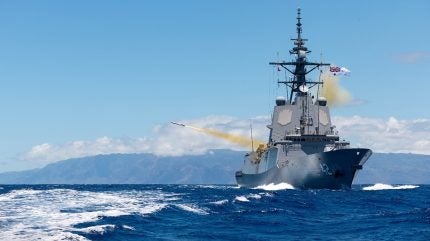
Pictured is HMAS Sydney firing Naval Strike Missile for the first time during RIMPAC 2024. The 2026 Integrated Investment Programme considers undersea capabilities, sea denial and long-range effects top investment priorities. Credit: Australia Defence Forces.
Australia has released its 2026 National Defence Strategy (NDS) and Integrated Investment Programme (IIP) today, 16 April
In the latter, the Government has pledged to spend A$425bn ($304bn) in defence over the next ten years
In doing so, Canberra revealed its top spending priorities: sea denial, air mobility and long-range effects.
It has been two years since Australia published its last defence strategy, and following a string of deliveries and weapon trials, Canberra will now accelerate its progress with $304bn over the next ten years.
Remarkably, the two documents simply extend the same tenets of the military strategy put forward in 2024. This is valid in the Indo-Pacific theatre, where geography demands a heavy naval focus, combat air/mobility and long-range strike effects.
Discover B2B Marketing That Performs
Combine business intelligence and editorial excellence to reach engaged professionals across 36 leading media platforms.
Find out more
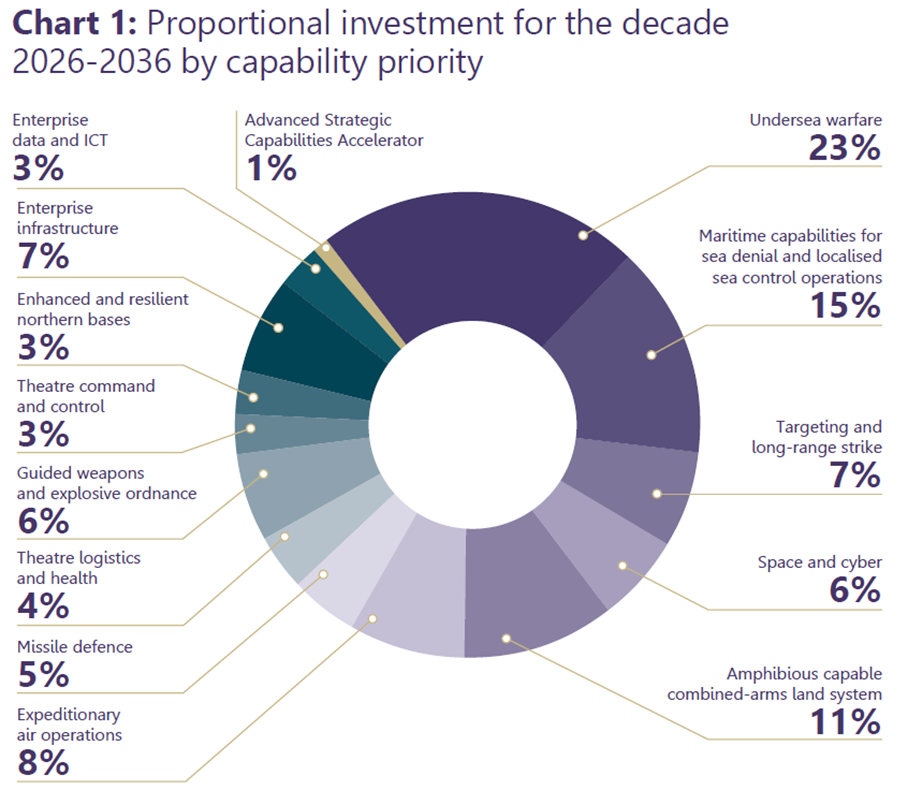
Notably, these top three spending priorities make up more than 60% of the budget.
Graph indicating focus on navy, air and long range strike. Credit: IIP.
But this may upset critics who prioritise recent conflict trends in the Near and Middle East recently, and across Europe through last year.
It could be argued that Australia’s commitment to counter uncrewed aerial systems (C-UAS), for which the IIP does not commit any additional funds, does not indicate a meaningful sense of the global problem. Some critics may consider this evidence that C-UAS does not impact Australia’s fixed and unwavering strategy.
Naval focus
Naturally, undersea warfare is the largest segment as it comprises the country’s AUKUS commitments.
However, this should not overshadow the requirement for uncrewed maritime vehicles (UMV), which GlobalData market intelligence projects will grow at a compound annual growth rate of nearly 9% in the next ten years.
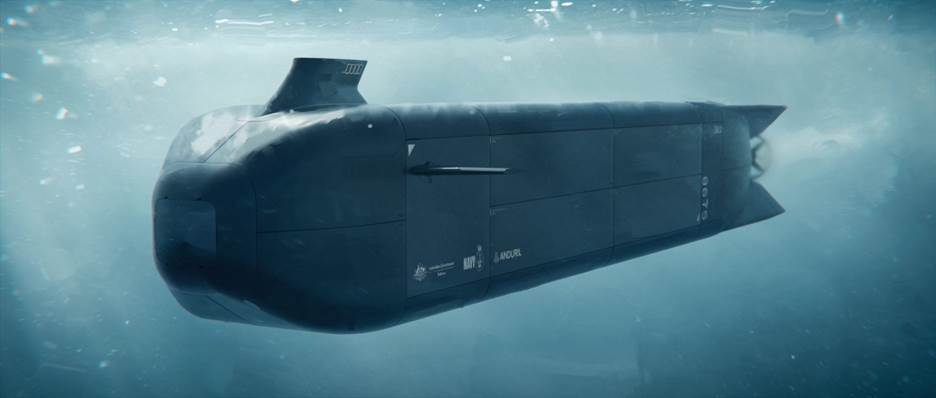
One notable Australian platform is the Ghost Shark XLAUV, for which Canberra signed a contract with Anduril Australia for the delivery, maintenance and continued development over the next five years.
Impression of Ghost Shark. Credit: ADF.
During the Undersea Defence Technology exhibition in London recently, Raytheon Australia’s Tim Midgell, a submarine combat system architect, said UMVs will help to reverse the Royal Australian Navy’s (RAN) “disproportionate” fleet size relative to the size of its EEZ.
Midgell’s assertion is informed by a unique modelling framework he presented to international collegaues duing the exhibition. He claimed UMVs are a “silver bullet” providing “mass, scale and persistance.”
Still hedging their bets somewhat, the Government is also investing $52-$65bn to double the size of the surface combatant fleet over the decade, contrary to the previous findings. The centrepiece will be the RAN’s 11 new Mogami-class frigates, which have a range of up to 10,000 nautical miles and a 32-cell vertical launch system.
Combat air and mobility
Australia is investing $34-$41bn over the decade in capabilities that will enable Air Force to undertake expeditionary air operations.
Both air mobility and combat segments will benefit from $11-$13bn in ongoing projects respectively.
This includes a new and expanded fleet of 20 C-130J Hercules medium air mobility aircraft to replace the existing fleet of 12 first-generation aircraft alongside the continued sustainment of the C-17A Globemaster III and KC-30A multi-role tanker transport aircraft fleets.
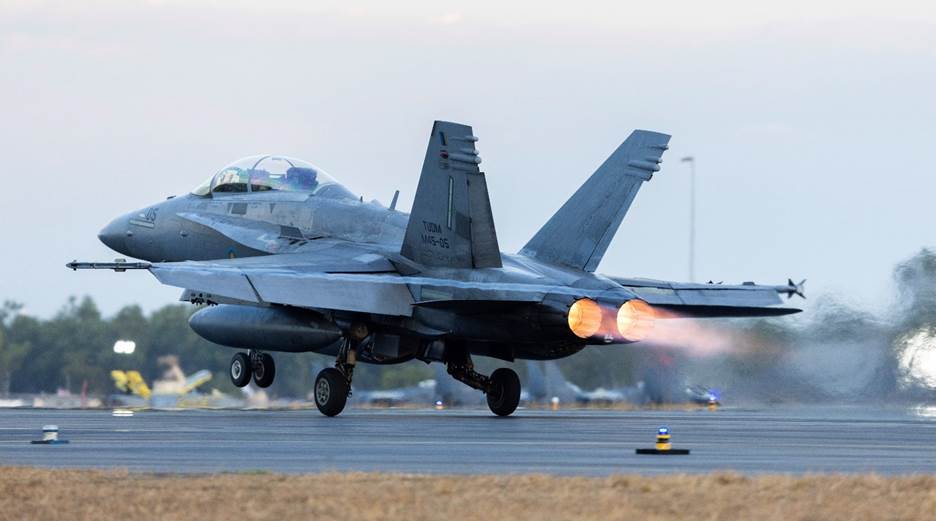
Royal Australia Air Force F/A-18F. Credit: ADF.
Australia will continue to enhance combat aircraft such as the F-35As and sustain its F/A-18Fs and EA-18Gs, preserving the fleet until 2040.
Funds will also cover enhancements to Australia’s network of northern air bases to improve resilience against attack, including dispersed and upgraded aircraft shelters, redundant fuel and munitions storage.
Long-range strike
If recent lessons from the Gulf are falling on deaf ears down under, it can still be said that Canberra are learning from Ukraine’s requirement for long-range strike effects.
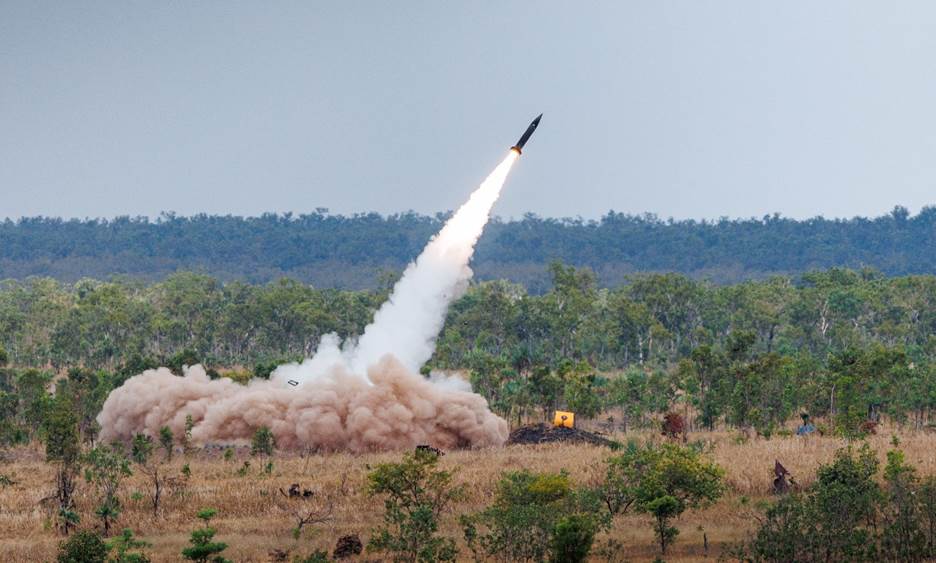
The ADF are pursuing a range of long range missiles, including the Tomahawk Land Attack Missile, Naval Strike Missile, Joint Strike Missile, Standard Missile 6 and Precision Strike Missile.
The military aim to increase the range of their effect across domains, specifically:
Sea-based strike: increased from 120 to 2,500km
Land-based strike: increased from 40 to 500km and transforming to 1,000km
Air-based strike: increased from 370 to 1,000km
HIMARS fires PrSM during Talisman Sabre 2025. Credit: ADF.
Prioritising long-range strike capability leans into the strategic environment in the Indo-Pacific particularly. The Australian Strategic Policy Institute validates this contention, arguing that it is consistent with the focus on “holding adversaries at risk beyond our immediate territory.”
But these effects are featured heavily in Eastern Europe too. But this is partly due to the static frontline, wherein belligerents must resort to launching various effects – particularly attack drones – against logistical lines well beyond one another’s territories.