
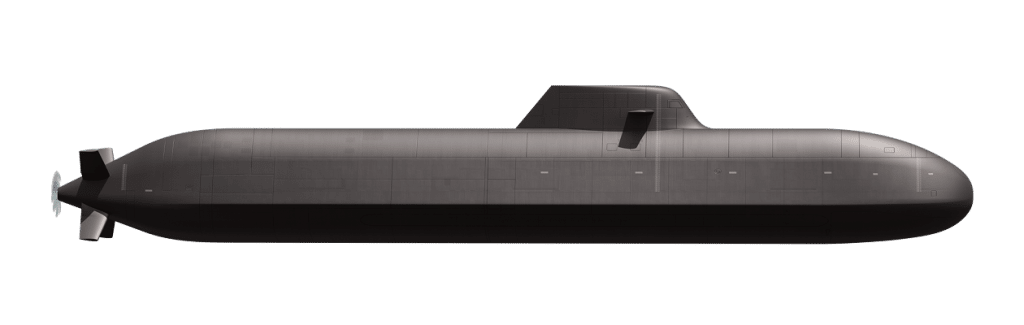
Canada’s Prime Minister Carney has announced the selection of German shipbuilder TKMS to supply up to twelve submarines for the Canadian Patrol Submarine Project (CPSP). The new fleet will be based on the Type 212CD design currently under production for Germany and Norway.
“July 6, 2026
Halifax, Nova Scotia
The assumptions that shaped decades of Canadian defence and security are being upended. Climate change is causing our Arctic region to warm nearly three times faster than the global average – a shift that adversaries are actively looking to exploit. In this increasingly dangerous and divided world, Canada must be prepared to defend ourselves and our Allies. To that end, Canada’s new government has reached 2% of defence spending for the first time since the fall of the Berlin Wall, transformed defence procurement, and secured over 20 defence and security partnerships in a year.
Key to this mission is the Canadian Patrol Submarine Project (CPSP). Submarines enable the Royal Canadian Navy (RCN) to defend threats near and far from Canada’s shores. Yet, our current fleet is aging, with only one of four submarines seaworthy. With the longest coastline in the world, Canada’s ability to deploy underwater surveillance capability is critical. Our security and sovereignty depend on them.
Today, at Canadian Forces Base Halifax, the Prime Minister, Mark Carney, announced that Thyssenkrupp Marine Systems (TKMS) has been selected as the preferred supplier to begin negotiations for delivering Canada’s next fleet of submarines to the RCN. This will be the largest defence procurement in Canadian history, and it will equip the RCN with the capabilities they need to keep Canadians safe.
With ultra-low acoustic and magnetic signatures, TKMS’ 212CD is one of the stealthiest submarines in the world. It is capable of Arctic patrol, undersea surveillance, special forces deployment, and it is fully NATO-interoperable. These submarines provide an unparalleled combination of advanced technology and lethality that will enable the RCN to detect, track, deter and, if necessary, defeat adversaries in all three oceans bordering Canada. This procurement will bolster Canadian security through a platform shared by Germany and Norway, two of Canada’s closest Allies.
The Government of Canada and TKMS will now enter into negotiations to finalise the contracts and all arrangements required to deliver the requirements of the CPSP. Canada will conclude contracting no later than the end of 2027, with the first four submarines to be delivered ahead of schedule, in 2034. In the event that negotiations with the preferred supplier are unsuccessful, Canada may designate Hanwha Ocean as the preferred supplier and enter into negotiations.
The CPSP is being advanced by the Defence Investment Agency and aligns with Canada’s Defence Industrial Strategy. Under the Build-Partner-Buy framework, the project demonstrates the Partner approach, with collaborations with trusted Allies to develop and deliver capabilities while ensuring industrial and economic benefits for Canada. The CPSP will prioritise investments across the Canadian supply chain, to create high-paying jobs, leverage Canadian defence industries, and maximise benefits for Canadian workers and businesses.
Canada is taking full responsibility for our defence, including in the Arctic. We have made the largest increase in defence investment in a generation. We are transforming our regulatory system from one that checks boxes to one that builds our defence industrial base with speed and scale. By investing in our people, our capabilities, our industry, and our partnerships, we are building a stronger, more secure Canada – one that is ready to meet today’s challenges, support our Allies, and shape a safer, more prosperous future for generations to come.
“In a more dangerous and divided world, Canada must be prepared to defend our interests, protect our citizens, build our economy, and secure our future. To that end, we are making the largest defence procurement in our nation’s history with speed, ambition, and discipline. Canada’s next submarine fleet will secure our coastlines and waters, and their construction will have enormous, lasting benefits for Canadian industries and workers. Together with our German and Norwegian Allies, we will build at speed and scale to expand our strategic capabilities and create greater strategic autonomy. We will build this fleet to build Canada strong.”
The Rt. Hon. Mark Carney, Prime Minister of CanadaQuick facts
-Ends-
Naval News comments:
Prime Minister Carney emphasised both TKMS and Hanwha provided highly competitive bids addressing Canadian political and economical requirements beyond the capabilities of the two submarine designs in question. Hanwha remains the reserve supplier for the Canadian Submarine Patrol Project, should Canadian negotiations with TKMS prove unsatisfactory. In his original announcement Carney estimated these negotiations to take between 6 and 18 months to finalise the contract. It is worth noting the emphasis on “up to twelve” submarines, indicating a possibility Canada may not in fact acquire the full number of new vessels.
The Royal Canadian Navy presently operates four Upholder-class submarines, only one of which the Prime Minister noted is operational. Therefore the Canadian Patrol Submarine Project represents an effort to triple the submarine fleet, and arguably more than triple operational readiness. This undertaking will require meeting very ambitious timelines for modernising and expanding relevant infrastructure for Atlantic and Pacific naval basing of the new fleet.
The German government has pursued a high profile campaign supporting the Canadian acquisition of submarines from TKMS. This effort included three visits by German defence minster Boris Pistorius to Ottawa, the most recent one in May this year. Germany and Norway will pass production slots for Type 212CD-submarines presently on order to facilitate the desired arrival of the first Canadian vessels by 2034.
Berlin and Oslo originally placed a first contract for the jointly developed Type 212CD in July 2021. Notably, both governments have since doubled their original order, bringing the contracted number to twelve boats of the fuel cell AIP and lithium ion battery powered design, with six units for each navy. The Canadian order, if fully exercised, would double this figure yet again, resulting in the largest single type fleet of conventionally powered submarines operated by multiple navies since the German Type 209-class and the British Oberon-class several decades ago.
Of note in this context is also a repeated emphasis by the Canadian and German governments on an ambition to jointly operate the design. Such collaboration would extend beyond the traditional sharing of training and maintenance pipelines into shared crewing of the new submarines. Neither government has yet detailed on the character of such shared crewing, which would set new standards globally for the joint operation of submarines.
TKMS will now need to focus on expanding production facilities for the joint fleet in order to ensure timely delivery for all three navies in question. To this effect the German submarine producer most recently signed further agreements with European partners expanding production capacity.
