The TWZ Newsletter
Weekly insights and analysis on the latest developments in military technology, strategy, and foreign policy.
The Army's top official lauded the Merops drone's performance defending against Iranian long-range kamikaze drones. The post Cheap Interceptor Drones Proven In Ukraine Protected U.S. Troops Against Iranian Shaheds appeared first on The War Zone.

The TWZ Newsletter
Weekly insights and analysis on the latest developments in military technology, strategy, and foreign policy.
The Army’s top official pointed to low-cost interceptor drones first sent to Ukraine as one defense against Iranian barrages of Shahed-136 one-way attack munitions. During Congressional testimony on Thursday, Army Secretary Daniel Driscoll lauded the Merops interceptor and the process to get it quickly into the hands of troops in the Middle East.
The Merops is a small, relatively inexpensive drone built specifically to zip through the skies and intercept long-range one-way attack drones. As we have previously reported, Ukraine has been using several locally produced drones, as well as Merops, to counter Russian Shaheds successfully for some time now, proving-out the concept.
“When the conflict kicked off, within about eight days, we were able to purchase…13,000 Merops, which are incredible,” Driscoll exclaimed. “They’re about $15,000 a piece right now. We think as they scale, they’ll get less than [$10,000] and we’re able to take Shaheds down that cost $30,000 to $50,000, which is amazing because that puts us on the right end of the cost curve, and we will make that trade all day long.”
The U.S. has its own interceptors that have been in service for years, such as Raytheon’s Coyote, but they cost roughly 10 times more.
In a recent interview with Bloomberg, Driscoll said that larger orders could drive that to $3,000 to $5,000 per interceptor. Given the success in Ukraine, it is likely that the Pentagon and other customers would see far less risk when it comes to ordering large numbers.
As we noted in a story last month, the Pentagon sent thousands of these drone interceptors to the Middle East. Iranian strikes on U.S. military facilities killed U.S. troops and caused damage to bases and equipment. Driscoll did not offer more specifics about how often they were used, how many Shaheds they downed or exactly where they were deployed.
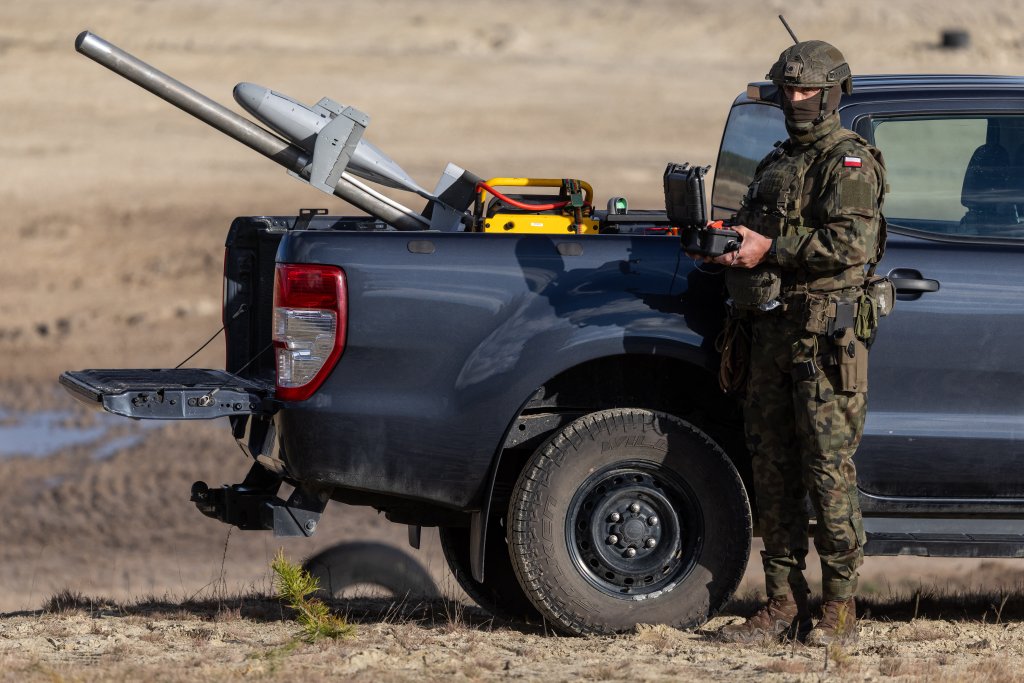
Merops was “developed as part of the US-backed Project Eagle initiative, which includes contributions from Swift Beat, a company associated with former Google CEO Eric Schmidt,” according to the Ukraine Defense Tech Community (DTC), a marketplace for modern weaponry. “The system is built around Surveyor drones, which act as airborne interceptors capable of destroying enemy UAVs mid-flight.”
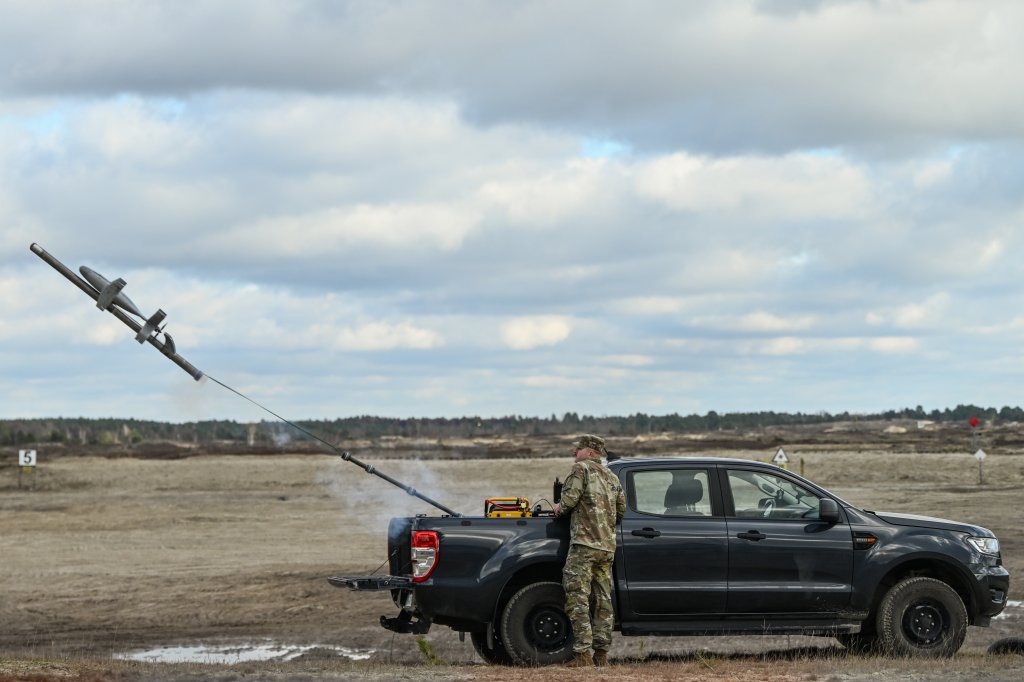
Each Merops unit “includes a command station, launch platforms, and a fleet of Surveyor drones,” DTC explained. “These interceptors can operate autonomously or be remotely piloted and are equipped with onboard sensors for target tracking.”
While full technical specifications remain undisclosed, they can reportedly reach speeds of over 280 km/h (175 mph). “The platform is considered fast enough to intercept jet-powered drones such as the Russian Geran-3, which can exceed 300 km/h,” DTC pointed out.
The interceptor can carry an explosive warhead and destroys targets either through a direct collision or a proximity detonation.
Driscoll said the ability to field Merops so quickly is because the Army streamlined its acquisition process.
“Fundamentally, one of the core problems was our own bureaucracy, our own infrastructure, our own decision-making organizations had decayed from any sort of speed and rationality,” he testified. “The reason we’ve been able to move fast since the conflict in Iran started is because of work 10, 12, 14 months ago to reorganize our acquisitions department.”
“And practically,” he added, “what that did is it took us from a 16-step decision-making process – where each of the bodies along those 16 steps could veto it and start it back over, and it could take two to seven years to purchase something.”
“We put everybody into a group who could make decisions on the fly,” the secretary noted. “And so a lot of the things the Army has worked on in the previous year are paying dividends as we try to make decisions quickly.”
You can watch Driscoll’s testimony on Merops at the 36-minute mark of the video below.
In Ukraine, Merops has proven to be a far cheaper alternative to munitions like Patriot interceptors and even far less advanced missiles for downing Shahed drones which have caused widespread destruction across that country. While these drones have neither the payload nor range of the far more expensive Patriot munitions, they can be deployed in great numbers giving them the ability to cover larger geographical areas. That helps keep the magazine depth of more sophisticated effectors from being quickly depleted and turns the disastrous ‘exchange ratio’ between cost of target versus effector on its head. In many cases, these systems would still need to be part of a layered defense, especially when used as point defense at high value installations and infrastructure.
Now that these weapons have helped save American lives and equipment, Merops success means we will likely be seeing more low-cost drone interceptors like it in the future.
Contact the author: howard@thewarzone.com

In a statement shared on state television, the headquarters said Washington had broken a promise by continuing its naval blockade of ships sailing to and from Iran’s ports.

Ukrainian Prime Minister Yuliia Svyrydenko presented Ukraine's investment "wish list" in priority sectors during a meeting in Washington with Makhtar Diop, Managing Director of the International Finance Corporation (IFC).

Europe just promised over $16 billion in military assistance to Ukraine, but critical parts of it, like missiles to shoot down Russian ballistic missiles, will be in short supply for years.

Iran will close the strategic Strait of Hormuz again if the United States continues its blockade of Iranian ports, parliament speaker Mohammad Bagher Ghalibaf said Saturday.