
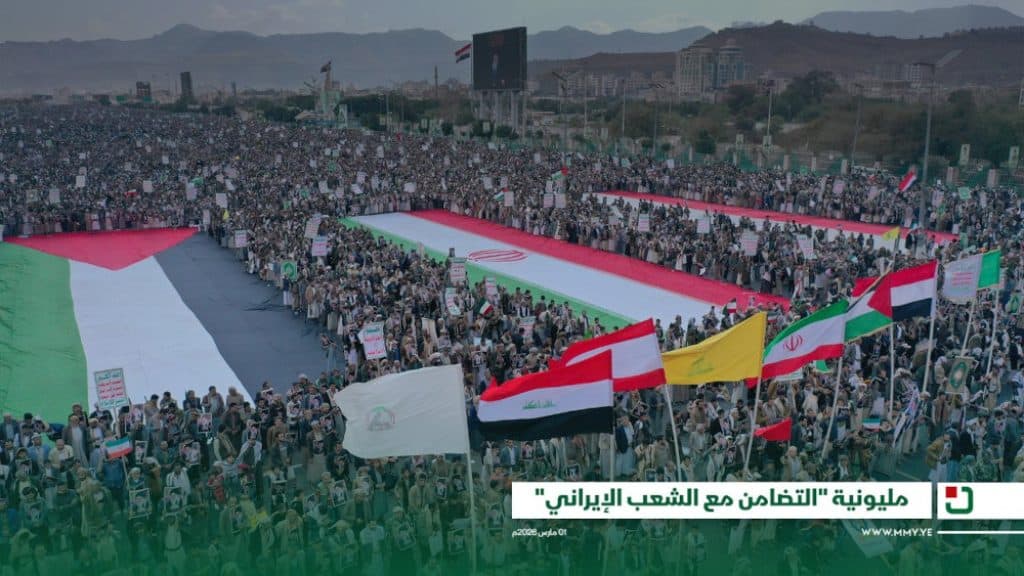
The Islamic Republic of Iran’s proxy groups and sympathetic Shiite communities have arranged demonstrations across the Middle East following the death of Iranian Supreme Leader Ali Khamenei in an airstrike. Many of these protests have turned violent, with some forcing US Embassies and consulates to close. Nonessential diplomatic staff have also departed many countries in which they work as Tehran’s regional partners threaten the United States. The US State Department has recommended that civilians leave Middle Eastern countries or shelter in place if doing so is impossible.
In Iraq, as Tehran and its proxy militias launched drones and missiles at targets in the country, members and supporters of the Tehran-backed militias took to the streets outside of the Green Zone, the fortified district in central Baghdad that’s home to government buildings and foreign embassies, on February 28. Many protesters carried photos of the late Iranian supreme leader, Islamic Republic flags, and flags associated with Tehran’s terrorist proxies in Iraq. The demonstrators attempted to reach the US embassy in a replica of the 2019 protests over American strikes on the Iran-backed terror group Kataib Hezbollah.
Iraqi News reported that people threw stones at security forces, and gunfire was heard. Security forces fired tear gas and water cannons at the assembled rioters. According to a statement issued by the Joint Operations Command of the Iraqi Security Forces (ISF) that was reported by Shafaq News, armed demonstrators opened fire and injured members of the ISF.
The Joint Operations Command statement also said that security forces arrested 15 rioters. Photos circulating on social media alleged that some of the arrested individuals are members of the Popular Mobilization Forces (PMF), an official Iraqi security institution comprised of militias, most of which are backed by Tehran. Iraqi officials were forced to close the Green Zone, and protestors returned on March 2 and March 3, again attempting to reach the US Embassy.
In Pakistan, hundreds of individuals tried to storm the US consulate in Karachi and attacked UN offices in the northern part of the country on February 28. “We are monitoring reports of ongoing demonstrations at the U.S. Consulates General in Karachi and Lahore, as well as calls for additional demonstrations at U.S. Embassy Islamabad and Consulate General Peshawar,” the US Embassy in Islamabad stated on March 1. Twenty-two protestors have died across Pakistan, including 10 in Karachi, where consulate security fired at the crowd after people breached the outer wall of the US consulate.
In Yemen, the Houthis have called people to the streets to oppose the US and Israeli military action, particularly the killing of Khamenei. “The American presence and bases in our region are considered a source of evil, a service to the Zionist enemy, and a threat to our security and safety,” the terror group’s military media arm said in a statement. However, despite professing solidarity with the Islamic Republic, the Houthis have not yet conducted any retaliatory attacks against US positions, Israel, international shipping, or neighboring countries.
In Bahrain, some protestors have hit the streets to protest the US-Israeli action, even as the Islamic Republic strikes the country, including its economic and civilian infrastructure. Bahraini officials said that the country arrested citizens celebrating attacks by the Islamic Republic. Social media videos have reported that the Unified Military Command, formerly known as the Peninsula Shield Force, a force that aims to ensure security, stability, and defense of Gulf Cooperation Council (GCC) countries, entered Bahrain in response to the unrest.
Bridget Toomey is a research analyst at the Foundation for Defense of Democracies focusing on Iranian proxies, specifically Iraqi militias and the Houthis.
Tags: bahrain, houthis, Iran, Iraq, Operation Epic Fury, Operation Lion’s Roar, Pakistan, PMF, Shiite militias, Yemen


