Missile damage a fraction of 2025 levels after 11 days of war with Iran
The most damage reported to the Tax Authority's hotline has been in Tel Aviv where 4,609 damage claims have been filed.

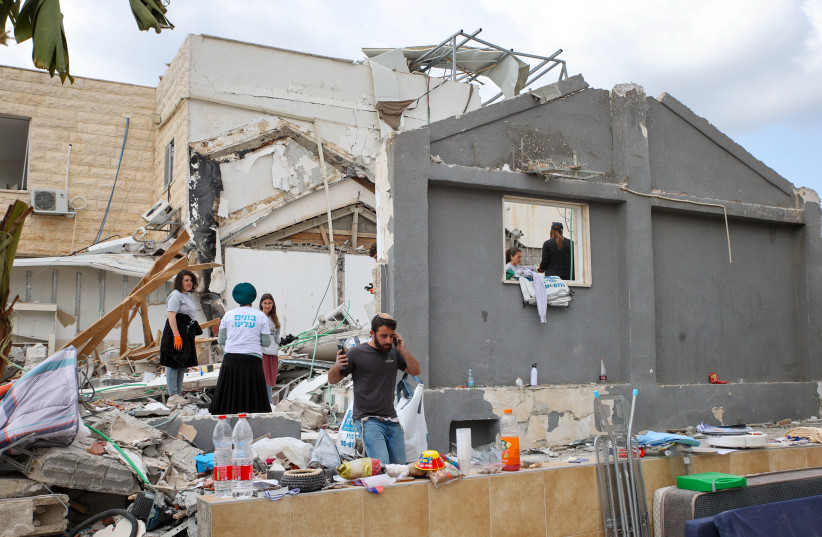
After 11-days of fighting, the Israel Tax Authority has received 9,115 claims for missile damage, including 6,586 for damage to buildings, 1,044 for damage to contents and equipment, and 1,485 for damage to vehicles.
The difference between the extent of damage in the current round of fighting and the war last June is clearly evident. The number of claims after 11 days of fighting was similar to that recorded by the second day of the war last June.
At that time, nearly 10,000 claims were filed with the Tax Authority's compensation fund for property damage. On the fourth day, the number of claims almost doubled, reaching 18,800. By the end of the 12-day round of fighting, 53,409 claims were filed for direct damage, and compensation with NIS 2.9 billion paid out for direct damage.
Less missiles more sirens
The data show that, in relation to last year's fighting, Iran has been firing less missiles but concentrating its efforts on central Israel. According to the Institute for National Security Studies, while in June Iran launched about 1,600 missiles and drones, the number in this round of fighting so far is less than 600.
However, in the current operation the number of alerts has increased significantly. If in June the number of alerts was about 20,000 for missiles fired and infiltration of drones, today this figure has already reached about 42,000.
In addition, last June, there were numerous hits on towers that included many dozens of apartments and as a result dozens of damage claims. In the previous round of fighting against Iran, more buildings had to be demolished and rebuilt following the hits on them.
Cluster missiles instead of large warheads
Another difference that has been experienced so far between last year's round of fighting and the current war is the extent of the damage. While direct damage from missile hits (as opposed to economic damage to businesses) last year reached about NIS 3 billion shekels. But the damage in the current campaign is estimated at several hundred million shekels (after 11 days of fighting).
The difference in the assessment of the damage lies in the nature of the buildings that were damaged. A number of luxury towers were damaged, the reconstruction of which and the restoration of the situation to their former state cost the state far more than residential towers of a normal or average standard. The restoration procedures for some of them are still in progress.
Yigal Govrin, chairman of the Israel Association of Engineers, explains why this time we saw fewer buildings in need of demolition.
"In the previous campaign, we saw missiles with large warheads of hundreds of kilograms, and each missile that was not intercepted and landed had the potential to destroy an entire building. These were definitely missiles that could take down buildings, and we saw several such hits. In this round, the Iranians are sending cluster missiles, that is, warheads that scatter, each with much less explosives, so the chance of a building being completely destroyed is very small. There could be damage, but not to the level of destruction of buildings that would require demolition and rebuilding."
"On the other hand," Govrin continues, "The large scatter is problematic. The potential for harm to people and property is greater because it reaches more places. If a person is injured by the bomb or shrapnel, it can be very dangerous, as we saw yesterday in Yehud — the building did not collapse, but the workers were injured by shrapnel. But damage that requires demolition will be very rare. In terms of preserving life, it is very important to protect yourself and stay in a protected area because the damage from the shell and shrapnel remains the same."
To date, the most damage reported to the Tax Authority's hotline has been in Tel Aviv, where 4,609 damage claims have been filed. At the Ashkelon office of the Tax Authority, which handles the Beit Shemesh and Beersheva areas, 3,664 claims have been filed. In the Jerusalem office, 181 claims have been filed, in Akko, 494, and in Tiberias, 167.