No consensus on the extent of Middle East ceasefire
The US and Iran have agreed to a two-week ceasefire today (8 April) with talks starting in Islamabad on Friday 10 April.
Army Technology
75
5 دقيقة قراءة
0 مشاهدة
The ceasefire, now in effect, will prioritise the immediate needs of the US and Iran over their strategic goals and the ongoing Lebanon conflict.
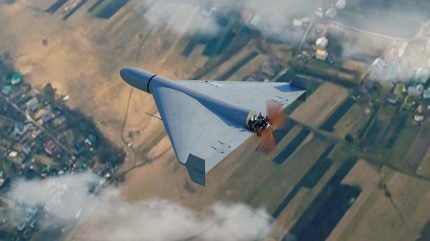
Iranian strategy in its conflict with the US and the Gulf this past month has relied on drone strikes. Credit: Shutterstock/Anelo.
The US and Iran have agreed to a two-week ceasefire today (8 April) with talks starting in Islamabad on Friday 10 April
Pakistan, appointed mediator, claims the truce extends across the region, including Lebanon
But Israel contests this point, suggesting that the ceasefire does not extend to its operations against Hezbollah, which Netanyahu insists remains a separate theatre
There is no consensus about the conditions of the two-week ceasefire agreed between the US and Iran early this morning.
The Prime Minister of Pakistan, Shehbaz Sharif, who will host negotiations in Islamabad on Friday, claims the ceasefire will extend “everywhere” throughout the Middle East, including Lebanon, he stated on the social media platform X.
Discover B2B Marketing That Performs
Combine business intelligence and editorial excellence to reach engaged professionals across 36 leading media platforms.
Find out more
Meanwhile Israel, another belligerent in the conflict, though not a participant in the talks, is widely reported to have welcomed the truce. But its Prime Minister, Benjamin Netanyahu, maintained that Israeli operations in Lebanon against the Iranian-backed paramilitary organisation Hezbollah are not part of the ceasefire.
Such discord sheds light on the manouvreing by all sides, particularly the Islamic Republic, which must pursue a careful balance between its immediate need to end the conflict and its strategic requirement for Hezbollah’s survival in the long term.
With the greatest humility, I am pleased to announce that the Islamic Republic of Iran and the United States of America, along with their allies, have agreed to an immediate ceasefire everywhere including Lebanon and elsewhere, EFFECTIVE IMMEDIATELY. I warmly welcome the…
Pakistan Prime Minister comments on Middle East ceasefire, 8 April.
A thorn in the side of diplomacy
Lebanon clearly remains an open question; a topic that will likely be covered in Pakistan as the rogue state looks to preserve its strategic influence in the region through proxies.
Iranian foreign policy has leaned increasingly on external Shia proxies – Hezbollah in Lebanon and the Houthis in Yemen – since the 1980s and around 2014 respectively.
Israel is clearly treating Hezbollah as a separate threat to Iran, meaning any engagement will be kinetic and unilateral, not negotiated. At the same time, Hezbollah is not an independent negotiating actor but operates within Iran’s axis of resistance, with strong operational influence from Iran’s Islamic Revolutionary Guard Corps.
But facing obliteration from the air, the Iranian regime will not sacrifice its own survival for that of a proxy. Therefore, the handling of Hezbollah will likely remain indirect and asymmetrical, rather than part of a formal ceasefire agreement.
In the short term, Iran will likely enforce a controlled pause on Hezbollah (as already indicated by temporary halts in attacks) to avoid escalation that could derail wider talks.
But in the medium term, the regime will try to preserve Hezbollah as a strategic deterrent asset, not concede it in negotiations.
“Tehran cannot afford to trade away Hezbollah,” Sidhu contends. “Effectively, Hezbollah becomes a pressure valve, restrained when diplomacy is active, reactivated if talks collapse.”
While there is disagreement about the extent of the ceasefire between Israel and Pakistan over Lebanon, the fundamental priorities for Iran and the United States will come first.
Position of US, Iran ahead of talks
The United States, whose Government initially sought Iran’s “unconditional” surrender, will now enter talks with the rogue state to discuss its 10-point proposal, which US President Donald Trump said is a “workable basis” on which to negotiate.
While American military might has proven overwhelming and umatched in its aerial campaign for more than a month, the superpower is still pressured by Iran’s asymmetric warfare, namely the its control over the Strait of Hormuz, wherein the regime managed to block critical global energy supply.
In his announcement on Truth Social, Trump assured the world that the contested chokepoint will reopen to maritime shipping during this two-week ceasefire, and that the US will continue “hangin around” to ensure all goes well.
Meanwhile, Iran faces an existential crisis – even the destruction of Persian civilisation, according to recent remarks from Trump – forcing the regime to place its immediate survival above its debilitating strategic influence in the region.
With the country’s air defence largely degraded, deprived of overland logistics routes, as well as its ability to conduct drone and missile strikes, Iran’s bargaining power is almost wholly tied to its ability to threaten shipping in a crucial waterway.
But the discord within this fragile ceasefire contains details of Iranian strategy and its enduring power base ahead of talks in Islamabad.