‘War With Russia Was Inevitable’: Historian-Turned-Soldier Reveals Who Saw It Coming
Ihor “Batko” Zhaloba spent decades studying Russian history before volunteering to fight it. His verdict: Europe remains dangerously unprepared, and Ukraine is the continent’s last line of defense.
Kyiv Post
75
8 دقيقة قراءة
0 مشاهدة
Ihor Zhaloba – known by the callsign “Batko” (Father) – is a Doctor of Historical Sciences, professor, and Senior Research Fellow at the Department of History of International Relations and Foreign Policy of Ukraine of the Institute of History of Ukraine, National Academy of Sciences of Ukraine. He is also a teaching professor in the Department of International Relations at Borys Hrinchenko Kyiv University and president of the Ukrainian branch of the Pan-European Movement.
When Russia launched its full-scale invasion, he did not hesitate. He volunteered to defend Ukraine and served until he was demobilized at the age of 60.
Today, he has returned to academic life at the Institute of History of the National Academy of Sciences of Ukraine, while continuing to lecture across Europe, raise awareness about the war, support Ukraine through volunteer work, and honor fallen comrades.
He also serves as president of the Ukrainian branch of the Pan-European Movement – a political and cultural initiative founded in 1922 to promote European unity in response to nationalism and conflict.
Zhaloba spoke with Kyiv Post about why he foresaw Russia’s invasion, why Europe remains unprepared for war, and why Ukraine now stands as the continent’s last line of defense.
In your previous interviews, you told your students that a major war with Russia was predictable and expected. Why did you think so?
Moscow announced a unilateral Victory Day truce while warning of retaliation if Ukraine attempts to disrupt the May 9 military parade.
Until Feb. 24, 2022, a large number of Ukrainians did not fully realize that we had already been at war since 2014. Back then, it felt distant to many of us – just as it still feels distant for many Europeans today.
In December 2021, I told my students – whom I taught in the course “Civilizational Dimension of Modern International Relations” – that there would be a major war with Russia. Later, they told me: “Ihor Volodymyrovych, back then we didn’t believe you.” At the time, the idea of war seemed far removed from reality for many Ukrainians.
I had studied Russian history for many years. As a historian, I understood the mentality and way of life of that country. The principle “we will not stand at any cost – we need victory” can be consistently traced throughout the history of the Muscovite state and, later, Russia.
This is the mode of existence of that state: it must expand its borders. In peacetime, it has nothing to sustain itself with. They have not even built proper sanitation infrastructure to this day, and struggle to organize their internal life. Therefore, Russians go elsewhere to seize what they are incapable of creating themselves.
I also recalled the Russian philosopher Vasily Rozanov, who once said: “Why would you need freedom? Freedom is necessary for substance, so that it can develop – but what kind of freedom, and to what end, is it for something without substance? And Russian society, after all, has no substance.” In that sense, they do not need freedom, because there is nothing to develop – Russian society is empty.
My professional background led me to conclude that war was inevitable.
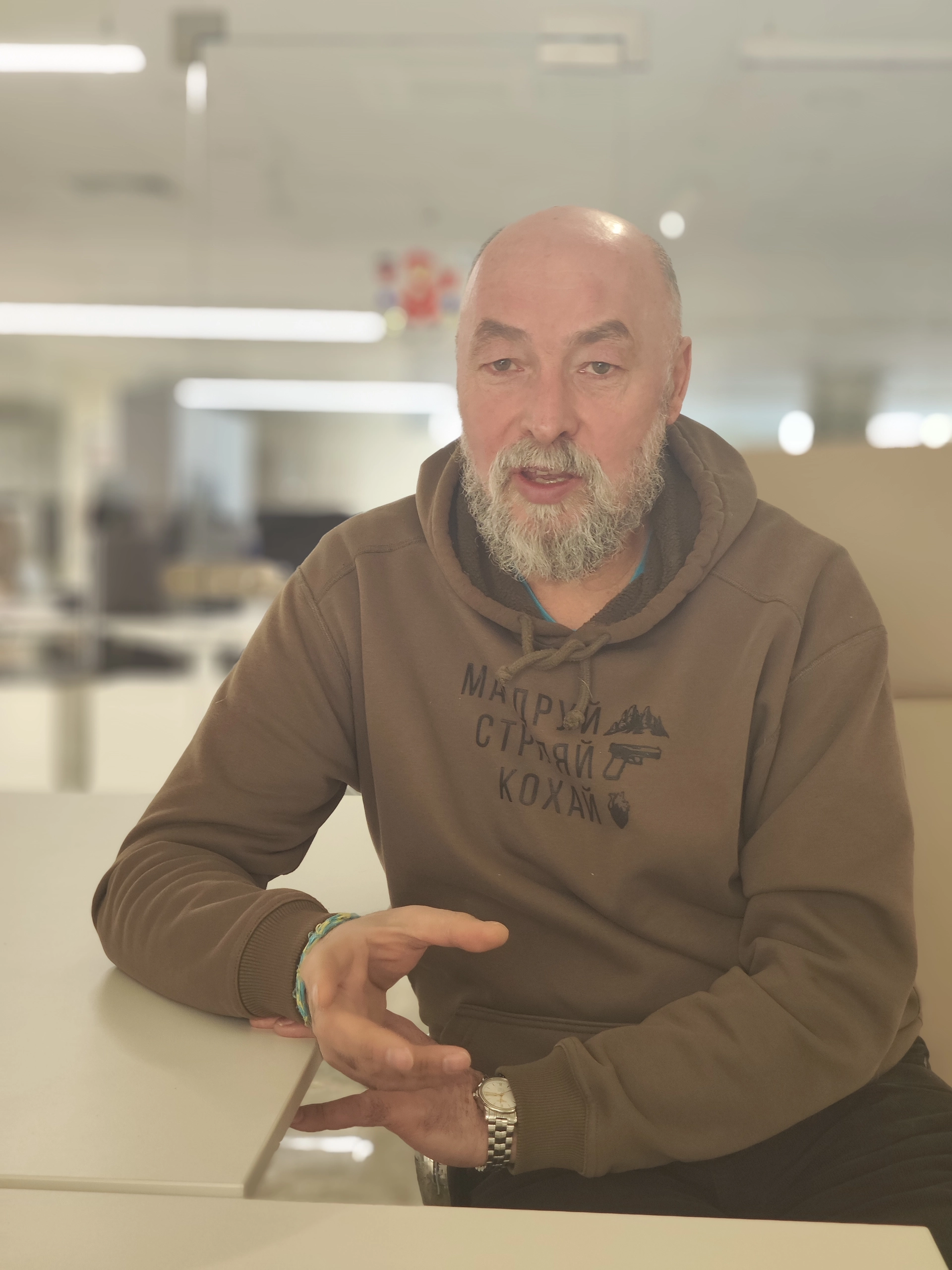
Ihor "Batko" Zhaloba speaking to Kyiv Post. (Photo by Julia Struck-Feshchenko / Kyiv Post)
Ukrainian society, meanwhile, has managed to overcome economic and political challenges. Since 2001, we have ensured economic growth while preserving our freedom – and we value it, because it allows our “substance” to develop.
This represents an existential threat to the Russian model, in which Ukrainians have always been perceived as “younger brothers,” incapable of independent existence and supposedly needing the “guiding hand” of big brother Russia.
The average Russian, in theory, should ask why Ukrainians – whom they often mock – live better than they do. For me, it was only a matter of time before these two antagonistic models – Ukrainian and Russian – would collide.
Since the time of Boris Yeltsin [President of Russia from 1991 to 1999], there were expectations in Russia that Ukraine would collapse and return “on its knees” in exchange for cheap gas, timber, and other resources. These expectations were never fulfilled.
Earlier figures such as Vladimir Lenin [Revolutionary leader and founder of the Soviet Union] and Leon Trotsky [Key figure in the Russian Revolution and founder of the Red Army] argued that Russia could not exist as an empire without Ukraine. Historically, Ukraine has often served as a resource base for this imperial structure. When the expectation of Ukraine’s return failed, the logic shifted toward attempting to restore control by force.
You noted that Russia constantly needs to expand. Since the beginning of the full-scale invasion, there have been claims that this war could lead to the collapse of the Russian Federation. Yet we now see the Kremlin continuing to build up its military machine. Is it still possible that Russia could collapse?
For me, Russia is the last colonial empire. History shows that all colonial empires eventually collapse, and Russia should be no exception. However, it is not a classic colonial empire like the Roman or British Empires.
There would need to be an external shock – some form of defeat – that triggers internal instability. For example, Russia’s defeat in the Russo-Japanese War of 1904-1905 led to the revolution of 1905-1907. Similarly, the strain of World War I triggered the February Revolution, followed by the October Revolution in 1917.
However, even if Russia begins to fragment, Ukraine would still have to continue fighting and maintain forces to stabilize its borders.
Why is the West so afraid of Russia’s collapse? Because it would likely be chaotic, uncontrolled, and extremely violent – especially given the presence of nuclear weapons. Many oppressed peoples within Russia could seek revenge against those who dominated them. The consequences would be brutal and destabilizing, affecting not only the region but the wider world.
This is a historical reality that may eventually have to be confronted.
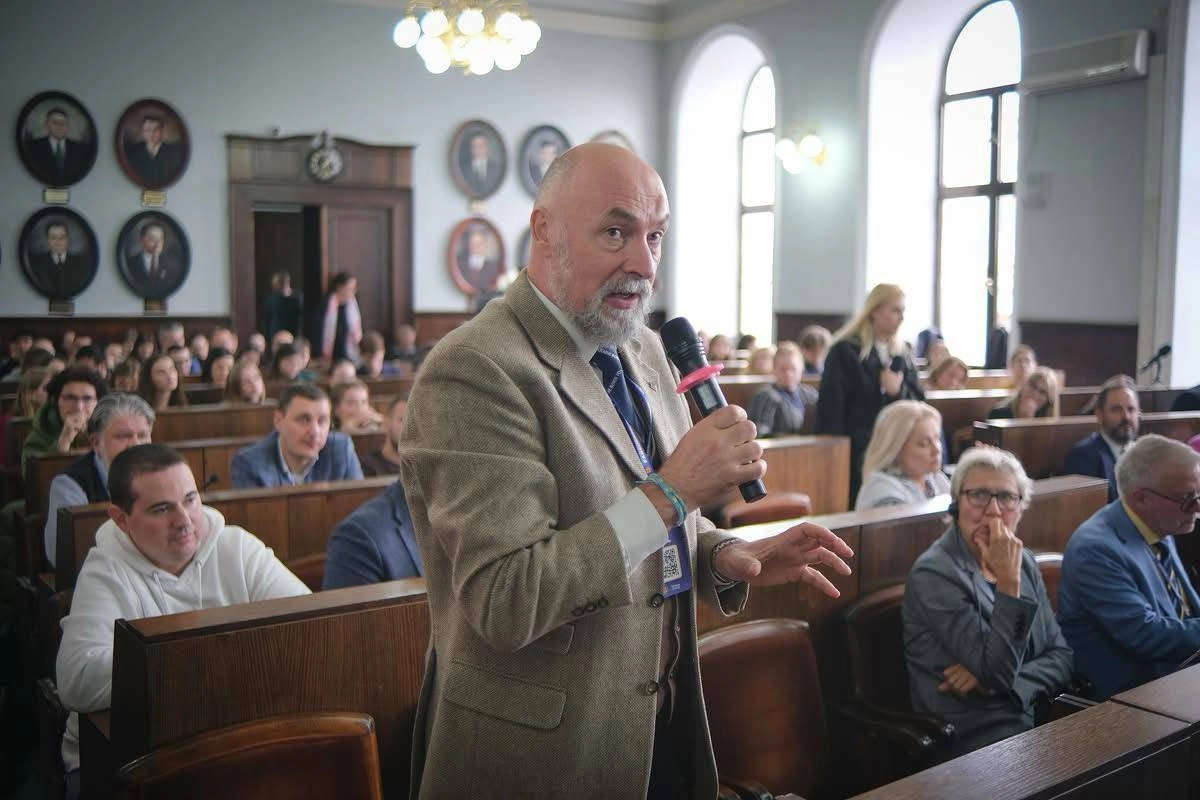
Ihor Zhaloba during a public speech (Photo provided by Ihor Zhaloba)
Your prediction – over what period of time could this happen?
In 1916, Lenin set out to provoke a revolution in Russia. At that time, he had been in political exile for many years. Significant resources were allocated in an attempt to mobilize the population – but nothing happened. Then, completely unexpectedly, February 1917 arrived. No one could have foreseen that a revolution would begin in Russia at that moment.
Therefore, despite all the current enthusiasm for political forecasting, I would say this: you can never fully understand human nature or predict its reactions – especially on a mass scale.
What prompted you to volunteer in the first days of the full-scale invasion?
On the night of Dec. 11–12, 2013, I was on Instytutska Street during the first attempt to disperse the Maidan. When I saw the Berkut officers, I realized that I was not afraid – and that I wanted to fight. In that moment, I gained a sense of self-respect. It was also when I first felt a true sense of brotherhood, right there on the Maidan in 2013–2014.
For various reasons, I didn’t join the army when Russia began its campaign in Donbas, and I have always felt guilty about it.
For me, the question of whether I would go to war in 2022 never arose. By Feb. 24, everyone in my family already knew that I would volunteer. They knew I had been preparing – going to the park every day, training, getting ready.
I may be old-fashioned, but I believe that, first and foremost, this is a man’s responsibility. I have three women at home; I knew I had to protect them.
At the same time, I am a teacher, and I love working with students. For 30 years, I have been telling them: “Take responsibility – your future, your life, your country are in your hands.” So what then – should I have left and gone abroad?
For me, my students are like my children. Who, then, was supposed to stand up for them?
This is an existential war for me: either we win and build a highly successful Ukraine, or we lose – and the project of Ukraine, as we know it, will cease to exist. Because Russia will never let us go.
That’s why, on Feb. 25, I was already at the assembly point.