Adolescent British Army Ajax to restart at an infant ‘crawl’
The British Army's Ajax armoured vehicle will restart its trials programme, 12 years after a production contract was first signed.
Army Technology
75
4 min read
0 views
UK Minister for Defence Readiness says the vehicle’s noise and vibration levels were “below legal exposure limits” following investigation.
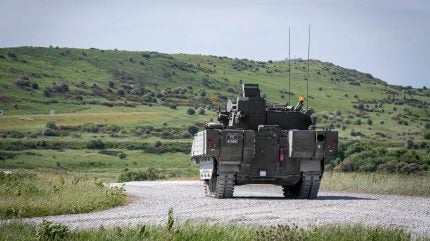
The Ajax programme was paused in 2021 due to injuries sustained by crews. Credit: UK MoD/Crown copyright
Ajax trials to restart slowly with tightly controlled “crawl-walk-run” testing
Problems blamed on multiple issues, not one root cause
MoD sticks with Ajax due to sunk costs and delivered vehicles despite value and obsolescence concerns
The 12-year-old Ajax armoured vehicle programme, yet to deliver a usable capability to the British Army, has been ordered to restart its trials programme at a crawl in order to shake off long-standing issues that have plagued the troubled platform.
Testing was suspended on Ajax in late-2025 after reports of another instance of excessive environmental shaking during exercises and testing, which followed a 2021 pause due to similar issues.
Providing a statement to the House of Commons on 28 April, UK Minister for Defence Readiness Luke Pollard revealed the Ajax programme was to restart, with a “limited number of vehicles” to be used under “very controlled circumstances” and maintenance regimes.
“I have now agreed to restart the acceptance of vehicles from General Dynamics,” Pollard said.
However, Pollard admitted “we know we have more to do” in trying to rebuild confidence in a platform and programme that has stumbled from pillar to post since its inception, having twice been suspended.
“That is why any return to training will also be very controlled with a crawl-walk-run staged progression ensuring safety is paramount throughout,” Pollard said.
According to Pollard, the Army Safety Investigation Team (ASIT) investigation found “no single causal mechanism” of the symptoms reported by personnel, but rather a “combination” of multiple factors.
Notably, Pollard said noise and vibration were “found to be below legal exposure limits”, with symptoms resulting from “incorrect track tensions and loose or missing engine deck bolts”, alongside other factors including “variability” in training and experience.
GDLS previously toldArmy Technology in 2026 that the Ajax platform was among the “most tested” combat vehicles produced.
Among the solutions posited during the 2021 pause was to require the crew to wear additional ear protectors to dampen the noise of the vehicle during operations, with the latest amendment to the Ajax’s tortuous journey through trials adding additional layers of training accountability.
Ajax: no other option
The UK National Audit Office reported as far back as 2022 the UK Ministry of Defence (MoD) had paid GDLS £3.167bn, with the company having built 324 hulls and assembled and completed factory acceptance testing of 143 units.
In the same report, the NAO warned the British Army was “becoming more dependent on Ajax” as successive defence reviews maintained the programme as a core capability.
Given all that has gone before, the UK MoD had little option but to proceed with the Ajax programme, despite purporting to have assessed potential alternatives during the testing hiatus, given the number of vehicles delivered and funding already sunk into its acquisition.
For the MoD, funding black holes and biting inflation has rendered any hopes of increasing capability a futile endeavour. It would be improbable in the extreme that the Treasury and Chancellor Rachel Reeves would have signed off on an Ajax replacement platform.
The best the MoD can do is deliver on the programmes that exist, which in this case means moving Ajax through at a snail’s pace, in the hope that an armoured cavalry capability is not needed in the short, and probably medium, term.
It is notable that Pollard states that the latest amendments required for Ajax will come at no additional cost, which could exceed £6.3bn ($8.5bn). Broken down, each Ajax variant armoured vehicle will cost nearly £11m, significantly more than the alternatives on the market.
Put another way, each Ajax armoured vehicle, on average, will require the same outlay as a Leopard 2A7 main battle tank.
This for a platform that runs to risk of being introduced intro service already obsolete, as the drone-dominated battlefields of Ukraine render Western notions of traditional combined arms warfare as being doctrine being consigned to the pages of history.
This is not a new, or cheap, programme, and the UK military has committed to it, hook, line, and sinker.