The TWZ Newsletter
Weekly insights and analysis on the latest developments in military technology, strategy, and foreign policy.
The B-52 departures, along with other assets returning home as of late, comes amid tense negotiations between the U.S. and Iran. The post B-52 Stratofortress Bombers Leave England After Iran War Deployment appeared first on TWZ.

The TWZ Newsletter
Weekly insights and analysis on the latest developments in military technology, strategy, and foreign policy.
U.S. Air Force B-52 Stratofortress bombers departed from RAF Fairford in the U.K. today, marking the end of a deployment to support the war against Iran. The flights come as the U.S. and Iran are still working toward a peace deal amid a shaky ceasefire occasionally marred by flare-ups of tit-for-tat attacks. However, there has been no mass bombardment of Iran since the April 8 ceasefire.
The departure was captured in video and still images by local aviation photographers, two of whom shared their work with us. Andy Riddle told us that six B-52s left RAF Fairford today in two waves of three. The first left at 10:15 a.m. local time and the second at about 2:20 p.m., noted Riddle, whose work can be found on his @Andyyyyrrrr X account.
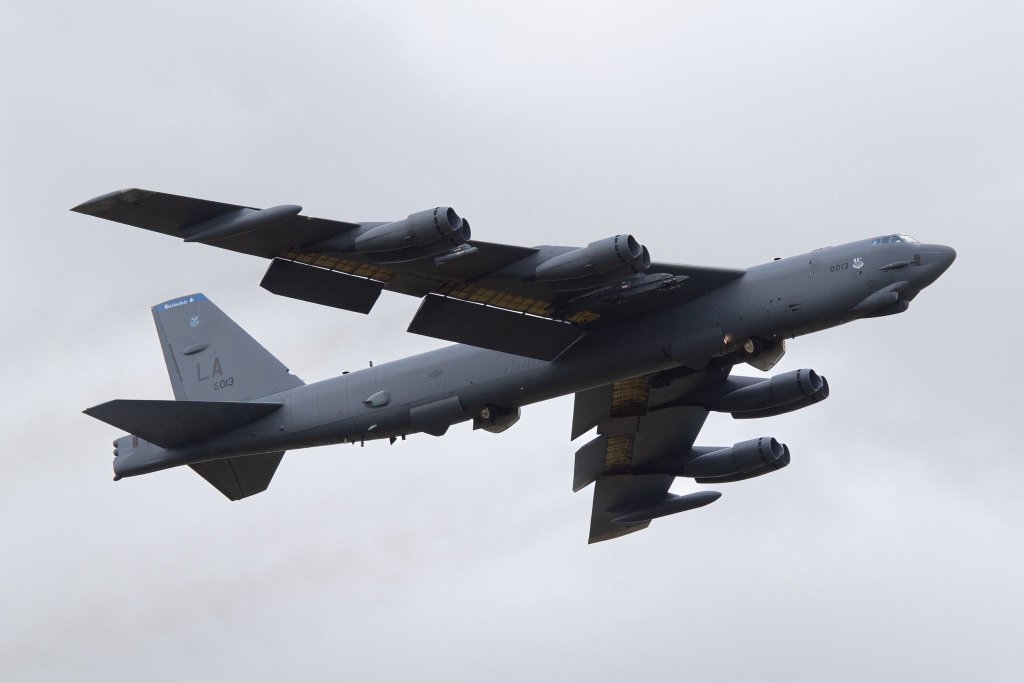
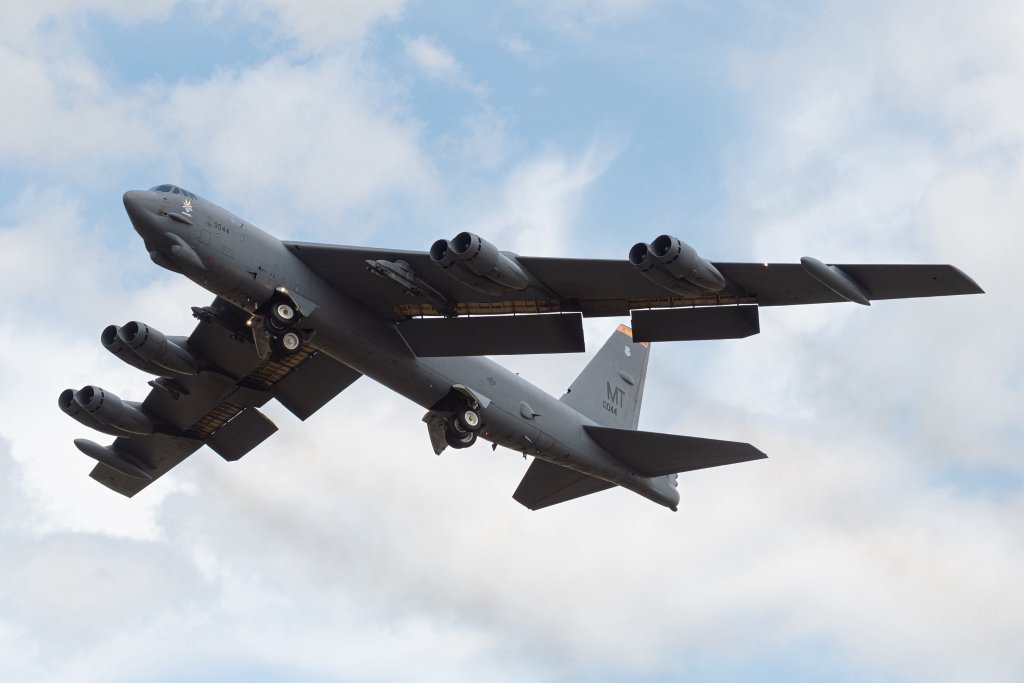
As we noted at the time, at least three of the bombers arrived at Fairford on March 8. It’s unclear when the others arrived. Both U.S. Central Command (CENTCOM) and Air Force Global Strike Command (AFGSC) declined comment.
In our previous reporting, we pointed out that during their time at Fairford, the B-52s operated at a high tempo, striking targets inside Iran. All told, the U.S. claims it struck 13,000 targets, though there is no way for us to know how many involved B-52s from Fairford.
You can see one of those jets leaded with stealthy JASSM cruise missiles in a photo shared with us by another local aviation photographer, who uses the @Saint1Mil X account.
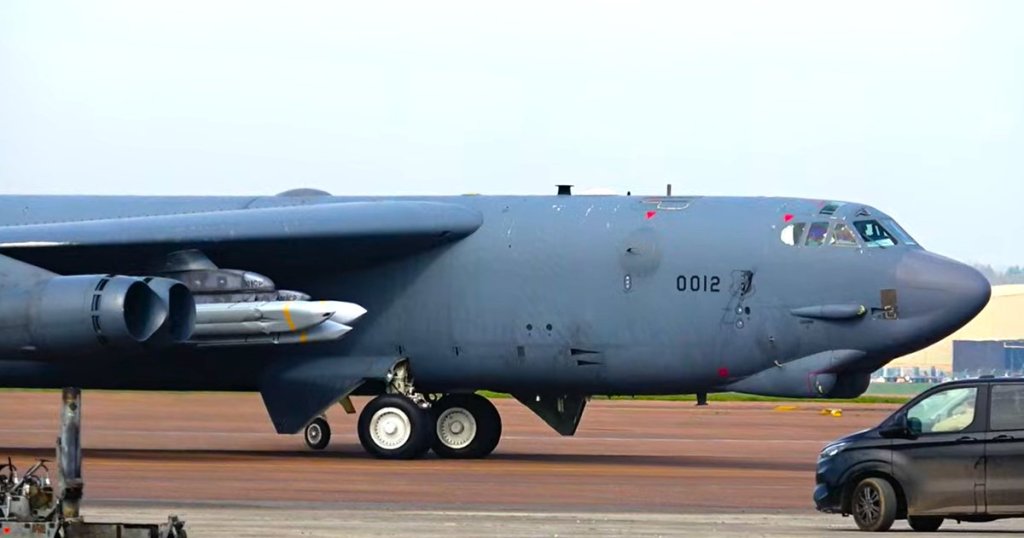
Meanwhile, a dozen B-1 Lancer bombers remain at the base, according to @Saint1Mil.
Since the military won’t comment, we can’t say for sure why the BUFFs left Fairford, but the move comes after both the U.S. and Iran promised to hold off on further tit-for-tat strikes after the latest round that threatened the fragile ceasefire.
The flights also took place on a day when the U.S. and Iran concluded a round of indirect talks. However, there were no signs that the parties made headway toward a lasting peace. Instead, they focused “on issues that they had supposedly resolved two weeks ago,” Reuters reported.
“Sources said negotiators for the two countries spent two days in Doha discussing maritime traffic in the Strait of Hormuz and financial incentives for Iran, two pillars of the initial agreement they signed in June, rather than more difficult topics that framework was supposed to tee up.”
The most difficult of these are the future of Iran’s nuclear ambitions and its stockpile of enriched uranium.
Despite the ongoing talks, President Donald Trump has repeatedly threatened to resume bombing Iran. He also has “weighed a return to all-out war with Iran, holding multiple conversations in recent days with Defense Secretary Pete Hegseth and Chairman of the Joint Chiefs of Staff Gen. Dan Caine on more strikes, but has decided to stick with diplomatic talks for now,” The Wall Street Journal reported, citing U.S. officials familiar with the discussion.
NEW: President Trump has weighed a return to all-out war with Iran, holding multiple conversations in recent days with Defense Secretary Pete Hegseth and Chairman of the Joint Chiefs of Staff Gen. Dan Caine on more strikes, but has decided to stick with diplomatic talks for now,…
— Lara Seligman (@laraseligman) June 30, 2026The departure of the B-52s won’t preclude Trump from ordering a new round of strategic aviation attacks. Aside from the remaining B-1s, the Air Force can launch B-52s, as well as B-2 and B-1 bombers from the U.S. to strike Iran as it did during Epic Fury. However, having the B-52s stationed at a base like Fairford much closer to the action helps to cut down on flight times, wear and tear on the aircraft and crews, and increases the generation of sorties.
As we have frequently reported, given that the U.S. began building up forces in the region in January, many of the ships, aircraft and troops will have to ‘retrograde’ out of the CENTCOM area of responsibility in the coming weeks and months. We’ve already seen aircraft like A-10 Thunderbolt II close attack jets, F-22s, F-15Es and other assets return from the region. As a result, the future of the American footprint there remains a question mark even as negotiations continue. Reinstating a large force once it has been even partially drawn down, assuming there is the will to do so, would take time and would put extreme stress on a force structure that has seen constant surges of deployments over the last year.
Contact the author: howard@twz.com

Over the past day, Russian forces used drones to attack enterprises, residential buildings, and a gas station in Ukraine’s Chernihiv region.
Russia launched a massive overnight strike on Kyiv using ballistic and cruise missiles along with drones. All districts of the Ukrainian capital sustained damage. By the morning of July 2, at least 13 people had been killed and more than 80 wounded.

Ukraine’s Defense Forces struck one of Russia’s largest oil refineries in Kstovo, reportedly damaging a key processing unit and sparking a fire. The military also hit a Russian UAV warehouse in Zaporizhzhia, a logistics bridge in Luhansk, and a command post in Kharkiv regions.

President Volodymyr Zelensky said Russia had launched more than 70 missiles and nearly 500 drones in a massive overnight attack on Ukraine, with Kyiv as the primary target.