The TWZ Newsletter
Weekly insights and analysis on the latest developments in military technology, strategy, and foreign policy.
The Pentagon has pushed back on reports of a massive upcharge in fees, but SpaceX's products have become largely essential to U.S. operations. The post Cost To Link LUCAS Kamikaze Drones To Starlink Highlights Pentagon’s Ever-Growing Dependence On SpaceX appeared first on The War Zone.

The TWZ Newsletter
Weekly insights and analysis on the latest developments in military technology, strategy, and foreign policy.
The cost to connect each of the U.S. military’s Low-Cost Uncrewed Combat Attack System (LUCAS) one-way attack drones to space-based networks has risen from $5,000 to $25,000 a month, according to a new report. This is said to be the result of a switch from using the commercial Starlink network to its more secure government-focused cousin Starshield, which SpaceX demanded after extensive use of LUCAS drones in the latest conflict with Iran. The Pentagon has pushed back on the story, but it still highlights how critical SpaceX’s networks and other space services have become across the U.S. government, which TWZ has previously explored in detail.
Reuters first reported on the price increase to connect the datalinks on LUCAS drones to SpaceX’s space-based networks earlier today. The story cites anonymous sources, as well as Pentagon documents the outlet says it reviewed. This follows the recent announcement that the Pentagon is working to make LUCAS more autonomous with new artificial intelligence (AI) driven swarming capabilities, which could impact future connectivity demands.
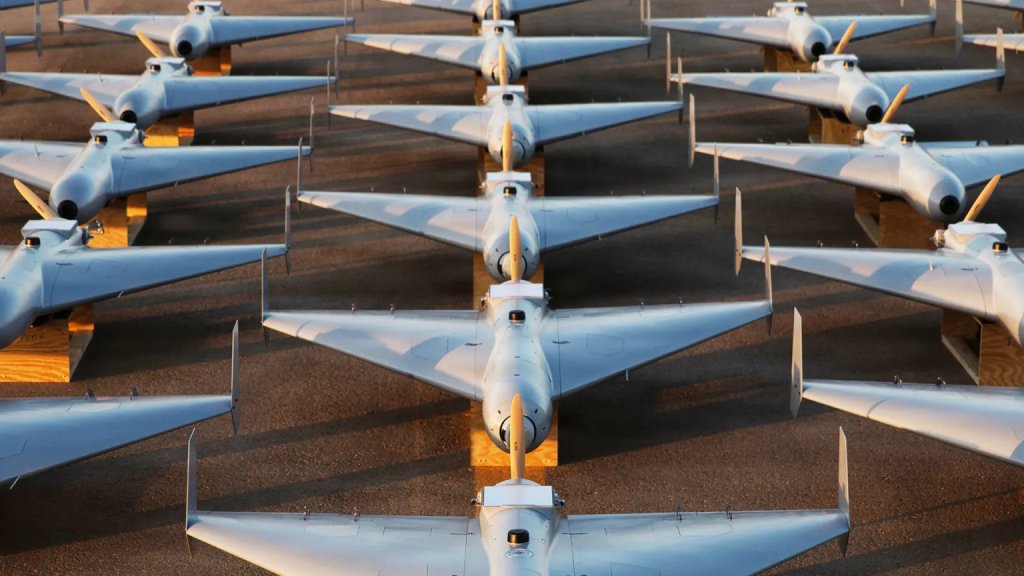
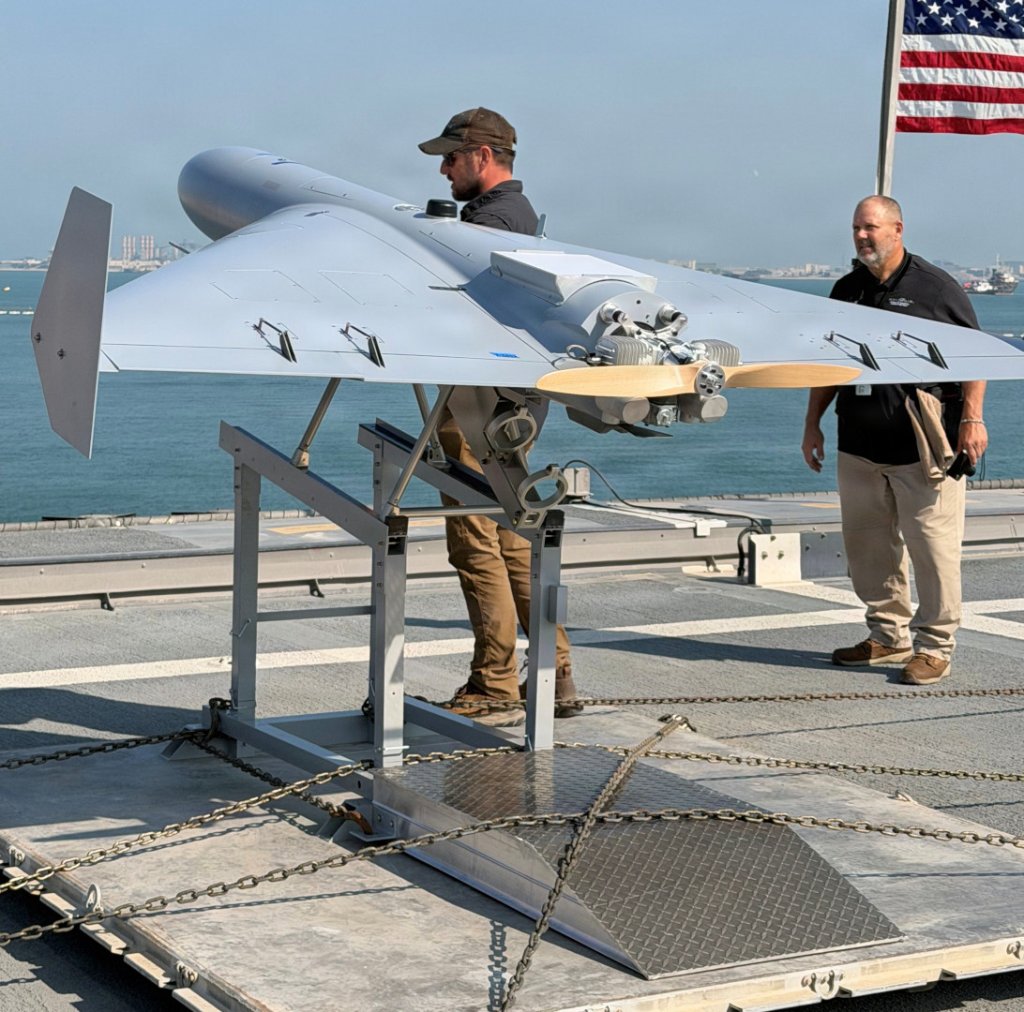
Produced by SpektreWorks, LUCAS was developed in close cooperation with the U.S. military. It is a reverse-engineered clone of the Iranian-designed Shahed-136 and has a unit cost of around $35,000. The American drone already comes in multiple variations, and there is a related target drone design for use in training and test and evaluation activities. Versions fitted with miniature beyond-line-of-sight satellite datalinks, allowing for dynamic control and for their progress to be otherwise monitored after launch, have been a fixture in official pictures of LUCAS drones in the Middle East.
In the video in the social media post below, the satellite communications terminal can be seen hanging from a cord on a LUCAS drone said to have been recovered largely intact in Iraq.
The U.S. military announced it had begun fielding LUCAS drones operationally last December with a special operations-led task force in the Middle East. LUCAS’s official combat debut came in the opening wave of strikes on Iran on February 28. U.S. Navy Adm. Brad Cooper, head of U.S. Central Command, subsequently described the one-way attackers as an “indispensable” component of that operation, dubbed Epic Fury.
“Within weeks of the United States launching its bombing campaign, SpaceX executives met Pentagon officials and argued the military had been paying about $5,000 for connection per terminal while effectively using a higher tier of service worth closer to $25,000,” according to Reuters. “SpaceX argued the LUCAS drones were operating under conditions that aligned more closely with its aviation tier subscription rather than a lower priced land or mobility service. Pentagon officials argued that the $25,000 price tag – a monthly fee – was designed for aircraft, not kamikaze drones that used Starlink connection for a matter of minutes or hours.”
“The Pentagon, which was ramping up strikes on Iran, ultimately agreed to pay SpaceX’s proposed price increase,” Reuters‘ report added.
The story also said this reflected broader “tensions” between the Pentagon and SpaceX that have been growing recently over Starlink fees.
“The Fake News media has the story wrong, again,” top Pentagon spokesperson Sean Parnell subsequently wrote in a post on X. “The claims in this article are simply not based in reality and do not reflect the close, effective collaboration between our teams.”
The Fake News media has the story wrong, again. @SpaceX remains a strong and valued partner to the Department of War.
The claims in this article are simply not based in reality and do not reflect the close, effective collaboration between our teams. https://t.co/872Maa5FX2
When reached for comment by TWZ earlier today before Parnell’s post, the Pentagon did not directly address Reuters‘ report.
“The Department of War is committed to fostering a competitive environment for commercial satellite communications and is conducting comprehensive market research to continuously monitor commercial offerings that align with government requirements,” a Pentagon official told us. “We are actively engaging with industry to identify innovative solutions and new entrants, ensuring acquisitions are inclusive of a diverse range of capable vendors.”
“The Commercial Satellite Communications Office is working on additional options with other proliferated low earth orbit partners as part of its strategy to leverage the unprecedented capabilities provided by the commercial SATCOM industry,” that same official added. “The U.S. Space Force is operating in accordance with the terms and conditions of its contracts.”
TWZ has also reached out to SpaceX for more information.
There is a separate network called Starshield, which is operated by the US government. This is not under SpaceX control.
Though described as a “monthly fee,” Reuters‘ report indicates that the U.S. military pays the $25,000 only once to employ a LUCAS drone. As the piece points out, the Pentagon reportedly argued that it should get to pay the lower $5,000 rate because it was only using the network to support LUCAS in timeframes measured in “minutes or hours.” This is also in line with Reuters describing the added cost as effectively approaching doubling the LUCAS drone’s $35,000 unit price.
The entire point of these one-way-attack drones is to offer a lower-cost complement to traditional exquisite long-range strike munitions. The Tomahawk cruise missile, the unit cost of a current-generation version of which is generally said to be in the $2 to $2.5 million range, is often used as a point of comparison, although they are far from equal in many ways. The underlying argument for LUCAS also relies on the drone being relatively cheap and easy to produce, as well as employ in large volumes. TWZ laid all of this out in a detailed case for the Pentagon acquiring exactly these kinds of drones in mass, which we published just three months before LUCAS was confirmed to be in operational service.
A combined price tag of some $60,000 (the unit cost plus one month’s fee to connect to Starshield, as reported by Reuters) would still be far less expensive than the cost of a single Tomahawk. Using Starlink/Starshield terminals to begin with, beyond their connectivity advantages, offers the benefit of miniaturized high-bandwidth hardware that is being produced at a commercial scale.
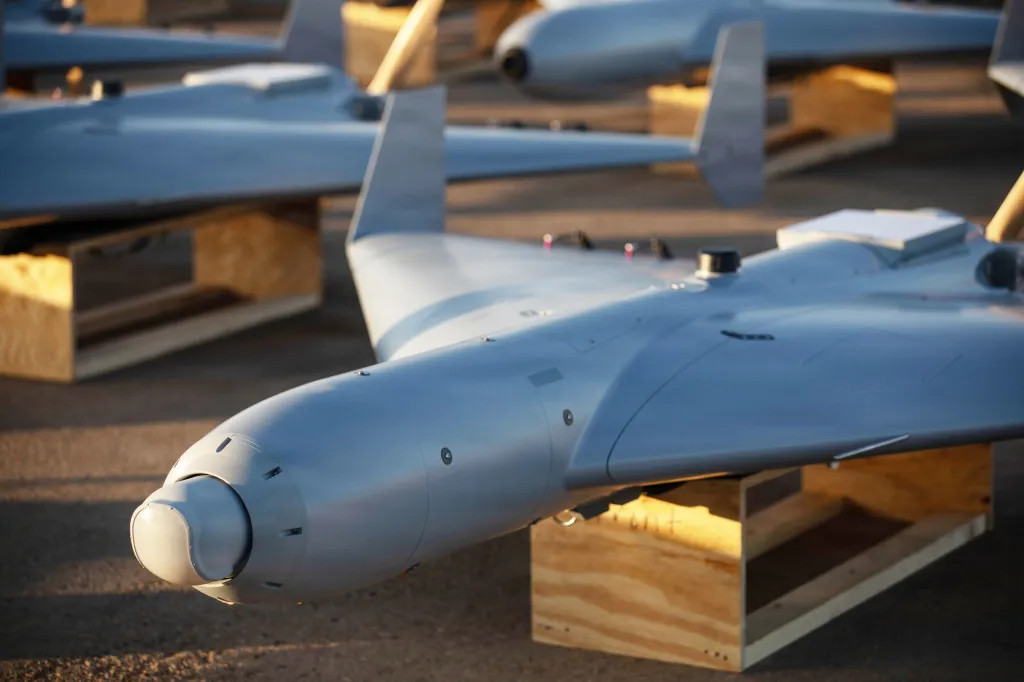
Plans to make LUCAS more autonomous through the addition of new swarming capabilities could affect future network connectivity requirements for the drones. This will be enabled by the integration of Shield AI’s Hivemind autonomy software, as you can read more about here.
As TWZ recently wrote:
“For the time being, the U.S. military demands a human operator is ‘in or on the loop’ for kinetic or otherwise potentially deadly actions, as opposed to letting autonomous weapons choose what targets to attack on their own without any extra authorization. While less controversial morally, this can also be a tactical hindrance, slowing the swarm’s potential and adding complexity and vulnerabilities to its operations. The debate around this choice will only get more heated as adversaries bypass this elected restriction in order to get an upper hand in future combat scenarios.”
“As we pointed out in our initial reporting on LUCAS’s emergence, the fact that some of the LUCAS drones already include miniature SATCOM terminals is very noteworthy. After all, ‘human in the loop’ swarming would not be possible without this form of communications at the beyond line-of-sight ranges these drones fly. At the same time, an entire swarm can be controlled in this manner, even if just a handful are equipped with SATCOM terminals. While a swarm can be mesh networked within line-of-sight, it has to relay all the important information back to an operator. By using some of the drones as SATCOM relay nodes, the entire swarm can be controlled remotely from most places on the planet.”
“Regardless, the Hivemind AI pilot will allow appropriately equipped LUCAS drones to perceive their environment, make decisions, and act autonomously without continuous human input. Unlike conventional autopilots tied to fixed flight paths, Hivemind is designed to dynamically adjust mission plans, react to unforeseen conditions, avoid obstacles, and carry out complex tasks with minimal operator oversight.”
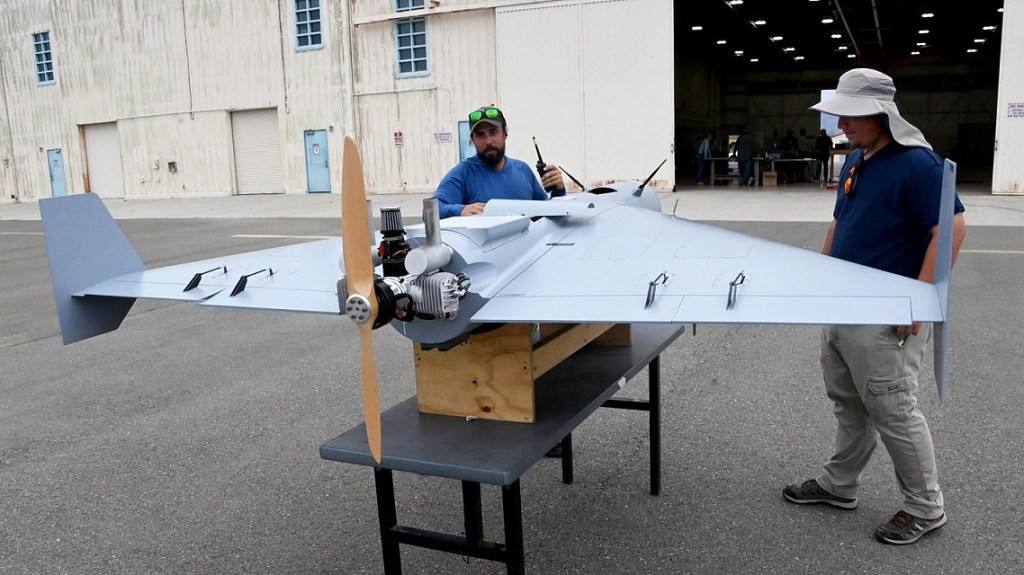
An increase in fees to connect individual SATCOM terminals to SpaceX’s networks, as well as cost savings on hardware, might further push the Pentagon toward a hub-and-spoke mesh-like networking arrangement like the one described above. LUCAS drones could also be employed in other contexts where satellite connectivity throughout the course of a mission might not be required, including if used essentially as fire-and-forget missiles aimed at fixed target coordinates. A satcom terminal would not be necessary at all for this kind of mission set, although it would be beneficial.
There is also a question about the total bandwidth that might be required to support swarms of LUCAS drones. From Reuters‘ reporting today, the increased load on its networks was a central factor in SpaceX’s demands for higher fees after strikes on Iran began.That being said, as already mentioned, Starlink/Starshield terminals are already designed with relatively high bandwidth use in mind.
These same considerations will apply to current and future programs that rely heavily on SpaceX’s satellite communications networks.
Specific cost figures aside, the LUCAS drone’s reliance on Starlink/Starshield underscores SpaceX’s dominance in the satellite communications market globally. It also highlights how essential the company’s space-based networks have already become for U.S. military. TWZ explored this reality in detail amid open feuding between President Donald Trump and Elon Musk last year. The relationship between Trump and Musk has since rebounded, with the latter accompanying the President on his recent state visit to China.
Reuters reported today that there are some 10,000 satellites in SpaceX’s constellation supporting Starlink and Starshield, and that this represents more than 60 percent of all satellites currently in orbit. The company’s space-based networks, far and away, dominate the commercial satellite communications space globally. Offerings from competitors like OneWeb and Amazon Leo are more limited in scale and scope.
This is reflected in the U.S. government’s ever-growing use of Starlink/Starshield on aircraft, ships, and in settings on land. This includes integration on some very high-value assets, including the U.S. Marine Corps’ VH-92 Patriot presidential helicopters and U.S. Navy aircraft carriers. There has also been a steadily growing push to use these networks to support tactical operations, as now highlighted by the link to LUCAS. The U.S. military had first demonstrated the ability to use Starlink to transmit targeting data years ago.
The U.S. government’s increasing use of Starlink/Starshield has already prompted operational security questions, even just in the context of supporting day-to-day peacetime operations, as you can read more about here. Starshield is designed to be more secure to help address these concerns for government customers.
At the same time, heavy use of Starlink on both sides of the conflict in Ukraine, including as a means of guiding one-way attackers in the air and at sea, has further underscored potential risks associated with the use of the networks in tactical scenarios. SpaceX and CEO Musk have faced particularly significant criticism in the past over limiting some Ukrainian use of the network. Actions SpaceX took earlier this year to block unregistered Starlink terminals also had major consequences for Russian forces, which were sent scrambling to find alternatives to fill the massive resulting communications gaps.

What SpaceX might have been prepared to do if the Pentagon did not agree to pay increased fees to support LUCAS is unknown. We also do not know what kind of protections are currently baked into U.S. contracts with SpaceX to prevent government users from being suddenly disconnected without warning. Regardless, as noted earlier, the Pentagon could deploy LUCAS swarms with just a handful of drones equipped with terminals to relay the critical info needed to control the rest of the formation, and LUCAS can still be used as a fire and forget weapon without any beyond line-of-sight connectivity, although this would greatly curtail it’s flexibility and, in some cases, its efficacy.
As the Pentagon official noted to TWZ today, there is a push to explore commercial alternatives to Starlink/Starshield and promote further competition in this space. At the same time, part of the attractiveness of Starlink/Starshield for the U.S. government has been the relatively low costs and other benefits associated with leveraging such well-established networks, as well as the knowledge base that comes along with that pedigree. Just today, the U.S. Space Force announced it had finalized a new Other Transaction Authority (OTA) agreement with SpaceX, valued at $2.29 billion, for work on the Space Data Network (SDN) Backbone program. The SDN is tied to work on new space-based sensing and targeting capabilities, particularly for missile defense, which could now feed into the Golden Dome initiative.
Beyond satellite communications, SpaceX is reportedly also now a critical player in U.S. military efforts to increasingly move air and ground moving target indicator (AMTI/GMTI) tasks into orbit.
On top of all this, SpaceX is also by far the top provider of space launch services globally, as well as other space-related services, including for the U.S. government. The core elements of Golden Dome, including the sustainment of planned batteries of space-based interceptors, require reliable, routine access to space at a frequency that only SpaceX can provide within budget constraints
SpaceX looks set to remain a dominant force in this market space worldwide for the foreseeable future, and it continues to expand its presence, driven heavily by commercial demand. The company’s government contracts, though substantial, only account for around a fifth of its annual revenue, according to Reuters.
Despite the Pentagon’s response to the particulars of Reuters’ story today, being so heavily reliant on one provider for critical technologies still raises important questions not just for LUCAS, but for other efforts across the U.S. military that rely on robust and secure satellite communications connectivity.
Contact the author: joe@twz.com

NATO is reportedly preparing plans to rapidly deploy additional corps-level forces to defend the Baltic states in case of conflict with Russia, according to Reuters. The move follows Moscow expanding legal provisions for overseas troop use and renewed rhetoric over the rights of Russians in Latvia,
Yurii Ihnat told Radio NV that Ukraine hopes its SAMP/T air defense systems will be capable of intercepting ballistic missiles, though such use has not yet been confirmed in combat on May 27.

Due to new Russian attacks, as of the morning of May 27, power outages have affected consumers in five regions; electricity consumption has increased.
Russia is currently incapable of launching a large-scale offensive against NATO countries, but warned the alliance must remain prepared for sabotage and provocations, Radosław Sikorski said on May 27.