The TWZ Newsletter
Weekly insights and analysis on the latest developments in military technology, strategy, and foreign policy.
BAE has delivered two AMPV 30 variants to the Army to help test them, but the service has no plans to buy this version. The post No, The Army Isn’t Fielding New AMPV Armored Vehicles With 30mm Cannons appeared first on The War Zone.

The TWZ Newsletter
Weekly insights and analysis on the latest developments in military technology, strategy, and foreign policy.
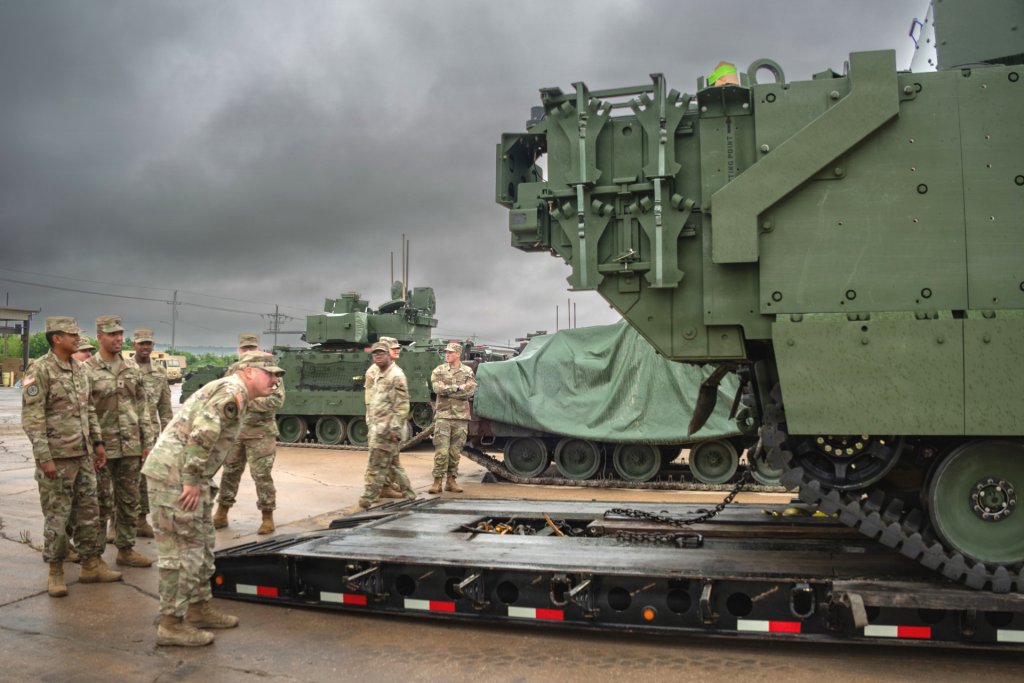
The U.S. Army’s 1st Cavalry Division turned heads yesterday with social media posts that seemed to suggest the unit had begun fielding a new version of the Armored Multi-Purpose Vehicle (AMPV) armed with a turreted 30mm cannon. Multiple outlets and large social media channels subsequently reported the news this way. TWZ asked the Army and defense contractor BAE Systems for more information, and both have clarified that the two AMPV 30s delivered this week are company-funded prototypes that are only set to be tested.
The Army will evaluate the AMPV 30s as part of the Transformation In Contact (TIC) 2.0 initiative. TIC efforts, in general, have been focused on helping accelerate the fielding of new and improved capabilities, as well as tactics, techniques, and procedures to go with them. However, presently, the service has no plans to acquire this variant of the AMPV.
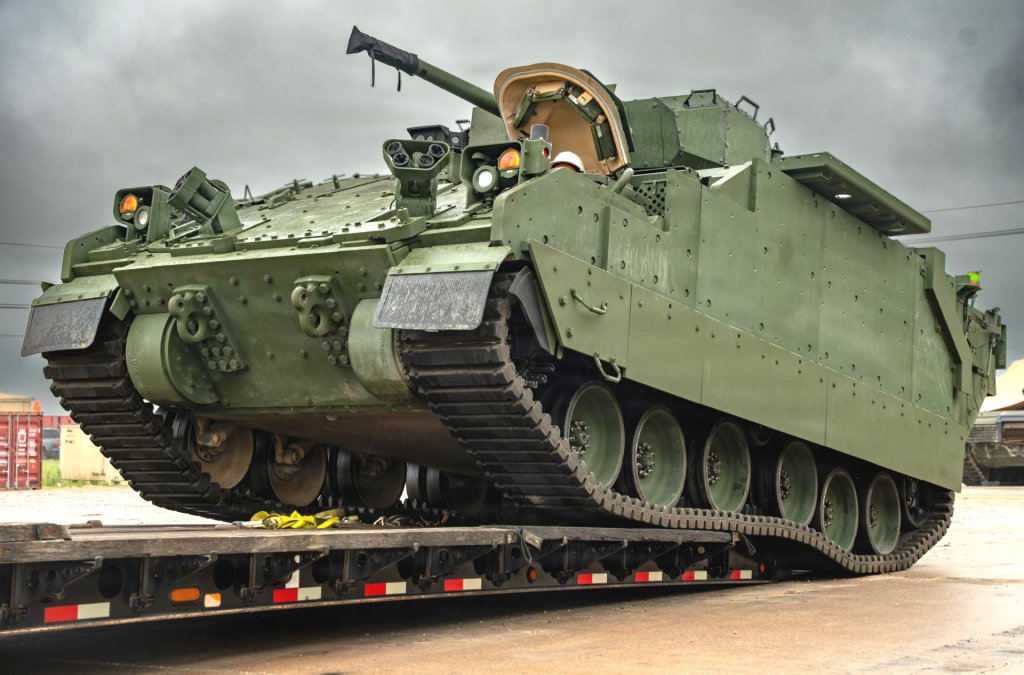
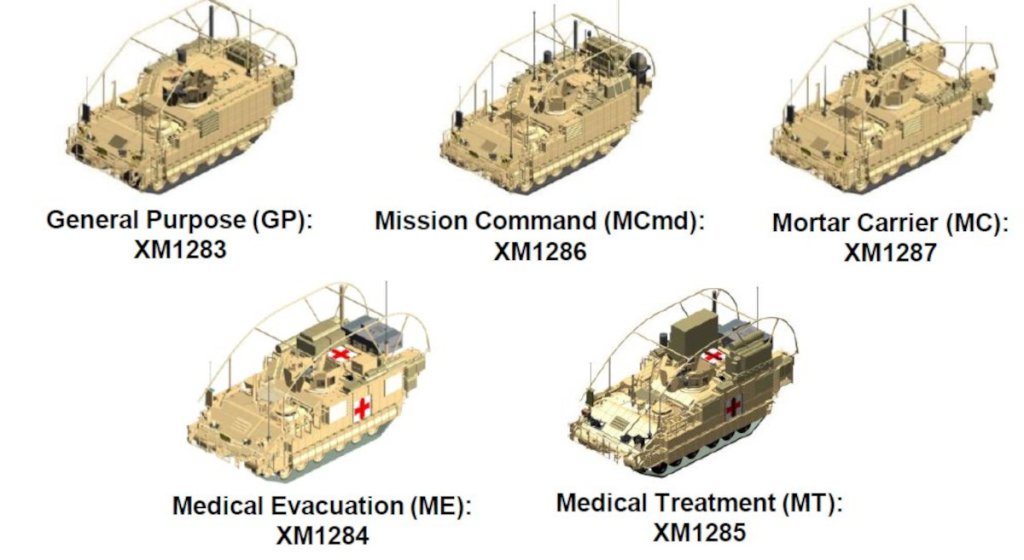
The Army selected the Bradley-based AMPV as the replacement for its long-serving M113 family of armored personnel carriers and related vehicles in 2014. The service’s current program of record includes five AMPV variants, all of which are turretless. The M1283 general-purpose personnel carrier, the M1284 medical evacuation vehicle, the M1285 medical treatment vehicle, the M1286 command and control version, and the M1287 mortar carrier vehicle.
So it came as something of a surprise when the 1st Cavalry Division announced the arrival of the AMPV 30s yesterday.
“Big news! The 1st Cavalry Division has just received the Army’s FIRST AMPV 30mm prototypes,” a post from the 1st Cavalry Division’s official account on X had declared. “Our troopers are leading the charge once again by integrating this next-generation capability into the formation and transforming how armored Divisions fight.”
Big news! The 1st Cavalry Division has just received the Army’s FIRST AMPV 30mm prototypes. Our troopers are leading the charge once again by integrating this next-generation capability into the formation and transforming how armored Divisions fight. #BeLegendary #PegasusCharge pic.twitter.com/Ny1gDRA796
— 1st Cavalry Division (@1stCavalryDiv) April 30, 2026The 1st Cavalry Division, which is based at Fort Hood in Texas, also shared a set of pictures of the vehicles yesterday through the U.S. military’s Defense Visual Information Distribution Service (DVIDS) website. “The AMPV features a remote 30mm turret capable of using programmable airburst ammunition, designed to target small drones and unarmored ground threats, embodying the Transforming in Contact initiative to dominate the modern battlefield,” per a common caption attached to all of these images.
As an aside, some were quick to point out a certain irony in the idea that the Army had fielded a new version of the AMPV with a cannon-armed turret. An AMPV in this configuration looks very similar to the Bradley on which the original turretless variants were based.
Despite the phrasing of the 1st Cavalry’s social media posts, the AMPV 30s are “an internal research and development type effort from BAE Systems,” an Army spokesperson told TWZ today. “It is not something the Army procured, nor is there a requirement for the system at this time.”
“This system will be participating in TIC, but again, there is no Army requirement,” the spokesperson added.
“BAE Systems provided two prototype AMPV 30s to the U.S. Army to participate in the upcoming Transformation in Contact (TiC) 2.0 initiative,” the company told TWZ in a separate statement. “The vehicles were developed through self-investment and based on the proven chassis of the Armored Multi-Purpose Vehicle (AMPV). Over the next several months, the Army will run the AMPV 30s through field evaluations to benchmark the platform’s capabilities against what Soldiers require to maintain advantage on the modern battlefield.”
“Our mission was speed and innovation, and we delivered beyond expectations. With today’s battlefield evolving faster than ever, it’s paramount that Soldiers have the capabilities they need to win the fight,” a BAE Systems spokesperson also told TWZ today. “Throughout this effort, our team demonstrated how we can integrate new design solutions in a time-effective and more cost-efficient manner for the Army.”
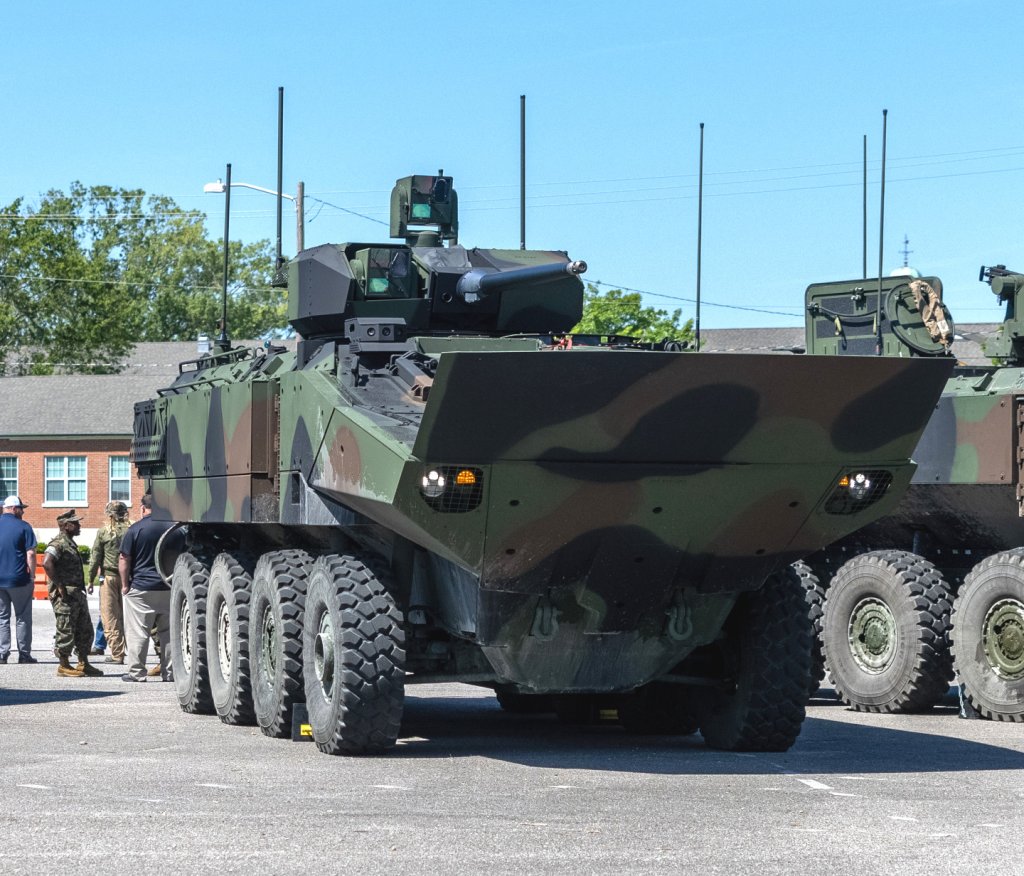
BAE Systems also confirmed that the turret on these up-gunned AMPVs is the Medium Caliber Turret-30 (MCT-30) from Norway’s Kongsberg Defense. This is a remotely operated design that contains a Mk 44 Bushmaster II automatic cannon, as well as a fire control suite that includes electro-optical and infrared cameras. It is interesting to note that the Marine Corps is in the process of acquiring a variant of its 8×8 wheeled Amphibious Combat Vehicle (ACV) equipped with MCT-30. BAE is also the prime contractor for the ACV family. In addition, the Army has two variants of the 8×8 Stryker wheeled armored vehicle armed with XM813 cannons, which are based on the Mk 44, but neither uses the MCT-30 turret.
An AMPV equipped with the MCT-30 was first shown publicly back in 2024. The turret in that case was also fitted with a Javelin anti-tank guided missile launcher. BAE Systems also previously announced the development of what it calls the External Mission Equipment Package (ExMEP) for these vehicles, which consists primarily of a new top plate that allows for the relatively rapid integration of various turrets. The company has said in the past that ExMEP can accommodate “more than 30 turret systems.”
In 2024, BAE had delivered another AMPV variant to the Army for evaluation, which was armed with a turreted 120mm rapid-firing mortar called NEMO (a contraction of “NEw MOrtar”). Patria in Finland, in cooperation with Kongsberg, supplied the mortar turret. The Army has not yet moved to acquire that version, either.
What interest the Army might ultimately have in the AMPV 30 remains to be seen. The service continues to operate Bradley variants and is working to update them with new capabilities, including Iron Fist active protection systems (APS). A test last year also demonstrated the ability of the vehicle to fire a loitering munition from its TOW missile launcher, which could open up new operational possibilities. The Army is also pursuing a separate replacement for the Bradley, tentatively designated the XM30, which will be armed with a larger 50mm cannon as its main weapon.
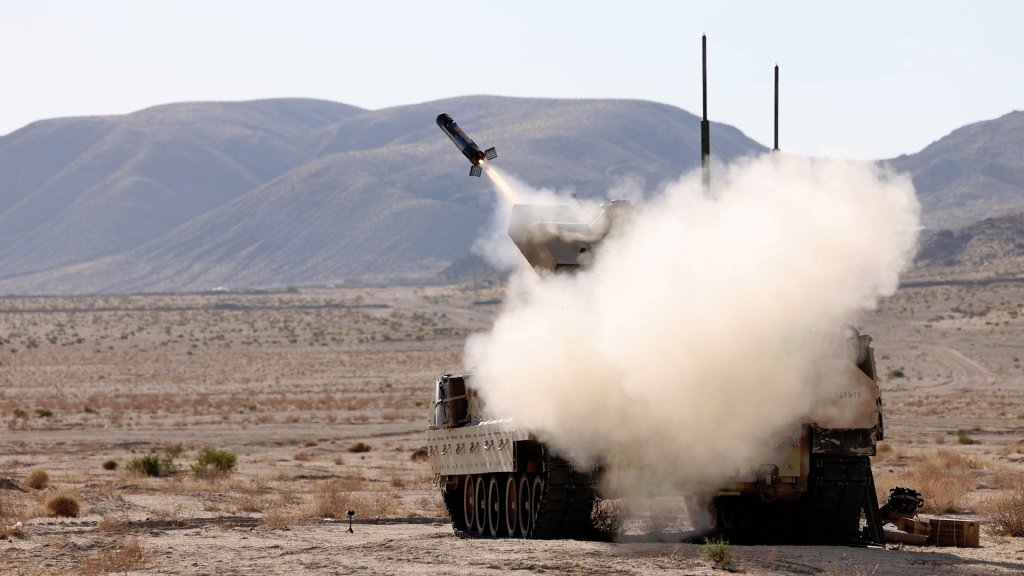
The mention of the counter-drone mission in relation to the prototype AMPV 30s delivered to the 1st Cavalry Division could point to a potential use case for the Army. The service previously had an air defense variant of the Bradley, the M6 Linebacker, which had a launcher for Stinger short-range heat-seeking surface-to-air missiles rather than TOWs. The last M6s were converted into standard M2 Bradley Infantry Fighting Vehicles in the mid-2000s, and no direct replacement for that capability was ever acquired.
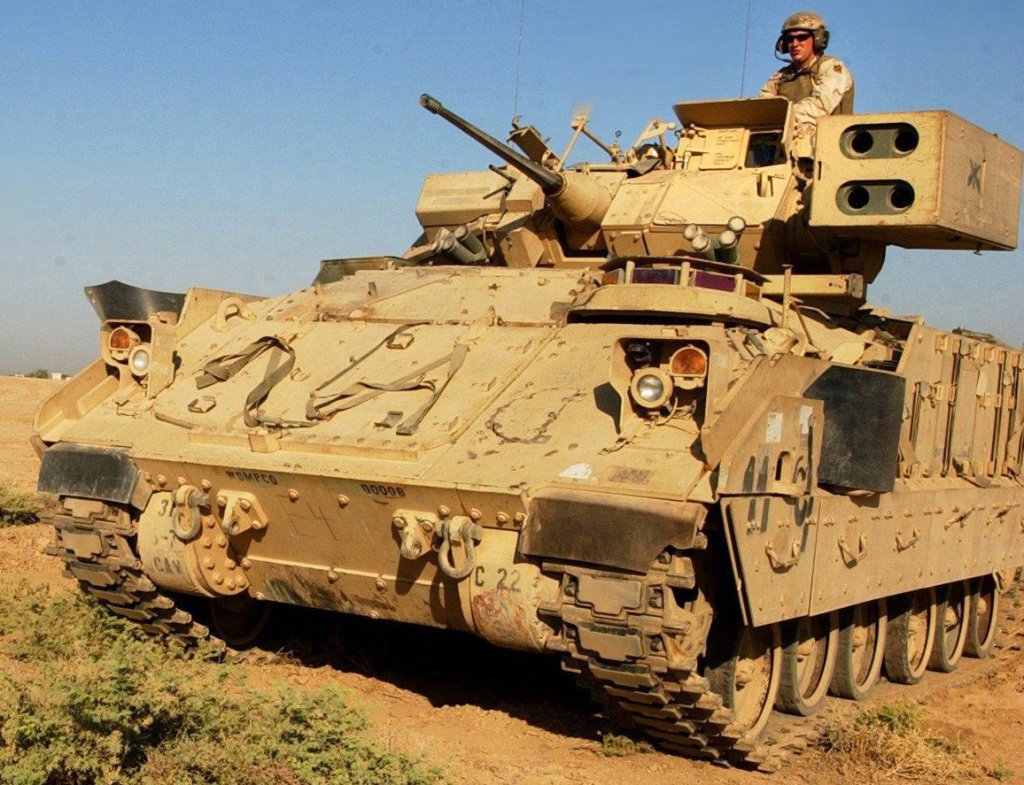
In the meantime, the threat posed by drones has continued to grow, prompting a surge in demand across the U.S. military and elsewhere globally for new capabilities to shoot them down or otherwise defend against them. The ongoing conflict in Ukraine, in particular, has underscored the critical importance of protecting heavy armored vehicles from uncrewed aerial attackers.
A Ukrainian drone from the 79th Air Assault Brigade drops a 40mm HEDP grenade on a Russian UR-77 Meteorit, causing a catastrophic payload explosion. pic.twitter.com/SsaQCKXsNL
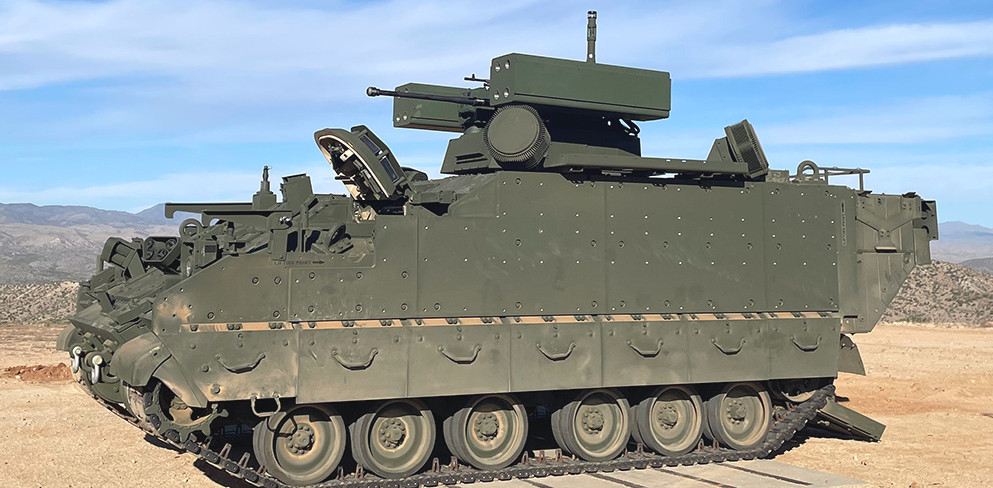
— OSINTtechnical (@Osinttechnical) August 14, 2023BAE Systems has previously shown another version of the AMPV in a more dedicated air defense configuration with a turret armed with a 30mm XM914 cannon, which fires a smaller round than the XM813, as well as Stinger missiles. The vehicle, seen in the picture below, also featured several small-form-factor radars to help spot and track incoming threats. An AMPV in a counter-drone or more general anti-air configuration would also be better able to keep up and otherwise operate with Army units equipped with other variants of that vehicle.
The Army could also have different demands for new, turreted AMPVs depending on how the XM30 effort continues to evolve. Designs from American Rheinmetall and General Dynamics Land Systems have been competing to secure that contract. However, a program pause and a new request for information for a different, but very similar-sounding vehicle earlier this year have raised questions about the XM30’s overall future.
Cost and other factors have scuttled several previous Bradley replacement efforts. If serious issues arise with the latest XM30 program plans, it might lead to at least a portion of the Bradley fleet ultimately being replaced by turreted AMPV variants instead.
A positive Army assessment of the AMPV 30 could be a boon for BAE, even if the service does not buy any of those vehicles, in the end, too. The combat effectiveness of older Bradley variants has recently been demonstrated in the conflict in Ukraine, and other potential customers could be attracted to the idea of a derivative with a new turret and other more modern features.
For now, anyway, the Army is set to put the AMPV 30 through its paces, but has no plans to buy any of them for its own use.
Contact the author: joe@twz.com

The president warned that Moscow is attempting to overwhelm air defenses with massive strikes, citing today’s deadly drone attack on a Kherson minibus as part of a “human safari.”

The number of people injured in this morning’s enemy attack on a bus in Kherson has increased to nine; one of the victims is a medical worker.

Washington warned that the conflict with Tehran has caused critical munitions shortages, potentially delaying weapons deliveries to European allies, Asian partners and Ukraine.

In the Chuvash Republic of the Russian Federation, a building belonging to an energy supplier in Alatyr and a power substation in Kanash caught fire on Friday night.