17 hours ago
Mitchell LabiakBusiness reporter
The G7 group of nations welcomes the idea of releasing oil in response to the surge in prices since the US-Israel war with Iran began

17 hours ago
Mitchell LabiakBusiness reporter

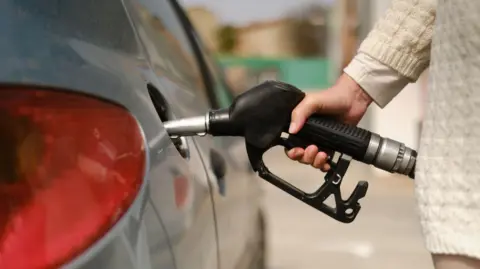 Getty Images
Dozens of countries have agreed to release a record amount of oil from their emergency reserves to try to tackle supply shortages and soaring prices.
All 32 of the International Energy Agency's (IEA) members — including the UK, the US, and many of the world's richest nations — will release 400 million barrels to combat what the group said were challenges "unprecedented in scale".
The US-Israel war with Iran has caused oil exports through the Strait of Hormuz, which carries 25% of global oil supplies by sea, to virtually stop and production in the region to slump.
The oil price is nearly a quarter higher than when the war began and experts say the IEA's move would only be a short-term solution.
The release is more than double the previous record amount released by the IEA's members following Russia's full-scale invasion of Ukraine in early 2022.
The IEA's member and associate countries represent two thirds of global energy production and 80% of consumption.
Member countries are required to keep 90 days' worth of their nation's oil use in reserve in case of global disruption.
Collectively, the members hold over 1.2 billion barrels in emergency stockpiles, with a further 600 million barrels of industry stocks held under government obligation.
Releasing a third of the stocks its governments hold is not something that it can repeat frequently.
The oil itself is not in a single place. For example, producers like Shell and BP keep stocks at terminals and refineries around the UK and can earmark stocks held elsewhere as counting towards their reserves.
When it is released, it does not mean a sudden flood of new oil starts moving.
Instead, producers will make more available in the market for refineries to order, though energy analysts have told the BBC that there is a shortage of refining capacity.
The other issue with releasing reserves is that it is not something you can do again.
"Once you release them, they don't exist," said Nick Butler, former head of strategy at oil giant BP.
Jorge Leon, an energy analyst at Rystad Energy, said the release "helps but it doesn't fully offset that disruption".
"Everyone knew there would be a release of emergency reserves [...] but prices haven't come down as much as you would expect," he added.
Meanwhile, the IEA's executive director Fatih Birol said the decision will not help the global gas market, which he described as "very challenging".
He said there are "few options" available to deal with a 20% slump in liquid natural gas (LNG) supplies caused by the conflict.
The benchmark UK LNG price has shot up around 70% since the conflict began, though it remains far from the heights it reached following the Russia-Ukraine war.
Energy Secretary Ed Miliband said: "The UK is playing our part in working with our international allies to address the disruption in oil markets."

Russian troops struck 14 settlements in the Kharkiv region over the past day, injuring six people.

Russian troops carried out nearly 120 strikes on 40 settlements in the Sumy region over the past 24 hours, killing two people and injuring another.

President Volodymyr Zelensky has arrived in Paris, where he is scheduled to meet with French President Emmanuel Macron.

On the evening of March 12, the Russian army attacked port infrastructure in the Odesa region with strike drones, damaging a food warehouse on the port territory.