The newly exposed Hamas files have forced Israel to confront one of the most painful truths of the October 7 massacre: Hamas caught Israel off guard by studying it, feeding it the signals it wanted to see, and turning its wish for quiet into part of the battlefield.
Yonah Jeremy Bob’s exclusive report in The Jerusalem Post, based on documents provided by the Military Intelligence Directorate to the Meir Amit Terrorism and Intelligence Research Institute, shows a calculated deception effort that began long before the massacre.
A Hamas document from September 2022 addressed the need to build a “strategic deception” plan for a surprise attack. Another, from September 25, 2023, shortly before the invasion, described calibrated border pressure, mediated demands, and the use of Jewish festivals as tactical opportunities.
That is the horror of these documents. They show planning, patience, and confidence.
Hamas understood that Israel had come to see Gaza through a management doctrine: More work permits. More Qatari money. More indirect messages through mediators. More rounds in which Palestinian Islamic Jihad fired, and Hamas sat on the sidelines.
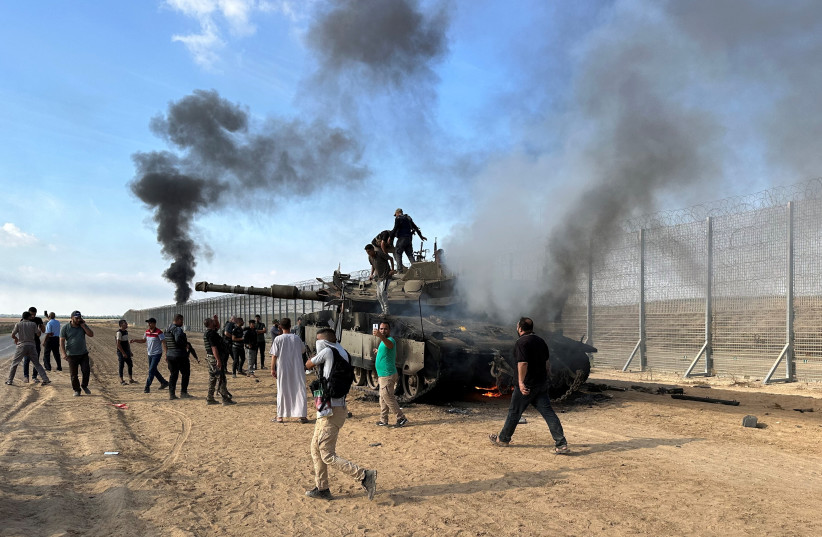
Quiet became evidence. Restraint became analysis. Economic distress became deterrence.
The documents suggest Hamas understood all of this and weaponized it. This deepens Israel’s self-indictment. A serious country expects enemies to lie. Terrorist organizations deceive. Intelligence exists because hostile actors conceal intentions, simulate routine, and exploit assumptions.
The question is why so many warnings, patterns, drills, border incidents, and signals were forced into a theory that said Hamas wanted calm more than war.
The answer begins with the old “conceptzia,” the preconceived notion that the enemy is deterred because our logic says he should be.
Israel has known this failure before. In 1973, it believed Egypt and Syria would refrain from launching war under conditions Israel considered irrational.
In 2023, it believed Hamas would prioritize its rule, its money, and its economic arrangements over a catastrophic confrontation. Hamas read that arrogance and built a trap around it.
The Saudi-normalization context makes the lesson wider. Hamas saw a regional order forming that could push the Palestinian issue aside and strengthen Israel’s place in the Middle East. It chose mass violence to blow up diplomacy.
Israel's enemies may sabotage peace initiatives
Israel must remember that its enemies may view peace initiatives as strategic threats, and they may try to sabotage them with bloodshed.
There is another lesson here for today’s Israel. Negotiations are necessary. Humanitarian arrangements can be necessary. Mediators can be useful. But none of them can substitute for skepticism.
A message passed through Qatar, Egypt, Turkey, or any other channel may be true, partial, manipulative, or all three at once. The purpose of Israeli statecraft is to test every message against action on the ground.
That means every future policy toward Hamas, Hezbollah, Iran, the Houthis, and other enemies must be built around a harder assumption: Our adversaries are studying us as closely as we study them.
They watch our politics. They watch our festivals. They watch our public debates, fatigue over reserve call-ups, diplomatic priorities, American pressures, and hunger for normal life. They know when Israeli attention moves elsewhere. They know when Israel wants to believe a problem has been contained.
Israel needs accountability for October 7
The Hamas files should also sharpen the public demand for accountability. Israel still needs a full, fearless reckoning for the October 7 massacre.
Military, intelligence, and political leaders all owe the country answers. The purpose is repair, because without accountability, the same culture rebuilds itself with new slogans and old instincts.
The security establishment must reward dissenting analysis. Junior warnings must move upward instead of dying in bureaucracy. Border intelligence must be treated as strategic intelligence. Technology must support human judgment. Decision-makers must be forced to ask the question that was asked too softly before October 7: What if the quiet is the warning?
Hamas’s documents show an enemy that was cruel, patient, and strategic. Israel’s response must be moral, disciplined, and equally strategic. The country cannot live forever in suspicion, but it also cannot afford innocence. It must protect life while remembering that in this region, calm can be real, and calm can be staged.