Investors Still Eye Ukraine Reconstruction Despite War, PrivatBank CEO Says
PrivatBank CEO Mikael Björknert says US and international investors have shifted their focus from wartime curiosity to reconstruction financing, with Ukraine’s rebuild estimated at $600 billion. The bank is pushing key partners to expand risk-sharing limits, raise loan ceilings to $50 million, and h
Kyiv Post
75
5 min čtení
0 zobrazení
US and international investors remain focused on Ukraine’s reconstruction prospects despite the ongoing war, with the central question now being how to mobilize enough capital to finance a rebuild estimated at $600 billion, PrivatBank CEO Mikael Björknert told Kyiv Post on the sidelines of the 2026 International Monetary Fund (IMF) and World Bank Spring Meetings in Washington.
Investors see reconstruction not only as a process after the war in Ukraine is over, but also as the need to rebuild during the war, especially for state-owned companies such as Naftogaz and operators of heating infrastructure. This blurs the line between wartime and post-war recovery, Björknert said.
PrivatBank held Hr. 941 billion ($22.3 billion) in assets in 2025, making it Ukraine’s largest lender, while revenue reached Hr. 88 billion ($2.1 billion), according to National Bank of Ukraine (NBU) statistics.
“If we talk about two different phases: the war phase and the reconstruction phase, from the war-phase perspective, they are more curious about this – how it is to live there, how it is for businesses… is there fatigue, and so on. But they are much more focused on the next step, the reconstruction. And this is very much about how we will ensure we have enough capital for it,” Björknert told Kyiv Post.
Ukraine will require an estimated $588 billion in recovery and reconstruction funding over 2026-2035, according to the updated Rapid Damage and Needs Assessment (RDNA5).
A Russian drone strike on Chornobyl’s New Safe Confinement destroyed its hermetic seal and ventilation system, sparking a two-week fire inside the cladding and raising fears of corrosion. EBRD officials warned Kyiv Post that delays in repairs could jeopardize the entire €2 billion structure.
“The question is, how will they be financed?” Björknert said.
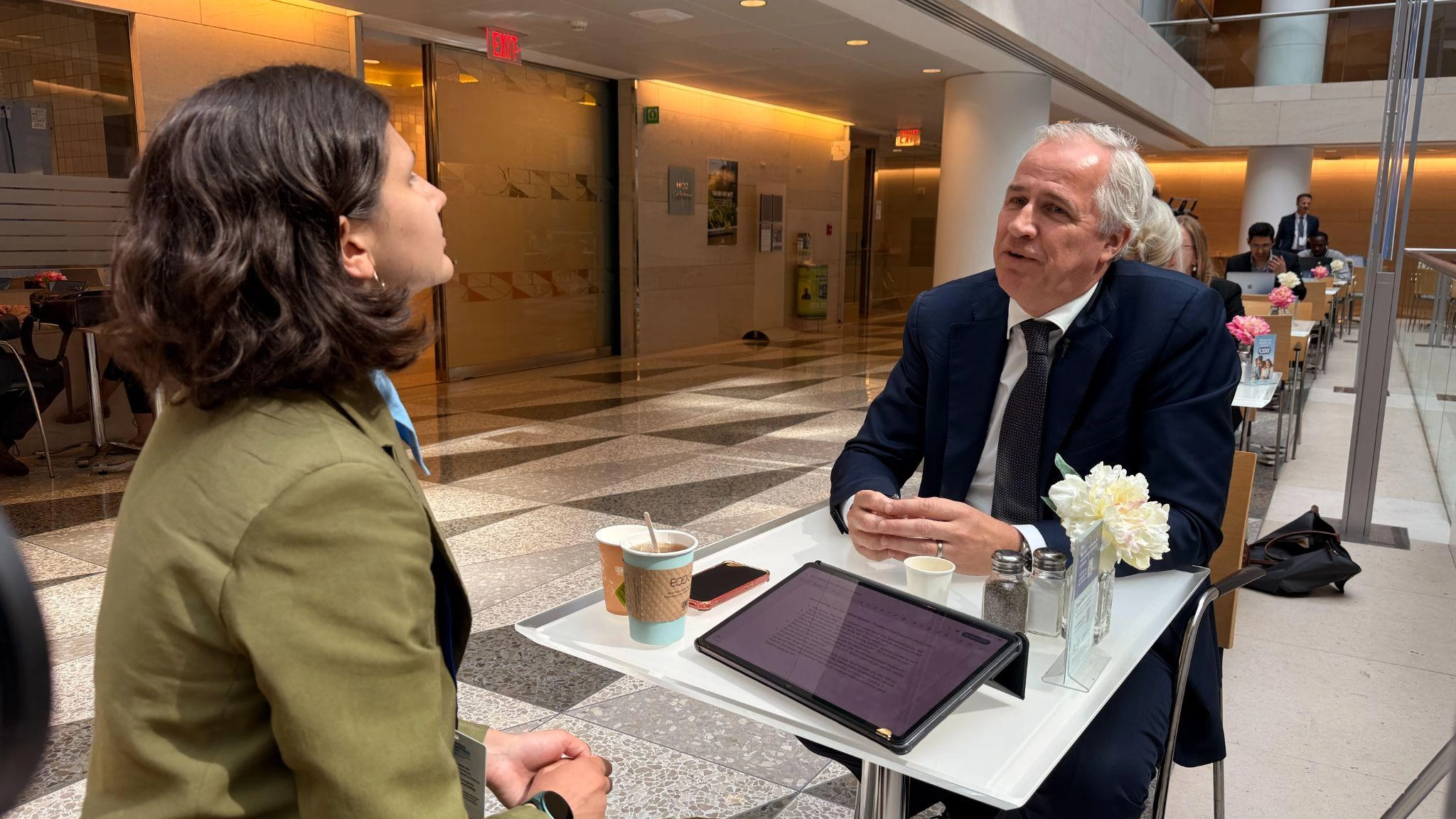
PrivatBank CEO Mikael Björknert in an interview with Kyiv Post on the sidelines of the IMF and World Bank Spring Meetings in Washington DC, April 17, 2026. Photo by Iurii Panin / Kyiv Post
How can investors finance Ukraine’s reconstruction?
Reconstruction capital, Björknert explained, will need to flow through multiple channels – foreign direct investment, grants and state subsidies, domestic investors, capital markets, and banks. Björknert argued that domestic banks carry a structural advantage: familiarity with local borrowers.
“Domestic banks, meaning PrivatBank, are much more active because we dare to lend out because we know our customers,” he said, contrasting that with foreign banks, which face restrictions from their head offices even when they nominally operate inside Ukraine.
Currently, the facilities are structured around relatively small credits, primarily for small businesses – a segment PrivatBank intends to continue serving. But Björknert said the bank is pushing to raise individual loan ceilings, allowing the risk-sharing framework to cover larger corporate borrowers.
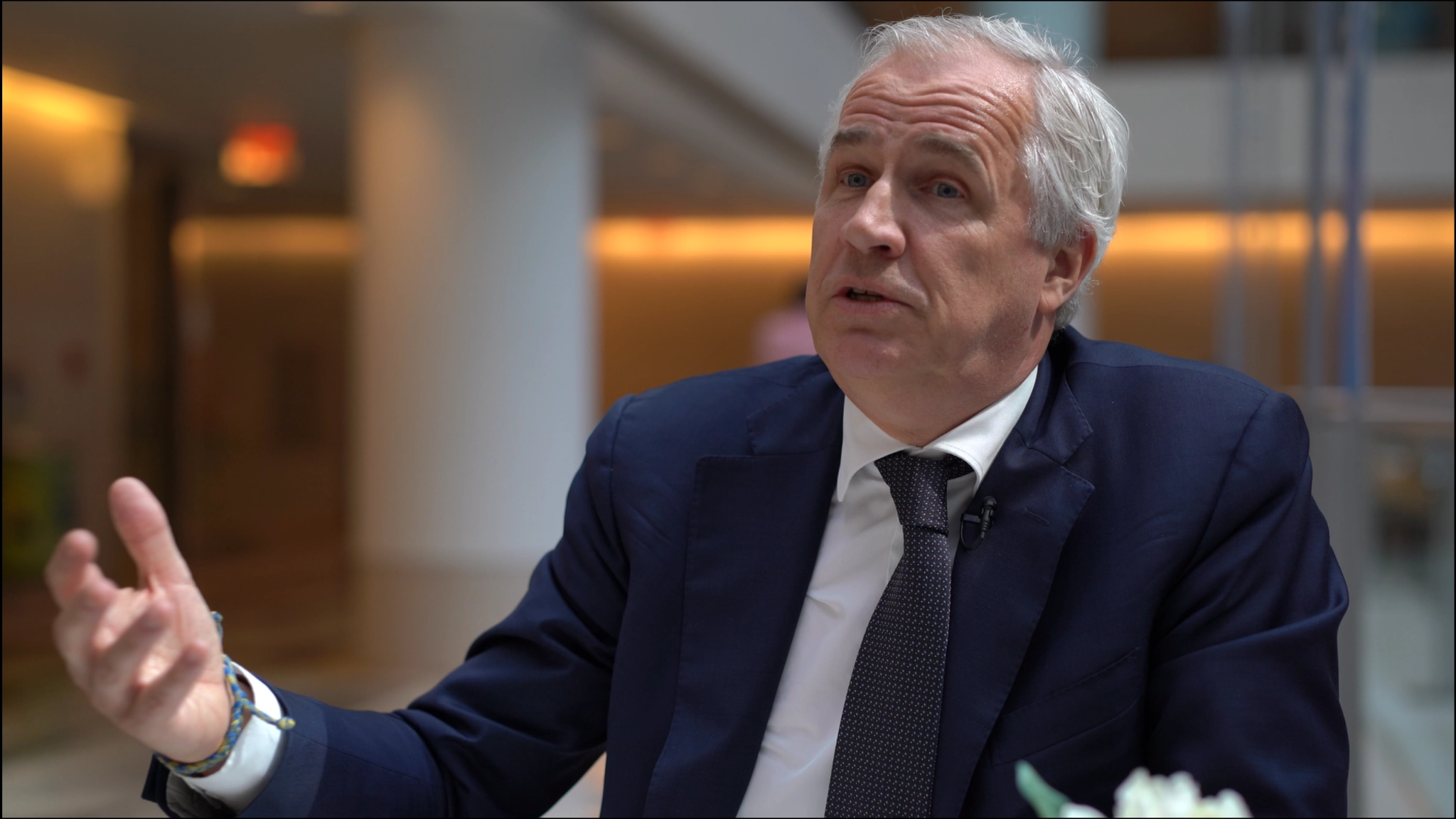
PrivatBank CEO Mikael Björknert in an interview with Kyiv Post on the sidelines of the IMF and World Bank Spring Meetings in Washington DC, April 17, 2026. Photo by Iurii Panin / Kyiv Post
On April 30, PrivatBank and the European Bank for Reconstruction and Development (EBRD) signed a mandate letter to launch a new €825 million ($894 million) unfunded risk-sharing facility to expand financing for Ukraine’s private sector. This type of facility means the EBRD does not provide cash upfront to PrivatBank, but instead guarantees part of the losses if borrowers default.
It is one of the largest risk-sharing facilities arranged for Ukraine’s banking sector since the start of Russia’s full-scale invasion, according to the bank. The facility will support lending for business liquidity and investment projects, with the EBRD covering part of the credit risk on new sub-loans issued by PrivatBank to Ukrainian companies.
To lift the ceiling on risk-sharing facilities, Björknert held meetings with senior management at the EBRD the European Investment Bank (EIB), and the International Finance Corporation (IFC) – three institutions that currently provide risk-sharing facilities that enable PrivatBank to expand its lending.
All three have signaled willingness to go further. And the IFC showed no change of risk appetite despite US President Donald Trump’s cooling towards Ukraine.
“[Discussions are positive] with all three,” Björknert told Kyiv Post, adding that the institutions are actively looking to increase their risk-sharing limits with the bank.
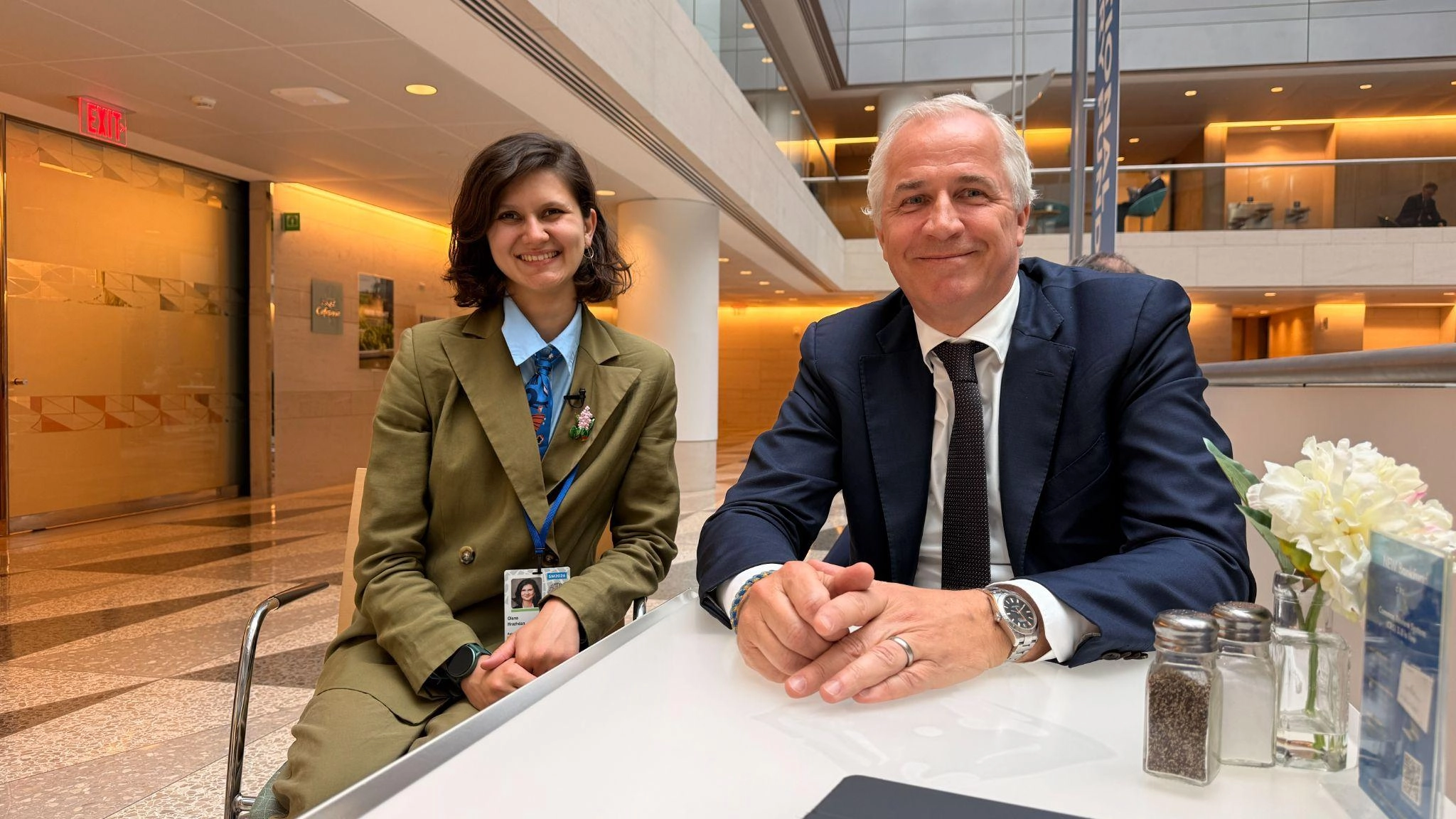
PrivatBank CEO Mikael Björknert in an interview with Kyiv Post on the sidelines of the IMF and World Bank Spring Meetings in Washington DC, April 17, 2026. Photo by Iurii Panin / Kyiv Post
PrivatBank wants to secure war risk coverage
Beyond credit limits, PrivatBank is also making the case for war-risk coverage.
Björknert said a meaningful segment of companies is still holding back on making investments due to fears about war-related consequences, and he is urging the international institutions to help develop a functioning market for war insurance.
While businesses in Ukraine may have had no choice but not to renew investments since the war entered a prolonged phase, Björknert explained that those deferring investment and equipment renewal through years of war eventually face a point where further delay threatens their viability.
“After a while, you really need to start renewing. Otherwise, your business will go down,” Björknert told Kyiv Post. He added that many Ukrainians are hoping the war is entering its final stretch – though he acknowledged that determination to continue fighting remains firm regardless of how long it lasts.
Olena Hrazhdan is the Business Reporter at Kyiv Post, covering Ukraine’s markets, business, and economic policy. While she reports broadly on economic issues, her core focus is banking, finance, monetary and fiscal policy. Olena previously wrote for leading Ukrainian business media and became a Fellow of the International Monetary Fund’s Journalism Fellowship in 2024.