
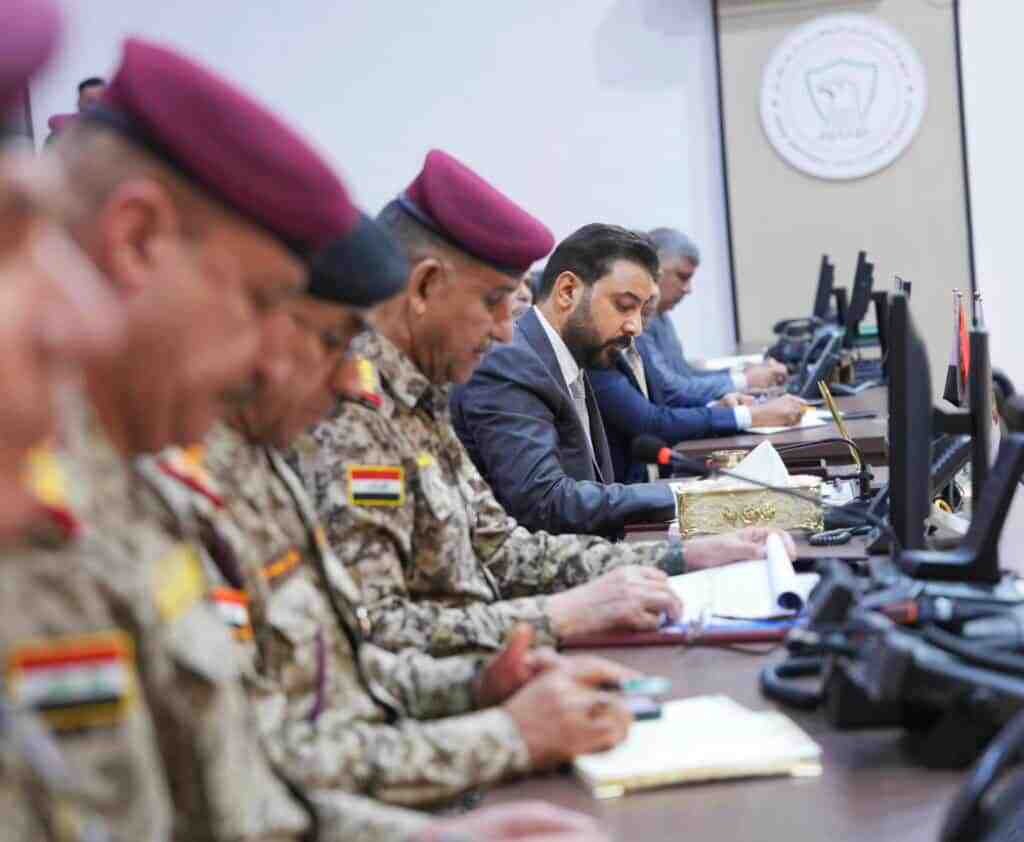
Saudi Arabia and the United Arab Emirates said that recent drone attacks against their countries originated from Iraq. “The United Arab Emirates said on Tuesday that six drones had been launched against it from Iraq in the past 48 hours, including one that caused a fire at a nuclear power plant in the Gulf state on Sunday,” Reuters reported on May 19. Saudi Arabia’s Ministry of Defense also said on May 18 that three drones had entered Saudi Arabia’s airspace from the direction of Iraq. However, Iraq said it did not detect drones launched from its territory at Saudi Arabia.
The drone attacks on Saudi Arabia and the UAE come in the context of tensions in the region with Iran that have continued since a ceasefire primarily between the US and Iran began in early April. Iranian-linked drones and missiles have targeted targets in the region, including Saudi Arabia, the UAE, and within Iraq, throughout the conflict, and the attacks have continued after the ceasefire.
New information has now emerged about the Iran-led attacks targeting countries in the region. Al-Monitor reported on May 18 that the majority of attacks on Saudi Arabia originated from Iraqi territory. “Since the start of the Iran conflict on Feb. 28, the bulk of attacks on the kingdom have come from Iraq, ostensibly carried out by Iran-backed Shiite militias, according to two diplomats based in the region and a senior Iraqi official who spoke exclusively to Al-Monitor on condition of anonymity.” Saudi Arabia and Kuwait responded to the attacks “multiple times” with strikes in Iraq, The Wall Street Journal reported on May 13.
The new reports have brought an increased spotlight on Baghdad and the threat of Iraqi militias. Saudi Arabia’s Ministry of Defense noted that “three drones were intercepted and destroyed after entering the Kingdom’s airspace coming from Iraqi airspace” on May 17. In a statement from the ministry the next day, Riyadh said it “reserves the right to respond.” The attacks on Saudi Arabia and the UAE have been condemned across the Middle East, including by the Iraqi government.
“The Ministry of Foreign Affairs expresses its strong condemnation of the attack on the sisterly United Arab Emirates by a drone, which resulted in a fire breaking out in an electrical generator outside the Barakah Nuclear Power Plant in the Al Dhafra region,” Iraq’s Ministry of Foreign Affairs said on May 18. Iraq’s Prime Minister’s Office also condemned the attack on the UAE in a May 19 statement.
After the drone attack on Saudi Arabia, Iraq’s foreign ministry said on May 18 that its air defense systems did not detect the drones. “In this context, the Ministry calls upon the relevant authorities in the Kingdom of Saudi Arabia to cooperate and exchange relevant information to contribute to obtaining accurate intelligence that enhances security and stability in both brotherly countries,” the ministry added.
Iraq is attempting to shore up its ties with Riyadh and Abu Dhabi in the wake of the incidents, an effort that comes amid potential negotiations with Saudi Arabia to restore the Iraqi Pipeline in Saudi Arabia as a new oil export route. However, Iraq’s Security Media Cell and Ministry of Defense provided no further details on the incidents. The drone attack could put Iraq’s new prime minister, Ali al Zaidi, under “immediate pressure,” The Arab Weekly argued on May 19.
Iraq’s new government is also facing pressure on other fronts. The US Justice Department announced the arrest of Iraqi national Mohammad Baqer Saad Dawood al Saadi on May 15. In addition to being charged with involvement in 20 attacks and attempted attacks in the US and Europe, Saadi is accused of being a member of Kataib Hezbollah, a US-designated Foreign Terrorist Organization. On May 19, a Kataib Hezbollah spokesperson denied that Saadi was a member of the group.
A report at Iraq’s Shafaq News noted that the country’s new prime minister is facing pressure to rein in the Iranian-backed militias that are part of the Popular Mobilization Forces (PMF). The PMF is an official paramilitary force mostly comprised of Iran-backed militias, several of which have been sanctioned by the US as terrorist groups. Recent US efforts against the groups have included new offers of rewards for information on four militia leaders. The latest reward was offered on May 5 for Harakat Hezbollah al Nujaba leader Akram Abbas al Kabi.
Iraq also continues to focus on reports of a secret Israeli base that was established in the country’s southern desert during the conflict with Iran. The New York Times reported on May 17 about a second base that may have been established in Iraq in 2025.
Reporting from Israel, Seth J. Frantzman is an adjunct fellow at FDD and a contributor to FDD’s Long War Journal. He is the senior Middle East correspondent and analyst at The Jerusalem Post, and author of The October 7 War: Israel's Battle for Security in Gaza (2024).
Tags: Iran, Iraq, Iraqi militias, PMF, Saudi Arabia, uae, US-Iraq


