10 hours ago
Theo Leggett International Business Correspondent
The final conclusions of the investigation have yet to be published, although more could become apparent in the coming days.

10 hours ago
Theo Leggett International Business Correspondent

 BBC
BBC
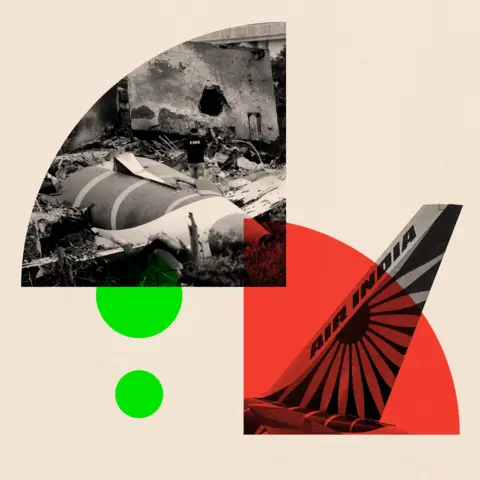
It was a hot and dry afternoon on 12 June last year, when Air India Flight 171 left the terminal at Sardar Vallabhbhai Patel Airport in Ahmedabad in the western Indian state of Gujarat. Settling into their seats for the nine-and-a-half-hour journey to London were 230 passengers, 53 of them British citizens. Looking after them were 10 cabin crew.
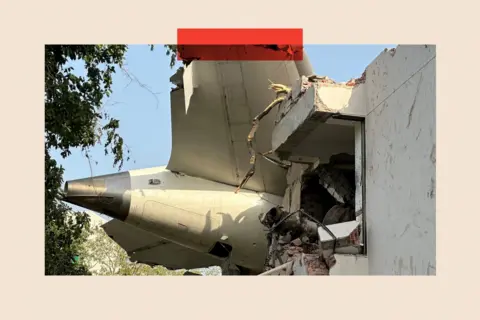
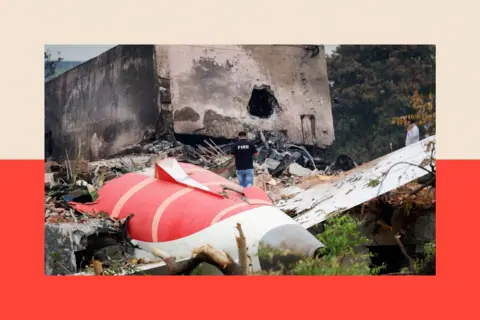
On the flight deck were Captain Sumeet Sabharwal, a pilot with decades of experience, and his younger colleague, first officer Clive Kunder. Just 32 seconds after take-off the plane crashed, killing all but one of those on board. Another 19 people on the ground were also killed.
CCTV footage from the airport and a social media video show the aircraft taking-off in what looks like a normal fashion, but rather than gain height it appears to hang in the air, before gliding gently downwards.
It disappears from view behind buildings and trees. Seconds later a huge cloud of flame and black smoke appears, and the magnitude of the disaster becomes apparent. What is not at all clear from the footage, however, is what actually caused the crash.
 PA Media
Finding out why so many people died is the job of India's Aircraft Accident Investigation Bureau (AAIB), part of the country's Ministry of Civil Aviation. Under international law, as set out in Annex 13 of the Convention on International Civil Aviation, the country in which an accident occurs is directly responsible for the official investigation.
Other parties, including the country where the aircraft or its engines were built, can also take an active part as "accredited representatives". In the case of AI171, that means the US National Transportation Safety Board (NTSB). The NTSB sent a delegation which included technical experts from Boeing, which made the plane itself and GE Aerospace, which built the engines, as well as the US aviation regulator, the Federal Aviation Administration.
According to Annex 13, "the sole objective of the investigation of an accident or incident shall be the prevention of accidents or incidents. It is not the purpose of this activity to apportion blame or liability".
Nevertheless, there is a great deal at stake.
For Boeing, a company already reeling from years of safety scandals, it is about the integrity of one of its premium products: the 787 Dreamliner, an aircraft with a hitherto impeccable safety record. Air India, a loss-making airline belonging to the Tata Group, can ill-afford to see its brand tarnished. Families of those who died, meanwhile, want to know what really happened to their loved ones.
The final conclusions of the investigation have yet to be published, although more could become apparent in the coming days. But it has already generated intense controversy, which has exposed deeper questions about the way inquiries into major air incidents are carried out. So can national authorities be trusted to conduct investigations that critics say are vulnerable to perceptions of political pressure and corporate influence?
In theory, the inquiry should be impartial and informative – a learning process focused solely on improving passenger safety. But in the case of AI171, the information revealed by the investigation so far has triggered a major backlash from safety campaigners, pilots' groups and lawyers acting for the bereaved relatives.
A key factor in this has been the preliminary report issued by the AAIB a month after the accident. The 15-page document did not draw any conclusions about the causes of the crash, or make any recommendations.
Nonetheless, just two short paragraphs generated a great deal of controversy.
First, it was noted that according to the aircraft's flight data recorder, the two fuel cutoff switches - normally used when starting the engines before a flight and shutting them down afterwards – transitioned from the run to the cutoff position seconds after take-off. This would have deprived the engines of fuel, causing them to lose thrust rapidly.
The report then says: "In the cockpit voice recording, one of the pilots is heard asking the other why did he cutoff. The other pilot responded that he did not do so."
This brief statement, provided without a transcript or any indication of who was speaking, sparked intense speculation about the actions of the pilots. Newsweek, for example, focused on the "troubling possibility: that a seasoned captain may have deliberately doomed his jet – and nearly 250 lives". Former NTSB chairman Robert Sumwalt told CBS News the report showed "this was not a problem with the airplane or the engines. Instead…somebody in the cockpit shut the fuel off to those engines."
A few days later, The Wall Street Journal weighed in. Citing people familiar with the matter, it claimed that recordings of dialogue between the pilots suggested it was the Captain, Sumeet Sabharwal, who had flipped the fuel switches.
It is important to note that this was merely a preliminary report, and within days, the AAIB issued a statement condemning "selective and unverified reporting" in the international press as "irresponsible". It urged the public and the media to "refrain from spreading premature narratives that risk undermining the integrity of the investigative process."
By then, arguably, the damage had already been done.
"When a pilot is alive he can defend himself" says Capt. CS Randhawa, president of the Federation of Indian Pilots (FIP). "When the pilot is dead, all the agencies can collude – and they put the blame on the pilot, to save the manufacturer. And this is seen the world over. It's not the first time".
His organisation, which represents around 6,000 pilots, condemned the preliminary report as "irrevocably compromised". Together with Sumeet Sabharwal's 91-year-old father, Pushkar Raj Sabharwal, they took their concerns to India's Supreme Court, demanding a judicial investigation into the crash.
 Reuters
Former UK air accident investigator Tim Atkinson agrees that there is always a temptation to blame a dead pilot for a serious accident.
"It's incredibly, incredibly convenient for all concerned," he says. "You know, the regulator's off the hook, the operator's off the hook, the manufacturer's off the hook. And that's why you have to push back against it so hard."
However, he personally believes that in this case, there is no other credible explanation – a view that is common among aviation professionals.
"I am in absolutely no doubt this is a homicide-suicide. And if you set out to investigate one of those, and try to show it is an aviation accident, you'll fail – because it isn't", he explains.
Nevertheless, safety campaigners in India and the US, along with the FIP, have pushed back vigorously against the pilot suicide theory. They point to reports alleging prior faults with the aircraft, as well as apparent anomalies in the timelines set out in the preliminary report, as evidence that the crash could realistically have been caused by a serious electrical failure.
Documents seen by the BBC show an incident of "burning" in one of the plane's main power panels in 2022. Air India says repairs were "carried out in accordance with Boeing-approved maintenance procedures" and that "the aircraft was returned to service only after applicable airworthiness requirements had been satisfied".
The preliminary report, meanwhile, notes that the aircraft had been permitted to fly with a known fault in its "core network", a framework that links the aircraft's computers and associated electronics and is often described as the "central nervous system" of the plane.
Boeing has referred all questions about what happened to the Indian AAIB.
A key theory put forward by campaigners is that the crash may have occurred because a major electrical failure caused the aircraft's main flight computers to reboot seconds after takeoff. They say this created a situation where the aircraft's systems briefly believed the plane was actually on the ground, even though it was in the air. A safety system detected dangerous levels of engine thrust, assumed a malfunction, and ordered the fuel supply to be cut off, the theory goes.
Under this scenario, fuel switches in the cockpit were not actually touched – the flight data recorder may instead have registered the electronic command to cut the fuel supply, rather than the physical movement of switches.
The report indicates that "Engine 1's core deceleration stopped, reversed and started to progress to recovery. Engine 2 was able to relight but could not arrest core speed deceleration…". But Chitra claims her research, which she says is backed up by engineering documents, suggests that any such relight would have been physically impossible at the speed the aircraft had reached and with the power sources available.
Meanwhile, lawyers acting on behalf of victims' families have focused on the moment at which an emergency power system began to operate. The Ram Air Turbine (RAT) is a small propeller which can rotate in the airstream to provide electricity and hydraulic pressure when other systems in the plane fail. On AI171, CCTV footage shows that the RAT had deployed immediately after take-off.
According to the preliminary report, the RAT was providing hydraulic power within five seconds of the fuel switches being cut off. However, simulator tests, the results of which have been shared with the BBC, appear to demonstrate that it would actually need 14-18 seconds. This would imply that it had actually deployed far earlier, potentially while the aircraft was on the ground, and well before the fuel was cut off.
 Reuters
Mike Andrews is an attorney with the Beasley Allen law firm which represents the families of 135 victims of the crash. He says the findings raise important questions, which cast doubt over the pilot suicide narrative.
"The RAT deployment is a symptom of something else going on," he explains. "In order for it to be out, something has happened…if it is out prior to the fuel switch allegation, our question still is: why?
"It is a symptom of something that has gone wrong".
Safety consultant and author Eckhard Jann thinks such controversy in a case like this is inevitable.
"We have gotten used to safe airline travels," he says, and as the reason for the B787 crash in Ahmedabad is unknown, it "rattles the world".
Former investigator Tim Atkinson thinks the "incredibly complex multiple electrical failure scenario" is unrealistic. He believes the physical architecture of the plane's systems would not allow it to happen.
For him, the controversy over AI171 comes down to "just the difficulty we all have talking about homicide and suicide".
Under Annex 13, those investigating a serious air accident are meant to publish a final report within 12 months if they can. However, this is not always possible. If a final report cannot be issued, an interim report must be published on the anniversary of the accident.
This means India's AAIB must publish an update of some kind by Friday, 12 June.
There is now widespread doubt that it will be conclusive. In May, India's civil aviation minister muddied the waters when he told reporters the investigation into the crash was into its "last stage", and that the final report would "mostly…come after a month".
Whatever report is published, it looks highly unlikely to reverse the wave of controversy and cynicism that has already engulfed the AI171 investigation.
A great deal of that stems from perceptions that the companies involved are being protected from blame.
Boeing, certainly, can ill-afford to see questions raised about the safety of the 787. Although it suffered severe teething problems in its early days, including a major battery fire on one aircraft at Boston airport in 2013, the 787 has since racked up a very impressive safety record. AI171 was the first time a 787 had been lost due to an accident. However, production of the plane has proved deeply problematic over the years with reports of defects and manufacturing problems, while whistleblowers have drawn attention to what they considered to be dangerous practices on the production line.
Boeing has consistently denied allowing potentially dangerous planes to enter service.
 Reuters
The manufacturer's corporate culture has, however, come under fire thanks to a series of issues involving the smaller 737 Max - including two fatal crashes. It has been forced by regulators to implement a comprehensive safety and quality improvement plan.
Air India, meanwhile, has struggled for years, racking up heavy losses. After being under government ownership until 2022, it was then taken over by the giant Tata Group. This was meant to herald a turnaround, but it has continued to struggle in what has been a difficult environment for the industry as a whole. It can not afford further damage to its brand.
This is not the first time the current system for investigating major air accidents has faced criticism. It has however highlighted ongoing concerns about the integrity of high-profile and often politically sensitive inquiries.
According to the non-profit Foundation for Aviation Safety, asking the country where the accident occurs to oversee an investigation "can trap the process within local bureaucracies or political pressures. Even more troubling, manufacturers' technical experts, while ostensibly assisting investigators, may face intense pressure to deflect corporate culpability."
"Diagnosing an extremely complex airplane with an outdated playbook is impossible," says the Foundation's executive director, Ed Pierson.
Eckhard Jann points out that the current system is still largely founded on principles set out in 1944. In today's more globalised world, he thinks "investigating authorities are having more and more difficulty fulfilling their duties: to investigate independently and make solid recommendations in order to improve aviation safety."
The International Civil Aviation Organisation (ICAO), the UN agency which oversees international air travel, is well aware that investigations can be vulnerable to conflicts of interest. In March, it set out a series of changes to Annex 13. These include giving countries the right to delegate investigations to a third party, as well as a number of steps to improve transparency. The new rules will take effect in late 2028.
More from InDepth
But according to Jann, this is just a sticking plaster. "Whatever ICAO is trying to change and improve is only trying to reduce the symptoms, but global aviation, global manufacturers and global airlines demand a global answer," he says.
Such an answer, he believes, would be "a global investigation authority with enough power to demand changes based on their recommendations."
But others question whether such investigations are even worthwhile in the modern era, given the tremendous cost and effort involved, among them, former investigator Tim Atkinson.
"This cycle of an accident happens, you investigate it impartially, make recommendations, prevent future occurrences… it doesn't really happen any more.
"The things that prevent people dying these days are nothing to do with that. They're to do with better technology."
However, if investigations are to continue, he says, much more transparency is needed, with information being provided much more freely at an early stage.
"I've always believed that", he says. "And I've never seen negative consequences of it".
Top image credit: EPA/ Shutterstock and Reuters

A high-ranking workplace safety official in central China’s Shanxi province has been placed under investigation over a massive coal mine explosion that killed 82. Zhang Heping, deputy director of the provincial department of emergency management, is suspected of “serious violations of discipline and

Twenty people died and 120 others were injured in the explosion at the Erawan shrine 11 years ago.

Robotic snakes have been deployed in southwestern China to inspect power lines and ensure a stable power supply during the country’s high-pressure national college entrance exam. The snakelike robots spiral around power lines in Kunming, the provincial capital of Yunnan, to detect hazards such as br

The man allegedly posed as an "adopter" of animals but ended up abusing the dogs and cats he took in.