The TWZ Newsletter
Weekly insights and analysis on the latest developments in military technology, strategy, and foreign policy.
Iran's Tomcats may have used up the last of their nine lives as the U.S. and Israel seek to neuter the country's air force. The post Iranian F-14 Tomcats Meet Their Doom In Israeli Airstrikes appeared first on The War Zone.

The TWZ Newsletter
Weekly insights and analysis on the latest developments in military technology, strategy, and foreign policy.
Satellite imagery from Vantor shows at least two, and more likely three, swing-wing F-14 Tomcat fighters, as well as at least 10 other aircraft destroyed on the ground following strikes on an Iranian airbase in Isfahan. Iran’s Tomcats, the only ones left in service anywhere after the U.S. Navy retired the type back in 2006, have been a hot topic of interest for decades now. The fleet’s fate may now be sealed for good as U.S. and Israeli strikes continue to pummel Iran’s Air Force, along with the rest of the country’s military and security forces.
Vantor has provided an image of Iran’s 8th Tactical Air Base in Isfahan taken on March 9, following strikes, as well as one from February 22 for comparison. The Israel Defense Forces (IDF) said explicitly on March 8 that it had targeted F-14s at Isfahan, the home base for Iran’s Tomcat fleet, but no imagery of those strikes looks to have been released. IDF videos of Iranian F-14s being struck that have been circulating online recently all look to be old.
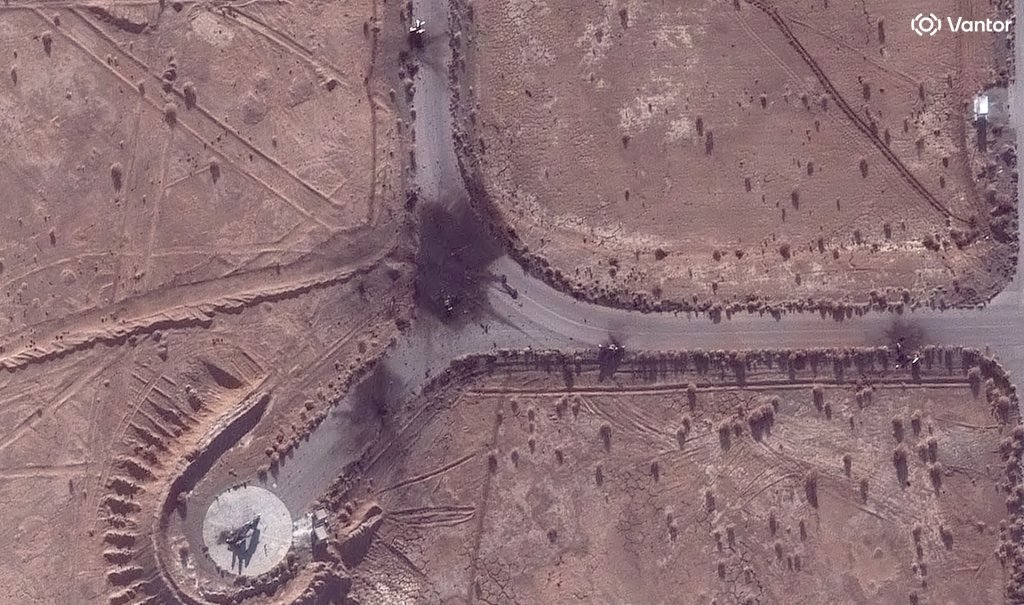
The Vantor image from February 22 shows five F-14s. One is seen on what looks to be an alert pad, with another on a taxiway nearby. Two more are seen sitting outside a pair of aircraft hangars, while another is seen next to a separate set of hangars. The March 9 image shows the Tomcat on the pad and the lone example by the shelters to have been hit. There is also a huge scorch mark where the F-14 had been previously seen on the taxiway, pointing to its total destruction, though it is hard to tell for certain from the remaining wreckage. The other two jets appear to have been moved in the intervening weeks, and their status is unclear.
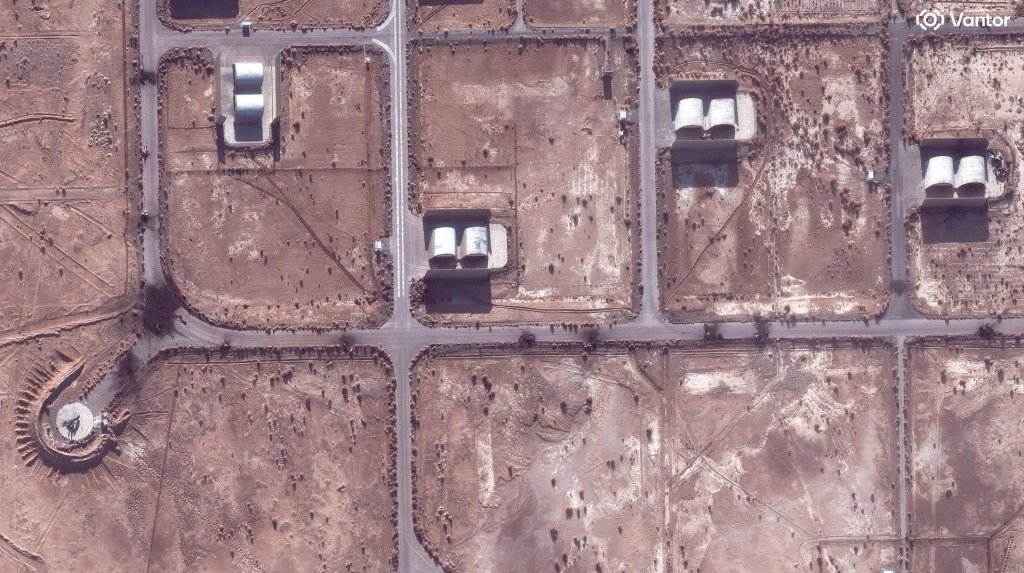
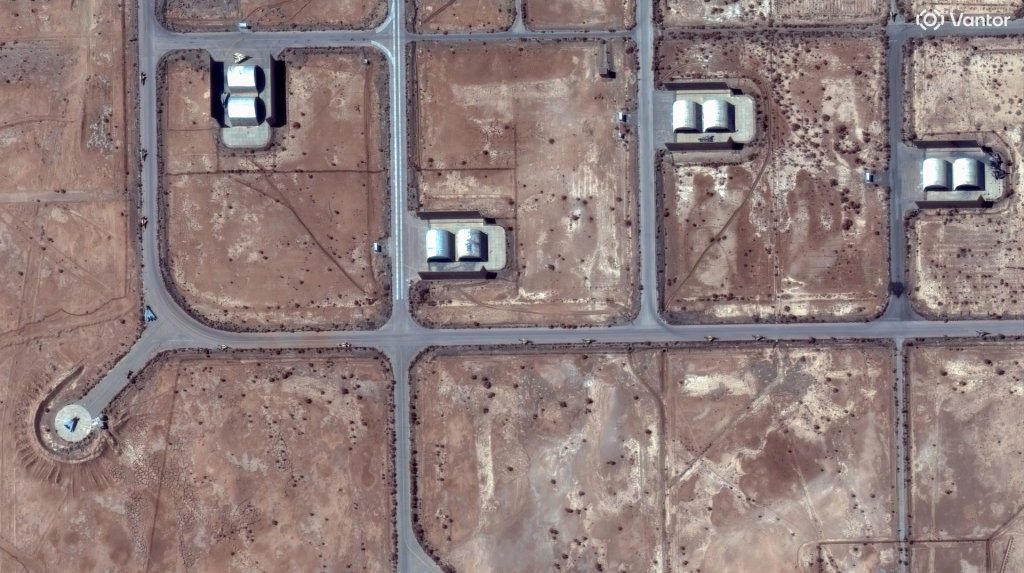
The post-strike image also shows at least 10 other aircraft destroyed along various taxiways. Vantor has assessed these to be members of the Iranian Air Force’s fleet of Chinese-made F-7 fighters. F-7 is the nomenclature for export variants of the Chengdu J-7, itself derived from the Soviet MiG-21 Fishbed.
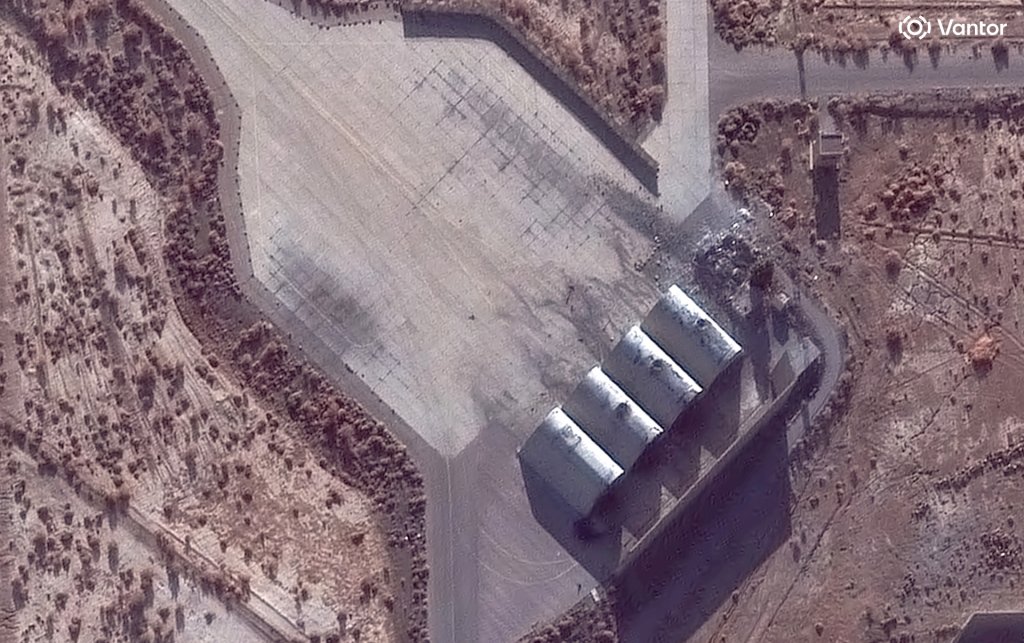
Vantor also shared imagery of a row of four hardened aircraft shelters at Isfahan, three of which have a single hole in the top following the strikes. A structure next to the shelters, which had already been damaged prior to the current conflict, has now been flattened, as well.
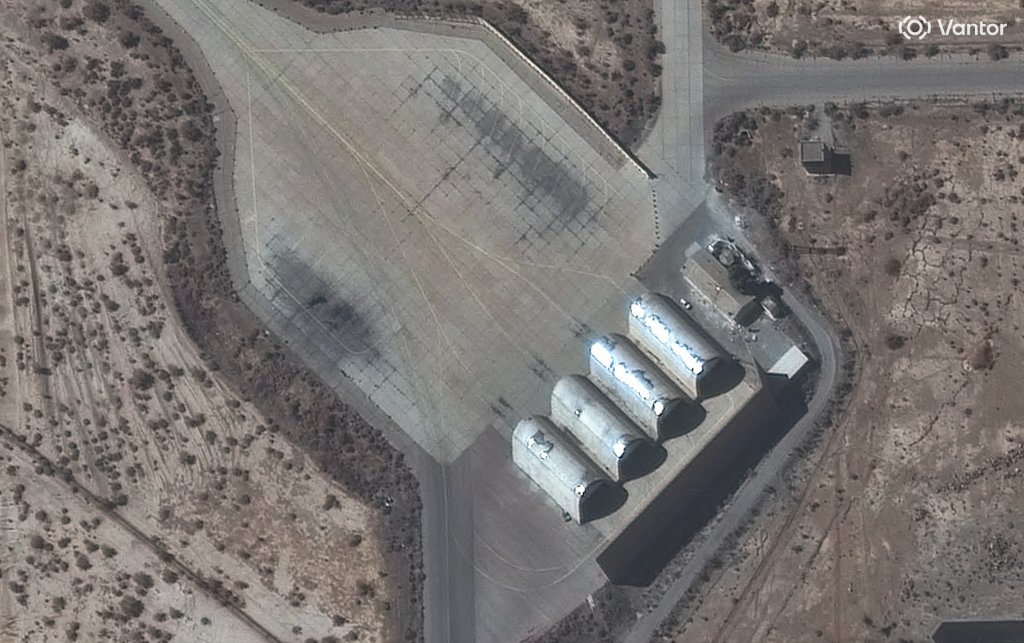
Whether or not any of the F-14s that were struck at Isfahan were operational at the time is unknown. Estimates of how many Iranian Tomcats are even still airworthy have ranged widely in recent years, from just a handful to maybe as many as 25. As noted earlier, the 8th Tactical Air Base is the main station for Iran’s F-14s, though examples have also been positioned to provide quick reaction alert (QRA) coverage for Tehran in the past.
A total of 79 F-14As were delivered to Iran before the fall of the Shah in 1979. Iran’s air arm and the U.S. Navy are the only ones to have ever operated the Tomcat, and Iran has been the only one still flying them since 2006. While the current regime in Tehran has been able to keep a small portion of its original F-14 fleet flyable, sustaining the jets has been an immense challenge requiring the cannibalization of airframes.
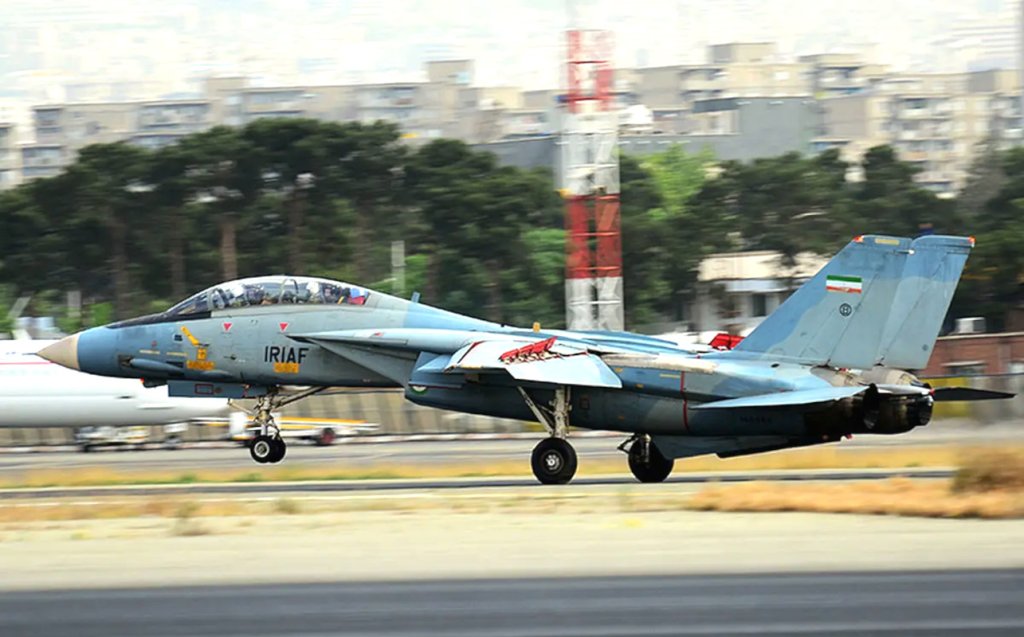
The capabilities of the remaining jets can only have steadily degraded, as TWZ has written in the past:
“In particular, the F-14’s once-state-of-the-art AN/AWG-9 fire control radar has suffered from low serviceability, with the Tomcat fleet effectively being divided between those with fully functioning radars and those with more diminished capabilities. The current status of any surviving AIM-54 Phoenix and AIM-7 Sparrow air-to-air missiles is also a matter of debate, and Iranian programs to introduce alternative weaponry for the F-14 have had only very mixed results, as you can read more about here.“
The total number of F-14s in Iran, flyable or not, had already been reduced to some degree during the 12 Day War with Israel last year. Strike footage the IDF released during that conflict showed at least five Tomcats being struck. Satellite imagery had confirmed that at least two of those jets had been sitting idle for some time beforehand, as well.
The Israeli Air Force has conducted additional precision strikes targeting IRIAF F-14s, continuing its focused effort to systematically degrade Iran’s remaining air combat capabilities. pic.twitter.com/vT6JJ4D1x7
— GMI (@Global_Mil_Info) June 21, 2025The overall intensity of the current U.S.-Israeli air campaign against Iran has been far greater than what was seen during the 12 Day War last year. The Iranian Air Force does not appear to have mustered any kind of major response, even in the first few days of what the U.S. military has dubbed Operation Epic Fury and that the Israelis are calling Operation Roaring Lion. Qatari F-15 fighters shot down two Iranian swing-wing Su-24 Fencer combat jets attempting to carry out a strike mission on Al Udeid Air Base on March 2. An Israeli F-35I Adir also shot down a Yak-130 armed jet trainer over Iran on March 4.
Other airbases across Iran beyond Isfahan have also been targeted in U.S. and Israeli strikes. Satellite imagery has previously confirmed the loss of one Il-76 cargo plane, two C-130 airlifters, and two swing-wing Su-22 Fitter combat jets in Shiraz.
U.S. Central Command has also previously released video footage in the past showing strikes targeting Su-22s at Shiraz, as well as some of Iran’s remaining U.S.-made F-5s at Qasem Soleimani International Airport (formerly Ahvaz International Airport) in Khuzestan.
Geolocation of destruction of F-27s and F-5s:
31.33563, 48.76275
Ahvaz International Airport, Khuzestan Province, Iran
Google Earth imagery taken 11/19/2025 for reference (F-5s not present). Aircraft were in current placement on 2/28/26. Runway was seen cratered by 3/05/26. https://t.co/XRMx7NZxWH pic.twitter.com/iZGnxPp4mO
Overall, Iran’s already dilapidated air arm looks to be even more severely degraded now, and seems likely doomed, at least in its present guise. U.S. officials have said that neutralizing the Iranian government’s ability to project military power beyond its borders is a core objective of the current campaign.
When it comes to the F-14s, regardless of whether any of them were still operational to any real degree when the current conflict erupted, the story of the country’s Tomcats looks to be increasingly approaching a definitive end.
Contact the author: joe@twz.com

Russian troops struck 14 settlements in the Kharkiv region over the past day, injuring six people.

Russian troops carried out nearly 120 strikes on 40 settlements in the Sumy region over the past 24 hours, killing two people and injuring another.

President Volodymyr Zelensky has arrived in Paris, where he is scheduled to meet with French President Emmanuel Macron.

On the evening of March 12, the Russian army attacked port infrastructure in the Odesa region with strike drones, damaging a food warehouse on the port territory.