North Korean remittance brokers shut down for SPA election
North Korean remittance brokers suspended operations in border cities ahead of the March 15 Supreme People’s Assembly election, shifting instead to public participation in political activities to avoid scrutiny. A source in North Hamgyong province told Daily NK recently that a special security
Daily NK
75
4 min read
0 views

North Korean remittance brokers suspended operations in border cities ahead of the March 15 Supreme People’s Assembly election, shifting instead to public participation in political activities to avoid scrutiny.
A source in North Hamgyong province told Daily NK recently that a special security alert was issued throughout the border region from March 10 to 16, covering the period immediately before and after the vote.
“Brokers nowadays will drop their activities at the slightest sign of a crackdown. That’s what happened once again: when a strange wind started to blow, they closed up shop,” the source said.
When remittance brokers are detained during a politically sensitive period, their cases can be handled not as simple economic crimes but as the political crime of espionage — so brokers preemptively suspended operations.
Instead, brokers made a point of visibly joining activities in their respective organizations to establish themselves as citizens in good standing. In the city of Hoeryong, brokers made sure not to miss any events organized by their neighborhood watch units.
“The election period is a time of tight restrictions — you can’t even visit the next village,” the source said. “Brokers believe that briefly halting their work and wholeheartedly participating in political events will serve them in good stead in the future.”
Donations and neighbor relations emerge as survival tools
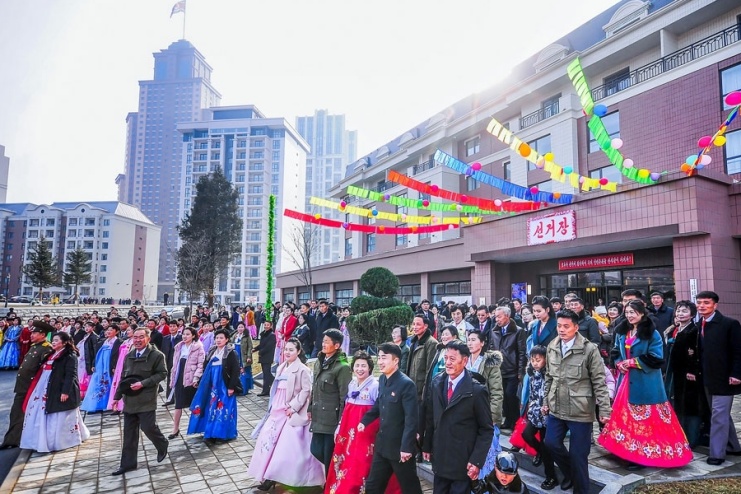
Some brokers went further, making cash donations during the election period. Polling station costs are typically covered by neighborhood residents, but this time brokers and others involved in illegal trades stepped forward to cover the expenses. As a result, neighborhood watch units in several parts of Hoeryong were spared their usual contributions.
These moves reflect a “risk reduction strategy” shaped partly by legislation the regime passed in 2019 encouraging citizens to inform on each other. Managing relationships with neighbors has since become a survival strategy for those engaged in illicit work.
“It used to be that bribing police officers, state security agents and neighborhood leaders was most important. But nowadays, neighborhood relationships have become crucial. As the regime activates networks of informers, these people are at risk of being turned in if they get on anybody’s bad side,” the source said.
“Being informed on is highly inconvenient, so remittance brokers are making an overt attempt to maintain positive relations with their neighbors. That explains their voluntary donations to the election organizers,” the source added.
Remittance brokers in Hyesan, in Ryanggang province, also halted operations around the election. Business dealings in the city dropped off sharply at the beginning of March and stopped entirely on March 10, according to a source in the province.
“Punishments are much more severe than in the past, and particularly harsh punishments are issued during the election period. So remittance brokers have curtailed their activities to minimize risk. These measures are becoming an established practice,” that source said.
The suspension has been especially noticeable to money changers. Exchange rates rose sharply, apparently due to a shortage of hard currency that remittances to defectors’ families would normally help offset.
“Exchange rates keep shooting up, apparently because of a lack of hard currency. Remittances made to defectors’ families would help alleviate that shortfall, but money changers say that remittances are currently suspended,” the source said.
The comments suggest that remittances sent by defectors to family members back home have a measurable effect on foreign currency circulation and the currency trading market in North Korea.
“Remittance brokers’ repeated suspension of business during every major political event is affecting the foreign exchange market. These brokers will start processing remittances again before long, so we’ll need to monitor trends in exchange rates after that,” the source said.
A Note to Readers

