One Year Later: How Ukraine’s Third Army Corps Is Reshaping the Army While Fighting Russia
One year after taking responsibility for its own sector of the front, Ukraine’s Third Army Corps says it has stabilized a 150-kilometer frontline while introducing new command structures, expanding drone and robotic warfare capabilities. Commanders describe the corps as a model for how the Ukrainian
Kyiv Post
75
11 min read
0 views
Can Ukraine reform its military while fighting the largest war in Europe since World War II?
One year after Ukraine’s Third Army Corps became the first newly formed corps to take responsibility for its own sector of the front, its commanders say the answer lies not only in drones, artillery or manpower, but in how the army itself is organized.
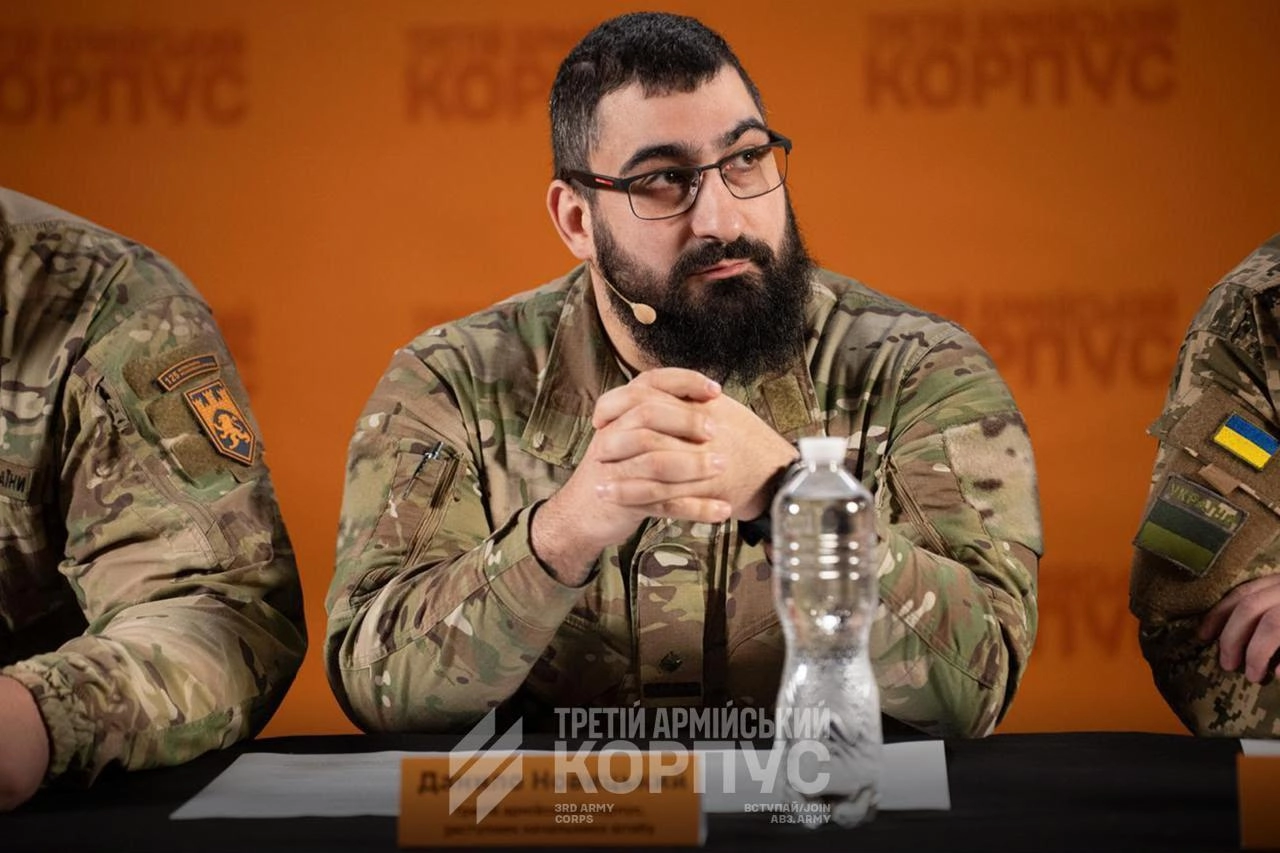
Speaking at a recent press conference in Kharkiv marking the first anniversary of the corps’ deployment, Deputy Chief of Staff Danylo Novytskyi, call sign “Boroda” (“Beard”), described the past year as a large-scale effort to unite brigades, attached units and supporting forces into a single fighting system.
The corps took responsibility for more than 150 kilometers (93 miles) of the front line – around 12% of the entire line of contact.
“It is the longest sector among the corps,” Novytskyi said.
The Third Army Corps is commanded by Brigadier General Andrii Biletskyi, one of Ukraine’s most recognized military commanders.
Biletskyi gained prominence after Russia’s initial invasion of Ukraine in 2014, when he established the Azov volunteer unit, which later evolved into a regiment within Ukraine’s National Guard.
Following Russia’s full-scale invasion in 2022, Biletskyi formed a new unit composed of veterans of the Azov Regiment that later became the foundation for the creation of the 3rd Separate Assault Brigade.
Sevastopol authorities in Russian-occupied Crimea temporarily suspended petrol rationing coupon use after supply trucks were unable to deliver fuel, following reported Ukrainian strikes on logistics routes. Officials said priority refuelling would go to emergency and public services, while new coupons would be issued. The disruption comes amid broader fuel shortages across Crimea and intensified Ukrainian drone attacks on Russian energy and transport infrastructure.
In 2025, Biletskyi was appointed commander of the newly formed Third Army Corps, which became the first of Ukraine’s new corps-level formations to assume responsibility for its own sector of the front.
Several commanders speaking at the anniversary press conference credited Biletskyi with driving the corps’ organizational reforms and helping build a unified command culture across units that previously operated separately.
“If Andrii Biletskyi managed to bring us together and make us work toward a common goal, then the role of a leader will always remain at the foundation of any successful mission,” Novytskyi said.
He said the corps managed to stabilize a sector where Ukrainian forces had previously been losing up to 70 square kilometers (27 square miles) of territory per month.
“Now, not a single meter is being lost,” he said, adding that the corps had also “fully eliminated all infiltration areas” in its sector.
From Soviet-era hierarchies to mission command
Corps commanders argued that the biggest changes over the past year were not only on the battlefield, but also inside the command structure itself.
“We built a unified command system based on the standards of leading alliance countries,” Novytskyi said. “We did not blindly take their doctrines, but adapted their military systems and methods to the modern battlefield.”
Danylo Novytskyi, deputy chief of staff of Ukraine’s Third Army Corps, speaks during a press conference in Kharkiv, Ukraine, June 4, 2026. (Photo via Third Army Corps press service)
Among the changes introduced by the corps was the creation of a new system of “battle captains,” officers responsible for directly managing combat operations. According to Novytskyi, the corps later introduced a higher-level “battle officer” position to coordinate these efforts across the entire formation.
The corps also sought to reduce bureaucracy.
Novytskyi said commanders eliminated 16 reports on the first day after taking over their sector and optimized another 32 within a month.
“This did not affect the flow of information in any way because the same information was already coming from other sources,” he said. “It allowed staff officers to focus on combat operations rather than paper wars.”
According to Novytskyi, the corps operates under the principle of mission command with senior commanders defining the objective while subordinate commanders decide how to best achieve it on the ground.
The drone war is changing the battlefield
While commanders devoted significant attention to organizational reform, they repeatedly returned to another theme: Technology is reshaping how the war is fought.
Novytskyi said the Third Army Corps has built one of Ukraine’s most extensive drone and robotic warfare ecosystems, including the country’s first corps-level Unmanned Systems Regiment.
“We have established fire control over the occupiers’ logistics routes in the Luhansk region, significantly disrupting their operations at both operational levels,” he said.
The corps has also expanded its use of ground robotic systems.
Commanders from several units described how unmanned ground vehicles are increasingly replacing soldiers in dangerous logistics missions near the front line.
Fedir Shapovalov, chief of intelligence of the 120th Territorial Defense Brigade, said Russian drone activity has made basic resupply operations significantly more difficult.
As a result, ground robotic systems have become increasingly important.
“More than 40 tons of provisions have been delivered to positions,” Shapovalov said, adding that the systems help restore supply routes and deliver ammunition, food and water to troops.
The growing influence of drones has also altered the realities of frontline combat. Shapovalov argued that one of the biggest challenges facing soldiers today is no longer holding a position, but reaching it.
“The task is to get to the position itself,” he said.
He attributed this change to the proliferation of first-person view (FPV) drones and aerial surveillance systems that now monitor movement across much of the battlefield.
Rebuilding units in the middle of a war
Commanders of the corps’ brigades also used the anniversary to highlight what they described as one of the less visible effects of the reform: rebuilding and integrating struggling units while they remained engaged in combat.
One example came from the 125th Heavy Mechanized Brigade, which joined the corps before undergoing a major restructuring effort.
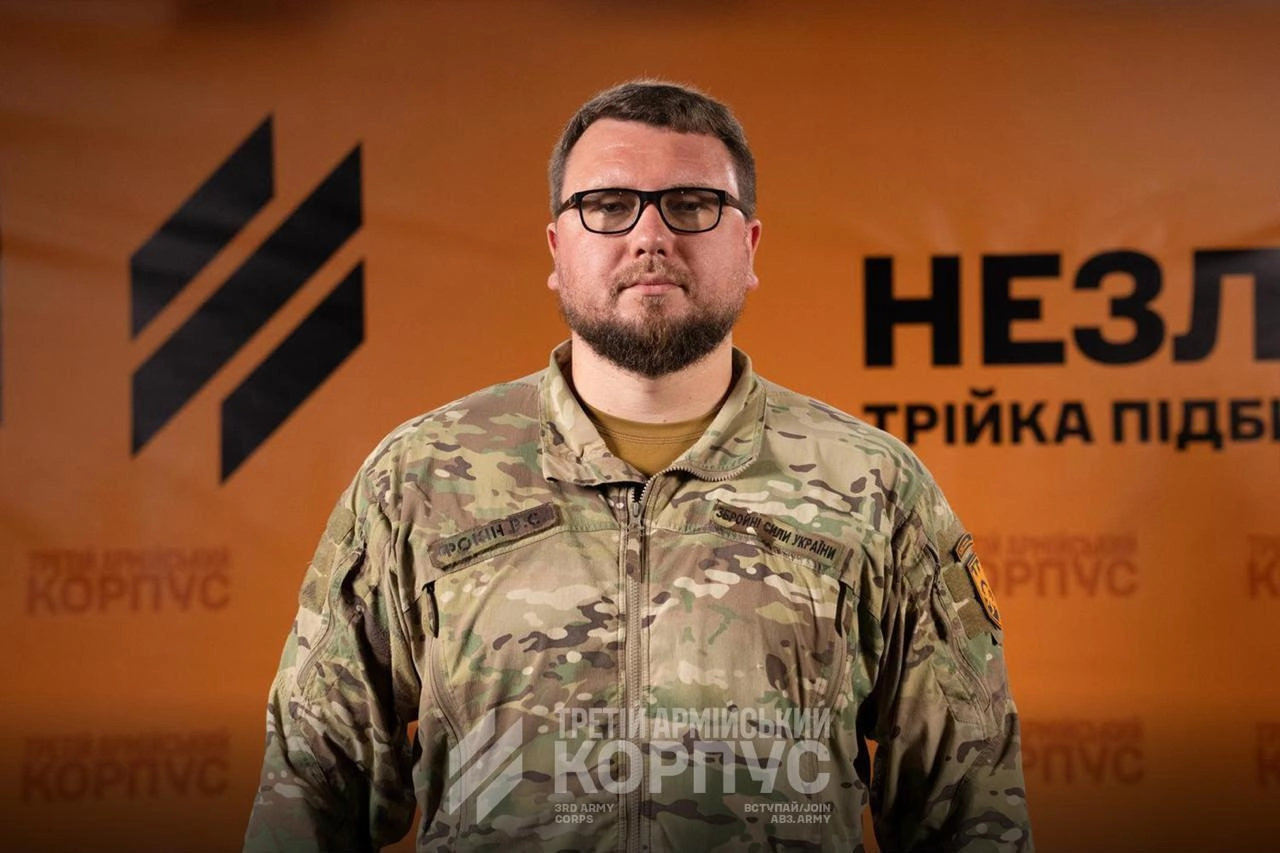
Volodymyr Fokin, the brigade commander, said he took over the unit last October and found a formation operating at only 18% personnel strength.
According to Fokin, the unit had almost no vehicles, no armored equipment, and little experience operating as a cohesive brigade. Parts of the formation were spread across multiple sectors of the front, while the brigade headquarters had never fully commanded all of its subordinate units in combat.
“On the entire brigade, we had two pickup trucks and one van,” he said.
Volodymyr Fokin, commander of the 125th Separate Heavy Mechanized Brigade, speaks during a press conference in Kharkiv, Ukraine, June 4, 2026. (Photo via Third Army Corps press service)
After conducting what he described as a rapid audit, the new command team replaced around 90% of key leadership positions and began rebuilding the unit almost from scratch.
Over the following seven months, Fokin said the brigade formed a tank battalion, an unmanned systems battalion, a ground robotic systems unit, and electronic warfare elements.
Personnel strength increased by 234%, while drone and artillery capabilities expanded significantly.
The commander argued that the changes were not only organizational, but cultural.
“Soldiers, especially sergeants and privates, had lost faith in themselves, in their capabilities and in their unit,” Fokin said, describing the state of the brigade when he first arrived.
Today, he said, the brigade is focused on initiative, professional development, and creating future officers from experienced enlisted soldiers who have already fought on the battlefield.
“Only the officer who has gone through the path of an infantryman truly understands the challenges faced by a soldier on the front line,” he said.
Training, retention, and the human factor
While technology was featured prominently throughout the discussion, commanders repeatedly emphasized that people remain the foundation of combat effectiveness.
Yehor Shcherbyna, chief of unmanned systems, 66th Separate Mechanized Brigade named after Prince Mstyslav the Brave, said one of the corps’ most significant contributions was improving training and integration processes for new personnel.
According to Shcherbyna, the brigade established its own training infrastructure, allowing recruits and mobilized personnel to complete a 51-day training cycle within the unit before joining combat formations.
“We can immediately integrate them into the unit where they will serve,” he said.
The brigade also introduced a mandatory adaptation period lasting between seven and 14 days after basic training. During that time, new personnel learn how their battalion operates, who supports them, and what missions they are likely to face.
“Every serviceman has a clear understanding of what awaits him on the battlefield,” Shcherbyna said.
Commanders also highlighted efforts to improve psychological recovery.
“Psychologists work with servicemen and help adapt them back to normal conditions, removing the combat stress they experienced in positions,” Shcherbyna said.
The brigade commander linked these efforts to personnel retention. According to him, the 66th Brigade currently holds one of the lowest rates of unauthorized absences in the Armed Forces of Ukraine (AFU).
He attributed that result to preparation, adaptation, and communication between commanders and soldiers.
“Every serviceman has contact with the battalion commander,” he said. “This raises the morale of soldiers, sergeants, and officers.”
Several commanders argued that training, professional development, and investment in personnel have become as important to battlefield success as drones, artillery, and electronic warfare systems.
One formation, many services
Since the start of the full-scale invasion in 2022, one of Ukraine’s military’s key challenges has been coordinating units from different branches of the security and defense forces under a unified command structure.
The Third Army Corps now includes not only army brigades, but also attached units from the State Border Guard Service (DPSU), Territorial Defense Forces (TDF), and other formations operating within its sector.
According to commanders, one of the corps’ goals has been to create a common operational framework regardless of a unit’s institutional background.
Andrii Hitt, chief of staff of the 3rd Border Detachment, said border guard units spent much of the war divided between different sectors and subordinated to different headquarters, often making coordination difficult.
“We came to the principle of one unit, one commander and one area of responsibility,” Hitt said.
The detachment was later reorganized into a brigade-type formation and eventually entered the Third Army Corps’ area of responsibility, where it now operates as an independent formation within the corps structure.
Hitt said one of the biggest differences from previous deployments was the level of cooperation among units.
“Here everything is clear,” he said. “There is an assessment of the situation, conclusions, and interaction. I have not seen this level of interaction anywhere else.”
He also highlighted the corps’ willingness to share expertise across formations, including air defense, electronic warfare, and operational planning.
“If something is unclear, people explain it,” Hitt said. “We act as a single element.”
According to him, three factors have been key to the unit’s experience inside the corps: personnel training, rapid integration of new technologies, and openness and mutual support between formations operating in the same sector.
One year after becoming the first newly formed corps to take responsibility for its own sector of the front, the Third Army Corps presents itself as more than a battlefield headquarters.
Throughout the press conference, commanders described a force that has spent the past year building new command structures, integrating units from different branches of the Ukrainian military, expanding the use of drones and robotic systems, and reshaping personnel training and management.
At the same time, they argued that the corps model is ultimately less about technology and more about creating a system capable of adapting to a rapidly changing battlefield.
“We did not invent something completely new,” Novytskyi said. “We made what already existed work.”
Whether the experience of the Third Army Corps can be replicated elsewhere remains an open question. But after a year of combat operations, its commanders say the experiment has already shown that organizational reform, technological innovation, and decentralized decision-making can coexist even under the pressures of a full-scale war.
As Ukraine continues to reform its military while fighting Russia, the Third Army Corps is positioning itself as a model for what the country’s future force could look like.