The TWZ Newsletter
Weekly insights and analysis on the latest developments in military technology, strategy, and foreign policy.
The recovery of much of a kill vehicle from a THAAD ballistic missile interceptor could be major intelligence loss. The post THAAD Kill Vehicle’s Infrared Seeker Appears To Have Been Found In Syria Intact appeared first on The War Zone.

The TWZ Newsletter
Weekly insights and analysis on the latest developments in military technology, strategy, and foreign policy.
An advanced imaging infrared seeker from a U.S.-made Terminal High Altitude Area Defense (THAAD) anti-ballistic missile interceptor looks to have been recovered largely intact in Syria. This could be a major intelligence loss that may allow adversaries to gain valuable insights into the capabilities of THAAD, which is being very heavily employed in the current conflict with Iran. THAAD has also been an important player in blunting previous Iranian missile barrages against Israel, and is a key component of the U.S. military’s global missile defense architecture.
A video, seen below, began circulating on social media earlier today showing the THAAD seeker, as well as other portions of the interceptor, on the ground. The clip is said to have been shot in the vicinity of the Syrian city of Suwayda in the southwestern corner of the country, though TWZ cannot immediately verify this independently. However, Suwayda is some 25 miles north of the border with Jordan and around 55 miles to the east of Israel’s internationally recognized boundaries. The U.S. military is currently reported to have THAAD batteries in Israel and Jordan.
As its name indicates, THAAD is designed to intercept short, medium, and intermediate-range ballistic missiles in the terminal phase of flight. Depending on a variety of factors, including the physical position of the launcher relative to the threat, the system can attempt intercepts against targets just as they begin their descent into Earth’s atmosphere.
THAAD cues its interceptors before their launch, either using its own powerful AN/TPY-2 radar or via data from offboard sensors through the Command, Control, Battle Management and Communication (C2BMC) network.
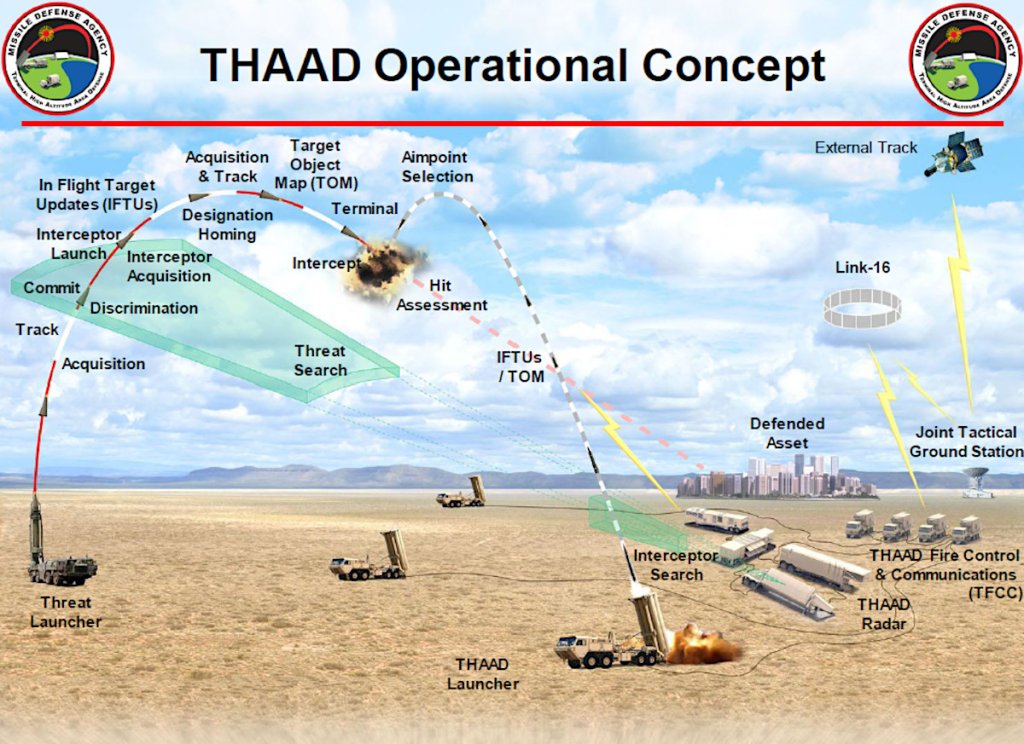
After launch, the so-called “kill vehicle” at the front end detaches from the rocket booster at the rear. A shroud at the front, which covers the seeker and the rest of the kill vehicle, also breaks away. That shroud is also seen on the ground in the newly emerged video.
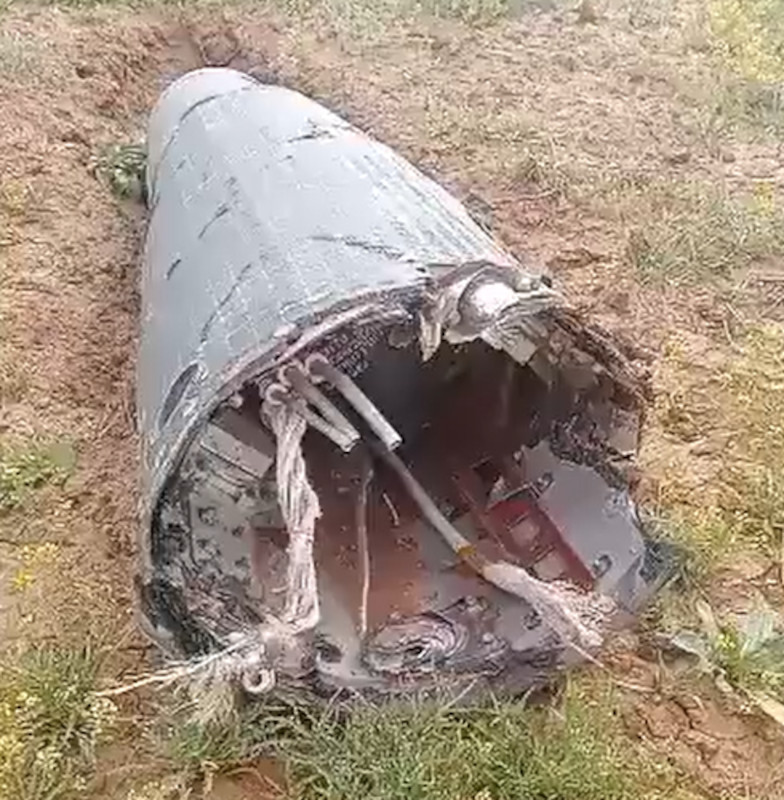
Freed from the shroud, the kill vehicle uses its conformal infrared seeker to find and home in on the target missile. In general, imaging infrared has the benefit of being a passive guidance method that is immune to radiofrequency countermeasures, such as jamming or decoys designed to mimic the radar signature of a real threat.
THAAD’s interceptors are hit-to-kill types that are designed to destroy their targets through sheer force of impact. As such, the kill vehicles do not contain any kind of explosive warhead. Each one does have several small rocket motors that help it precisely maneuver into position to slam into the incoming missile. These are collectively known as the Divert and Attitude Control System (DACS).
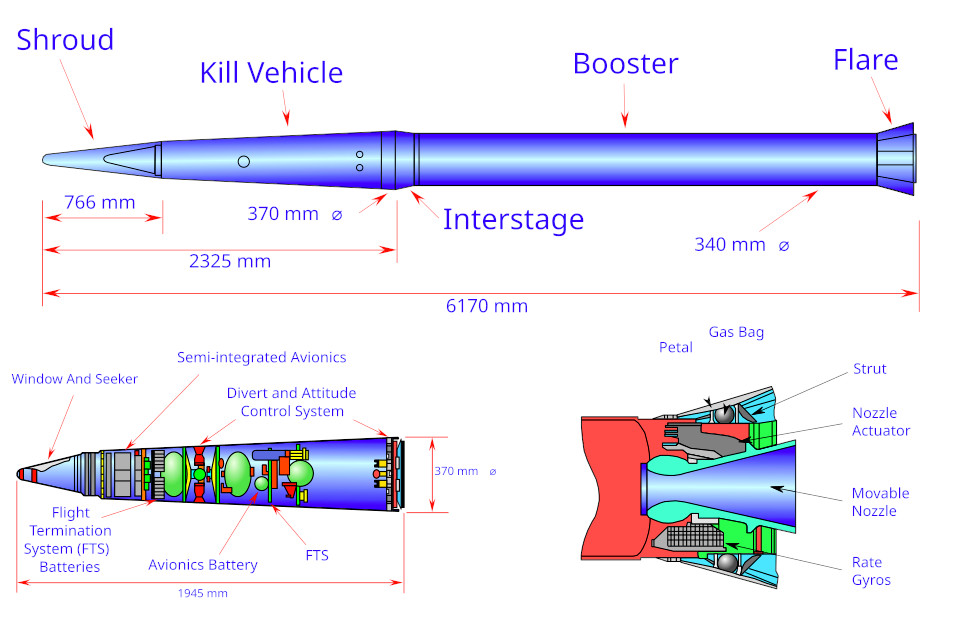
“The unique DACS provides two kinds of propulsion: one for attitude control and another for kill-vehicle maneuvering. The DACS uses six thrusters to provide roll, pitch, and yaw control for the interceptor,” according to L3Harris, which supplies this component of the interceptor. “These thrusters work together to precisely stabilize the interceptor-seeker field of view for proper target visibility. The seeker’s target data are then converted into maneuvering or divert commands that actuate the other four DACS thrusters as required. The four divert thrusters provide short, forceful pulses to quickly and accurately position the THAAD kill vehicle for target intercept.”
In the video, the entire kill vehicle is intact enough that the ports for some of these rockets are plainly visible.
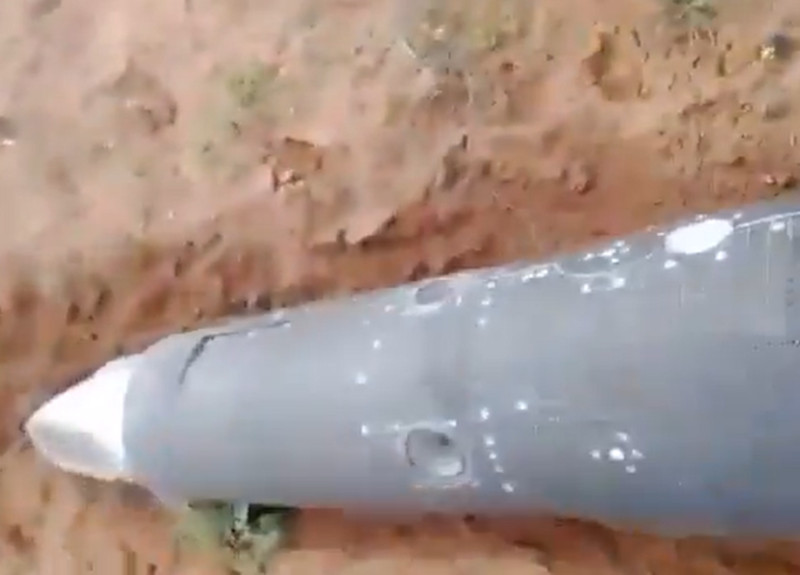
The fact that the kill vehicle and shroud were recovered on the ground so close together and in relatively good condition points to a failure of some kind, but the exact circumstances remain unknown. What has since happened to the debris is also not known.
Gaining access to a THAAD interceptor seeker, as well as the rest of the kill vehicle, would give an adversary new insights into its performance envelope and other capabilities. That information could then be used in the development of new countermeasures, as well as tactics, techniques, and procedures to reduce the interceptor’s effectiveness. This would be on top of what Iran, as well as countries like Russia and China, have already been gleaning just from observing THAAD’s performance in the current conflict, as well as prior engagements.
Deep intelligence exploitation of the physical design of the seeker and the kill vehicle, as well as the materials used to make them, could be beneficial for supporting other developments, as well. The kill vehicle and the systems within have to survive the stresses of traveling at hypersonic speeds, typically defined as anything above Mach 5, as it screams toward its target. Adversaries like China could leverage this information to improve their own anti-ballistic missile capabilities or attempt to clone THAAD more directly.
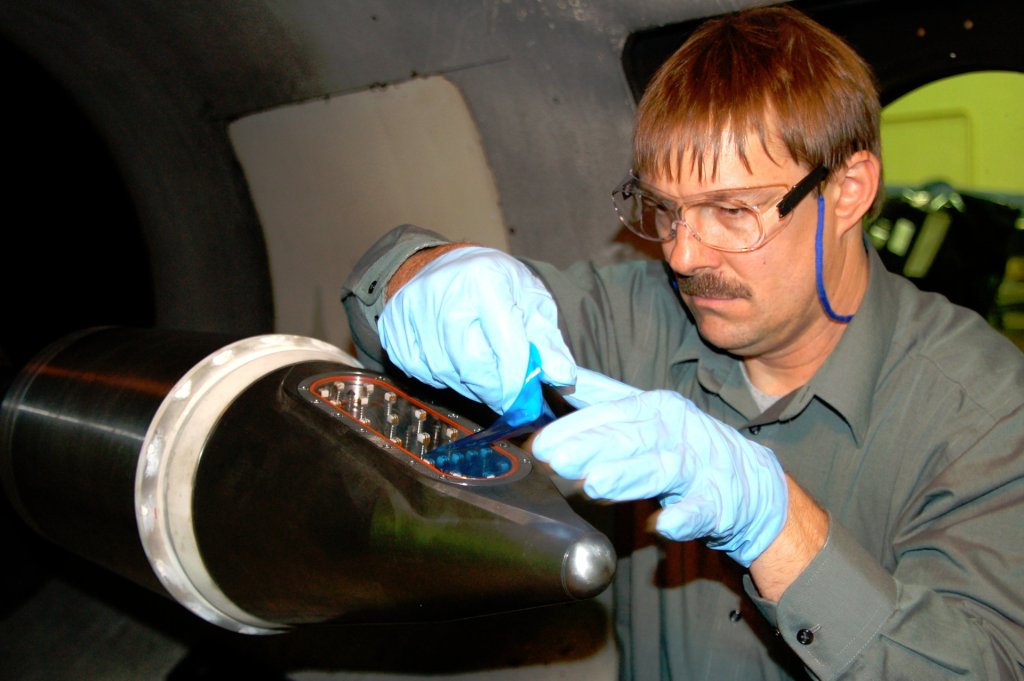
Employing highly advanced weaponry of any kind always carries at least a degree of risk of intelligence loss. Even just in the course of normal operations, the most reliable systems can still fail and fall into the wrong hands. This is not the first time TWZ has called attention to this reality, including in regard to the recovery of sensitive components of surface-to-air interceptors. The U.S. government, as well as China, Russia, and many other countries, have extensive foreign materiel exploitation programs poised to seize on any opportunity to acquire weapon systems and other equipment for extensive analysis, testing, and even reverse engineering.
Though we do not know what happened to the THAAD seeker and the rest of the kill vehicle seen in the video, this may not be the last time we see such debris in Syria or elsewhere in the region, given how extensively these interceptors are being used as Iranian ballistic missile attacks continue.
Contact the author: joe@twz.com

A Russian FPV drone struck a bus in central Nikopol as it approached a stop, killing three people and injuring 12, local authorities said.

Over the past 24 hours, Russian forces carried out 27 strikes in the Chernihiv region, resulting in 67 explosions.

A drone attack was reported in Russia's Leningrad Oblast on the night of 6-7 April. Local social media channels are reporting strikes and damage to an oil pipeline in the area of the port of Ust-Luga.

In the Russian Baltic port of Ust-Luga, the Defense Forces have struck at least 30% of the oil storage tanks.