The TWZ Newsletter
Weekly insights and analysis on the latest developments in military technology, strategy, and foreign policy.
We are getting a clearer idea of how the Navy thinks it can use these ships, which have an estimated cost of $17B per vessel. The post Everything New We Just Learned About The Trump Class Battleship Program appeared first on The War Zone.

The TWZ Newsletter
Weekly insights and analysis on the latest developments in military technology, strategy, and foreign policy.
The Navy’s top leadership says they are working hard to avoid serious issues that have plagued previous shipbuilding efforts when it comes to the Trump class “battleship” program. Senior officials have focused, in particular, on the need to have a very firm design before any work on the large surface combatants, the first of which could cost a whopping $17 billion, actually begins. A lack of a finalized design, along with repeated changes to it along the way, contributed heavily to the demise of the Constellation class frigate last year.
Editor’s note: As this story was being written, the Pentagon announced that the Secretary of the Navy “is departing the administration, effective immediately,” and that Undersecretary Hung Cao will take over as Acting Secretary of the Navy. No reason for the change in leadership was immediately given.
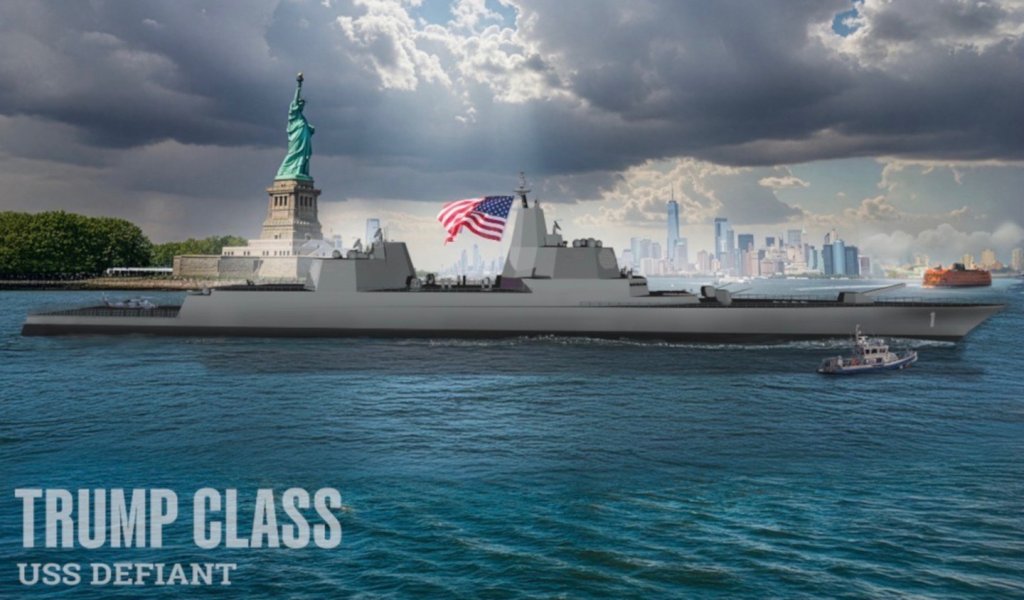
Chief of Naval Operations (CNO) Adm. Daryl Caudle and Secretary of the Navy John Phelan both discussed the Trump class battleship, also known as the BBG(X), at separate roundtables on the sidelines of the Navy League’s Sea Air Space 2026 exposition this week. President Donald Trump had officially rolled out plans for the Trump class, the first of which is currently set to be named the USS Defiant, last December.
“I think it is a necessary element to the force,” and “I think it provides real flexibility to the force,” said about the BBG(X) effort at his roundtable.
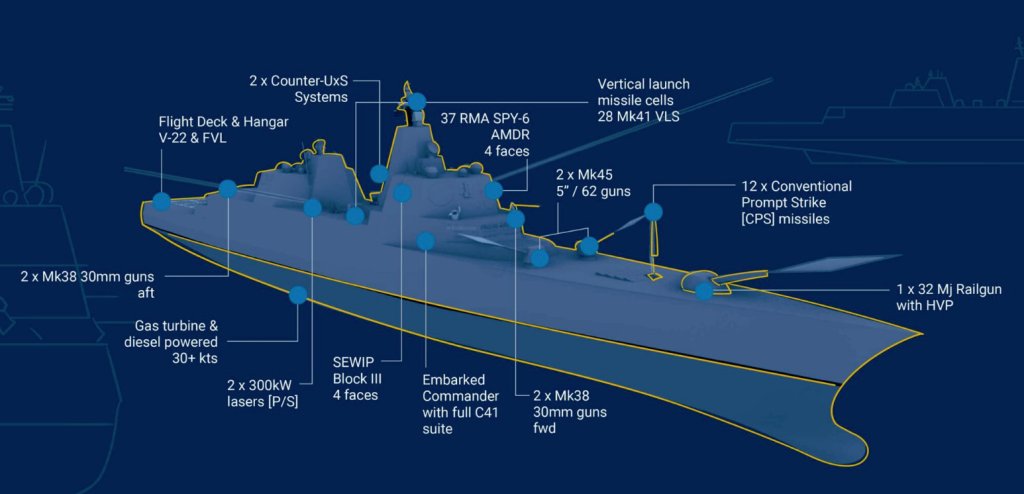
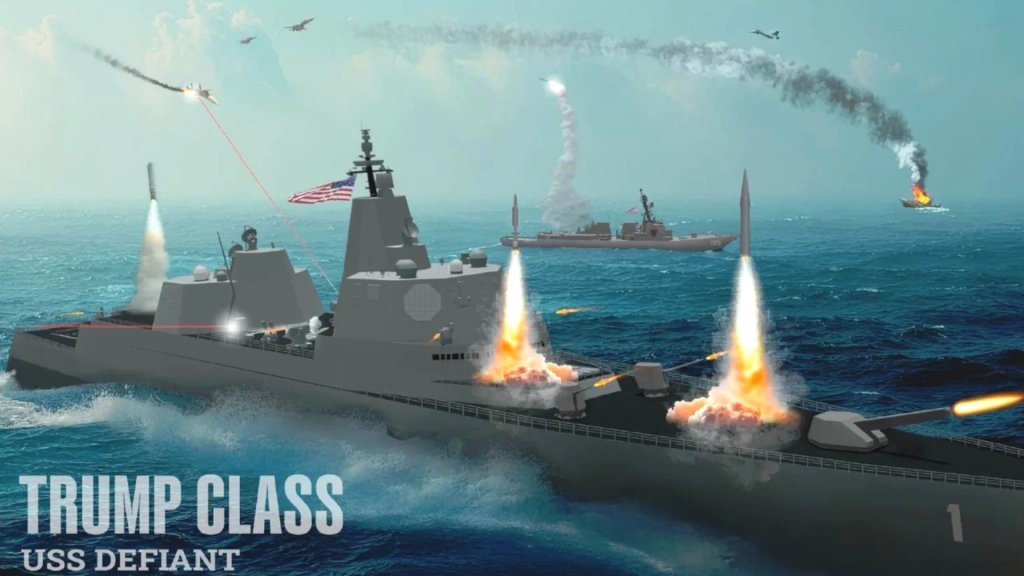
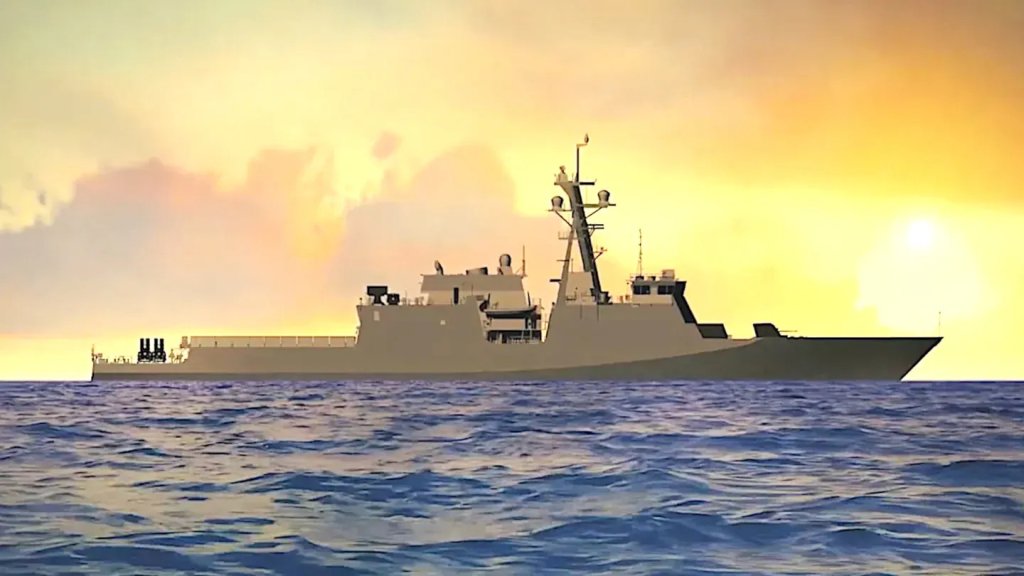
From what the Navy has shared so far, the Trump class warships will displace approximately 35,000 tons, very roughly three times that of the newest Flight III subvariant of the Arleigh Burke class destroyer. They will also be between 840 and 880 feet long, have a beam (the widest point in the hull) between 105 and 115 feet, and be able to reach a top speed greater than 30 knots. The armament on each of the ships will include a mix of nuclear and conventional missiles, including hypersonic types, loaded into large vertical launch system (VLS) arrays. They will also have an electromagnetic railgun, a pair of traditional 5-inch naval guns, laser directed energy weapons, and various additional weapons for close-in defense.
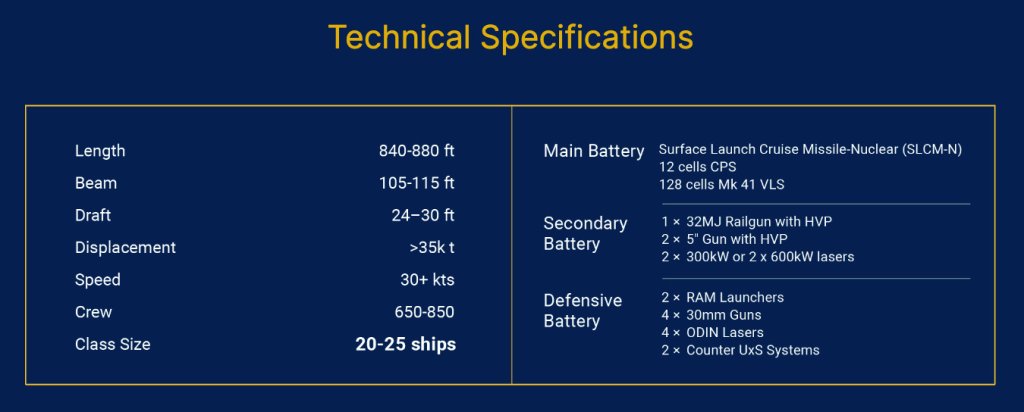
Navy officials also provided additional details about the costs and production schedule associated with the Trump class during yesterday’s rollout of the service’s proposed budget for the 2027 Fiscal Year. As it stands now, the Navy is looking to order the first of three of these large surface combatants in Fiscal Year 2028, at an estimated cost of $17 billion. The Navy is currently projecting it will spend $43.5 billion on the program, overall, across the next five years. As a point of comparison, the estimated total procurement costs of each of the next three Ford class aircraft carriers range from roughly $13 to $15 billion.
The $17 billion figure “is the early initial estimate. We’ll see where we really settle down as we get through that and start to rationalize some of the costs,” Secretary Phelan noted at his roundtable at Sea Air Space. “So, let’s see where we land on that first ship, and then what the economies of scale get us to as we move through it.”
The Navy has already started “talking to two different vendors” about actually building the Trump class warships, he added. “Then it’ll be a function of how we get through that design process with them, and then their capacity in their yards, what we think they can do. Because we’re looking to really get moving on this and lay the keel in [20]28.”
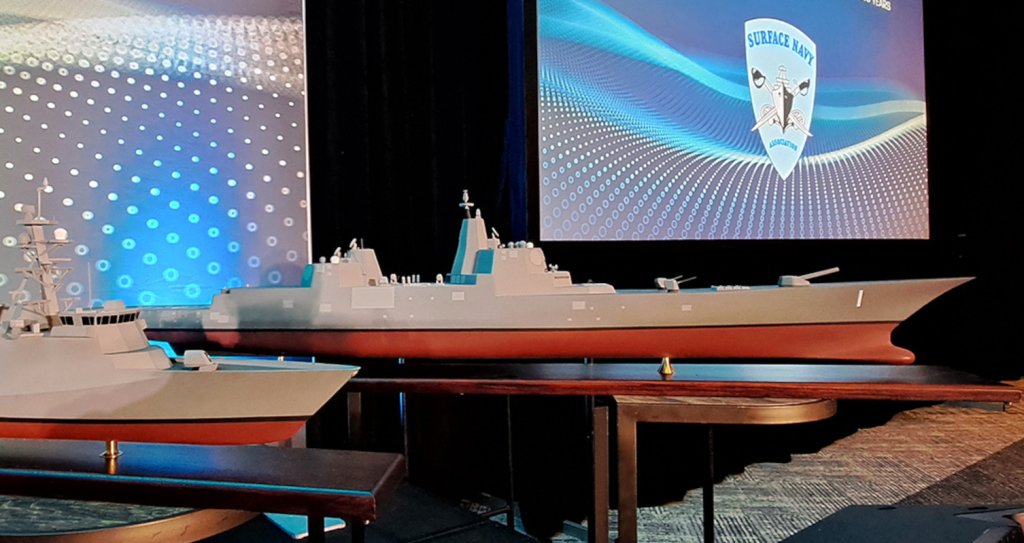
The Secretary of the Navy and CNO Caudle have made clear that the BBG(X) design is still in the very early stages of being formulated. The ships are also set to incorporate a host of advanced capabilities, many of which, such as the railgun and laser directed energy weapons, have yet to be fully proven out, despite years of relevant work the Navy has done already.
“The ship needs to be designed. So, I got to put money toward the research and design of it,” Adm. Caudle said during his roundtable at Sea Air Space. “It’s really the design and how much pull-through I can do from previous efforts, like things that we already have on Arleigh Burke and DDG(X) designs that were already in the works.”
The Navy has previously confirmed that BBG(X) is a direct successor to the DDG(X) next-generation destroyer program. The service has also said that the new large surface combatant addresses shortcomings that had emerged with the previously planned DDG(X) design, which we will come back to later on.
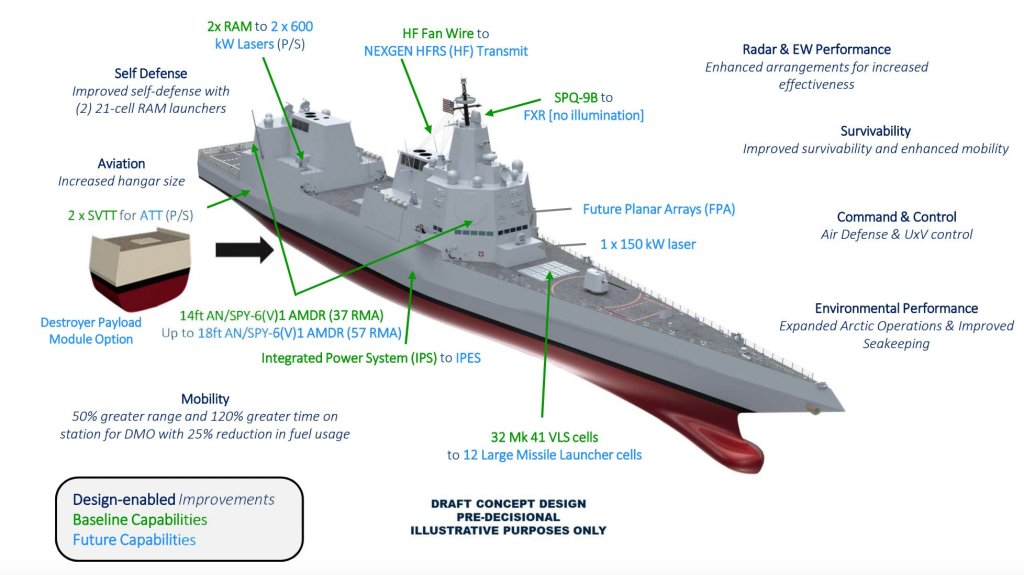
“So all that has to go into a form factor in which we’re fundamentally changing the capacity, [the] vertical capacity of it, [and] the electrical plant and electrical generation for future large-scale directed energy [weapons] and other munitions that require a lot of power, like railgun,” Caudle continued. “So all that’s being baked into that design. And, because we’re taking it so seriously, we want to make sure that we have the right resources applied to the design.”
One of the “mistakes that we’ve done before, quite frankly,” is “we’ve started to build before the design is mature enough,” the CNO added. “And we want to make sure that we’re at at [sic] least a very, very high level – I won’t try to give a percentage, but you can think like 80% or more design – before the first weld is done.”
Caudle did not explicitly mention the Constellation class frigate, but the design of that ship was still being finalized as of April 2025, nearly five years after the initial contract award. Work had already begun on the lead ship at that time. This was all despite the Navy having explicitly chosen a derivative of an in-production frigate – Franco-Italian Fregata Europea Multi-Missione (FREMM) – specifically to help reduce risk and keep the program on track. Needless to say, that did not happen, as you can read more about here.
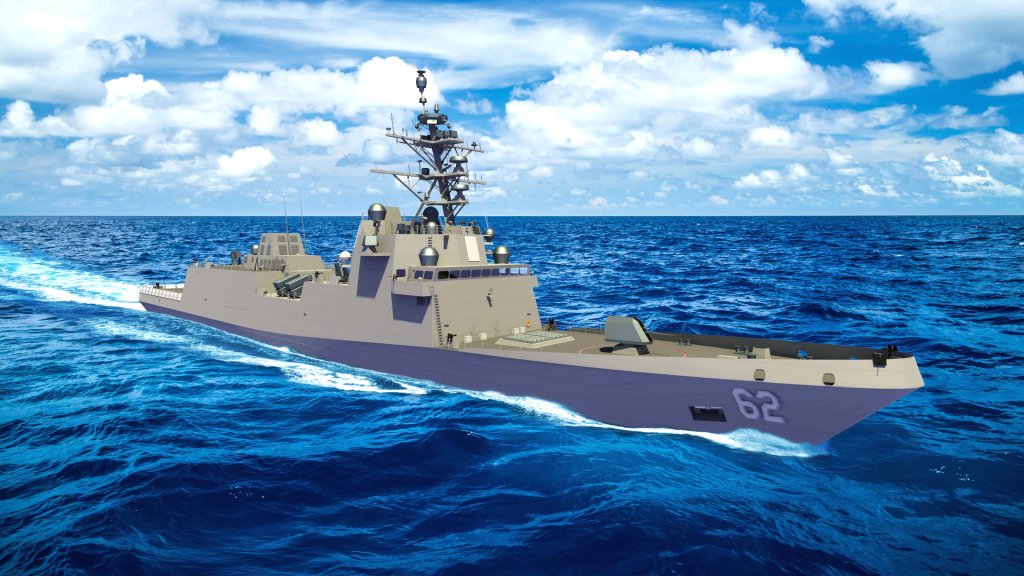
The Navy has also deliberately utilized a process known as “concurrency,” which entails starting production without having a validated design in place, on other shipbuilding projects. Concurrency has been presented in the past as a cost and time-saving measure, but has often produced exactly the opposite results. It has had notably negative impacts on the Navy’s newest operational aircraft carrier, the USS Gerald R. Ford, and both classes of Littoral Combat Ships (LCS).
“Look, we were doing work on railguns. We kind of abandoned it. We do have some directed energy [weapons] we are testing out right now,” Secretary Phelan also pointed out in terms of work the Navy has already done to develop key capabilities for the Trump class. “These are all things we have to get better at and need to do. So I think it’s just making sure that we’ve got the design down in an appropriate fashion, pretty locked down, and then making some trade-offs as we decide where to build that ship, when, how.”
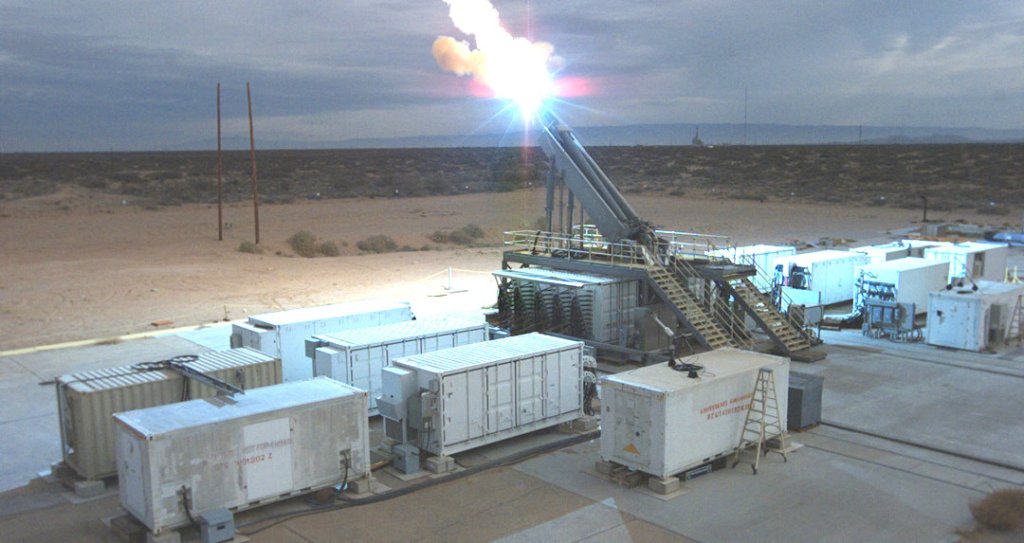
The Navy just disclosed earlier this year that it conducted at least one new round of live-fire testing utilizing a prototype electromagnetic railgun currently at the White Sands Missile Range (WSMR) in New Mexico. In the early 2020s, the service had shelved work on that weapon, at least publicly, despite promising developments, citing technical hurdles.
Navy officials also continue to be very supportive of work on laser directed energy weapons, despite ongoing challenges with their development. The service is actively pursuing microwave directed energy weapons, as well.
At his roundtable at Sea Air Space this week, Phelan said that there are discussions ongoing about the possibility of the Trump class warships being nuclear-powered, though he said that was “unlikely” to be the case. Nuclear propulsion would have major impacts on the complexity and cost of the ships. Navy budget documents say the plan currently is for the BBG(X) to use a combined conventional propulsion system that includes diesel generators and gas turbines.
The Navy is also still fleshing out how it plans to employ the Trump class battleships operationally, which will also have impacts on the final design. This ties back into the aforementioned issues with DDG(X) that the service has cited in the past. The Navy has said it had previously arrived at a place with the next-generation destroyer program where it was considering building two subclasses with different armament configurations. This, in turn, had prompted questions about the limits that course of action would have imposed on the operational flexibility of the class as a whole.
“It’s something we’re trying to understand all the proper trade-offs, and then think about it as a Battleship Strike Group, Carrier Strike Group, how do they work in which different theaters,” Phelan said. “Look at how we’re deployed today, and ask yourself, how a ship like that, what it could do for us. If I had a ship like that today, I could park that off the coast of Venezuela, and I don’t need a ton of DDGs [Arleigh Burke class destroyers] to support it, and I can relieve some of the pressure on those.”
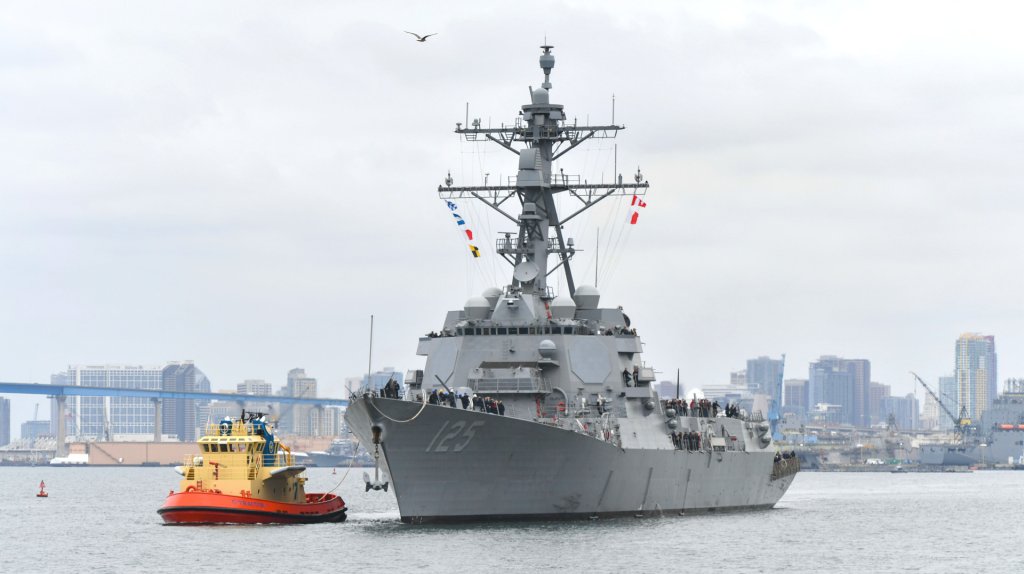
The Secretary’s comments here are in line with how the Navy’s latest budget request describes the current operational concept behind BBG(X).
“Adding capability at the highest end of the Golden Fleet high-low mix, the Battleship’s primary role is to deliver high-volume, long-range offensive fires and serve as a robust, survivable forward command and control platform. The expanded size and energy density of the new Battleship provide critical advantages for future naval warfare, offering a future-proof platform with distinct capabilities that enhance deterrence,” the line item for the program says. “Its advanced systems will enable true long-range strike with hypersonic weapons housed in new, larger vertical launch systems. Vastly increased power generation, managed by a sophisticated integrated power system with high-capacity energy storage, will support mission-critical directed energy weapons like high-output lasers and electromagnetic railguns, reducing reliance on costly single-use munitions.”
“Furthermore, its advanced naval gunfire offers cost-effective options for strike and defense, and its capacity to embark a fleet command staff enhances survivability by putting commanders closer to the fight. As a flexible command-and-control platform for both manned and unmanned platforms, the Battleship can lead a Surface Action Group, integrate with a Carrier Strike Group, or operate autonomously to secure critical sea lanes,” it continues. “To overcome the capacity limits of the Arleigh Burke class destroyer and the capability compromises of the previously planned DDG(X), the Battleship is designed specifically to accommodate these advanced weapon systems.”
TWZ has previously raised detailed questions about the actual ability of a warship like the Trump class design to conduct independent operations, as well as the general utility of employing it in this way. These questions are compounded by the Navy’s plans, at least right now, to only acquire a very small number of these ships, which can only be in one place at one time. They would also be top targets for adversaries in future conflicts. With the plan now to order the first of these ships in Fiscal Year 2028, the decision about whether to proceed at all could fall to a new administration, as well.
The service does not appear to have ever put out a firm target for how many of the smaller DDG(X)s it expected to buy, but there had been talk of acquiring between 30 and 50 of those ships in the coming decades.
There are also industrial base and affordability concerns around acquiring such an expensive class of new large surface combatants amid the Navy’s other shipbuilding priorities. Naval shipbuilding capacity, or lack thereof, in the United States has been of growing concern for years, especially when contrasted with China’s industrial might in this regard.
“What we’re looking at more is this distributed ship building in modular [sic; modules], and I think that is a way to tackle that issue,” Phelan said at his roundtable in response to a direct question about these issues. “We’re going to need to really improve our ability to build ships.”
While TWZ and other outlets at a separate event earlier this year, Adm. Caudle also touted the importance of a greater focus on modular shipbuilding methods, which are not new. At that time, CNO was talking about how that could be used to help accelerate work on new FF(X) frigates that the Navy is now looking to acquire in place of the abortive Constellation class.
“An innovative strategy is guiding the new Battleship’s design and construction, centered on a state-of-the-art digital workflow. This utilizes modern digital engineering, AI-enabled design, and advanced production practices to reduce cost and schedule risk. Adopting best practices from Korean and Japanese shipbuilding, the approach emphasizes high design maturity before construction begins, precision modular construction, and tight integration between design and production teams,” according to the Navy’s Fiscal Year 2027 budget request. “This digital-first, modular approach allows for distributed construction across the industrial base, with U.S. shipyards focusing on final assembly and integration. The strategy is designed to stabilize the workforce, increase industrial resilience, and deliver the new capability more predictably and affordably.”
With the Navy now pushing to order its first Trump class battleship in Fiscal Year 2028, and insisting it won’t start work without a very firm design in place, more details about these warships are likely to continue to emerge in the coming months.
Contact the author: joe@twz.com

Ukrainian President Volodymyr Zelensky has appointed the heads of the Security Service of Ukraine departments in Kyiv and the Kyiv region, as well as in the Kherson and Kharkiv regions.

Intercept released by Ukraine´s Intelligence suggests Russian commanders threaten and beat foreign recruits to force them into near-suicidal assaults.

A woman suspected of poisoning a soldier on behalf of Russian intelligence agencies has been detained in the Zakarpattia region.

Polish fintech company ZEN.com, which acquired 100% of the shares of insolvent JSC First Investment Bank (PINbank), does not plan to enter the Ukrainian banking market with lending services in the near future.