Fuelling a continent: how China’s engineering prowess built Africa’s biggest oil refinery

As the energy shock unleashed by tensions in the Middle East rippled through Africa, a massive oil refinery in Nigeria’s biggest city of Lagos, owned by Africa’s wealthiest man, came to the rescue. Running at its full capacity of 650,000 barrels per day, the world’s biggest single-train refinery sup

South China Morning Post
75
2 min read
0 views
Fuelling a continent: how China’s engineering prowess built Africa’s biggest oil refinery

As the energy shock unleashed by tensions in the Middle East rippled through Africa, a massive oil refinery in Nigeria’s biggest city of Lagos, owned by Africa’s wealthiest man, came to the rescue.

Running at its full capacity of 650,000 barrels per day, the world’s biggest single-train refinery supplied fuel to many African countries that usually relied on imports through the Strait of Hormuz, from Senegal in the west to Mozambique in the southeast.

Built at a cost of about US$20 billion, Dangote Petroleum Refinery’s eight-year journey from construction to production was made possible by cost-efficient Chinese engineering, procurement and construction contractors, according to Aliko Dangote, the refinery’s founder and chairman as well as Africa’s wealthiest person.

“The case between Africa and China is like where everybody abandoned you and somebody tells you, ‘Fine, you know what, let us partner with you’,” Dangote told a conference of the Africa Finance Corporation in the Kenyan capital Nairobi in April.

“We will get credit lines from China and deliver on time.”
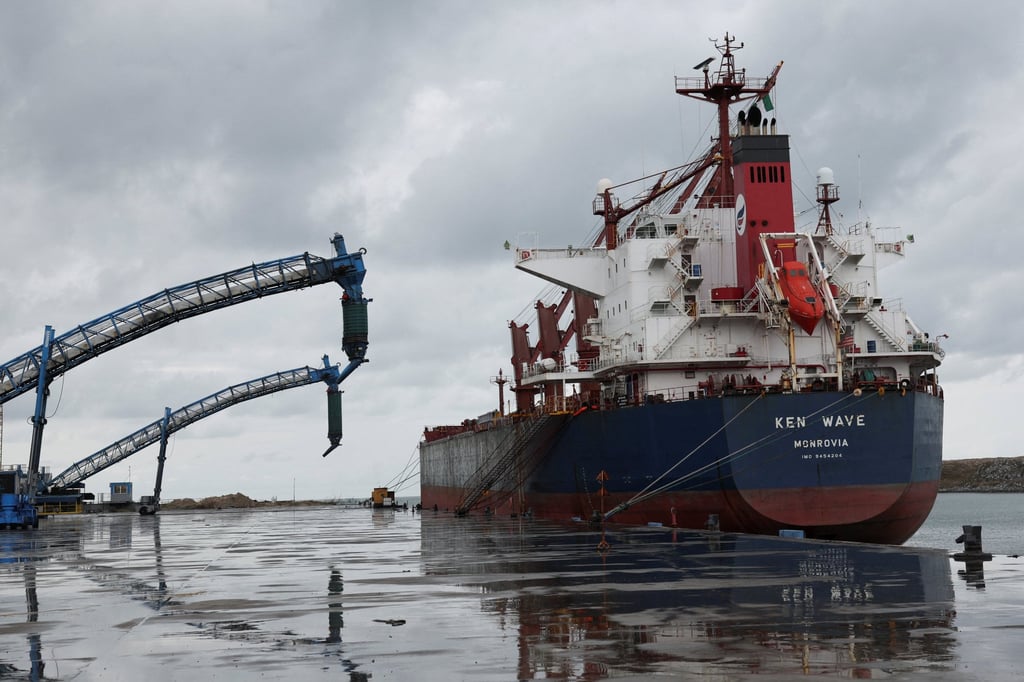
An oil vessel waits at Dangote Petroleum Refinery’s loading and discharging point in Lagos. Photo: Reuters

An oil vessel waits at Dangote Petroleum Refinery’s loading and discharging point in Lagos. Photo: Reuters

Dangote Petroleum Refinery now plans to expand its refining capacity to 1.4 million barrels per day. In February, it signed a US$400 million deal with China’s XCMG Construction Machinery to start the expansion.

Share this article

Related Articles

Why does China portray India as an elephant? Decoding the politics of animal analogy
🇨🇳🇹🇼China vs Taiwan
South China Morning Post

Why does China portray India as an elephant? Decoding the politics of animal analogy

In December 2010, on the final day of his three-day India visit, Chinese premier Wen Jiabao offered a metaphorical vision for bilateral ties, suggesting that “the dragon and the elephant should tango”. The analogy – dragon for China, elephant for India – had already circulated in Western academic an

hace alrededor de 7 horas2 min
Faith, hope and ancestry: William Lai’s clan village in Beijing’s push for cross-strait ties
🇨🇳🇹🇼China vs Taiwan
South China Morning Post

Faith, hope and ancestry: William Lai’s clan village in Beijing’s push for cross-strait ties

As the closest mainland Chinese province to Taiwan, Fujian is a key site for Beijing’s messaging towards the island. In the second of a two-part series, Xinlu Liang looks at how the ancestral home village of William Lai Ching-te has become a focus for efforts to promote closer ties based on kinship

hace alrededor de 13 horas2 min
Beyond subsidies: what’s really driving China’s industrial climb
🇨🇳🇹🇼China vs Taiwan
South China Morning Post

Beyond subsidies: what’s really driving China’s industrial climb

Driven by intensifying competition in advanced manufacturing, the world is waking up to “China shock 2.0”. The first “shock”, associated with China’s accession to the World Trade Organization in 2001, focused on low-tech manufacturing. Of course, this latest “shock” isn’t framed as such by Chinese p

hace alrededor de 13 horas2 min
Can the US Democrats beat Trump by becoming more like him? A Chinese academic weighs in
🇨🇳🇹🇼China vs Taiwan
South China Morning Post

Can the US Democrats beat Trump by becoming more like him? A Chinese academic weighs in

The US Democrats have pursued “selective Trumpification” since losing power in 2024, but their strategy of borrowing from the president’s agenda and mimicking his abrasive style risks undermining their branding as guardians of American institutions, according to a Chinese academic. Two years ago, th

hace alrededor de 21 horas1 min