
Greece has placed an order for RAM Block 2A missiles to equip its fast attack missile craft, with a second batch of RAM Block 2B missiles expected in the near future for integration on the FDI HN frigates.
The General Directorate for Defence Investments and Armaments (GDDIA) of the Hellenic Ministry of National Defence announced that on Tuesday, 10 March 2026, Contract No. 001B/25 was signed by the Director General of GDDIA, Major General Ioannis Bouras, with RAM–SYSTEM (RAMSYS) GmbH for the procurement of 52 RAM Block 2A (RIM-116D) guided missiles.

The program had previously been approved by the Hellenic Parliament on December 3, 2025 and is primarily intended to equip the 21-cell RAM launchers of the last two Hellenic Navy Roussen-class (Super Vita) Fast Attack Missile Craft (FACM), P-78 Karathanasisand P-79 Vlahakos. In addition, the acquisition includes 10 extra missiles to reinforce the Navy’s overall stockpile. These two vessels were commissioned into the Fleet during the 2020–2022 period.
Delivery of the full quantity of missiles is scheduled to be completed within 18 months following contract activation.

A key advantage of this acquisition lies in its fleet-wide interoperability. The RAM Block 2A missiles are fully backward-compatible with the launch systems installed on all existing Roussen-class vessels that have been upgraded to support this newer missile generation. Currently, these ships operate the earlier Block 1A (RIM-116B) variant. Furthermore, the new missiles are designated for integration into the upcoming Kimon-class (FDI HN) frigates, enabling a unified and highly capable point-defense solution across multiple surface combatant platforms.
RAM Missiles for FDI Frigates
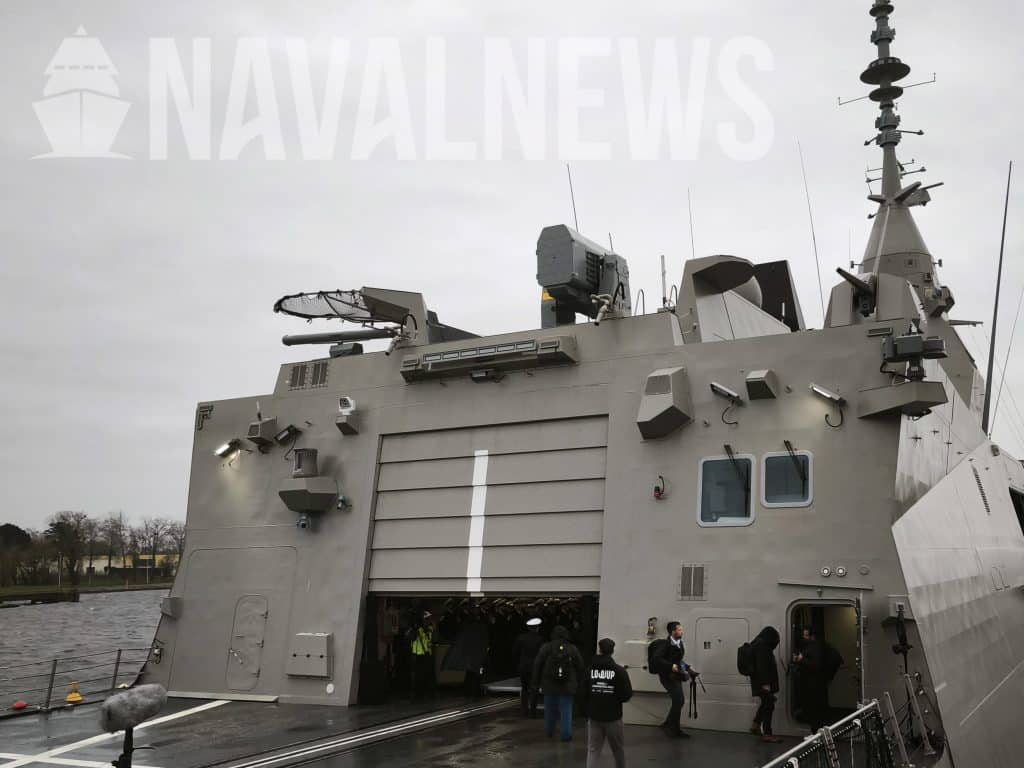
A follow-on procurement of an additional batch of RAM missiles is expected in the near term to support the four Kimon-class (FDI HN) frigates, the first of which, Kimon (F-601), has already entered active service. A central element of the FDI frigate program is the acquisition of next-generation guided missiles (Block 2B) under a dedicated, standalone contract, ensuring that these advanced vessels are equipped with state-of-the-art munitions from the outset.
The Hellenic Navy has already initiated the procurement process, with finalization of the agreement anticipated in the near future. The planned quantity is expected to include at least 84 missiles.
With the commissioning of all four FDI HN frigates into the Fleet by 2028, the Hellenic Navy will operate a total of eleven RAM launchers produced by the German RAMSYS. The RAM system currently represents the most advanced close-in air defense capability within the Hellenic Navy’s inventory, echoing the choice of the US and Germany amongst many, significantly enhancing layered fleet protection against modern aerial and surface threats.
RAM Block 2 SAM

The Rolling Airframe Missile (RAM) is fire-and-forget Close-In Weapon System (CIWS) for ship self-defence against Anti-Ship Missiles (ASM), drones, helicopters, aircraft and surface targets. RAM was designed to engage the most challenging threats and is capable of effectively coping with multiple and high-density raids, even in littoral scenarios.
RAM Block 2 is a kinematic and radio frequency (RF) receiver upgrade of the RAM Block 1A missile. It also provides for pier communication between missiles of a salvo firing. A larger, more powerful rocket motor and advanced control section provides the Block 2 missile with the capability to defeat high-maneuver threats. The enhanced RF receiver allows detection of anti-ship missiles that employ low probability of intercept radars. Maximum reported effective range is about 9km for Block 1 models
and about 15km for Block 2 missiles depending on the target.
The RAM system Mk 31 consists of the missile RIM-116 and the Guided Missile Launching System (GMLS) Mk 49. The GMLS holds 21 RAM Block 1 or RAM Block 2 RIM-116 missiles and is integrated with the Combat Management System (CMS) of the naval platform.


