The TWZ Newsletter
Weekly insights and analysis on the latest developments in military technology, strategy, and foreign policy.
Unleashing submunitions at high altitudes has helped Iran to get through Israel's terminal missile defenses, and is a tactic others will likely seize upon. The post Iran Is Piercing Israel’s Ballistic Missile Defenses With High Altitude Cluster Warhead Releases appeared first on The War Zone.

The TWZ Newsletter
Weekly insights and analysis on the latest developments in military technology, strategy, and foreign policy.
One of the most striking visuals to emerge in the current conflict with Iran has been videos of ballistic missiles unleashing torrents of cluster munitions at very high altitudes over Israel. In doing so, the Iranians look to have found a worrisome way to consistently get around terminal-phase ballistic missile defenses, especially Israel’s David’s Sling.
The gap that the Iranians are leveraging with these cluster munition missile attacks goes beyond just bypassing terminal defenses. It, by extension, puts greater pressure on diminishing stocks of prized mid-course interceptors to try to defeat these incoming threats before they release their payloads. With all this in mind, what we are seeing with Iran’s attacks on Israel with ballistic missiles with cluster warheads could have even greater implications for future conflicts elsewhere, particularly in the Pacific region.
In some five weeks of fighting, Iran had launched more than 500 ballistic missiles at Israel, with at least 30 of those having carried cluster munition payloads (likely many more), according to the Times of Israel. Iran had fired ballistic missiles with cluster warheads in anger for the first time in attacks on Israel during last year’s 12 Day War.
One of the ballistic missiles launched by Iran at central Israel a short while ago carried a cluster bomb warhead, footage shows. pic.twitter.com/kaIdFcyKuj
— Emanuel (Mannie) Fabian (@manniefabian) March 24, 2026Spectacular footage showing the fall of submunitions from the Iranian Khorramshahr-4 medium-range ballistic missile carrying cluster warhead on Israel short time ago. pic.twitter.com/n6LsbZwp1C
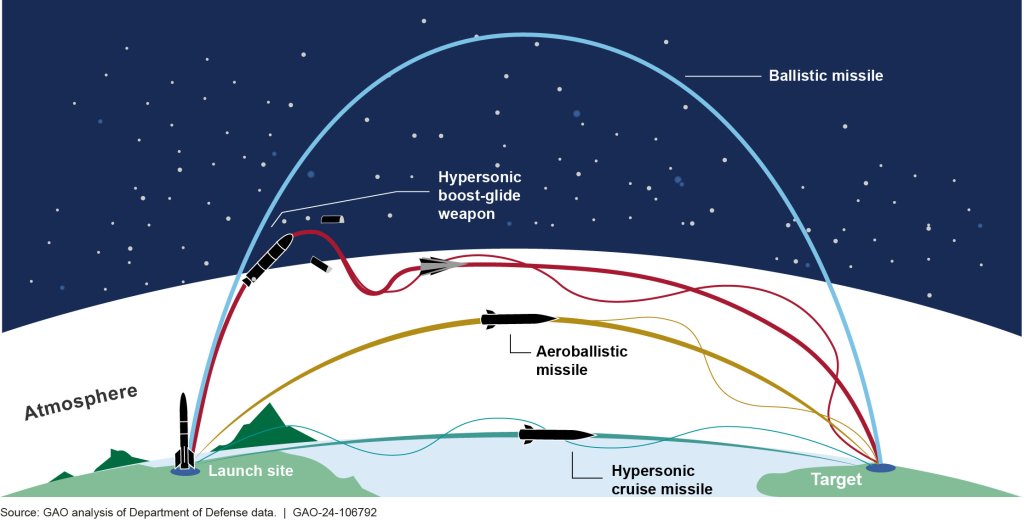
— Status-6 (War & Military News) (@Archer83Able) March 17, 2026Iran has developed multiple types of submunitions that can be dispersed via different ballistic missiles in its inventory during the terminal phases of their flight. Ballistic missiles typically fly along roughly parabolic trajectories to their targets. The arc is generally broken down into three main sections: the boost phase right after launch, the terminal phase as the missile comes back down at the end, and the mid-course phase in between. During the mid-course phase, the missiles leave the Earth’s atmosphere, with larger types spending more time in space in the middle of their flight. You can learn more about the complexities of intercepting a target in the mid-course phase in our past report here.
A typical Iranian cluster warhead reportedly contains between 20 and 30 submunitions. However, larger missiles, like members of the Khorramshahr family, are said to be able to carry up to 80. Reports also state that the cluster munitions can contain anywhere between four and 11 pounds of explosives. The damage they can cause is further magnified by the high speed with which they impact the ground.
“Iran has shown pictures in the past of triconic warheads [for ballistic missiles] equipped with at least four different sizes and types of bomblets,” Behnam Ben Taleblu, a senior fellow at the Foundation for Defense of Democracies (FDD) think tank, told TWZ. “So Iran calls these warheads ‘raining warheads,’ because these different bomblets will be showered on a wider geographic target set than if it was just the traditional unitary high explosive warhead. How many depends on what kind of configuration of bomblets they can actually choose to put in, but it can be easily a dozen-plus to two dozen to three dozen, depending on the size of the bomblets.”
The Iranian submunition installed in Iranian BM launched at Israel was seen TWICE in the past: In 2016 weapons exhibition and in a failed KHORRAMSHAHR missile test in Iran, 2023. pic.twitter.com/AxCYSDxs69
— Tal Inbar (@inbarspace) June 21, 2025For the first time, a SUB-MUNITION from an Iranian BM was found in Israel. It is not yet clear on what type of missile it was installed. pic.twitter.com/HgwxCsE0FS
— Tal Inbar (@inbarspace) June 19, 2025“Most importantly, in this conflict, the regime is using the Khoramshar ballistic missile, which is a threshold medium-range ballistic missile modified from an intermediate-range ballistic missile that can carry the heaviest reported warhead weight,” he added. “So, the regime is basically filling a large conical warhead with lots of bomblets and cluster munitions that basically fuse and disperse upon re-entry into the atmosphere, posing a real challenge, even for integrated air and missile defense systems like what the Israelis have, and causing quite a bit of damage and civilian harm.”
Both the shape of the fragment and the serial number pattern indicate it was part of a Khorramshahr reentry vehicle.
Would confirm the suspicion that some of the large submunition releases observed over Israel were linked to the use of the Khorramshahr. https://t.co/KP4Sp1Yy9P pic.twitter.com/B7SC1q6GNQ
Khorramshah-4 is shorter than the previous versions as the missile engine is designed inside fuel tank.
The evolvement of different versions of Khorramshahr mostly deal with its re-entry vehicles which @inbarspace showed in this good picture. 3 pic.twitter.com/nm7kC6WfL2
Differentiating between missiles carrying cluster warheads and those with unitary ones is likely to be difficult, if not impossible, before any release of submarines occurs. This creates further challenges for defenders, as we will come back to later on.
In terms of dispersion, when Iran first fired cluster munition-laden ballistic missiles at Israel last year, authorities in the latter country said the weapons had released their payloads at an altitude of approximately 23,000 feet (seven kilometers). The submunitions were scattered across an area approximately 10 miles (16 kilometers) in diameter. This is in line with a report last month from CNN, where that outlet assessed two separate Iranian cluster missile attacks to have dropped submunitions across areas in Israel between roughly seven and eight miles (approximately 11 to 13 kilometers) long.
The IDF Home Front Command confirms that Iran launched at least one ballistic missile carrying a cluster bomb warhead at central Israel today.
The missile's warhead split while descending, at around 7 kilometers altitude, spreading around 20 smaller munitions in a radius of… https://t.co/PF5RCpLfvH pic.twitter.com/2wyrH2JJM3
Israel’s Haaretz has also previously reported an instance where submunitions, apparently all from one missile, hit seven populated areas within a zone measuring nearly 17 miles (27 kilometers) across. This would point to a higher release altitude than the other cases.
A higher-altitude release earlier in the terminal phase of a missile’s flight inherently presents greater challenges for defenders trying to intercept the warhead before submunition release. Once the payload is dispersed, one larger target suddenly becomes dozens of smaller ones.
The David’s Sling system’s Stunner interceptors have a reported maximum engagement altitude of around nine miles (15 kilometers). However, various factors, especially the position of the launcher in relation to the target’s flight path, would impact the circumstances in which they would be able to reach the upper end of their envelope.
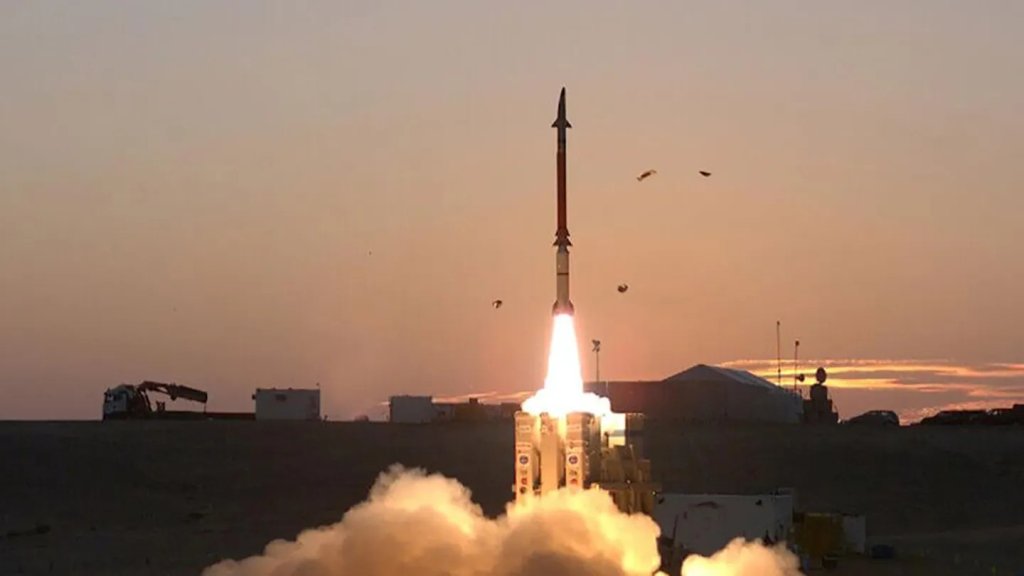
There are terminal missile defense systems with greater reach, such as the U.S. Terminal High Altitude Area Defense (THAAD) system and the ship-launched Standard Missile-6 (SM-6), but their engagement envelopes still face positional constraints. THAAD would likely have the best chance as its interceptors can reach higher altitudes, in some circumstances, near the end of the transition from the mid-course to the terminal stage of flight.
As with Stunner, releases at very high altitudes would preclude intercept attempts by lower-tier terminal defenses like Patriot entirely.
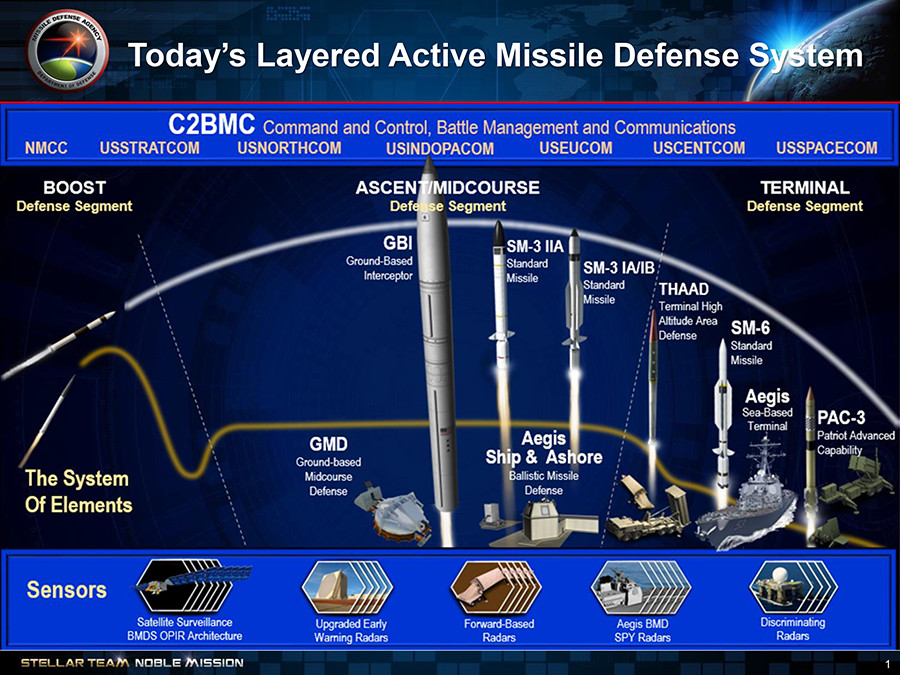
All of this combines to creates a situation in which mid-course intercept attempts are critical for catching cluster munition-laden missiles before they release their payloads. However, inventories of relevant interceptors to defend targets in Israel have reportedly been dwindling after weeks of persistent Iranian ballistic missile attacks. Mid-course interceptors, like the U.S. Standard Missile-3 (SM-3) and the Israeli Arrow 3, are precious munitions that have generally been stockpiled at lower levels, to begin with. They also take years to procure and cost many millions of dollars each.
Retired Army Col. David Shank echoed much of this when speaking to TWZ about the challenges and complexities of responding to Iranian long-range ballistic missiles with cluster munition payloads. Shank, who served as Commandant of the Air Defense Artillery School at Fort Sill, Oklahoma, and as the 10th Army Air Missile Defense Commander in Europe, also highlighted that this threat would require the use of higher-end systems to attempt intercepts, either inside or outside of the Earth’s atmosphere, before any submunition payload is released.
“We talk endo/exo-atmospheric. We’re talking THAAD capability, [and] SM-6/SM-3-capable systems,” Shank explained. “And so we’re really talking upper-tier in order to defeat that type of target once it is launched.”
The video below shows THAAD interceptors being fired at incoming Iranian threats in the course of the current conflict.
“Obviously, the goal is to kill it before they even launch it through a variety of means to do that,” he continued. “But if you can’t do that, and there is some type of air launch. And the next step is that upper-tier capability, coupled with other domains.”
In terms of other domains, “let’s just talk space real quick,” he added. “Sensing that launch and detecting it and then passing that information over a network, ultimately to what we’re talking about now,” systems like THAAD and ships armed with SM-3s and SM-6s that are “capable of defeating that threat with endo- and exo-atmosphere capabilities I mentioned.”
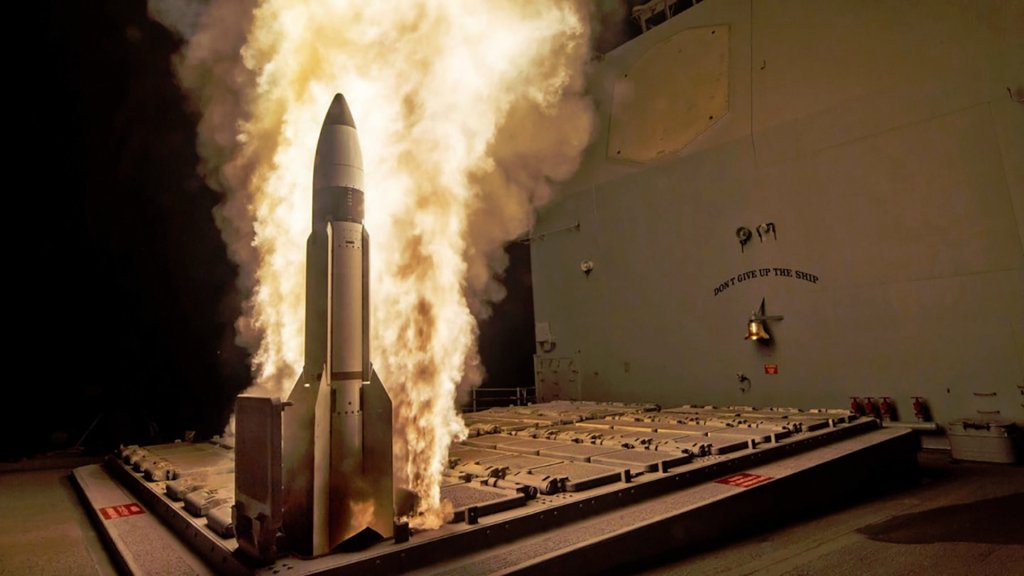
Shank underscored the importance of trying to intercept ballistic missiles with cluster warheads at as high altitudes as possible before they can release their payloads.
“Once it hits that point where bomblets are released, so a mechanism within the platform that releases the bomblets, instead of now having one aerial threat, now you obviously have many,” he said. “So, very difficult now to engage multiple aerial threats at one time.”
Shank told us that watching videos of submunitions being dispersed from Iranian ballistic missiles reminded him of past modeling and simulation of such attacks he observed during his time in the Army.
“I’ve seen modeling and simulation, when I was still in uniform years ago, of how we would fight against those types of early-release munitions,” he said. “They had different names then, but it’s very similar to what we’re seeing now in real time.”
That modeling and simulation “would show that overmatch” and that “need to defeat that capability before it does disperse those early-release munitions or those bomblets,” he added.
The retired Army air defense officer noted that the ballistic missile threat ecosystem in the Middle East, in general, is made more complicated by the relatively short distances those weapons travel from launch points in Iran to their targets.
“In the scenario that’s playing out real time, potentially, if they’re launched out of southwestern Iran at the GCCs [Gulf Cooperation Council states on the Arabian Peninsula] – they’re the closest – so minutes, two, three, four minutes,” said Shank.
The time to react is further compressed when facing missiles carrying scatterable payloads. “You’re down to a minute or two.”
Attempts can still be made to intercept submunitions after they are released. At the same time, in addition to the challenge of trying to prioritize and engage dozens of smaller targets, intercept attempts against individual submunitions also impose different costs on the defender. These are targets that are likely to be cheap even compared to lower-cost interceptors. Trying to shoot them down with something like Patriot would create an even more lopsided exchange ratio. Also their singular destructive power is far less than a unitary payload.
“What’s the cost curve look like?” Shank said, speaking generally about how expensive this proposition could become.
“I talk cost curve a lot, [but] you got to recognize the boots and the people that are on the ground on the other end of that, and other national assets and capabilities,” Shank noted. “What is a Soldier’s life worth? … What is an E-3 AWACS aircraft that is high-demand, low-density – what value do you put on something like that, or even a Patriot radar?”
Overall, Iran’s use of ballistic missiles with cluster munition warheads highlights a “very big challenge in front of us, and so when I say in front of us, obviously in front of the warfighters. It’s a lot,” Shank said, highlighting the broader ramifications. “From an operator perspective, you have to discern which target is which, which one should be the priority to defeat first, how many of those bomblets are possibly going to impact dirt and not be a threat, and which ones will be the threat. You’ve got to discern [that] fairly quickly, and then pass on those engagement authorities to the shooters.”
As noted earlier, it is likely that defenders would be challenged to differentiate between missiles carrying submunitions and those with unitary payloads until a release occurs. This can only make it more difficult to prioritize intercept attempts against missiles with cluster munition warheads, especially in the mid-course phase of flight, when it would be most ideal. This could then contribute to a further wearing down of stocks of critical mid-course interceptors.
Shank stressed that this is not an entirely new problem set for the U.S. military, citing the aforementioned modeling and simulations.
“It helped drive discussions on increased [force] structure, increased requirements. It helped recognize, in this scenario [including missiles with cluster munition warheads], adversarial capabilities with regards to munitions,” he explained. “The results, or the findings, personally, were somewhat laughable.”
“We would run a scenario, not necessarily the Middle East, but we’d run a general scenario, and the outcomes would be, well, we need 48 Patriot battalions, as an example. And then that’s a hypothetical number, but it was a very large number,” Shank said. “And, so, when you think through this, at the time, I think the U.S. Army had 14 Patriot battalions. And this was a 2030-2035 scenario, which we’re a lot closer to today, and we have 16 Patriot battalions. And so even if you factored in – which we were not during that modeling and simulation period, or exercise – but even if you factored in our allies and partners, I’m not sure we have 48 Patriot battalions on planet earth.”
TWZ has written on several occasions in the past about the strains on the U.S. Army’s Patriot force, which is inadequate to meet current demands. This is reflective of broader air and missile defense capacity limitations across the U.S. military, despite efforts in recent years to change that paradigm. This has been highlighted again in the course of the current conflict with Iran, and would be an even bigger issue should a high-end fight, such as one in the Pacific against China, erupt.
As an aside to all this, Shank pointed to the importance of so-called “left-of-launch” operations to neutralize threats before they are even launched.
“Within the U.S. Army, we had four ‘pillars’ within integrated air and missile defense. It’s attack operations. It’s active air defense, passive air defense, and command and control,” he noted. “And so the attack operations piece is that left of launch piece. And I would also tie today some of our offensive cyber capabilities as part of attack operations.”
“Again, if we can prevent an adversary from launching or from getting to the launch pad,” he added. “So, whether it’s a supply chain disruption, whether it’s a special operations force with eyes on a target forward on a battlefield, or what we possess now [with] some of our surface-to-surface precision munitions, that can influence and defeat those capabilities before they launch.”
In recent years, the Army and other elements of the U.S. military have also pointed to the value of a similar breadth of left-of-launch activities for disrupting and defeating drone attacks, as you can read more about here.

It should be stressed here that, at least from what has been observed so far, Iran has been using ballistic missiles with cluster munition warheads primarily as terror weapons against population centers in Israel. The high-altitude releases have certainly helped those weapons get around terminal defenses like David’s Sling, but have also limited their ability to focus their effects on specific points on the ground. For vengeance attacks that also wear down the supply of mid-course interceptors, this is likely deemed adequate, and even less accurate cluster attacks still put military target under threat.
However, Iran’s demonstration of how this tactic can strain on an opponent’s layered defenses does have serious implications beyond the current conflict and the Middle East. Independent reports have previously highlighted the vulnerability of key U.S. air bases, especially in the Pacific, to attacks by cluster munition-laden ballistic missiles. Aircraft parked in the open and thin-skinned fuel storage sites are at particular risk from such strikes. This ties into a separate and increasingly heated debate about the value of investing in new hardened infrastructure, which TWZ continues to follow closely.
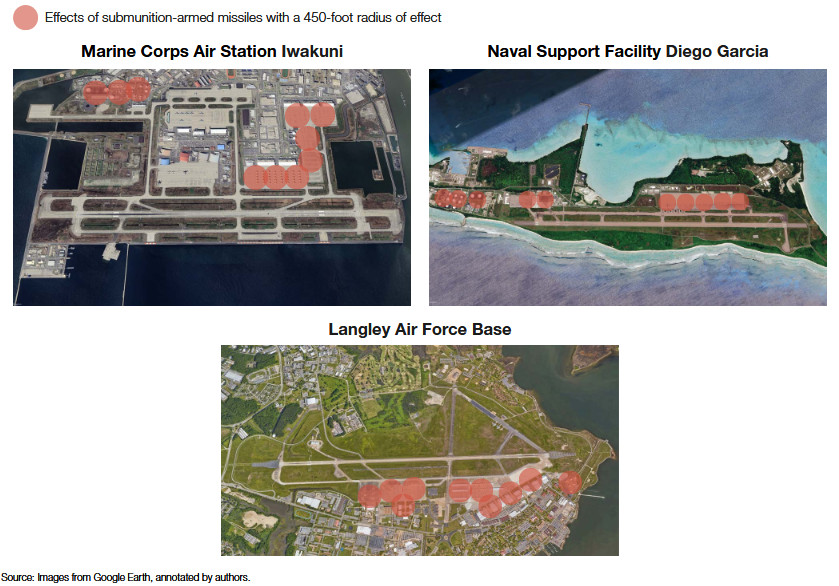
Those assessments are based on lower-altitude releases where submissions can be more focused on particular target areas. However, high-altitude releases could still be focused, at least to a general degree, on saturating very large area targets, including sprawling established air bases. As an example, the two main runways at the U.S. Air Force’s highly strategic Andersen Air Force Base on Guam, are roughly two miles long. They have taxiways and numerous open parking aprons attached to them. There are many other sprawling facilities on the island, too.
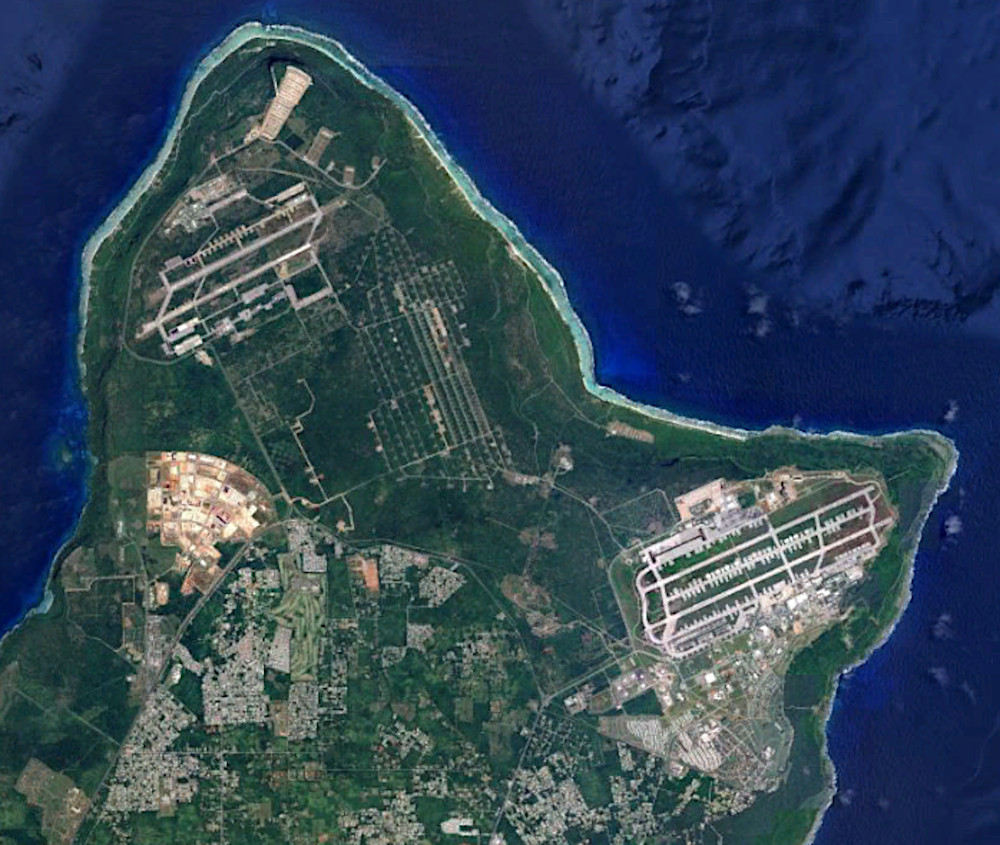
For an adversary like China, a barrage of missiles designed to scatter submunitions across larger areas could be relevant in striking a target like Andersen, or anything similarly large. Those weapons could also be used to help overwhelm defenses, eat up valuable interceptors, and otherwise sow chaos as part of layered strikes that also include more precise missiles, as well as drones. Even dispersing submunitions at lower altitudes to achieve better accuracy, but still relatively high within a system like Patriot’s interception envelope, would give a much smaller window to destroy the missile than compared to a traditional unitary warhead. In a future high-end fight in the Pacific, Chinese forces could also choose to employ this capability to attack large population centers, especially in Japan and elsewhere in the First Island Chain, similar to Iran’s attacks against Israel now.
The development of precision-guided submunitions capable of being released via ballistic missile would further change the equation. In 2024, the Guangdong Aerodynamic Research Academy (GARA) in China notably put forward a tangential concept for a hypersonic boost-glide vehicle carrying different kinds of scatterable payloads, including miniature missiles and drones. Ballistic missiles often also reach hypersonic speeds, generally defined as anything above Mach 5, in the terminal phase of flight, and any submunitions they release have to be able to withstand similar stresses.
There is no doubt that China, in particular, has been keenly watching the outcomes of Iranian missile and drone attacks on Israel, as well as other countries in the region. Israel’s integrated air and missile defense network has long been touted as the best in the world. The Gulf Arab states have also spent billions of dollars over the past decade or so to bolster their capabilities and overall capacity in the past decade or so with this exact scenario top of mind. The U.S. military’s higher-end ballistic missile defense posture in the Pacific remains relatively limited, and focused largely on very particular regions, despite years now of efforts to dramatically expand that architecture.
Iran’s ability to launch retaliatory attacks has been significantly degraded over the past five weeks, but it has been able to keep up a persistent tempo regardless. China has a broader array of far more capable ballistic missiles, as well as other stand-off strike weapons, that it would bring to bear en masse in any future high-end fight in the Pacific.
Other countries, such as Russia or North Korea, could look to capitalize on what Iran has demonstrated with its cluster munition missile attack, as well. There has been a burst in the development and proliferation of ballistic missiles, in general, including to non-state actors, globally, in recent years.
If anything, application of these tactics by Iran help make the case for the Trump administration’s highly ambitious and expensive Golden Dome missile defense network, which will put a much higher-focus on mid-course intercept. This includes stationing interceptors in space.
Overall, while Iran has been using high-altitude releases of submunitions from ballistic missiles to help ensure it can continue executing succes attacks on Israel, it is a tactic that could have significant implications in other contexts in conflicts well beyond the Middle East.
Contact the author: howard@thewarzone.com

Clashes erupted at Habima Square as police declared an anti-war rally an “unlawful assembly,” despite a High Court ruling allowing limited demonstrations amid the ongoing conflict with Iran.

American boots on the ground would condemn Europe to a period of prolonged stagflation – and potentially economic catastrophe.

For a full generation, Ukraine, despite its huge human and material wealth, has been the longest-suffering and unhappiest nation in Europe. This must be fixed after the war.

In Nikopol, Dnipropetrovsk region, one person died and another sustained severe injuries as a result of the drone strike.