Kim Yo Jong loses State Affairs Commission seat as Kim Jong Un reshapes North Korea’s 15th-term leadership
The first session of the 15th Supreme People’s Assembly convened in Pyongyang on March 22, bringing with it a sweeping reorganization of the State Affairs Commission — one that demoted Kim Jong Un’s sister, elevated a longtime loyalist to the regime’s second-highest post, and place
Daily NK
75
6 min read
0 views

The first session of the 15th Supreme People’s Assembly convened in Pyongyang on March 22, bringing with it a sweeping reorganization of the State Affairs Commission — one that demoted Kim Jong Un’s sister, elevated a longtime loyalist to the regime’s second-highest post, and placed the country’s top prosecutor inside the highest organ of state power for the first time.
Kim Yo Jong removed from State Affairs Commission
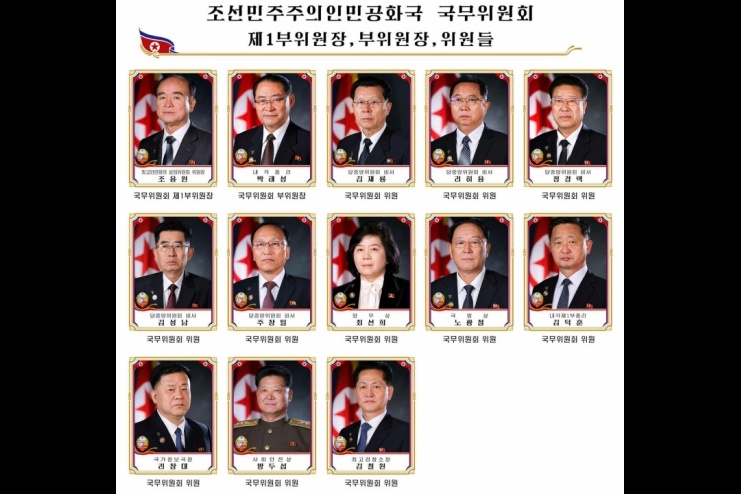
Kim Yo Jong was not elected to the State Affairs Commission at the first session of the 15th Supreme People’s Assembly, held March 22. The outcome amounts to a dismissal: Rodong Sinmun reported March 23 that immediately after Kim Jong Un was re-nominated as chairman, he “proposed the composition of the State Affairs Commission,” after which delegates conducted elections and approved the slate in full. The sequence makes clear that Kim Jong Un had already determined the commission’s makeup and personally excluded his sister from it.
Kim Yo Jong had emerged from the Ninth Workers’ Party of Korea Congress in February with a promotion to party department director. Her removal from the State Affairs Commission — the supreme state organ responsible for executing the country’s overall affairs — is a significant reversal. The commission expanded from seven members in the 14th session to 11 in the 15th, making her exclusion all the more pointed. It is fair to assess that her political standing has retreated.
The question is why. Above all, Kim Jong Un appears to have declared, both domestically and internationally, that Kim Yo Jong is not the regime’s second-in-command or its real power broker. Instead, he has clearly positioned Cho Yong Won in that role, recalibrating his sister’s influence accordingly.
Cho Yong Won’s rise and Kim Tok Hun’s survival
The ascent of Cho Yong Won is the most consequential personnel development to emerge from both the Ninth WPK Congress and this Supreme People’s Assembly session. Having retained his seat on the Politburo Presidium at the congress, Cho was elected at the assembly as chairman of the Standing Committee of the Supreme People’s Assembly — the equivalent of speaker of a national parliament — while simultaneously being named first vice chairman of the State Affairs Commission. In the 14th session he had held a commission membership; he now holds a post two rungs higher, effectively inheriting the position and authority previously held by Choe Ryong Hae. Kim Jong Un has released Choe Ryong Hae’s hand and taken Cho Yong Won’s firmly in his own.
Also notable is the survival of Kim Tok Hun. The former premier was removed at the Eighth Central Committee’s 11th Plenary Session in December 2024, with Pak Thae Song named as his replacement. Kim Tok Hun subsequently disappeared from public view, and speculation about a purge began circulating. On Jan. 19, Kim Jong Un publicly criticized and dismissed Cabinet Vice Premier Yang Sung Ho at the inauguration of the Ryongsong Machine Complex, and in the same address sharply criticized Kim Tok Hun, accusing him of “neglecting policy guidance and acting as a spectator.”
With a purge widely assumed, Kim Tok Hun has now resurfaced. He has been demoted from his previous posts but survives as first vice premier of the Cabinet — the position directly below premier — and as a member of the State Affairs Commission, having previously held the vice chairmanship. The pattern is consistent with Kim Jong Un’s governing method: subject officials to ideological struggle sessions, then grant them a second chance. Ri Son Gwon, who served as director of the United Front Department and oversaw inter-Korean affairs, appears to follow the same trajectory — he escaped purging and appears on the roster of the Standing Committee as vice chairman.
Prosecutor general elevated to State Affairs Commission
The single most striking personnel decision from this assembly session is the appointment of Supreme Prosecutor General Kim Chol Won to the State Affairs Commission. Rodong Sinmun noted the distinction explicitly, reporting that “the session appointed the chief of the Supreme Procuratorate and elected the chief of the Supreme Court” — using different verbs to signal that the prosecutor general was appointed by Kim Jong Un’s directive while the chief justice was elected by delegates.
This appointment is genuinely unprecedented. Under the structure of the 15th-term State Affairs Commission, Cabinet ministers and even vice premiers are not eligible for membership; at minimum, first vice premier-level standing appears required. That the prosecutor general has been placed on the commission — bypassing that hierarchy entirely — represents a more dramatic break from precedent than Kim Yo Jong’s own appointment to the commission during the 14th session. In effect, Kim Jong Un has handed to the head of the prosecution the seat vacated by his sister. The elevation of a judicial figure to the State Affairs Commission is highly irregular; that it is the prosecutor general rather than the chief justice makes it more so. Kim Jong Un is not merely raising the prosecutor general’s rank — he is issuing a direct mandate for the prosecution to play a stronger role.
A signal on internal security — and perhaps more
The elevation of the prosecution reads as Kim Jong Un’s determination to root out what the regime terms “anti-socialist” and “non-socialist” elements — a crackdown that has intensified alongside the ideological mobilization following the Ninth WPK Congress. With some additional interpretive latitude, it may also carry a message directed southward.
South Korea’s ruling party recently passed legislation, on March 21, to abolish the prosecution and place its functions under the Ministry of the Interior and Safety. Critics have characterized the move as an assault on judicial independence. Kim Jong Un has now done the visible opposite: elevating the prosecution’s status and underscoring that the judiciary operates as an independent institution outside the Cabinet. Whatever one makes of the parallel, the current South Korean government and ruling party are, whether they wish to acknowledge it or not, displaying a degree of institutional regression that invites the comparison Kim Jong Un may well be relishing.


