The TWZ Newsletter
Weekly insights and analysis on the latest developments in military technology, strategy, and foreign policy.
The Senate action comes amid deep concerns about how the U.S. can provide enough Patriot interceptors for itself and allies. The post Pentagon’s Ability To Supply Ukraine With More Patriot Interceptors Questioned By Congress (Updated) appeared first on The War Zone.

The TWZ Newsletter
Weekly insights and analysis on the latest developments in military technology, strategy, and foreign policy.
Concerned with Ukraine’s ability to protect itself from the onslaught of Russian missile and drone attacks, the Senate Armed Services Committee (SASC) is demanding to know if the Pentagon can increase deliveries of Patriot air defense system interceptors to that war-torn nation. This comes against the backdrop of extreme U.S. and allied demand on dwindling supplies of these weapons.
As we have previously noted, between U.S. usage in recent Middle East conflicts and commitments to Ukraine and nearly 20 other nations, there have long been concerns about the supply of Patriot interceptors. Still, the Pentagon has maintained that it has sufficient supplies.
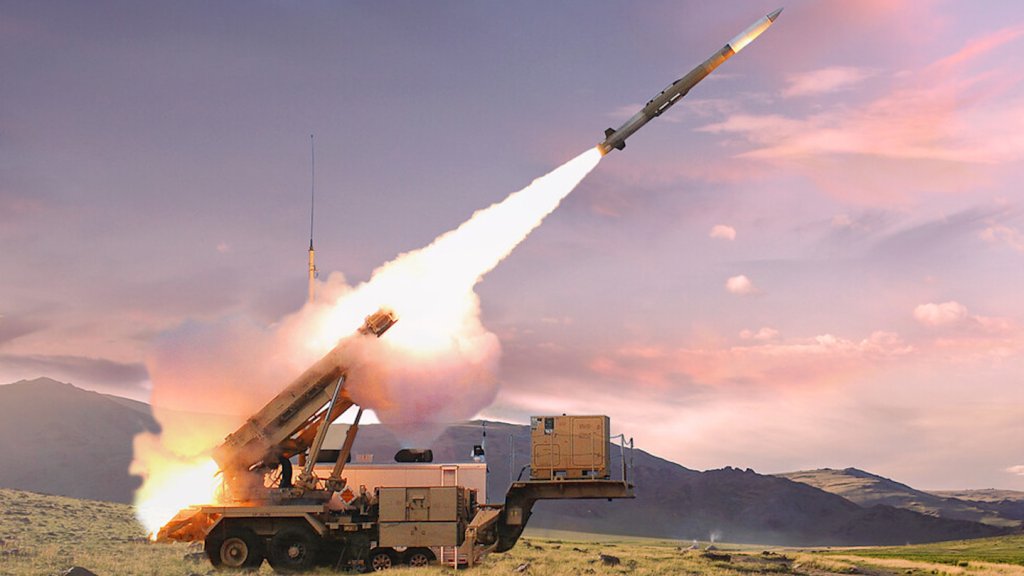
It is hard to say precisely how many Patriot interceptors remain in Ukraine’s stockpile, The New York Times recently noted.
“The number is classified. At the end of June last year, there were as few as 16 in Ukraine’s arsenal,” the publication stated. Given the low supplies and constant Russian bombardment, Ukrainian President Volodymyr Zelensky has frequently requested additional interceptors from the U.S. and allies.
We were receiving PAC-3 missiles from our partners in certain quantities, but later that monthly volume was cut several times over. It wasn’t due to a lack of funding, but because of the war in the Middle East. This affected different types of weapons. Whatever we could, we… pic.twitter.com/qwPFydwAzC
— Volodymyr Zelenskyy / Володимир Зеленський (@ZelenskyyUa) June 3, 2026SASC said it “recognizes the importance of Patriot air defense systems and Patriot Advanced Capability-3 (PAC-3) interceptors in supporting Ukraine’s self-defense and notes continued concerns regarding interceptor availability, production capacity, and the impact of transfers on United States military readiness.”
“Accordingly, the committee directs the Secretary of Defense, in coordination with the Under Secretary of Defense for Acquisition and Sustainment, to submit a report to the congressional defense committees, not later than October 1, 2026, assessing the feasibility of increasing deliveries of PAC-3 interceptors to Ukraine,” its directive states.
We have reached out to the committee to find out which variant of the PAC-3 they are referring to. Lockheed Martin is boosting production of the more advanced current-generation Patriot PAC-3 Missile Segment Enhancement (MSE) interceptors and it is unclear how many of the other variants are still being made or are in U.S. stockpiles.
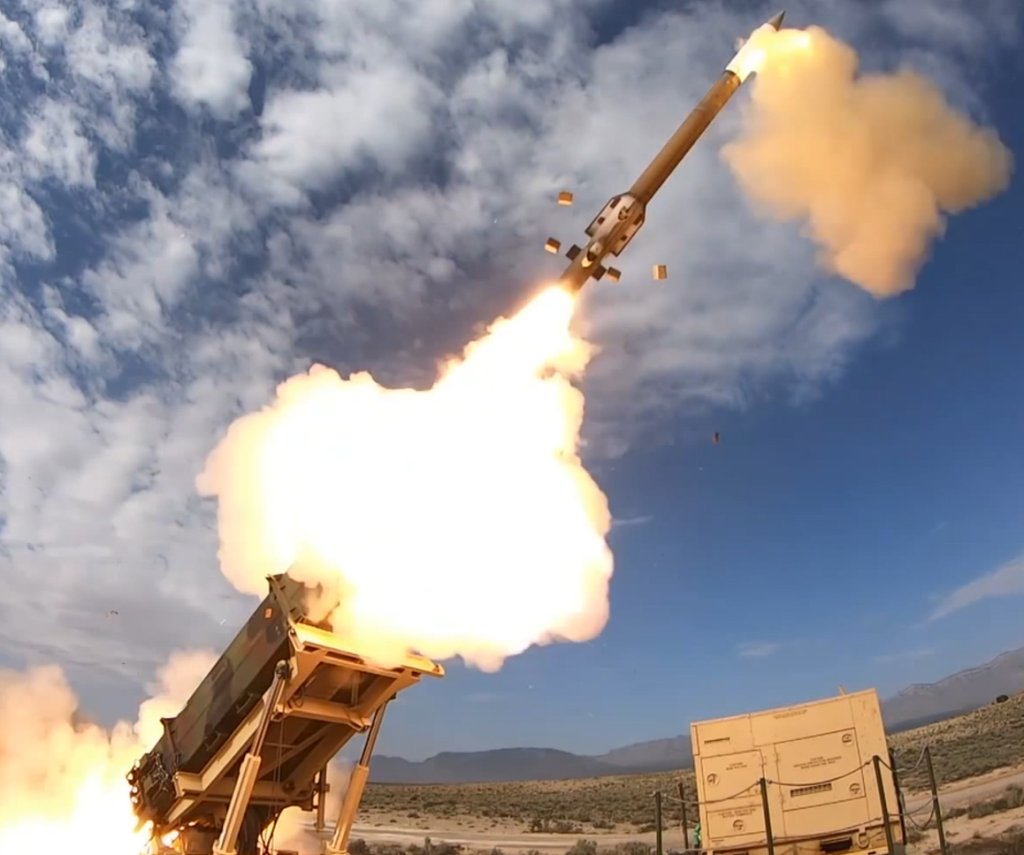
SASC wants the following information from the Pentagon:
In addition, the committee said the secretary should “brief the congressional defense committees on the findings of the report, not later than 15 days after its submission.”
The Pentagon on Wednesday declined comment on the committee’s report, how many interceptors it has provided to Ukraine or whether it has the ability to increase that supply. We have reached out to Lockheed Martin as well and are awaiting a response.
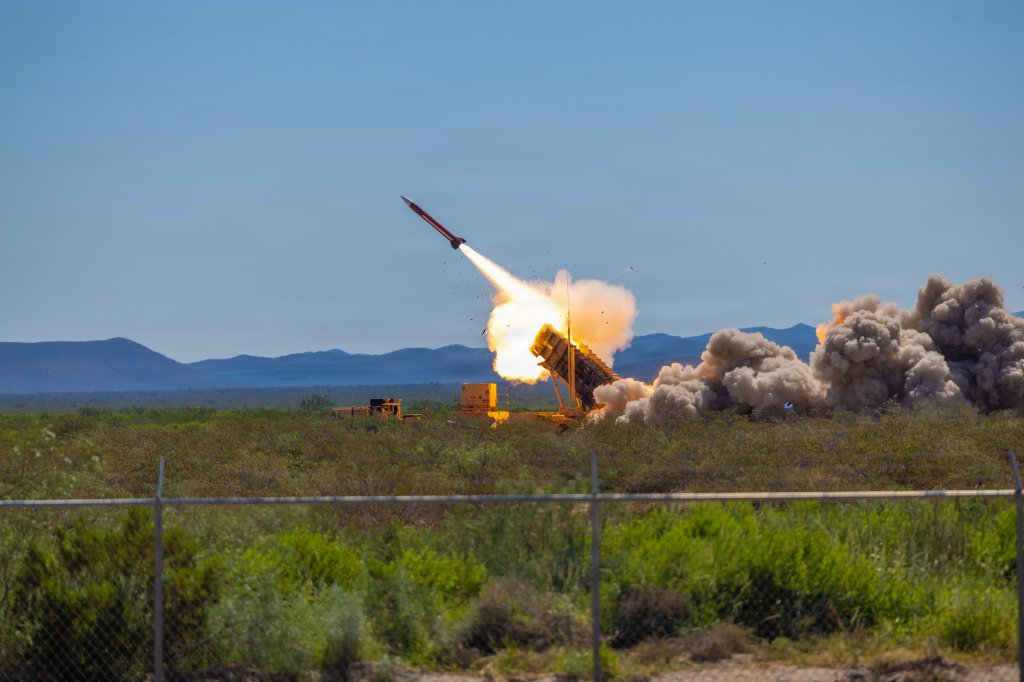
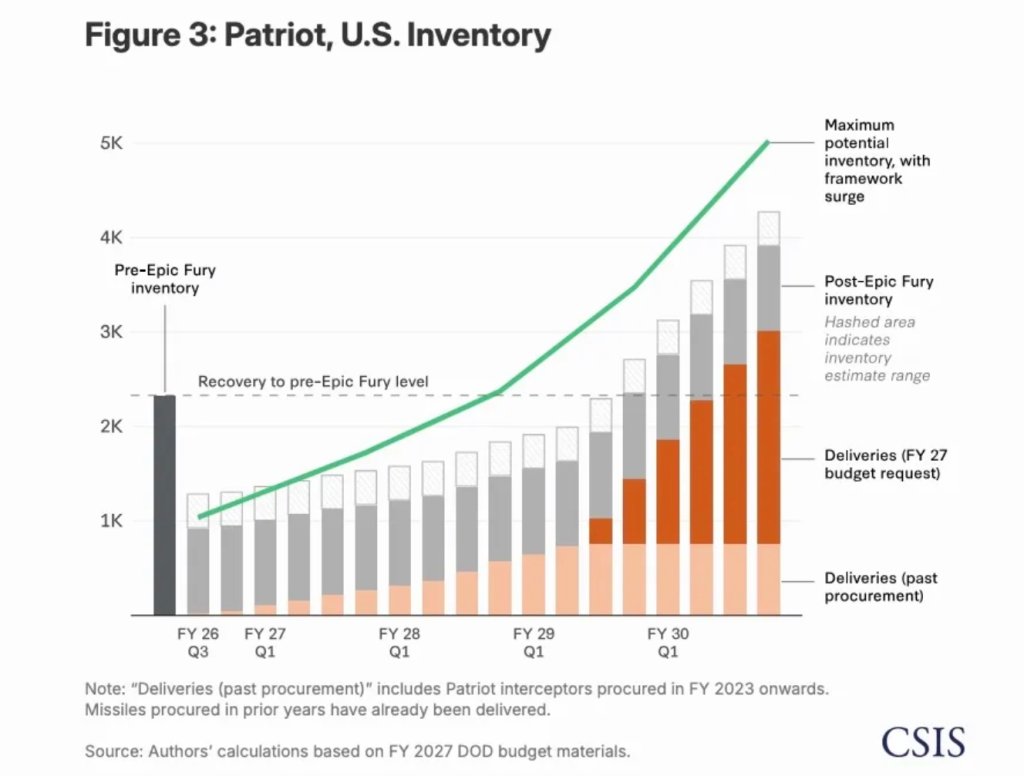
TWZ recently addressed the supply of these munitions in a story about a new report from the Center for Strategic and International Studies (CSIS).
The report, on the severity of the depletion of U.S. advanced weapons stockpiles, found that current production PAC-3 MSE “is around the baseline rate of 650 interceptors per year, with half the deliveries going to the United States and the rest to allies and partners.”
Under a contract with the Pentagon inked in January, Lockheed is committed to boosting Patriot annual production to 2,000.
Lockheed Martin announced Tuesday that it would be increasing its annual production rate of PAC-3 MSE (Missile Segment Enhancement) Interceptors for the MIM-104 “Patriot” Surface-to-Air Missile System from roughly 600, to 2,000 a year, under a new contract with the Department of… pic.twitter.com/aCkVK8xkqx
— OSINTdefender (@sentdefender) January 6, 2026“Because U.S. procurement in the last decade has averaged 225 missiles per year, deliveries from prior years will not be enough to fully replace expenditures,” CSIS cautioned. “For that, the United States will need to wait for the 3,203 Patriot missiles requested in the Army’s FY 2027 budget. These are projected to start delivery in May 2029.”
As we noted earlier in this story, in addition to the Patriot interceptors already provided to Ukraine, the U.S. used a large amount during the conflict with Iran defending its assets, as well as those of allies.
The CSIS report found that at the start of the war with Iran, “there were about 2,500 Patriot interceptors in the U.S. inventory,” though its accompanying chart does not specify which variant. “During the course of the conflict, between 1,060 and 1,430 Patriots were fired.” We don’t know what that tally includes, but we do know that PAC-2 and PAC-3 series interceptors have been employed in the latest conflict with Iran.
Adding to questions about the ability to supply Ukraine with more Patriots, a top official from Lockheed Martin recently warned that the company cannot give U.S. allies any certainty over when they will receive interceptors despite plans to triple capacity, according to Financial Times.
Brian Dunn, vice president for strategy and business development of missiles and fire control, recently said that the company was working hard to scale up production of critical PAC-3 interceptor missiles amid a supply crunch exacerbated by the war in Iran.
But in remarks to journalists at the ILA Berlin Air Show, “he sent a sobering message to American allies including Germany, Japan, Poland, the UAE and Saudi Arabia that operate the Patriot air defense system,” the publication reported.
Dunn said the extra capacity “is obviously going to be able to satisfy multiple user requirements in a faster timeline.” However, he added that Lockheed Martin does not “control what the allocation of those missiles is going to be. We can’t tell anybody where you’re going to be on that [priority list].
“Obviously there’s a lot of rhetoric coming right now from the Department of War . . . about how they’re going to reorder, reorganize, who’s going to get missiles first,” he continued. “We don’t control any of that.”
🇺🇸 American company Lockheed Martin cannot guarantee US allies the delivery of Patriot interceptors, which Ukraine desperately needs, despite plans to triple its production capacity.
This was stated by the company's vice president, Brian Dunn, according to the Financial Times. pic.twitter.com/fq8QYdtAXR
Dunn’s statements highlight concerns we raised long before and during Operation Epic Fury about the rapid expenditure of critical munitions and how that could affect a potential future fight against China. It also goes along with our reporting about the overall inadequacy of the U.S. Patriot force, an issue we have been highlighting for years.
Meanwhile, for Ukraine, the influx of new Patriot interceptors cannot come soon enough. Two nights ago, for instance, Russian forces launched 70 missiles and over 600 drones in a mass assault, according to the Kyiv Independent.
“Of the 34 ballistic missiles fired, 19 were aimed at the capital,” the publication noted.
You can see a video of one of those strikes below.
The number of Ukrainian cultural sites hit in Russia’s overnight attack on Kyiv continues to rise, with the Mystetskyi Arsenal on fire this morning.
The complex is one of Ukraine’s flagship museums. pic.twitter.com/FGY2lEz5iT
“Kyiv’s beleaguered Patriot batteries did a valiant job, intercepting 15 of them, along with five of the six 3M22 Zircon hypersonic cruise missiles launched in the attack,” the news outlet added. “Still, even layered defenses were stretched beyond the limit.”
UPDATE: 6:57 PM EDT –
Lockheed Martin responded to our questions:
Lockheed Martin is accelerating production and increasing capacity to deliver a record number of interceptors to American and global customers, and stands ready to support any U.S. government decision on Foreign Military Sales deliveries. Additional questions should be directed to the U.S. government.
The PAC-3 MSE is the only variant currently in production. We closed our PAC-3 CRI production line in 2023.
Contact the author: howard@twz.com
Moscow came under its largest drone attack since the start of the full-scale war overnight, with nearly 200 Ukrainian drones shot down on approach to the capital, according to Mayor Sergey Sobyanin. Fires broke out at an oil refinery in the city’s southeast for the second consecutive day, while debr
Video published by Telegram channels Exilenova+ and Supernova+ appears to show the moment a storage tank at the Moscow oil refinery was struck, following a reported drone attack on the facility on June 18.

Romania and Ukraine are closely cooperating across multiple areas, including security, the economy, logistics, and humanitarian affairs.
Russian forces launched an overnight attack on Ukraine's Poltava Oblast on June 18, damaging an energy facility and causing power outages in parts of the region, Poltava Oblast Military Administration head Vitalii Diakivnych reported.