The TWZ Newsletter
Weekly insights and analysis on the latest developments in military technology, strategy, and foreign policy.
Buying both Collaborative Combat Aircraft designs instead of just selecting one has a number of big advantages to what is still a high-risk program. The post USAF Orders Both General Atomics’ FQ-42 And Anduril’s FQ-44 Into Production appeared first on The War Zone.

The TWZ Newsletter
Weekly insights and analysis on the latest developments in military technology, strategy, and foreign policy.
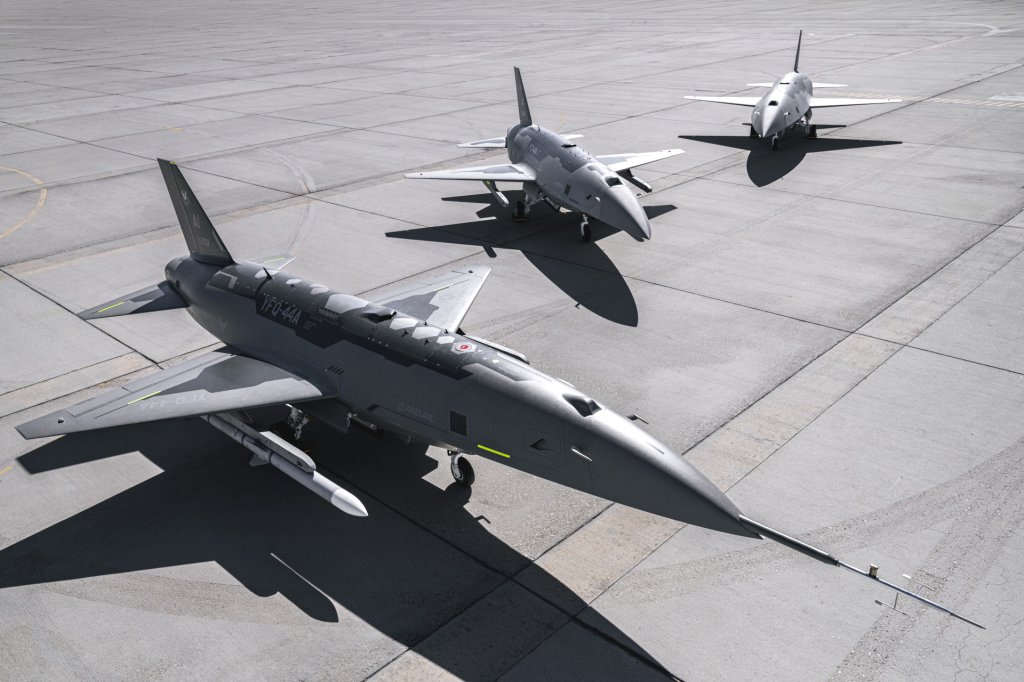
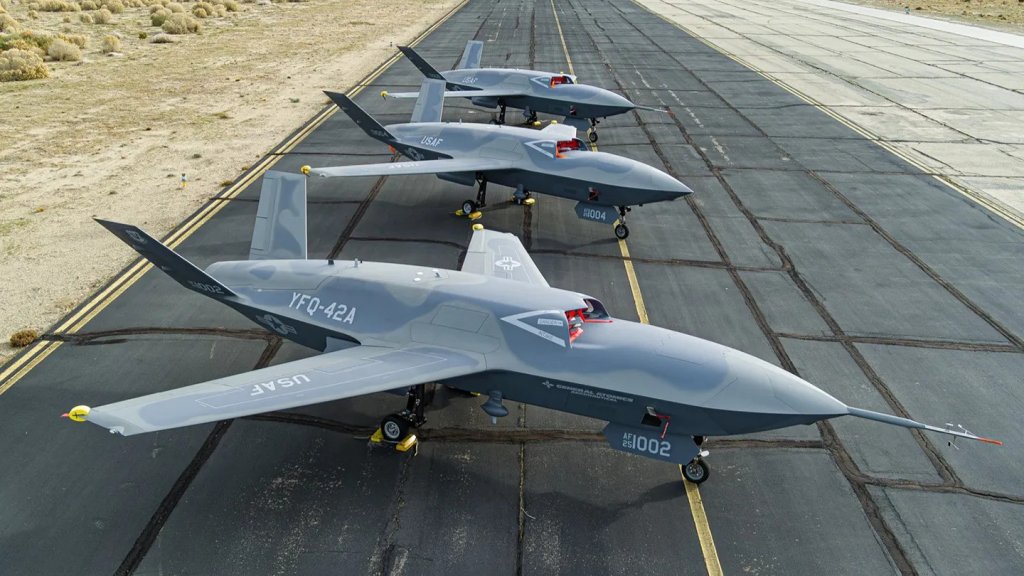
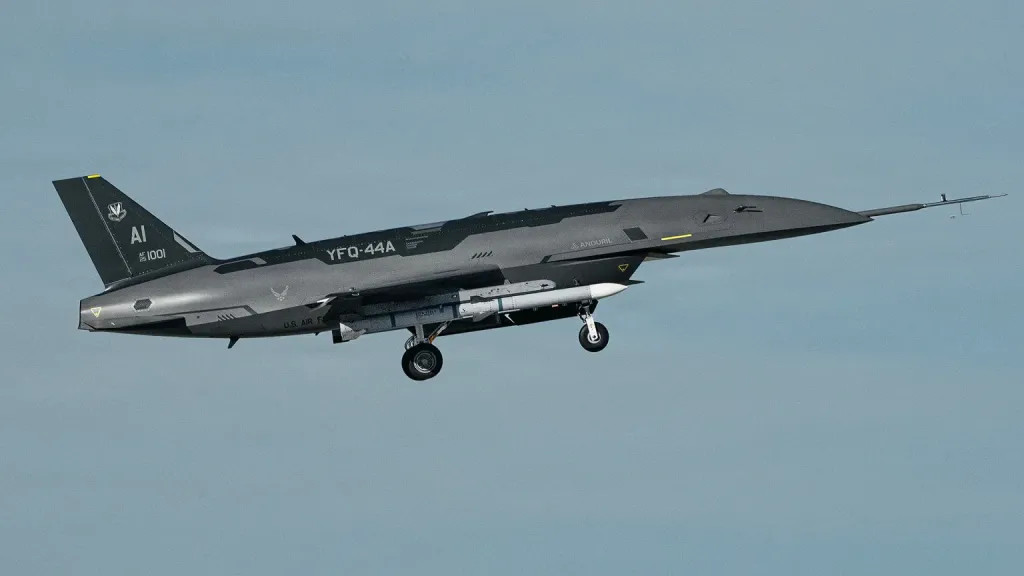
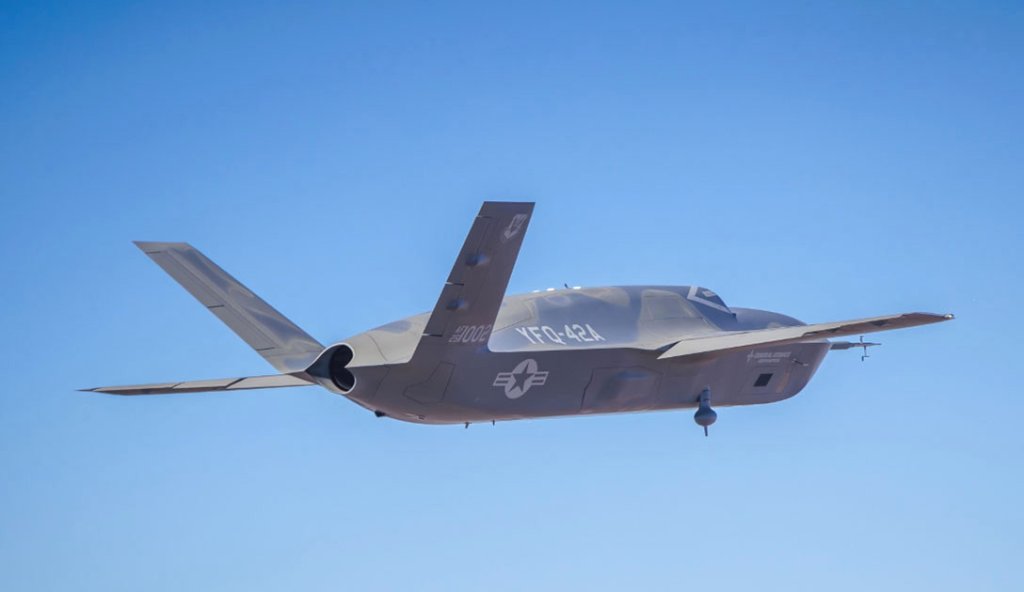
The U.S. Air Force has awarded contracts for the production of General Atomics FQ-42A Dark Merlin and Anduril FQ-44A Fury drones. This sets the service up to operate a split initial fleet of Collaborative Combat Aircraft (CCA), something TWZ has highlighted as being a distinct possibility from the start.
The Air Force down-selected the designs from General Atomics and Anduril to move ahead as part of the first incremental development cycle of its CCA program, or Increment 1, back in 2024. What were originally designated the YFQ-42A and YFQ-44A first flew in August and October 2025, respectively, and have been undergoing further testing since then. Dark Merlin testing was paused earlier this year after one of the drones crashed, but has resumed.
“By moving fast from competitive selection into full-scale manufacturing, we position ourselves to field highly credible and combat-ready semi-autonomous systems to stay ahead of the pacing challenge,” Secretary of the Air Force Troy Meink said in a statement today. “These contracts reaffirm our confidence in the strategic path forward for the program to procure over 150 combat capable CCA by the end of the decade.”
The Air Force says these contracts were awarded four months ahead of schedule, reflecting “that the FQ-42 and FQ-44 meet rigorous mission requirements and are ready for full-scale manufacturing.” At the time of writing, the service does not appear to have provided an update on the expected delivery timeline of the first production CCAs, but it has said in the past that it is hoping to have the first examples in operational service toward the end of the decade. Air Force has asked for nearly $1 billion in its 2027 Fiscal Year budget request to begin procurement of these drones.
“Under the contract, Anduril will deliver an initial set of production FQ-44 semi-autonomous fighter aircraft to support continued testing, validation, and, ultimately, operational fielding,” Mark Shushnar, Anduril’s Vice President for Autonomous Airpower, also wrote in a blog post today. “The contract also establishes a structure for the Air Force to buy additional lots of production FQ-44 aircraft across the next several years, providing a clear path for the Air Force to rapidly and affordably expand fighter capacity.”
“This is an exciting day for our company and the nation,” David Alexander, President of General Atomics’ Aeronautical Systems, Inc. division (GA-ASI), said in his own statement. “Moving to production on FQ-42A is the result of an extraordinary partnership and many years of investments between General Atomics and the U.S. Air Force. We’ve been preparing for this order, and manufacturing is already well underway.”
A split-buy of Dark Merlin and Fury drones will help drive down risk. The designs are also very different, which opens the door to more operational possibilities for the Air Force right from the start. General Atomics and Anduril can also then focus on refining the respective strengths of their uncrewed aircraft. As noted, TWZ has pointed out on several occasions that a mixture of uncrewed platforms with different attributes would be needed to truly do justice to the CCA concept.
Furthermore, the Air Force making this decision still deep in the developmental phase also underscores how critical the service sees CCAs, and its desire to push ahead with getting at least an early iteration of the capability into service.
“Collaborative Combat Aircraft change how we project power and generate mass in highly contested environments,” Air Force Chief of Staff Gen. Ken Wilsbach said in a statement today. “Delivering this capability to our warfighters faster ensures our forces maintain the tactical edge required to deter and, if necessary, defeat any adversary.”
The Air Force has also further split the CCA effort into hardware and software segments, with airframe development falling into the former category.
“These distinct efforts validate acquisition transformation principles to secure a critical operational advantage: decoupling hardware from software,” according to an Air Force press release today. “By treating mission autonomy as ‘software sold separately,’ the Air Force ensures that the warfighter receives state-of-the-art physical platforms alongside agile, easily updatable software, effectively breaking traditional procurement molds.”
Anduril and General Atomics, as well as Lockheed Martin, Northrop Grumman, RTX Collins Aerospace, and Shield AI form the current vendor pool for the software side of the CCA program. The Air Force announced today that it had awarded additional mission autonomy contracts to Anduril, Collins, and Shield AI. Anduril is notably the only company currently with CCA contracts on the hardware and software sides.
“This targeted award, based on the vendors’ ability to meet aggressive schedule and affordability requirements, will fund the first of two six-month competitive phases designed to speed the fielding of operational software to the warfighter,” according to an Air Force release. “While the baseline contract establishes a continuous competitive arena, the competitive awards are designed to deliver capability faster. Following the initial six-month period, the Air Force will evaluate the vendors’ progress and execute a second competitive award period. This performance-based competition will culminate in the selection of a primary mission autonomy provider for CCA Increment 1, with award planned for selection by summer 2027.”
“Furthermore, this software contract leverages a first-of-its-kind award fee exposure strategy, which enables operator feedback and combat performance to determine what the Air Force pays for mission autonomy. The Air Force will only pay the entire licensing fee if a vendor provides a combat capability aligned with warfighter needs and feedback,” the release adds. “The licensing approach also allows the Air Force to award software licenses to any of the six vendors within the pool at any point over the next six years. This approach ensures the Air Force can procure the best-performing and most affordable solutions as technology evolves.”
More government ownership of key intellectual property, and software in particular, has become a central guiding principle for the U.S. military contracting, in general, in recent years. When it comes to autonomy software packages, there is also now a core government-owned Autonomy Government Reference Architecture (A-GRA) that goes beyond the Air Force’s CCA program.
“Today, Lattice for Mission Autonomy is fully A-GRA compliant, ensuring that it can be integrated not only with all Increment 1 CCA, but with the full spectrum of current and future A-GRA compliant aircraft,” Anduril’s Shushnar highlighted in his blog post. “Through the A-GRA, the CCA program has established the foundation that will drive the development of a larger ecosystem of autonomous aircraft.”
Shield AI’s Hivemind software is also already flying on a number of different drones. Just last month, the Pentagon announced that it would be using this autonomy package to introduce swarming capabilities to its Low-Cost Uncrewed Combat Attack System (LUCAS) kamikaze drones.
“Mission autonomy is the cornerstone of the CCA concept, and leveraging a competitive, multi-vendor environment ensures we capture the latest technology,” Secretary Meink also said today in another statement. “This approach guarantees our Airmen are equipped with state-of-the-art capabilities today but keeps the door open for the breakthroughs necessary to maintain air superiority.”
In general, greater government control over intellectual property rights also helps avoid the potential to be locked into a single vendor. Establishing vendor pools to compete for follow-on contracts also creates opportunities to lower costs and to diversify supply chains, especially when it comes to hardware. That diversification, in turn, can be beneficial when it comes time to scale up production of both key subcomponents and complete systems.
As far as we know, the Air Force is still planning for at least one more incremental CCA development cycle, or Increment 2, firm requirements for which have yet to be publicly released. This could lead to further diversification of the service’s future CCA fleets. The Air Force has notably already given the YFQ-48A designation to Northrop Grumman’s Talon Blue drone design, which first broke cover in December 2025. Boeing’s MQ-28 Ghost Bat, originally developed for Australia, now has a greater presence in the United States.
The U.S. Marine Corps and the U.S. Navy are also pursuing their own CCA fleets in very close coordination with the Air Force. The Air Force is very much in the lead in fielding drones in this category, which could factor into future Marine and Navy decisions. The Marines are currently planning for their first tranche of MQ-58 Valkyrie CCA drones from Kratos to arrive in 2029. The Navy’s program is still very much in its infancy.
The Air Force’s CCA program has now taken another major step forward toward an initial fleet of drones that will include both General Atomics Dark Merlin and Anduril’s Fury.
Contact the author: joe@twz.com
Moscow came under its largest drone attack since the start of the full-scale war overnight, with nearly 200 Ukrainian drones shot down on approach to the capital, according to Mayor Sergey Sobyanin. Fires broke out at an oil refinery in the city’s southeast for the second consecutive day, while debr
Video published by Telegram channels Exilenova+ and Supernova+ appears to show the moment a storage tank at the Moscow oil refinery was struck, following a reported drone attack on the facility on June 18.

Romania and Ukraine are closely cooperating across multiple areas, including security, the economy, logistics, and humanitarian affairs.
Russian forces launched an overnight attack on Ukraine's Poltava Oblast on June 18, damaging an energy facility and causing power outages in parts of the region, Poltava Oblast Military Administration head Vitalii Diakivnych reported.