IAN ELLIS-JONES/TWZ
The TWZ Newsletter
Weekly insights and analysis on the latest developments in military technology, strategy, and foreign policy.
Trump orders U.S. Navy to blockade Strait of Hormuz as a third carrier strike group steams towards the CENTCOM area of responsibility. The post Carrier Tracker As of April 12, 2026 appeared first on The War Zone.

The TWZ Newsletter
Weekly insights and analysis on the latest developments in military technology, strategy, and foreign policy.
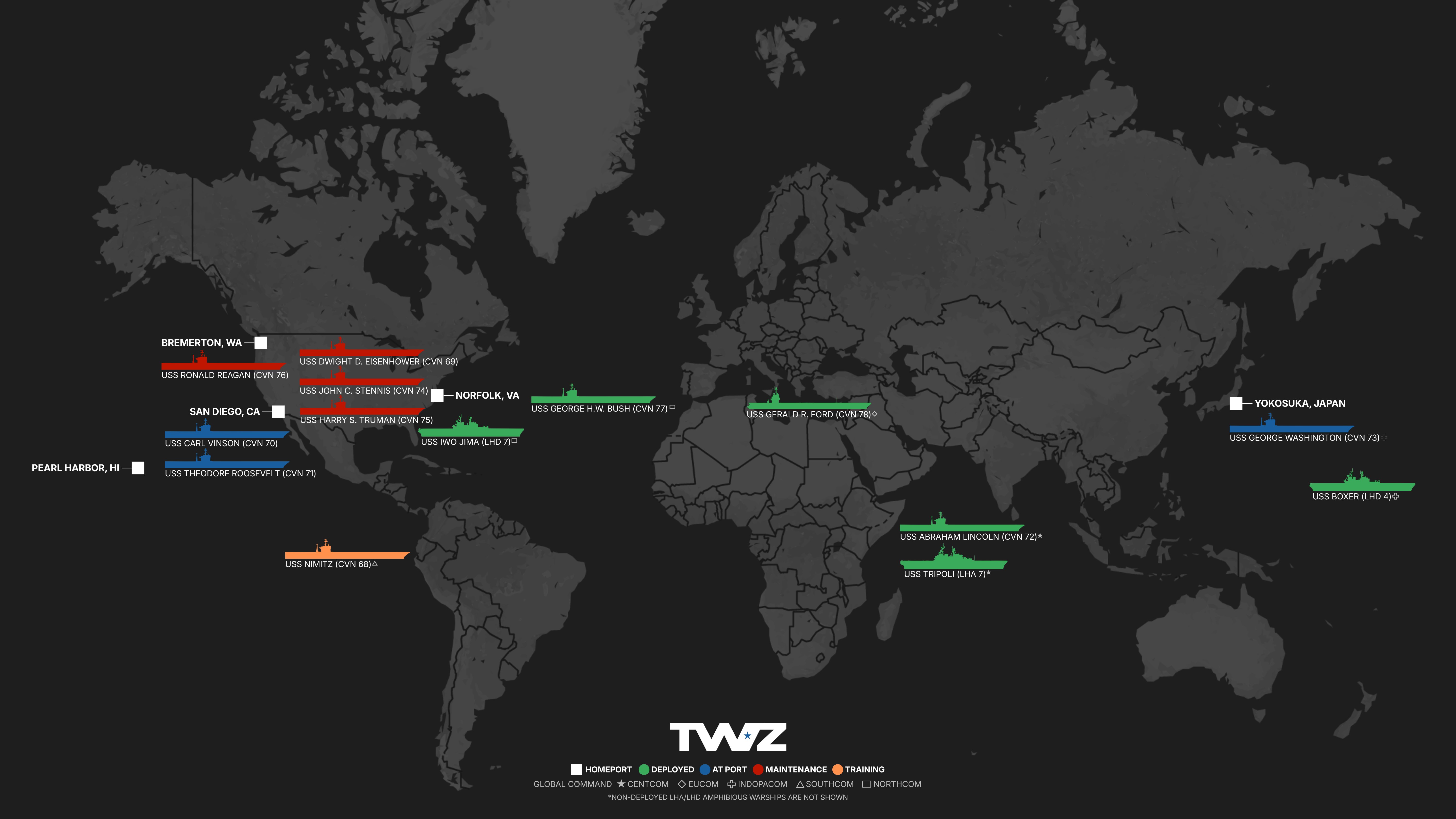
Here’s TWZ’s weekly carrier tracker monitoring America’s flattop fleet, including deployed Carrier Strike Groups (CSG) and Amphibious Ready Groups (ARG), using publicly available open-source information.
President Trump declared this morning on Truth Social that the U.S. Navy “will begin the process of BLOCKADING any and all Ships trying to enter, or leave, the Strait of Hormuz,” which follows U.S. Central Command’s announcement yesterday that U.S. forces executed a mine clearance mission and asserted navigational rights and freedoms in the Strait. “Additional U.S. forces, including underwater drones, will join the clearance effort in the coming days,” the release concluded. It isn’t clear exactly what the destroyers did near the Strait or the details of their attempted transit.
Additional warships have arrived in Europe and the Middle East over the last week, and more are en route, as the U.S. takes advantage of the ceasefire to rearm, resupply, and reposition key assets across theaters. The first elements of the George H.W. Bush CSG transited the Strait of Gibraltar in early April, and the flagship with at least three escorts is expected to follow in the near term. The Gerald R. Ford CSG is on station in the eastern Mediterranean Sea, most recently conducting operations southwest of Cyprus, satellite imagery shows. The Boxer ARG, embarked with the 11th Marine Expeditionary Unit (MEU), departed Pearl Harbor and is transiting the Pacific Ocean westbound toward the Middle East, where the Tripoli ARG-31st MEU is currently operating.
For the latest on the status of the ceasefire and negotiations, follow our rolling coverage here and be sure to check TWZ.com daily for live updates.
Note: Positions are general approximations. Non-deployed LHA/LHD amphibious warships are not shown.
Contact the author: ian.ellis-jones@teamrecurrent.io
Russia’s Federal Security Service (FSB) said it had disrupted the activities of three Russian citizens who used Telegram channels to manipulate securities on the Moscow Exchange.

Russian forces in certain sectors of the front are mostly replenishing personnel losses rather than increasing troop numbers, while heavy equipment is used only in a limited way due to the nature of modern warfare.
Asian messaging apps surged in popularity in Russia in March as Telegram faced mounting restrictions, with monthly active user numbers rising an average of 60 percent, according to research by MTS AdTech cited by the Russian business daily Kommersant.

The intensity of combat operations on the frontline during the so-called “Easter ceasefire” declared by Russia did not actually change, with Russian forces using certain periods to rotate and regroup.