The US is more coordinated with China than many assume, former Israeli Navy commander Maj.-Gen. (res.) Eliezer Marom told 103FM on Wednesday.
"I think the fuel problem has been completely solved, because the Chinese will get supplies from the Russians," he said, claiming that alternative energy arrangements are already reducing the impact of regional disruption on global fuel markets.
He also said Iran's longstanding claim that it controls the Strait of Hormuz is being challenged by American military superiority in the area.
"I do not believe the Iranian stories that an Iranian ship passed through without American permission," Marom said. "There is no such thing."
According to Marom, the main immediate losers from the maritime disruption are Qatar and Iran, while the United States and Russia may be positioned to benefit from increased energy exports. He said the broader result is that Iran feels increasingly boxed in, with limited movement through its ports.
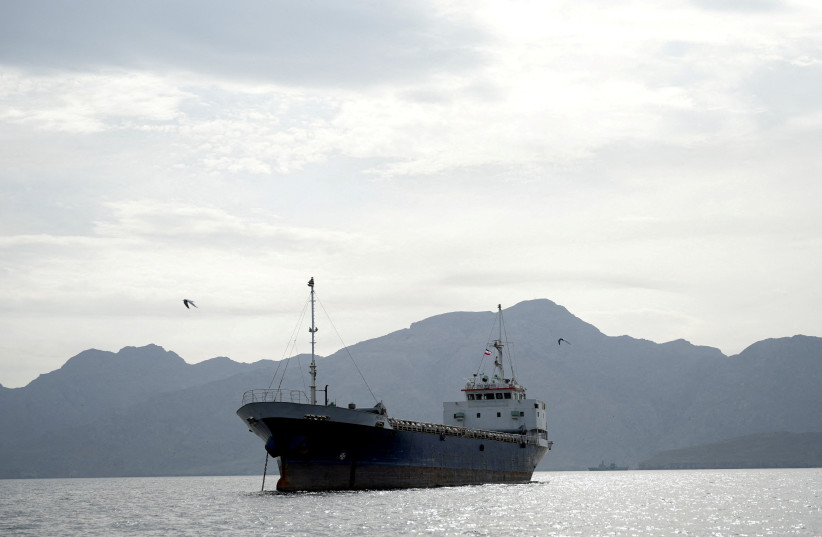
"The ones who have gained are the Americans and the Russians, who will be able to supply more oil and gas. Trump's solution of closing the straits is working very well; the Iranians feel choked off, and nothing is entering or leaving their ports."
Marom argued that Washington has established effective control over the maritime arena and is using that leverage to intensify pressure on Tehran, adding that the US understands Iran urgently needs revenue, both to rebuild damaged infrastructure and to support its population.
Possible understanding between US and Houthis?
Marom also addressed the Houthis' conduct and suggested that behind-the-scenes developments may have helped reduce the threat from Yemen. He said it remains unclear what understandings may have been reached between the US and the Houthis, but noted that the group appears to have acted with restraint in the latest round of fighting.
He said the Houthis had done the minimum required to satisfy Iran and had not taken the broader steps Tehran may have wanted. For that reason, he said he does not currently believe the Houthis are likely to move to close the Bab el-Mandeb Strait.
Marom added that, despite the tension, the global shipping system has shown it can adapt. He said Israel remains affected by the closure of the Bab el-Mandeb route, but argued that international trade and fuel supply chains have found workarounds and continue to function.
Addressing the Eilat Port, Marom said alternative arrangements exist, even if they are not discussed publicly. He pointed to the continued arrival of goods as evidence that the market has adjusted. He said that oil prices not surging to extreme levels suggests that supply remains sufficient, even if transportation remains a challenge.
Looking ahead, Marom said the next stage depends largely on whether Iran agrees to future understandings. If it does not, he said, the US is capable of sustaining long-term pressure through a naval blockade, while simultaneously preparing military and diplomatic options.
He argued that such pressure could become increasingly effective because Iran needs external revenue, concluding that a prolonged maritime squeeze could leave Tehran with few good options.
