
SETERMOEN, Norway — Norway’s elite soldiers for Arctic warfare swear by an old-fashioned method for staying hidden from drones’ sophisticated sensors: quinzhees, or snow caves, carefully dug by hand.
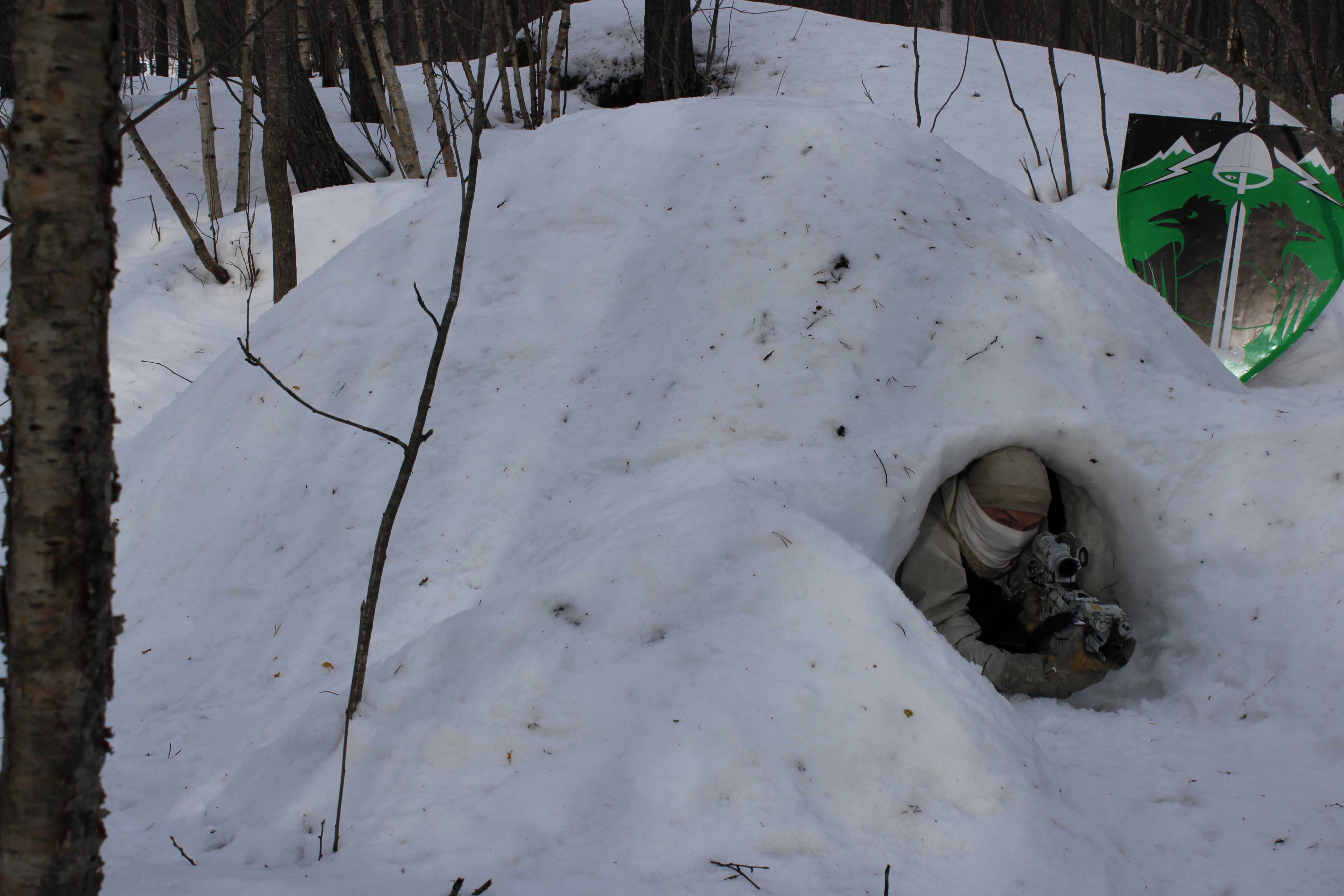
Deep in Norwegian woods, some 400 kilometers away from the Russian border, an officer of the Norwegian Long Range Reconnaissance Squadron is hidden in a snow-made shelter, with only his light-grey firearm peeking out.
The officer, nicknamed Poster Boy, is part of the country’s elite Arctic task force, designed to operate far behind enemy lines to conduct surveillance missions. The snow cave serving as his concealment is known as a quinzhee, 1.5m high and 2m wide, built by piling snow together and allowing it to sinter, or harden, a task force specialty.
RELATED
Nations withdraw some equipment from NATO Arctic exercise amid Iran fallout
“It’s a constant evolution of what works and what doesn’t for us – what worked four years ago might not work today due to all the technology developments of equipment designed to catch us, some years ago a tent and camouflage could’ve been sufficient but not anymore,” the officer, who spoke anonymously because of the sensitivity around the unit, told Defense News.
Training here alongside the Norwegian soldiers were several other nations’ elite unit, including U.K. Royal Marines and soldiers of the Canadian Special Operations Forces Command. Royal Marines told Defense News that, given the speed of modern combat, units that want to stay invisible often have to move every 15 minutes to avoid detection.
Besides hiding from enemy drones, the Norwegian reconnaissance soldiers carry their own unmanned craft to spy on adversaries.
The unit is experimenting with different types of winterized surveillance drones, including the American-made Skydio and first-person-view models, to provide eyes in the sky and enable operations from greater distances on the battlefield.
Poster Boy said those systems will be increasingly relevant, especially in the event of a potential conflict with Russia, where the battle space would consist of vast stretches of icy land.
The Norwegian Army chief, Maj. Gen. Lars Lervik, told Defense News that drones were playing an important role in NATO’s largest Arctic exercise, Cold Response 2026, organized across Norway from March 9-19. He noted that aside from surveillance-type ones, forces are also testing attack drones and several unmanned ground robots in ground-to-ground and air-to-ground roles.
The name of the game for the quinzhee connaisseurs is silence and invisibility, two objectives that are increasingly hard to achieve, as seen in the war in Ukraine, where troops and equipment remain perpetually vulnerable to being located.
One way to mitigate these risks is to focus on tracking avoidance in snow, which relies on minimizing a soldier’s visual, thermal or electronic signatures. The Norwegian Defense Materiel Agency announced last month that recent trials in Denmark confirmed the effectiveness of the Swedish-made Mobile Camouflage System. Developed by Saab, the cloak is intended to greatly reduce detectability by limiting visual, thermal and radar signatures, including in Arctic conditions.
However, amid new technologies, the Norwegian top-tier Arctic unit continues to return to proven basics: using natural camouflage, such as snow, as its best bet for staying hidden.
“Using snow is our absolute best concealment – we move in darkness, foggy conditions, snow falls, where our tracks can be rapidly filled and hard to follow, and in good weather we stay static and concealed,” the officer explained.
Elisabeth Gosselin-Malo is a Europe correspondent for Defense News. She covers a wide range of topics related to military procurement and international security, and specializes in reporting on the aviation sector. She is based in Milan, Italy.


