The TWZ Newsletter
Weekly insights and analysis on the latest developments in military technology, strategy, and foreign policy.
The Harrier story is a transatlantic saga of improvisation, ambition, and unlikely partnership, which helped shape the F-35B. The post The Hidden History of America’s Harrier Jump Jets appeared first on The War Zone.

The TWZ Newsletter
Weekly insights and analysis on the latest developments in military technology, strategy, and foreign policy.
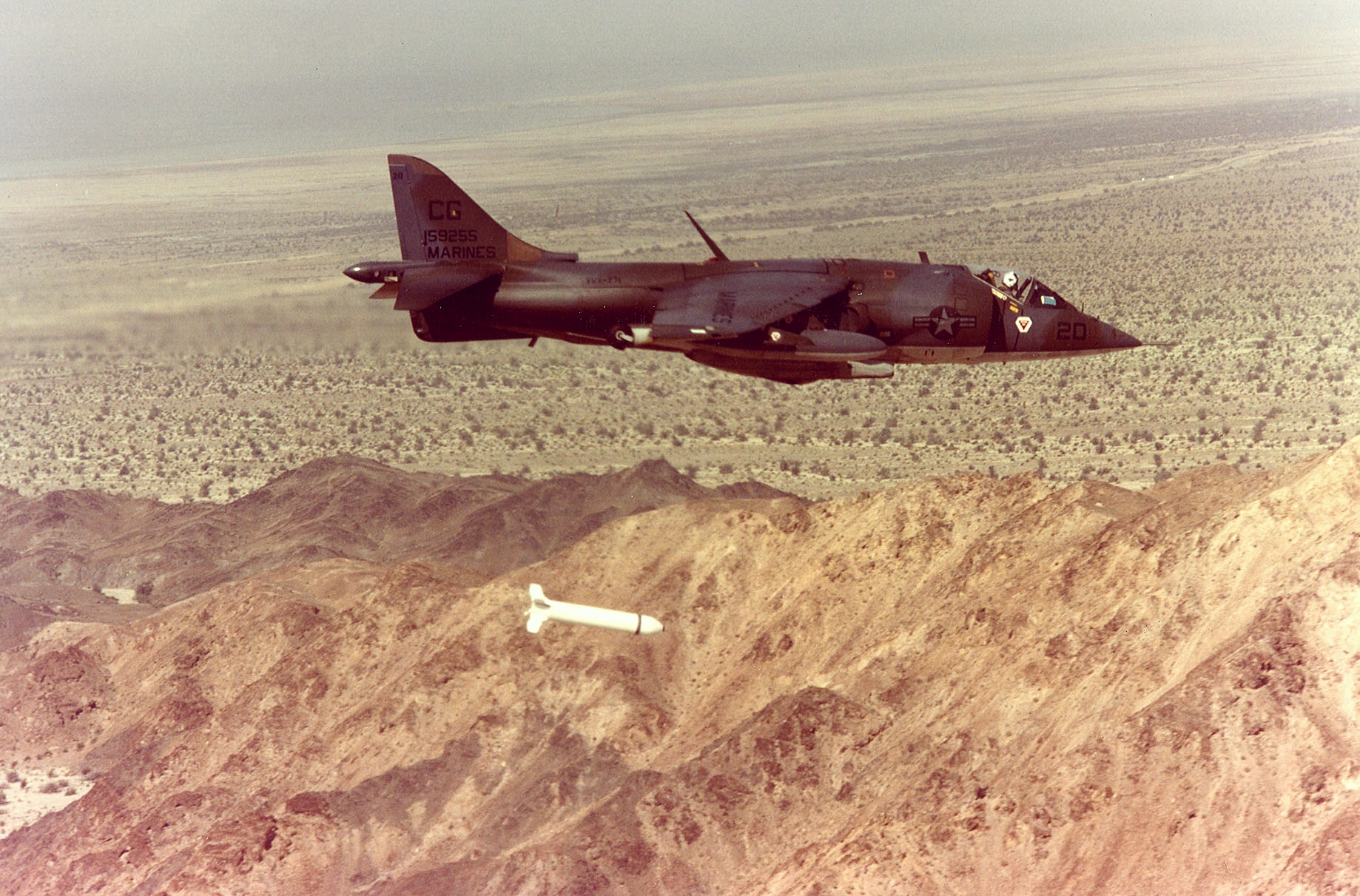
Today, the U.S. Marine Corps celebrated the end of more than half a century of Harrier ‘jump jet’ operations with a sundown ceremony at Marine Corps Air Station Cherry Point in North Carolina. For more than 20 percent of the history of the republic, the British-originated jump jet helped to defend America. The story of how the U.S. military first got involved in the program is a little-known but fascinating one. Michael Pryce, who has worked on various aircraft projects, from the Harrier to the Tempest, explains, and, in the process, connects the dots between the AV-8 and its replacement with the Marine Corps, the F-35B Lightning II.
Read our coverage of the Marine Harrier sundown here.
Right from the start, the Harrier had been of immense interest to Britain’s ‘cousins’ across the pond. In the 1950s, the threat of nuclear war led to the creation of jump jets, and NASA, plus the U.S. Air Force, Navy, and Army soon found that developing rockets seemed easy in comparison to this new class of combat aircraft.
Despite valiant efforts, no American jump jet could be made to work.
A video shows the Ryan X-13 Vertijet during tests. It was one of many Cold War-era jump jet projects that ended in failure:
All three services got involved in trials of the Hawker Siddeley P.1127 Kestrel, the first iteration of what would become the Harrier, initially in a joint British-American-West German trials squadron. Then, six of the Kestrels were taken to America to continue testing there, and they were renamed as XV-6As once on U.S. soil. Unlike other jump jet projects, the P.1127 utilized four adjustable exhaust nozzles beneath the wing, which rotated to provide thrust for vertical, backward, or hovering flight as well as conventional forward movement.
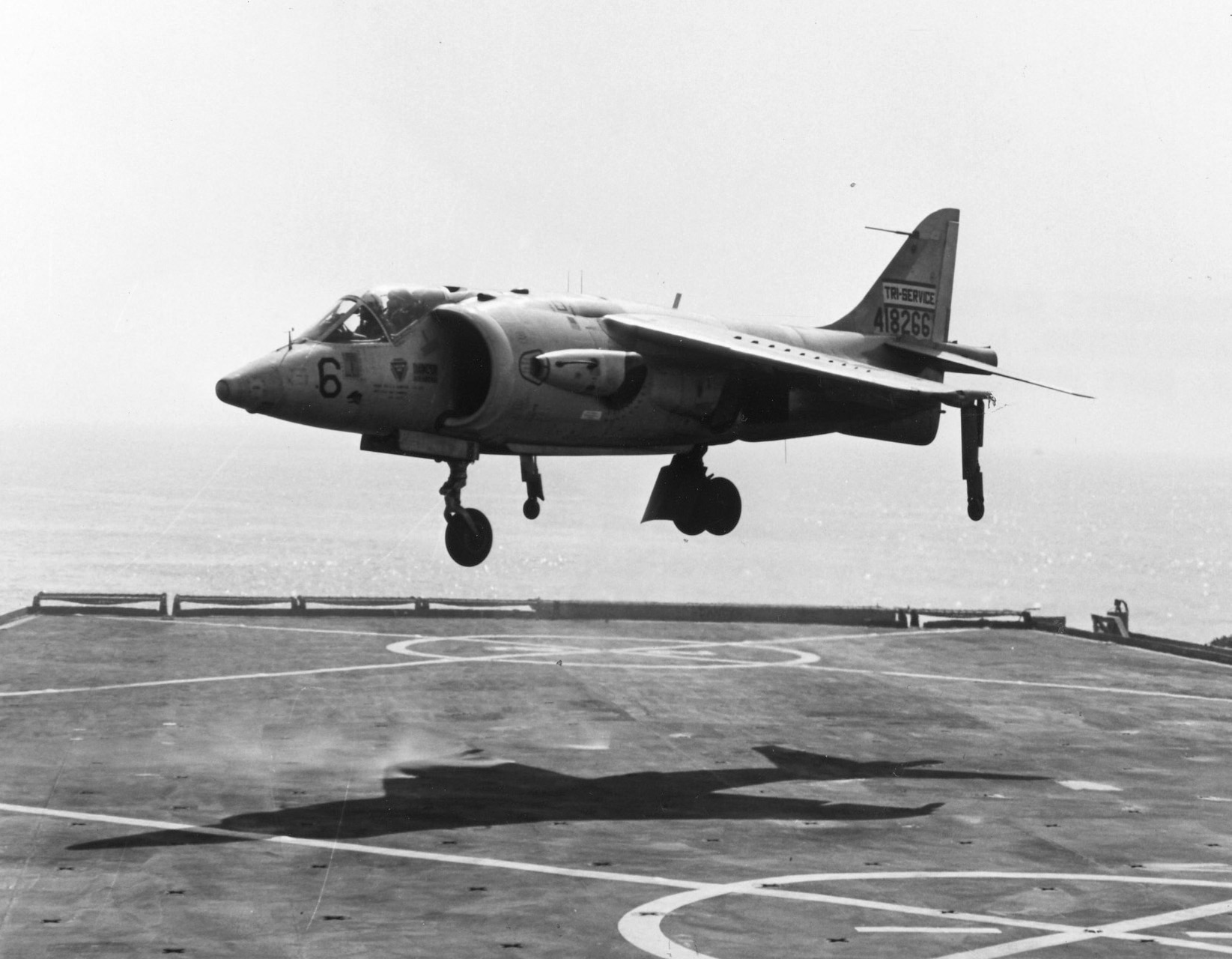
The thing that impressed the Americans was the sheer simplicity of the British jump jet. With just one engine, and ‘not an electron’ needed in its flight controls, the Kestrel soon transformed into the Harrier, and in 1968 the U.S. Marine Corps decided they would acquire them. Despite not having flown any of the Kestrel trials, they knew they wanted to bring the jump jet into the front line as soon as possible.
The British makers of the Harrier, Hawker Siddeley, first found out about the U.S. Marines’ interest when two men in uniform walked into the Hawker Siddeley hospitality chalet at the 1968 Farnborough Airshow and said they wished to fly the jet. Within two weeks, they had. It was the start of the Marines’ love affair with the Harrier, but it was not America’s first encounter with the British jet.
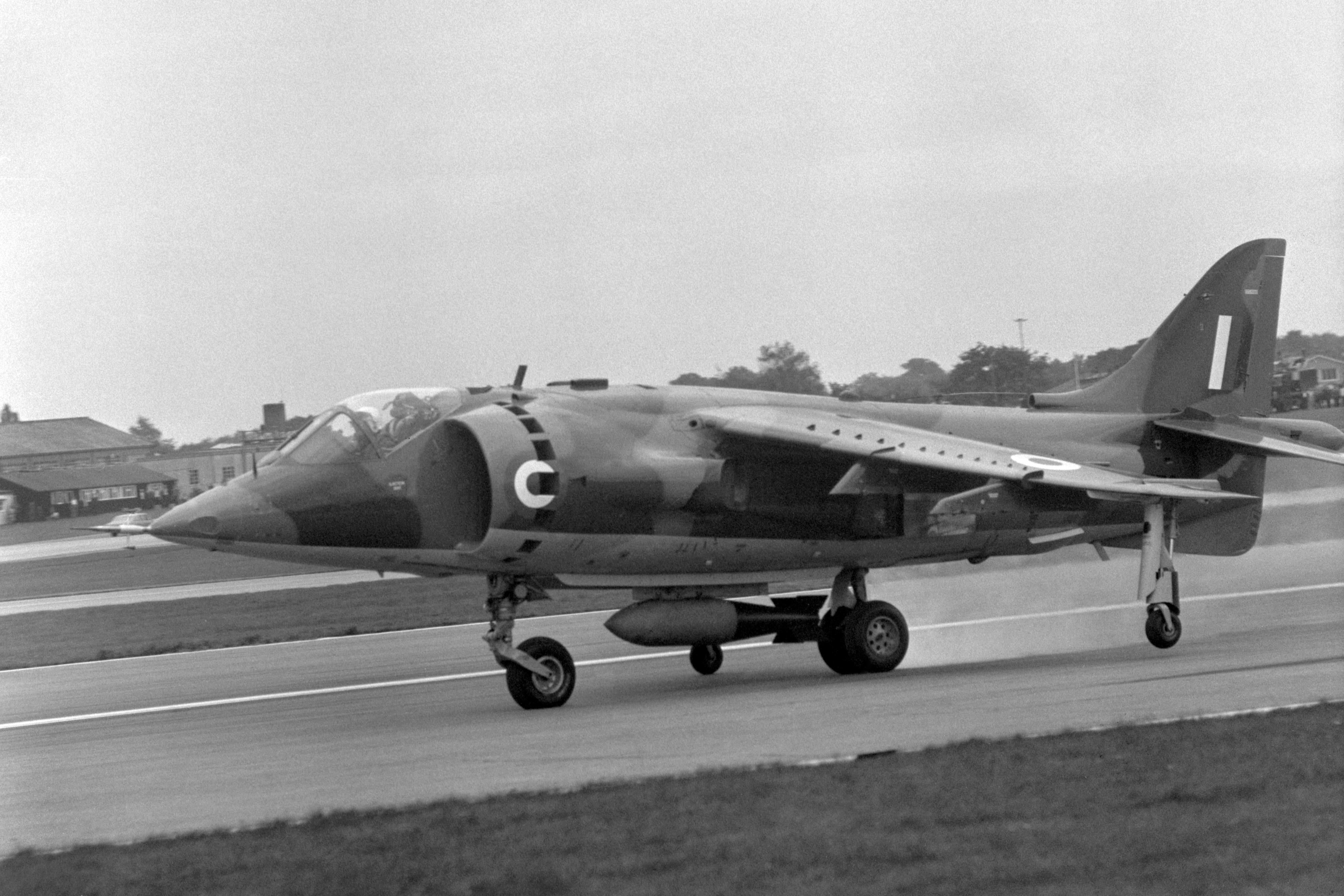
Over 10 years before, another American had walked into Hawker’s fancy tent at another Farnborough airshow and asked to see their design for what would become the Harrier. Col. Willis “Bill” F. Chapman of the U.S. Air Force was an American in Paris, there to find European weapons that America could fund. Jump jets were all the rage, and the Hawker P.1127 seemed to him to be the most promising.
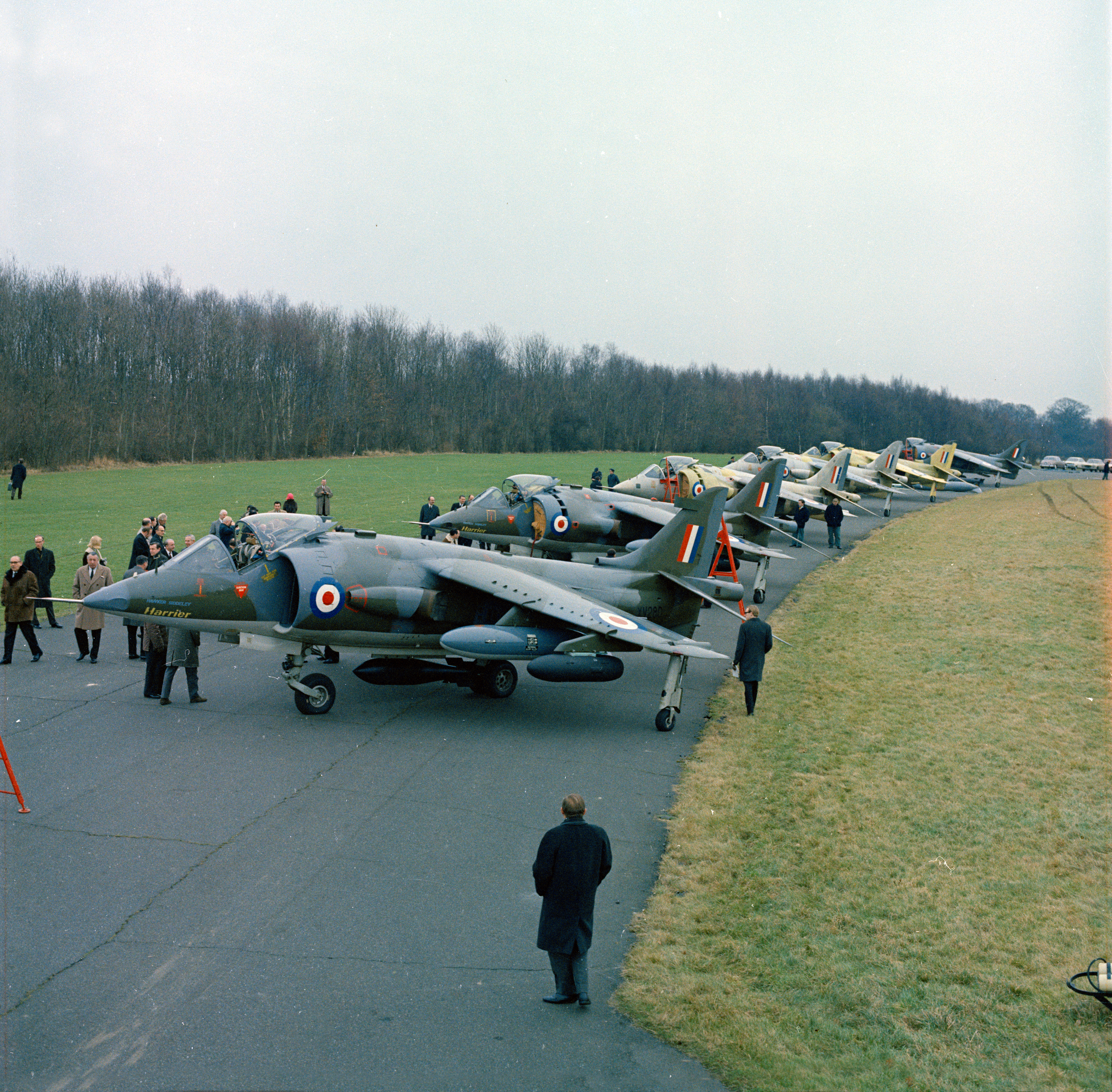
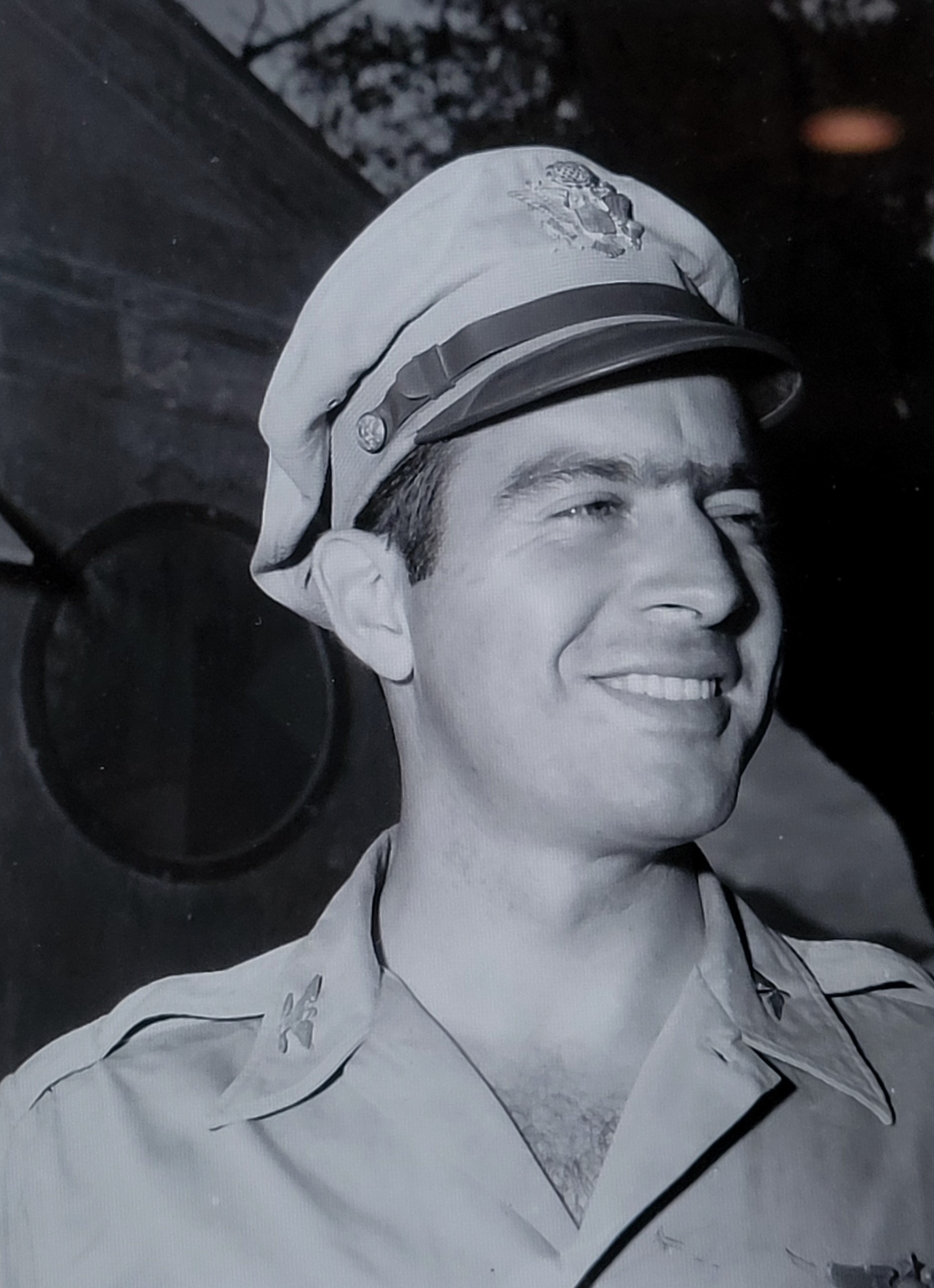
As leader of the 340th Bomb Group in Italy in World War II, Chapman had seen dozens of his B-25 bombers wiped out, first by a volcanic eruption and then by a Luftwaffe attack. He knew nuclear missiles could do much worse. Soon, he had funded the Pegasus engine, the heart of the Harrier, and struck up a strong friendship with the Hawker design team led by Ralph Hooper, driving their design forward, from the drawing board into the sky.
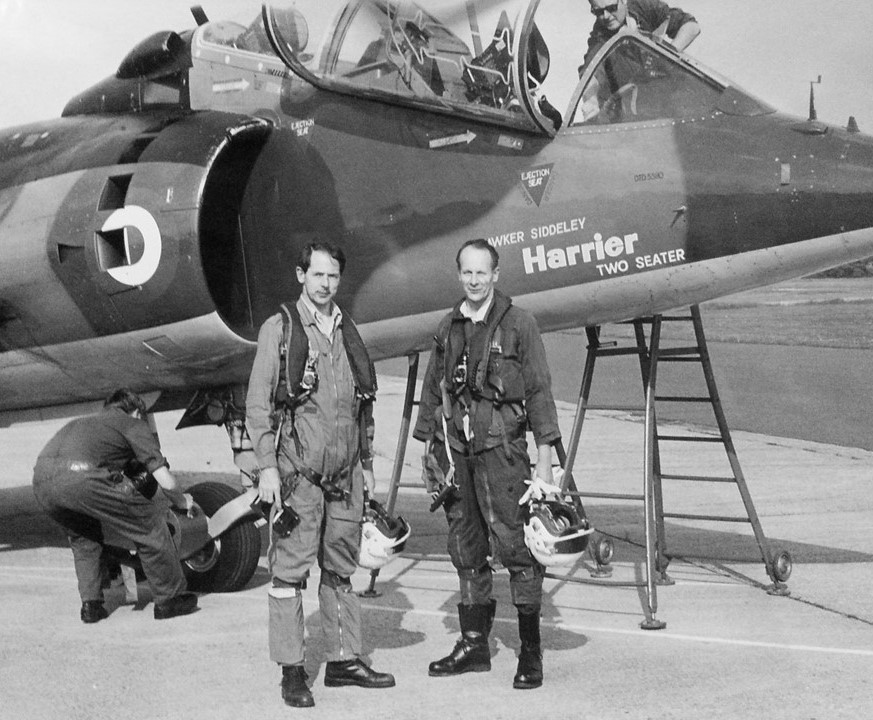
In 1968, one of the U.S. Marines who walked in at Farnborough would play an equally vital role in getting the Harrier into Marine service. Col. Tom Miller had flown in Korea and Vietnam, and scored a speed record in a McDonnell F4H Phantom for good measure. Deeply impressed by the Harrier, he went into battle on ‘The Hill’ to secure it for the Corps, then on to lead it into service as the commander of the 2nd Marine Aircraft Wing at Cherry Point — the same unit that retired the Harrier today, 55 years later.
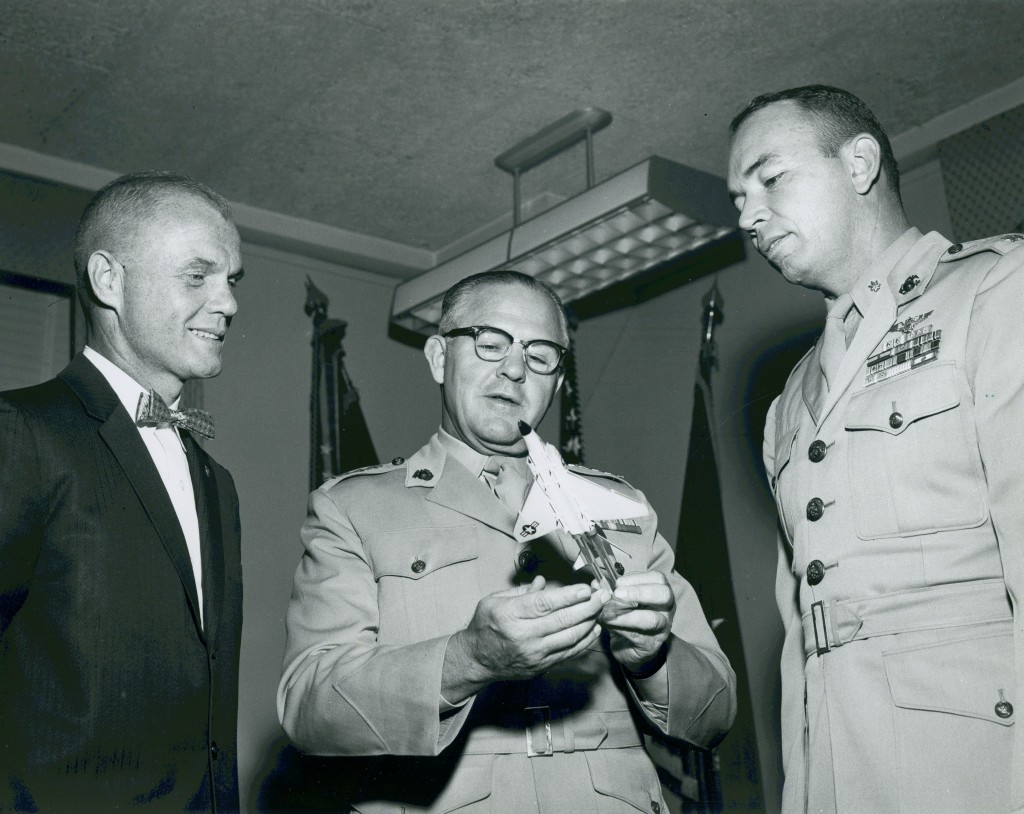
The rest of the history of the Harrier is well known. From the initial, British-built AV-8A to the jointly-developed, with mostly American technology, second-generation AV-8B Harrier II, the Harrier found more use, and created more jobs, in America than in Britain. The American connection was the making of the British jump jet, and helped cement relations between the two countries’ pilots, engineers and ground crews over decades.
In the 1980s, there were attempts to make a new, supersonic successor, with the speed of the Marines’ F/A-18A Hornet and the vertical flight ability of the Harrier. Once again, the Americans turned to British designers. In 1981, Hooper and a team of engineers from the Harrier factory at Kingston-upon-Thames went to work at McDonnell Douglas in St. Louis, Missouri, to design the ultimate jump jet. Over drawing boards and at tailgate parties after ball games, they evolved a great beast of a jet, the P.1218, with two crew, two engines and the latest tech, to succeed the U.S. Navy’s F-14A Tomcat fleet interceptor and A-6E Intruder all-weather strike aircraft. Despite arriving at a joint design, money was limited, and the work was re-focused on research with NASA — the start of what in time would become the Joint Strike Fighter program.
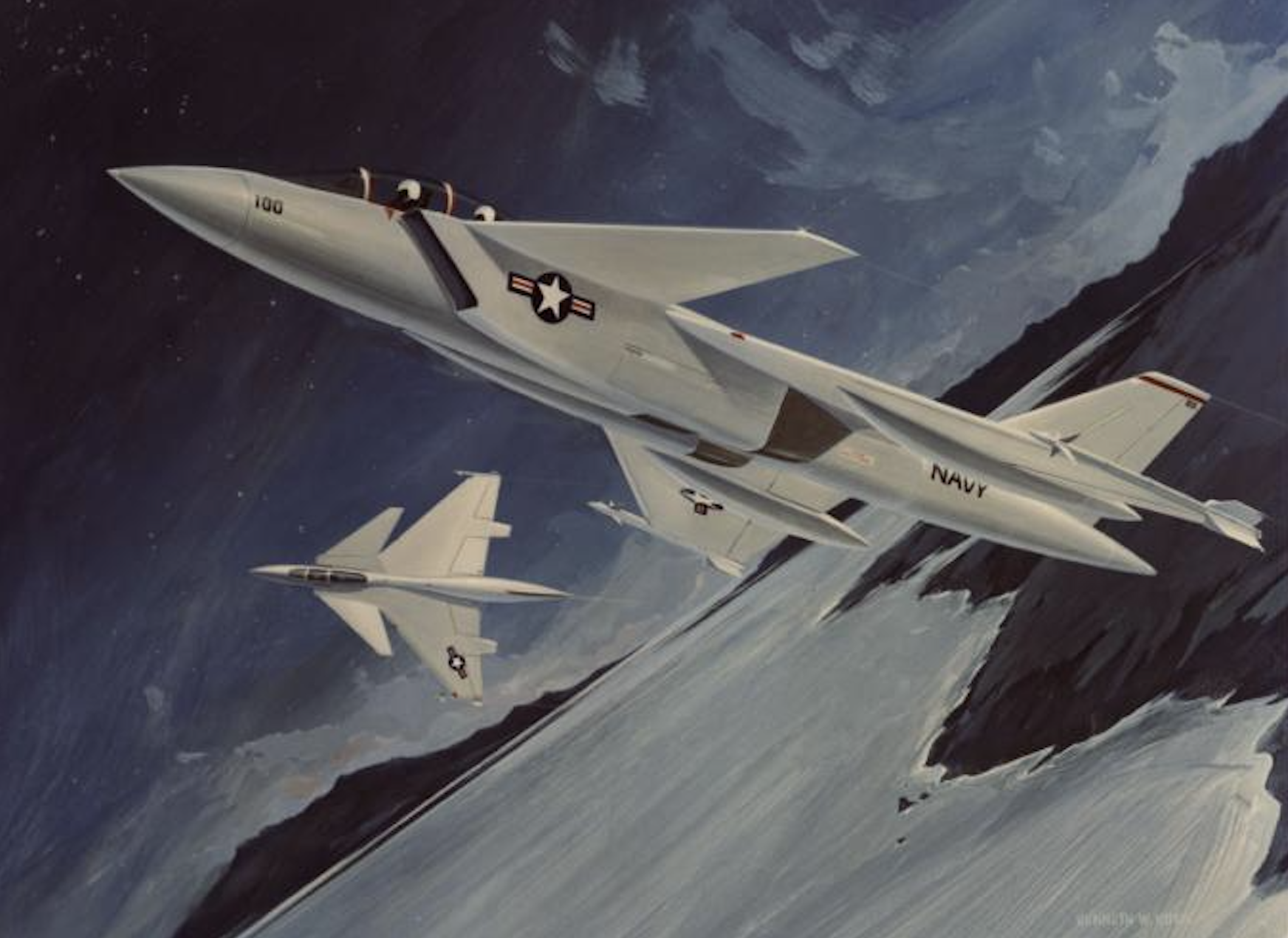
Although the U.S Navy buys jets for the Marines, the big twin-engined design was of less interest to the Corps than another of Hooper’s designs, a smaller, single-engine jet that weighed the same as the Hornet. This supersonic jump jet was seriously studied in the United Kingdom, with tests and design work over many years. The U.S. Marines were involved too, officers visiting the Kingston factory to talk about its prospects. When Britain delayed jump jet plans in favor of what became the Eurofighter Typhoon, it meant Hooper’s single-engined P.1216 design, with its wild-looking twin-boom configuration, seemed to miss its chance with the Marines. The British designer retired too, but he did not let that stop him.
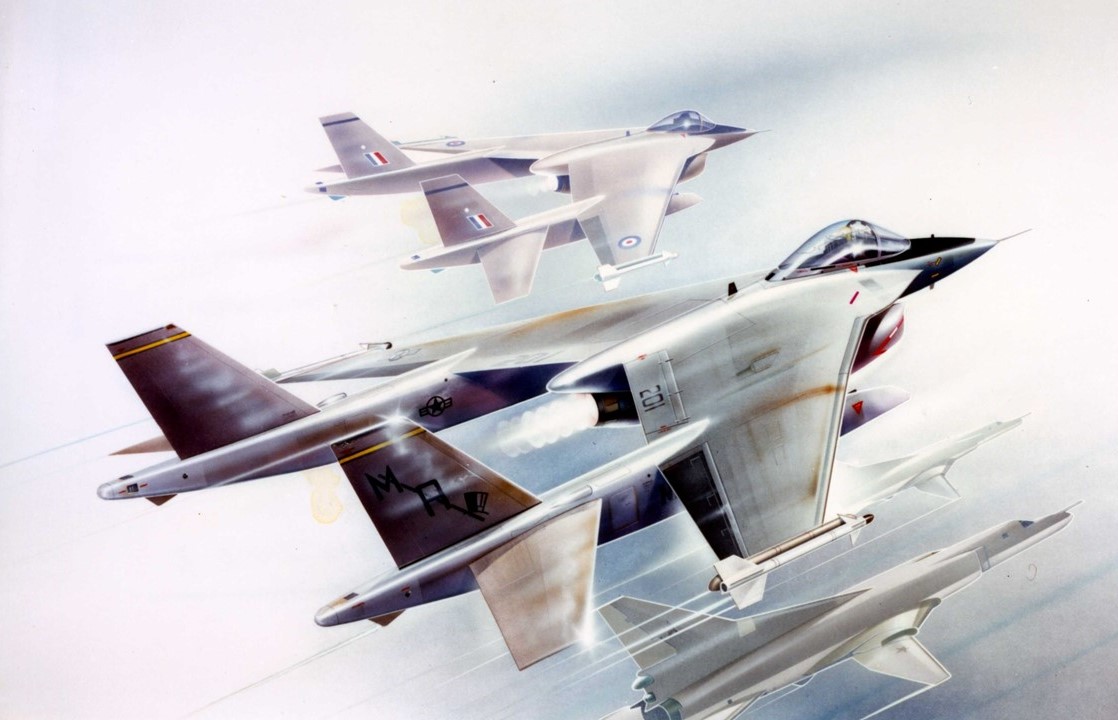
Keen to see a supersonic jump jet in Marine service, he turned to Miller once again. As the accompanying letter in this article shows, in 1992 he gave Miller the technical plans of the new jump jet, and Miller showed it around at Marine HQ at a vital time — just as 10 years of research was turning into the serious acquisition program for the Joint Strike Fighter.
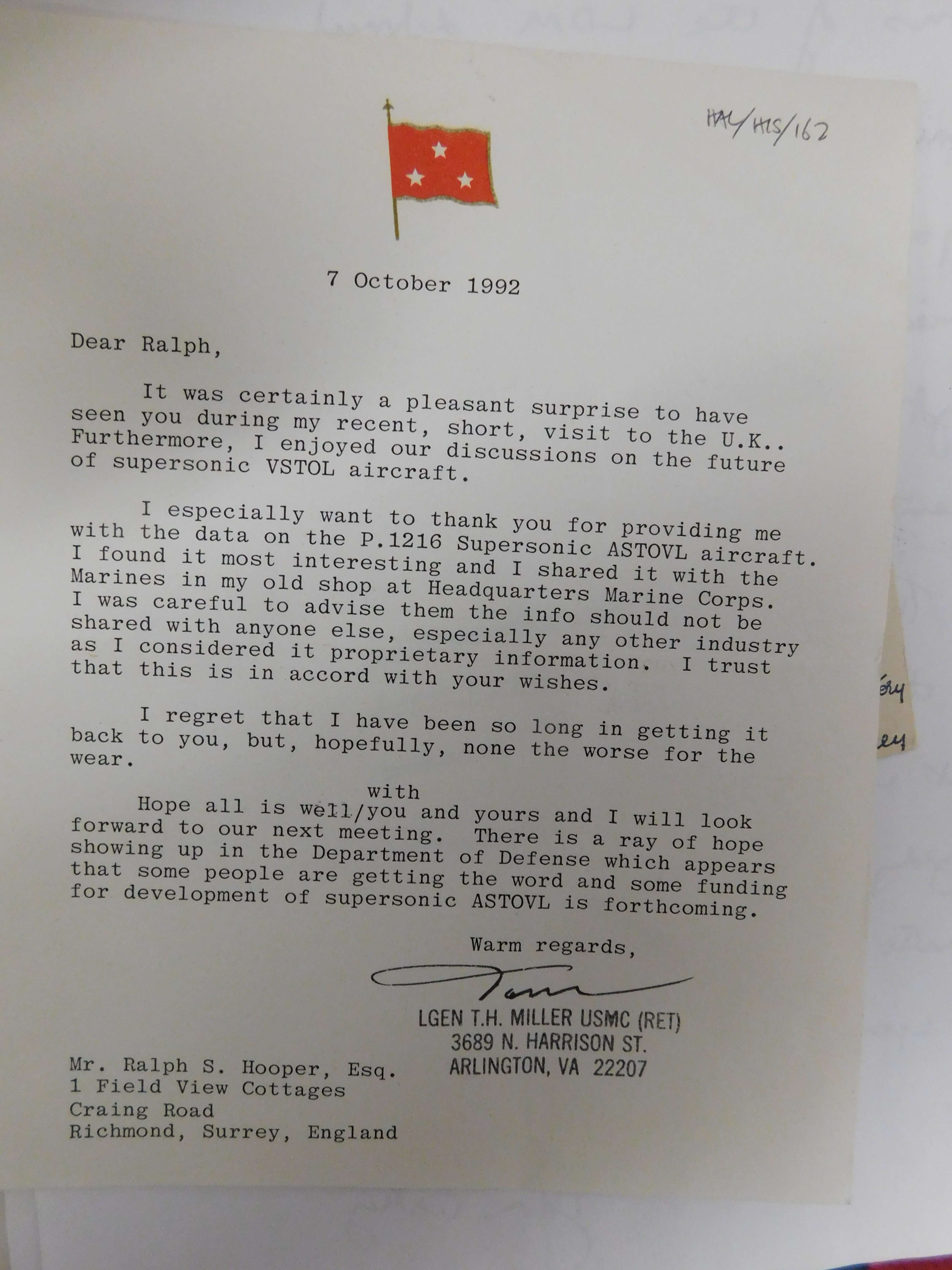
The emerging requirements specified a weight the same as the Hornet — the same, too, as Hooper’s P.1216. Speed, range and weapons load were close too. While avionics and stealth had advanced beyond the British jet’s capabilities, the knowledge that the man who made the Harrier thought a practical jump jet of Hornet size would work helped get the ball rolling on the third generation of jump jets. Miller’s support ensured the Corps got behind it, leading to the Lockheed Martin F-35B now taking over Cherry Point.
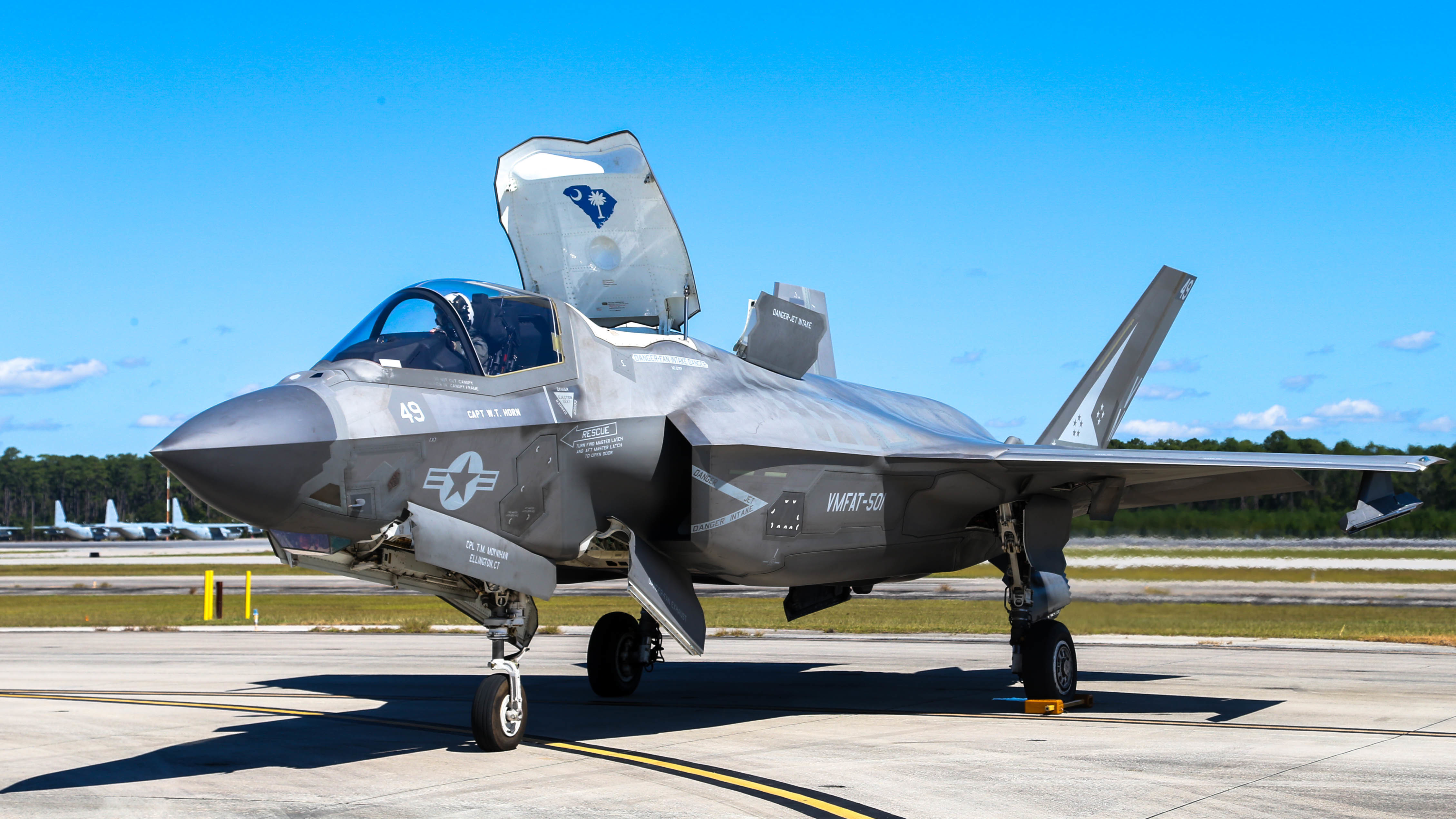
Making a fighting jump jet that works is extremely challenging. The Harrier had its problems — without rigid training, accident rates echoed those of its 1950s origins. The F-35B has had to overcome its own hurdles too.
In the early 2000s, Hooper was called in to help fix those. The transatlantic story of the Harrier may have ended today, but the people who found ways to cut bureaucratic corners by trusting each other, and who cracked the technical code of making the Harrier work, continue to support the next generation of F-35Bs.
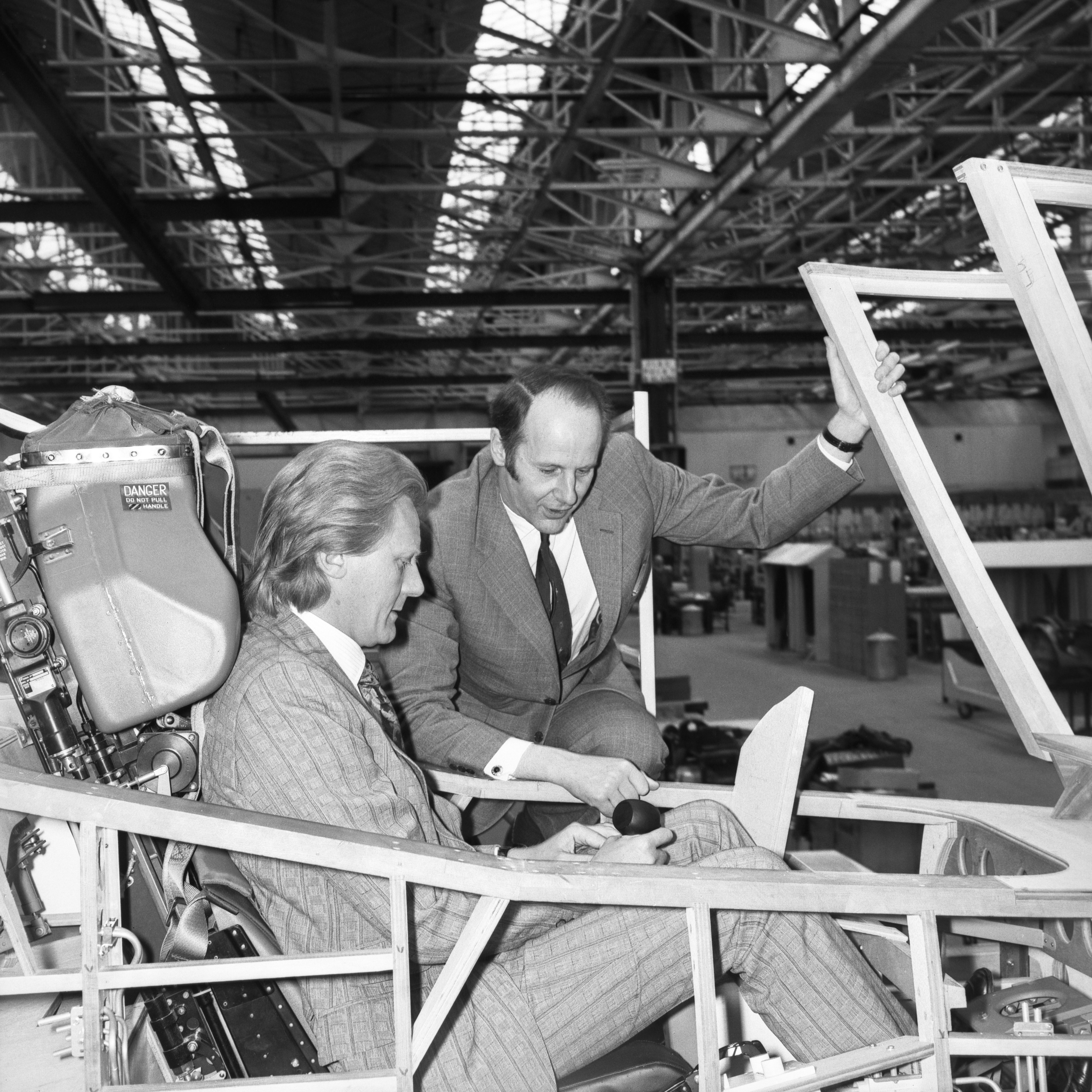
The ‘Harrier Mafia’ worked their own way, but always in line with the motto of the Marine Corps. “Semper Fi” was a value shared by British pilots who flew American Harriers in combat operations on exchange as much as by the men and women who made, and supported, 55 years of Harrier operations at Cherry Point.
Jump Jet: The Secret History of the Harrier by Michael Pryce is published on August 27 and is available for pre-order.
Contact the editor: thomas@thewarzone.com

Ukrainian Foreign Minister Andrii Sybiha said that Ukraine and Hungary are opening a new chapter in their bilateral relations based on mutual respect and trust.

Hungarian Prime Minister Peter Magyar has announced that a comprehensive agreement has been reached with Ukraine on expanding the linguistic, educational, cultural, and political rights of the Hungarian minority, which numbers approximately 100,000 people.

Sybiha said the full North Atlantic Council visited Kyiv on Thursday despite Russia’s recent threats and escalating missile attacks. Discussions focused on securing additional Patriot air defense systems, expanding European funding for US weapons purchases, and preparing concrete Ukraine-related out

Russia plans to significantly increase the share of jet-powered strike drones in its attacks to up to 50%, AFU’s Chief Syrsky said. He warned this creates new challenges for Ukraine, despite growing interception success, with over 3,500 Russian drones downed in May alone. Kyiv says Russia is rapidly