Sweden received the largest fallout of radioactive cesium outside the Soviet Union – 1,000 km from Chornobyl. Four decades later, what impact has the disaster had on Swedish society?
Kyiv Post
75
7 min read
0 views
The discovery
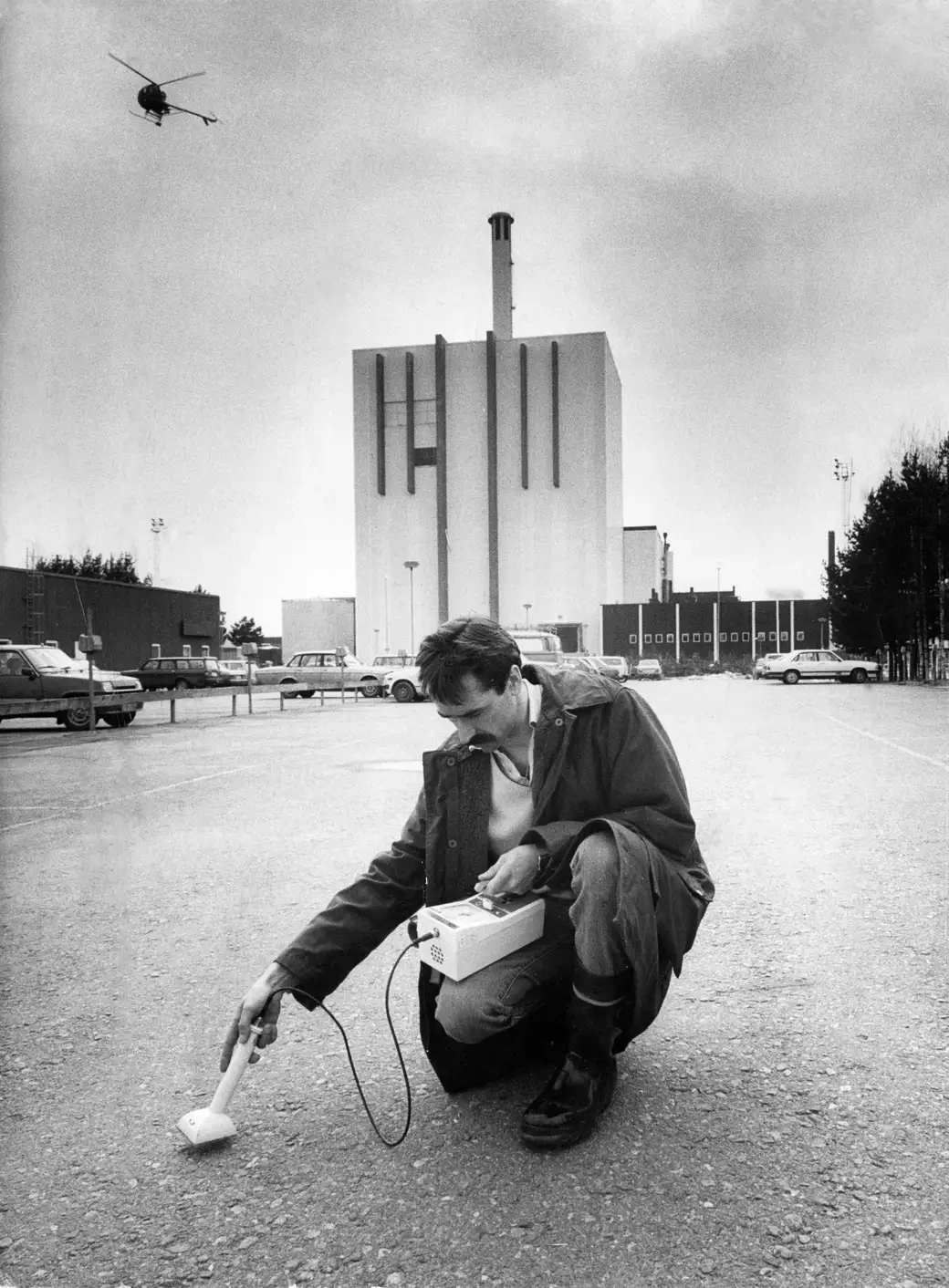
On April 27, 1986, rain fell over parts of Sweden while southeasterly winds were blowing. At half past seven on Monday morning, the operations manager at the Forsmark nuclear power plant (located about 150 kilometers north of Stockholm) received an alarming message: radiation detectors had reacted to an employee’s shoes.
The source could not be identified. After about an hour, plant management raised the alert level. All employees except essential operating staff and emergency personnel – around 800 people – were sent away from the plant to an assembly point ten kilometers away.
At the same time, government authorities began mapping radiation levels in the surroundings of the plant. Elevated readings soon appeared elsewhere in Sweden, while Finnish authorities reported similar findings. Weather analyses showed that the radioactive substances had been carried into Sweden on winds from the east. By Monday evening Forsmark returned to normal operations, and later that night the Soviet Union confirmed that a serious nuclear accident had occurred at Chornobyl on April 26.
Bengt Bellman, a measurement technician at the Forsmark nuclear plant, April 1986. (Photo by Roger Turesson/Expressen)
For more than three decades, the museum has shaped public memory of the worst technological disaster in human history.
Radiation reaches Sweden
The Chornobyl disaster spread radioactive substances across much of Europe. For Sweden, the consequences were more severe than for any other country outside the former Soviet Union. About five percent of all radioactive cesium released fell on Swedish territory.
The fallout was highly uneven. Rain carried radioactivity from the air to the ground, and where it rained, cesium levels were high. Northern Sweden was hardest hit, particularly areas around Gävle, Sundsvall, and Härnösand. In some cases, significant differences appeared even between nearby locations, depending on local rainfall patterns.
Sweden did not introduce drastic emergency measures. There were no evacuations, no calls to remain indoors, and no iodine tablets were distributed. Instead, authorities focused on food safety. Limits for cesium were introduced, and regulations and recommendations were issued for agriculture.
During May and June, cows in affected areas were not allowed to graze outdoors, and hay was transported from other parts of the country. Farmers received advice on plowing and fertilization to reduce future uptake of radioactive cesium.
The most visible consequences were felt in reindeer husbandry. Reindeer consume large amounts of lichen, which accumulates radioactive substances. In 1986, 75% of Swedish reindeer meat had to be discarded: 27,000 of 36,000 slaughtered reindeer exceeded permissible levels. Over the next decade, more than 200,000 reindeer were discarded for the same reason. Moose hunting was also heavily affected; nearly half of the animals shot exceeded the limit. To ease the economic impact, the government paid compensation equivalent to roughly €200 million in today’s terms.
Since the accident, Swedish authorities have monitored radiation levels closely. The Swedish Radiation Safety Authority still measures cesium in soil, seas, and food – especially milk and wild game. About 40 percent of the cesium remains in the soil, but radiation levels and concentrations in most foods have declined sharply. Wild boar remain an exception, and hunters in affected areas are still advised to test the meat and avoid consuming meat with excessively high levels
In summary, the fallout did not cause any immediate or acute health effects among the Swedish population. Long‑term effects are instead estimated to include a small increase in cancer cases – around 300 – spread over many decades.
Beyond the statistics
Forty years have now passed. Those who remember 1986 often recall the late April and early May days when radio and television were dominated by reports of a crippled nuclear power plant and an invisible threat carried by wind and rain.
Younger generations have encountered Chornobyl differently. Some know it through Svetlana Aleksijevitj’s“Voices from Chornobyl,” which gives voice to those who lived through the disaster. Others have seen the 2019 television series “Chornobyl,” which brought the event to life through vivid imagery and personal tragedy.
I was 25 years old when the accident occurred. What has stayed with me is not numbers or measurements, but people’s worry. A pregnant friend living in a heavily affected area was terrified that the contaminated environment might harm her unborn child.
Another friend recalled raking leaves on a Sunday after spring rain. She remembered the beauty of it – the sunlight glittering on wet leaves, the feeling of renewal. Two days later she read that her area had received radioactive fallout. What had felt pure and life‑giving suddenly became dangerous, perhaps even deadly.
The media were full of contradictory messages, partly because fallout varied so much regionally, and partly because of genuine uncertainty. Authorities, experts, and journalists struggled to understand what had happened and how dangerous it was. The public waited for clarity.
This was before the internet and social media. Yet the uncertainty feels strikingly familiar today. No matter what was said on radio or television, doubt lingered: do they really know everything, and are they telling us the whole truth? As in many crises, the issue was not only facts, but trust – trust in institutions, experts, and political leaders tasked with helping us navigate the unknown.
Personal risk strategies
People rarely follow official advice to the letter after major accidents. Research shows that informal strategies often emerge, blending recommendations with personal judgment and compromise. After Chornobyl, Sweden was no exception.
In one severely affected area, a man described how his hunting team handled moose meat. The official limit was 1,500 becquerels per kilo. The team kept all animals up to 2,500. Meat with higher cesium levels was evenly distributed among the 17 hunters so no individual bore the full risk. A truly risk spreading strategy.
A couple in northern Sweden reacted quite differently at first. They stopped picking berries and mushrooms altogether. The hares they shot were not even fed to the dogs. Their caution was absolute. After a year, however, they began eating game and forest produce again, even though contamination remained high. Asked why, they explained that they had chosen rural life in order to live off the land. Completely abstaining from forest and game was incompatible with the life they wanted. “Now we pretend the Chornobyl disaster never happened,” one of them said.
This kind of adaptation is common. What once appeared exceptional and terrifying gradually becomes part of everyday life. The risks do not disappear; instead, they are normalized and no longer experienced as threatening.
More than radiation
Chornobyl’s consequences cannot be reduced to cesium levels in soil and food. The disaster also gave rise to widespread anxiety, a reduced quality of life for many, and significant political change.
In Sweden, the accident reignited a debate over nuclear power that had been contentious since the 1970s. A national referendum in 1980 had endorsed completing a 12‑reactor program, but after Chornobyl public opinion shifted dramatically. Opinion polls showed that around 80 percent of the population now favored phasing out nuclear power by 2010. This shift helped fuel a renewed political debate and ultimately led to a parliamentary decision to shut down two reactors in 1995–1996.
Yet public opinion soon shifted again. General opposition to nuclear power gave way to skepticism toward unsafe nuclear power – effectively Soviet – alongside growing support for what was perceived as safe, Swedish nuclear energy. Today, a clear majority of Swedes support its continued use.
Forty years on, many of Chornobyl’s concrete effects on Sweden are little known or largely forgotten, not least because nearly half the population was born after 1986. The disaster itself, however, remains firmly embedded in collective memory – kept alive through books, television series, and other media.
Rolf Lidskog is a Professor of Sociology at Örebro University, Sweden. His main research interest concerns the role of scientific expertise in environmental governance.