
Since the United States and Israel initiated large-scale combat operations against Iran on February 28, Tehran has lashed out at its neighbors with hundreds of missiles and drones. Despite the scale of the initial attacks and the damage they have done to Americans, Israelis, and Arabs, the daily rate of Iranian ballistic missile attacks is decreasing over time.
This decline is likely due to a combination of factors, including the effectiveness of the ongoing US-Israeli strike campaign against Iranian ballistic missile stockpiles, launchers, and facilities; the risk to Iranian operators of being detected and destroyed by American and Israeli aircraft; a potential rationing effort by the Tehran regime to preserve missiles for a sustained conflict and to retain a credible deterrent at the war’s conclusion; as well as prior Iranian missile expenditures and losses in last June’s 12-Day War with Israel.
To be sure, the impact of Iran’s recent missile and drone attacks has been significant. Tehran has fired over 500 ballistic missiles and over 2,000 drones at military installations and civilian sites across the region, including in Bahrain, Jordan, Kuwait, Qatar, Saudi Arabia, the UAE, Iraq, Turkey, and Israel. Despite extensive air and missile defense efforts from the US and its partners, Iranian missiles and drones have struck targets across the Middle East, including American military bases. Six US service members have been killed and at least 18 wounded by Iranian retaliation by the afternoon of March 2.
The quantity of ballistic missiles employed by Iran in conflicts since April 2024 has been growing, as the regime has learned and tried to increasingly overwhelm air defenses. In the April 2024 conflict with Israel, Iran fired roughly 120 missiles. In the October 2024 conflict, Iran fired over 200 ballistic missiles. Each of those totals occurred in less than 24 hours. In the June 2025 12-Day War between Iran and Israel, Tehran fired roughly 550 ballistic missiles.
In other words, the quantity of missiles launched in four days of the current war is comparable to the amount fired in 12 days of the last conflict. Nonetheless, the rate of Iran’s ballistic missile launches is lower than one might have expected for a battle that the regime likely views as existential.
These top-level numbers, however, should not mask another reality. While the total fired in this conflict has already exceeded, or will exceed, that of the 12-Day War in less than half the time, initial data suggest that the volume of daily Iranian ballistic missile launches has decreased rapidly since the beginning of hostilities.
“Iran’s ability to hit us and our partners is declining,” Admiral Brad Cooper, head of US Central Command (CENTCOM), stated in an update released on the evening of March 3. The following morning, Chairman of the Joint Chiefs of Staff General Dan Caine told reporters at a press conference that Iran’s theater ballistic missile launches were down 86 percent since the first day of the conflict, dropping substantially in the preceding 24 hours. For example, the UAE Ministry of Defense reported that 137 Iranian ballistic missiles targeted the Emirates on February 28, followed by 28 on March 1, nine on March 2, 12 on March 3, and three on March 4.
There are several likely reasons for the decline in Iranian ballistic missile launches. The first is the impact of previous Israeli strikes on Iran’s ballistic missile capacity during the 12-Day War. Those strikes did significant damage to Iranian missile production and storage facilities, though Tehran worked to reconstitute some of that capacity.
Perhaps most importantly, US and Israeli forces have extensively targeted Iranian missile launchers and facilities since Saturday. The Israeli Air Force reported destroying or disabling around 300 launchers by March 3, and US forces have also targeted them extensively.
Admiral Cooper characterized the remaining threat as a “lingering launch capability.” In addition to attriting Iranian capacity, these strikes suppress Tehran’s ability to actually launch ballistic missiles, even if it has remaining stockpiles. Simply firing missiles from launchers before US and Israeli aircraft can detect and destroy them poses a significant threat to these finite assets.
Losing systems central to Tehran’s military power and deterrence likely influences the risk calculus of Iranian military planners about when and how to employ remaining assets. If Iran loses too many of its missiles and launchers early in the conflict, its ability to continue imposing costs will decline in a drawn-out war.
Iranian planners are likely also considering the need to preserve enough missile capacity for a credible deterrent post-conflict, especially given the centrality of missiles to Tehran’s long-term deterrence strategy. That potential calculus, however, assumes that Iran’s central command-and-control apparatus is still able to communicate with its respective missile units. Given the destruction of various headquarters and the degradation of command, control, and communication capabilities, that may not be a good assumption, as many operational and tactical units are likely making decisions in the absence of guidance from higher echelons.
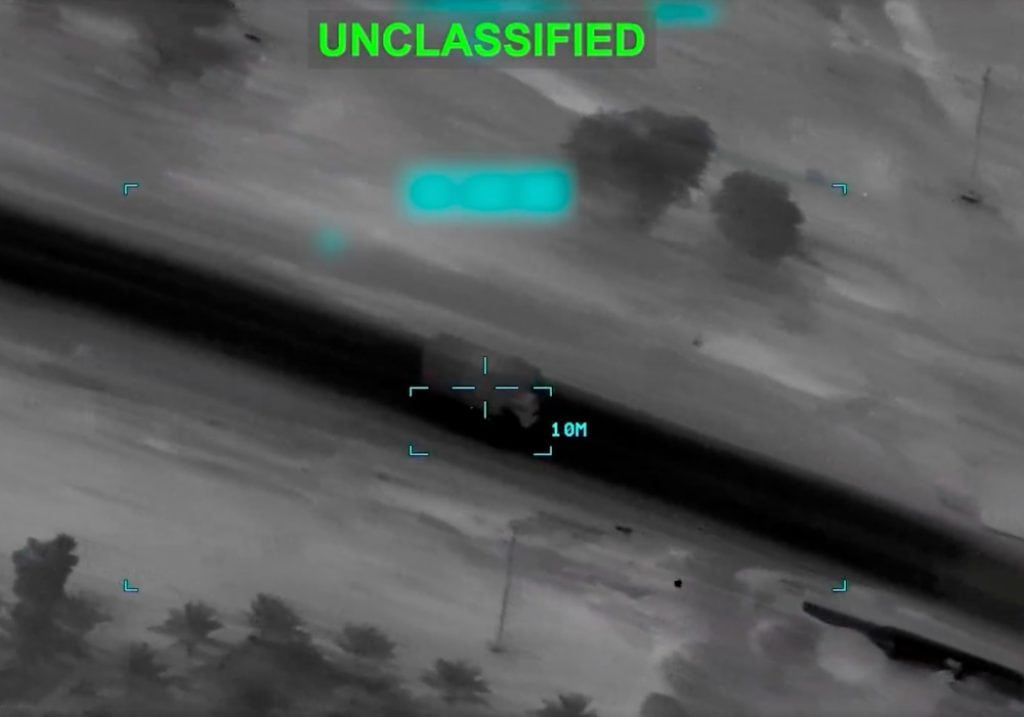
Regardless, the persistent air-to-surface suppression campaign could potentially also deter individual launcher operators, evidenced by videos released by US Central Command that appear to show strikes on abandoned launchers.
In addition to attacks aimed at taking out missiles before they launch, ballistic missile defense efforts by the US and its regional partners appear to have been relatively successful in the opening stages of the conflict. Preliminary statistics released by the UAE and Qatar claim ballistic missile interception rates above 90 percent in the opening days of the conflict. If accurate, these figures would represent relatively successful defensive efforts, given the level of saturation from Iran’s attacks.
That said, several Iranian ballistic missiles have tragically hit their targets, in addition to drone strikes. The US and its regional partners entered the conflict with existing strains on their missile defense capacities, but so far, it appears that these stocks have been sufficient relative to Tehran’s ability to sustain large volumes of launches.
The United States and Israel are in a race with Iran to deplete Tehran’s ability to launch ballistic missiles before American and partner air defense capacities decline to a dangerous level. Given some of the dynamics detailed above, barring unforeseen events, the United States is unlikely to fully deplete its ballistic missile defenses in this conflict with Iran in the near term. However, finite American air defense capacity is being consumed, and depending on the rate of expenditure in the coming weeks, that could leave the US ill-prepared for simultaneous or subsequent major wars elsewhere.
Cameron McMillan is a senior research analyst at the Foundation for Defense of Democracies’ (FDD’s) Center on Military and Political Power (CMPP), where Ryan Brobst is the deputy director and Bradley Bowman is senior director.


