China opens world’s largest ship data set that could be used to train drones

A Chinese military research team has released what it described as the first publicly available visible light-infrared ship detection data set, a resource that could sharpen maritime target recognition for drones, missiles or surveillance systems operating at night or in environments where radar is

South China Morning Post
75
2 min read
0 views
China opens world’s largest ship data set that could be used to train drones

A Chinese military research team has released what it described as the first publicly available visible light-infrared ship detection data set, a resource that could sharpen maritime target recognition for drones, missiles or surveillance systems operating at night or in environments where radar is degraded or suppressed.

The dual-modal ship detection (DMSD) data set contains more than 2,000 paired visible and infrared vessel images and nearly 20,000 annotated instances, according to the peer-reviewed study published in January by the Chinese-language Journal of Radars.

Ship recognition at sea is markedly harder than object detection on land. Maritime environments are shaped by glare, shifting weather, long-range imaging degradation and cluttered backgrounds, all of which can undermine classification accuracy.

The challenge was illustrated in February when an Iranian claim of a successful strike on aircraft carrier USS Abraham Lincoln near the Strait of Hormuz was dismissed by Washington, which said the missiles or drones involved did not come close.

The episode underscored a familiar problem: reaching the vicinity of a ship is one thing, but reliably detecting, identifying and tracking a moving naval target under contested conditions is another.
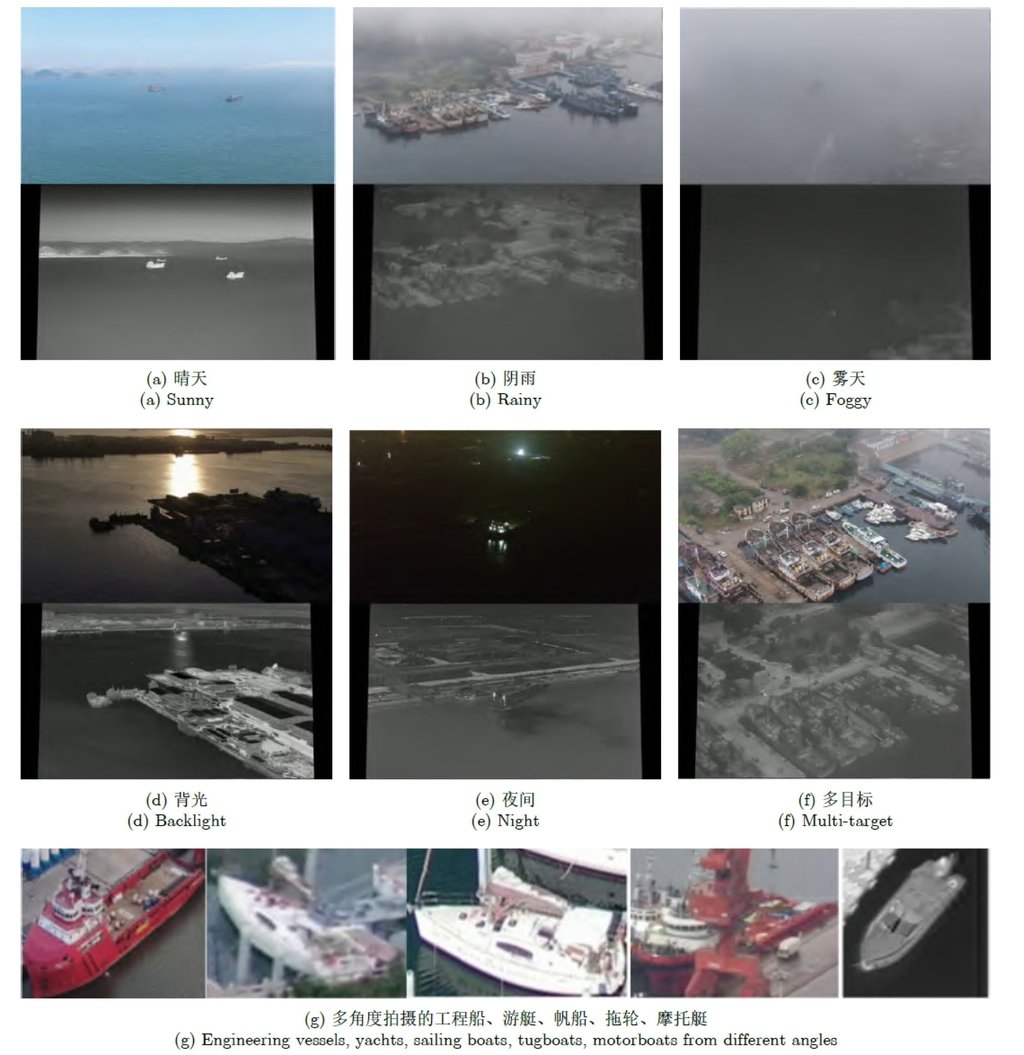
The dual-modal ship detection (DMSD) data set contains more than 2,000 paired visible and infrared vessel images under different sea conditions and target conditions. Photo: Journal of Radars

The dual-modal ship detection (DMSD) data set contains more than 2,000 paired visible and infrared vessel images under different sea conditions and target conditions. Photo: Journal of Radars

The study was led by researchers from the Naval Aeronautical University in Yantai, Harbin Engineering University and the Chinese Academy of Sciences’ Institute of Computing Technology.

Share this article

Related Articles

‘Demand shock’: China cannot escape the impact of a long Iran war, analyst warns
🇨🇳🇹🇼China vs Taiwan
South China Morning Post

‘Demand shock’: China cannot escape the impact of a long Iran war, analyst warns

While China appears better prepared than other countries to deal with the shocks brought by the US-Israel war on Iran, its economy would still come under pressure in the short term if its regional partners suffer, an executive with a global consultancy has said. “China might be more resilient, but C

लगभग ५ घंटे पहले2 min
Trump confirms May meeting with Xi Jinping as Iran war forces postponement
🇨🇳🇹🇼China vs Taiwan
BBC News - Asia

Trump confirms May meeting with Xi Jinping as Iran war forces postponement

Trump's delayed meeting with Xi Jinping will be the first visit to China by a US president since 2017.

लगभग ५ घंटे पहले3 min
As Iran war rages, China links peace to economic growth at Boao Forum
🇨🇳🇹🇼China vs Taiwan
South China Morning Post

As Iran war rages, China links peace to economic growth at Boao Forum

As the US-Israeli war on Iran continues, China’s top legislator, Zhao Leji, has told the Boao Forum for Asia – a high-level gathering of governments and business leaders – that power politics should be rejected in favour of economic development and conflicts should be resolved through negotiations.

लगभग ६ घंटे पहले2 min
Australia bans Iranian tourists with valid visas for six months
🇨🇳🇹🇼China vs Taiwan
BBC News - Asia

Australia bans Iranian tourists with valid visas for six months

Critics say the move, which comes after Iranian footballers were granted asylum, is a "moral failure".

लगभग ७ घंटे पहले3 min