DoW, BAE Systems agree to quadruple production of seekers for THAAD
The US Department of War (DoW) has entered into a framework agreement with BAE Systems and Lockheed Martin to quadruple manufacturing of seekers for the Terminal High Altitude Area Defense (THAAD) interceptor.
Army Technology
75
3 min read
0 views
DoW’s deals with BAE Systems and Lockheed Martin come as US weapons stocks are reportedly strained amid operations against Iran.
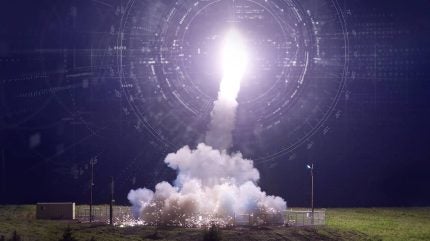
BAE Systems will quadruple production capacity and accelerate delivery of the infrared seeker for the THAAD interceptor missile. Credit: BAE Systems.
The US Department of War (DoW) has entered into a framework agreement with BAE Systems and Lockheed Martin to quadruple manufacturing of seekers for the Terminal High Altitude Area Defense (THAAD) interceptor.
The THAAD seeker is responsible for providing sensing and guidance to intercept ballistic missiles, using advanced sensors to identify targets travelling up to 17,000 miles per hour.
Discover B2B Marketing That Performs
Combine business intelligence and editorial excellence to reach engaged professionals across 36 leading media platforms.
Find out more
Under the agreement, BAE Systems will raise yearly seeker production to meet demand for enhanced capacity and operational requirements.
This follows DoW’s commitment with Lockheed Martin earlier this year, which was also to quadruple overall THAAD interceptor production.
Using BAE Systems’ sensor technology, THAAD interceptors target ballistic missiles and are capable of neutralising warheads with kinetic impact both within and beyond the atmosphere.
Under Secretary of War for Acquisition and Sustainment, Michael Duffey said: “Securing our supply chain is just as critical as our partnership with the prime contractors. This agreement with BAE Systems sends a clear, stable, long-term demand signal. We are providing the certainty our partners need to invest, expand, and hire. This is how we place the industrial base on a wartime footing.”
The agreement aligns with the DoW’s Acquisition Transformation Strategy, an initiative aimed at accelerating the delivery, expansion, and deployment of key technologies to military personnel.
It offers BAE Systems stability for long-term investment, ensuring timely and large-scale delivery of this key supply chain component.
BAE Systems manufactures THAAD seeker at its facilities in Nashua, New Hampshire, and Endicott, New York.
BAE Systems president and CEO Tom Arseneault said: “This new, multi-year agreement provides a long-term demand signal that gives us the confidence to further invest in expanding our capacity; and underscores the strength of industry’s collaboration with the Department of War. We remain focused on rapidly delivering superior technology at scale to help our warfighters maintain a decisive advantage.”
In a separate development, the DoW and Lockheed Martin have announced a framework agreement to speed up Precision Strike Missile (PrSM) production fourfold.
This builds on an earlier $4.94bn contract awarded by the US Army.
The new agreement outlines investments in advanced tooling and facility modernisation by Lockheed Martin to cut lead times for manufacturing.
The PrSM is positioned as a successor to the Army Tactical Missile System (ATACMS), offering extended range and platform adaptability through advancements in digital engineering.
The US Army granted Milestone C approval for PrSM in July 2025, enabling full-scale production and deployment.
These agreements come at a time when US weapons stockpiles are reportedly strained due to ongoing military operations against Iran and continued support for Ukraine in its conflict with Russia.
According to CBS reports citing US President Donald Trump, aid for Ukraine has contributed to lower US inventories.
Recently, the White House has sought additional Congressional funding of at least $200bn related to these operations.
As of 23 March 2026, US Central Command confirmed strikes on more than 9,000 targets and damage or destruction of over 140 Iranian vessels during current military actions.