First flight of Valkyrie drones with Airbus MARS system set for 2026

Airbus and Kratos are progressing with the development of an integrated Uncrewed Collaborative Combat Aircraft (UCCA) system.

Air Force Technology
75
3 min read
0 views
First flight of Valkyrie drones with Airbus MARS system set for 2026

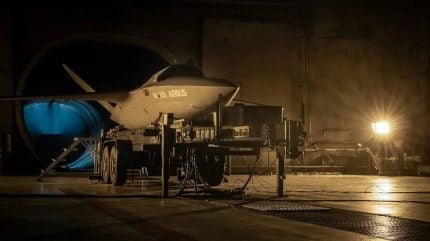
Currently, Airbus is readying two Kratos’s Valkyrie drones in Manching, near Munich for first with MARS.

Valkyrie drone. Credit: © Airbus/Kratos.

Airbus and Kratos are progressing with the development of an integrated Uncrewed Collaborative Combat Aircraft (UCCA) system, targeting delivery to the German Air Force by 2029.

The companies confirmed ongoing preparations at Manching, near Munich, where Airbus is configuring two Valkyrie drones from Kratos with its sovereign European mission system, the Multiplatform Autonomous Reconfigurable and Secure (MARS) mission system.

Discover B2B Marketing That Performs

Combine business intelligence and editorial excellence to reach engaged professionals across 36 leading media platforms.

Find out more

Testing of these initial units will include the MARS platform, which features an AI-driven software component called MindShare.

This system replaces the need for an onboard pilot and can coordinate multiple crewed and uncrewed assets during operations.

The joint effort aims to produce and deliver the Airbus UCCA System, with first flight tests scheduled before the end of this year.

Airbus Defence and Space, key account Germany head Marco Gumbrecht said: “By combining the Kratos Valkyrie with our MARS mission system, we are offering the German customer exactly what Germany and Europe urgently need in the current geopolitical situation: a proven flying uncrewed combat aircraft with a sovereign European mission system that does not have to be developed from scratch in a time-consuming and costly manner.

GlobalData Strategic Intelligence

US Tariffs are shifting - will you react or anticipate?

Don’t let policy changes catch you off guard. Stay proactive with real-time data and expert analysis.

By GlobalData

“Our objective is to deliver credible combat capability in time of relevance, while assuring key sovereign aspects. And we are confident that we can do this at a very affordable price – which is a key driver for UCCAs.”

The Kratos Valkyrie is designed as a tactical uncrewed aerial vehicle capable of high-subsonic speeds over long distances.

With a length of 9.1 metres (m), wingspan of 8.2m, range exceeding 5,000 kilometres, and maximum take-off weight close to three tonnes, it can operate at altitudes up to 45,000 feet.

The Valkyrie supports various mission payloads and can carry different types of weapons both internally and on its wings.

Initial flights of the Valkyrie took place in the US in 2019, with further regular flights continuing since then.

The first flight involving the Airbus-modified version is expected in 2026.

The aircraft can be controlled autonomously or directed by a Eurofighter, enabling it to undertake missions considered too risky for crewed platforms.

The UCCA is capable of performing both kinetic and non-kinetic tasks across multiple roles, however, Airbus and Kratos are currently prioritising specific combat applications to meet immediate German defence requirements.

Kratos Unmanned Systems Division president Steve Fendley said: “Along with the technical and production backing Airbus and Kratos bring, we are realising an optimal capability system that can be bought and deployed as ‘affordable mass’; the consistent discriminator identified in today’s peer to peer wargames.”

Original Source

Air Force Technology

Share this article

Related Articles

Anschütz passes Critical Design Review for Hunter-class navigation systems
🔬Weapons & Technology
Naval News

Anschütz passes Critical Design Review for Hunter-class navigation systems

Anschütz has successfully passed the Critical Design Review (CDR) with its Warship Integrated Navigation and Bridge Systems (WINBSs) for the Royal Australian Navy’s Hunter Class Frigate Programme. This milestone confirms the maturity of the system design and marks the transition to the production an

लगभग २ घंटे पहले3 min
🔬
🔬Weapons & Technology
Defence Blog

U.S. Navy taps Boeing for Harpoon update

The United States Navy’s Naval Air Systems Command announced plans on March 16 to pursue a sole-source contract with Boeing for software updates to the Harpoon missile support system, according to a presolicitation notice. The effort focuses on updating the Common Munitions BIT/Reprogramming Equipme

लगभग २ घंटे पहले1 min
🔬
🔬Weapons & Technology
Defence Blog

U.S. NGA moves to replace manual geospatial analysis with AI

The United States National Geospatial-Intelligence Agency (NGA) issued a Request for Information on March 16, 2026, seeking industry solutions to develop an automated system for extracting geospatial features from imagery and maps as part of its Foundation Digital Twin program. The agency is explori

लगभग २ घंटे पहले1 min
🔬
🔬Weapons & Technology
Defence Blog

Poland deploys MiG-29 fighters to intercept Russian Il-20

Poland’s Operational Command of the Armed Forces said that on Friday, March 13, 2026, a pair of Polish Air Force MiG-29 fighter jets intercepted and escorted a Russian Il-20 reconnaissance aircraft over the Baltic Sea. The interception reflects ongoing efforts by NATO members to monitor and control

लगभग ३ घंटे पहले1 min