The TWZ Newsletter
Weekly insights and analysis on the latest developments in military technology, strategy, and foreign policy.
The review includes comparing the Ford class to the Nimitz class and seeing what has been gained or lost operationally. The post Ford Class Review Puts Navy’s Future Carrier Plans Into Question appeared first on The War Zone.

The TWZ Newsletter
Weekly insights and analysis on the latest developments in military technology, strategy, and foreign policy.
Secretary of the Navy John Phelan says his service is looking to wrap up a review of its aircraft carrier plans within the next month or so. The Navy has been taking a deep look at the design and capabilities, and associated costs, of the Ford class as compared to the older Nimitz class. The question has been raised about whether this might point to a major shift in the service’s carrier acquisition strategy on the horizon, including the potential cancellation of planned orders for more Ford class ships and even a transition to a new design.
Phelan talked about the carrier review yesterday at a roundtable on the sidelines of the Navy League’s Sea Air Space 2026 exposition. When asked, Phelan said that there was nothing in particular about the Ford class that prompted the Navy to take a new comprehensive look at the program and that the service is looking for ways to cut costs and be more efficient across the board.
A key question the review has been focused on is “are we getting the appropriate bang for our buck, i.e., how superior is the Ford [class] to the older Nimitz class, etc,” the Navy’s top civilian leader said. “To be honest, we’re reviewing every program, so it’s – carriers [are] just one of them.”
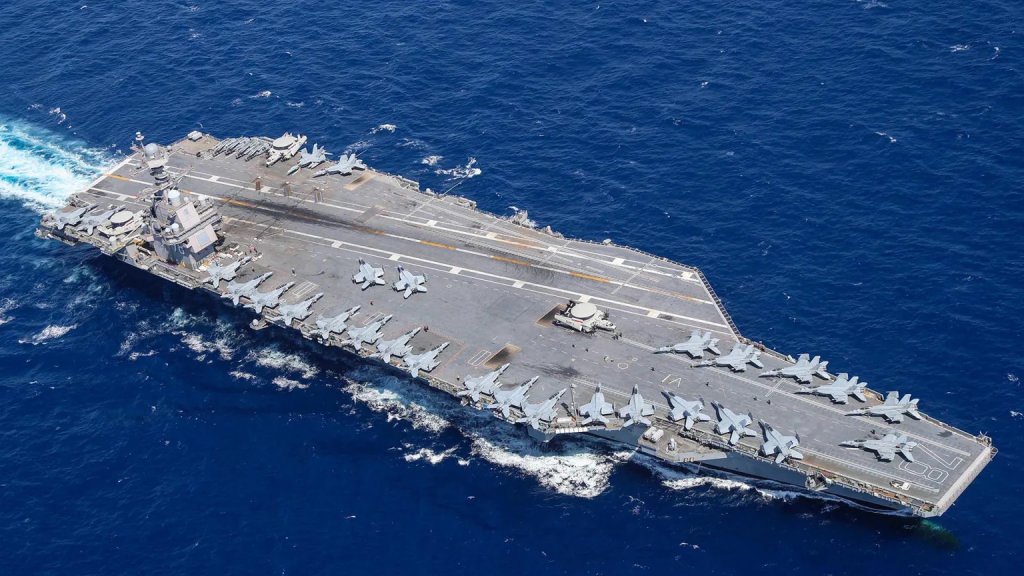
That being said, President Donald Trump has been a vocal critic of the Ford class, and its electromagnetic catapults (also known as the Electromagnetic Aircraft Launch System, or EMALS) and weapons elevators in particular, which have faced serious reliability and maintenance issues. Last October, he pledged to sign an executive order that would compel the Navy to go back to using steam-powered catapults and hydraulic elevators on new aircraft carriers, which has yet to materialize. Two months later, in announcing plans for the Trump class “battleship,” the President also said that “we have the Ford class. We’re going to be upping that to a different class of aircraft carrier,” but did not elaborate.
Phelan’s comments yesterday about the ongoing review were prompted, in part, by a question about whether the Navy has actually been looking at acquiring a new class of aircraft carrier. There is no indication that this is the case currently. The service has explored alternatives to the Ford class, including smaller designs, on several occasions in the past decade or so.
“What I would say on the carriers is, we are looking at [CVN-]82 and [CVN-]83 to review the costs, the designs, the systems, to make sure that they make sense and they have all the systems and requirements that we want going forward,” Phelan explained. “I think it’s a prudent and practical thing for us to do, given the costs of them, as a percentage of the budget, and how we are thinking about the force design and our needs going forward.”
CVN-82 and CVN-83 are the hull numbers assigned to a pair of future Ford class aircraft carriers currently set to be named the USS William J. Clinton and the USS George W. Bush. Construction has not begun on either of those ships, and the Navy has not even awarded contracts yet to order them. The service is asking for advance funds to support the future procurement of CVN-82 in its newly released budget request for the 2027 Fiscal Year. The budget documents also still show plans to seek funding for CVN-83 in the coming years.
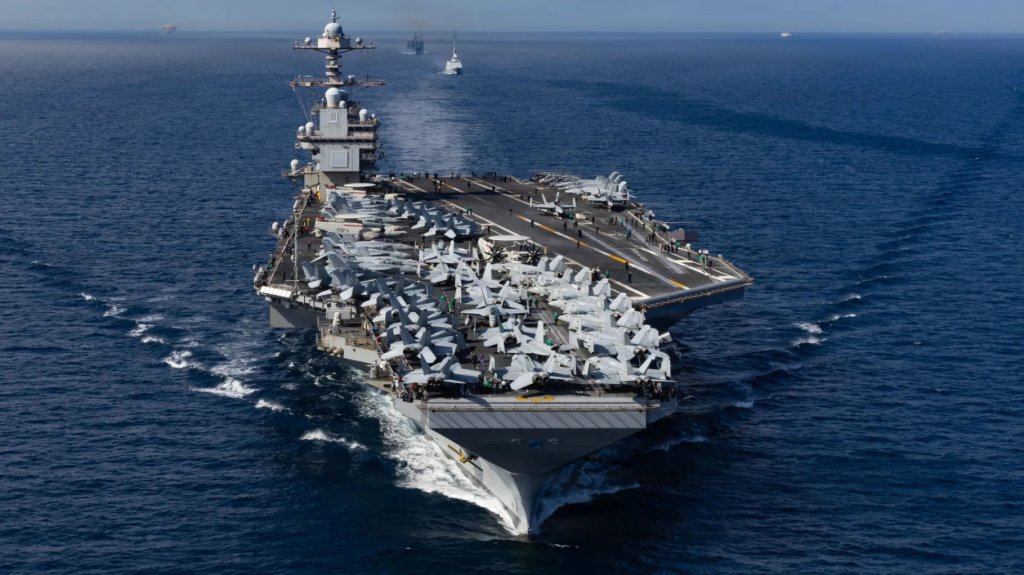
The USS Gerald R. Ford is the only member of its class currently in service. It is now in the midst of a marathon deployment that has lasted some 10 months already, the longest for any carrier since the Vietnam War. In its time at sea so far, the ship and its air wing took part in the mission to capture Venezuelan dictator Nicolas Maduro, and more recently supported operations against Iran. Ford suffered a fire in March, underscoring concerns about strains on the ship and its crew, as you can read more about here.
There are three more Ford class carriers in various stages of being built. The second ship in the class, the future USS John F. Kennedy (CVN-79), left port for the first time for initial sea trials in January and is set to be formally delivered to the Navy next year.
Kennedy and all subsequent ships in the class are already set to have notable differences from Ford, including AN/SPY-6(V)3 radars in place of the design’s original Dual Band Radar (DBR). The immensely troublesome DBR is just one of a laundry list of issues that Ford has had to contend with over the years. The Navy has been trying to leverage lessons learned from those experiences to streamline work going forward.
However, Kennedy, as well as the next two ships in the class after that, the future USS Enterprise (CVN-80) and USS Doris Miller (CVN-81), have all continued to suffer further delays. As of last year, the estimated total procurement costs for Kennedy, Enterprise, and Doris Miller were nearly $13.2 billion, almost $14.25 billion, and just over $15.2 billion, respectively, according to the Congressional Research Service.
This, in turn, has created complications for Navy plans to begin retiring Nimitz class carriers. In May, the service announced it was extending the USS Nimitz‘s service life into 2027, in line with the latest delivery schedule for Kennedy.
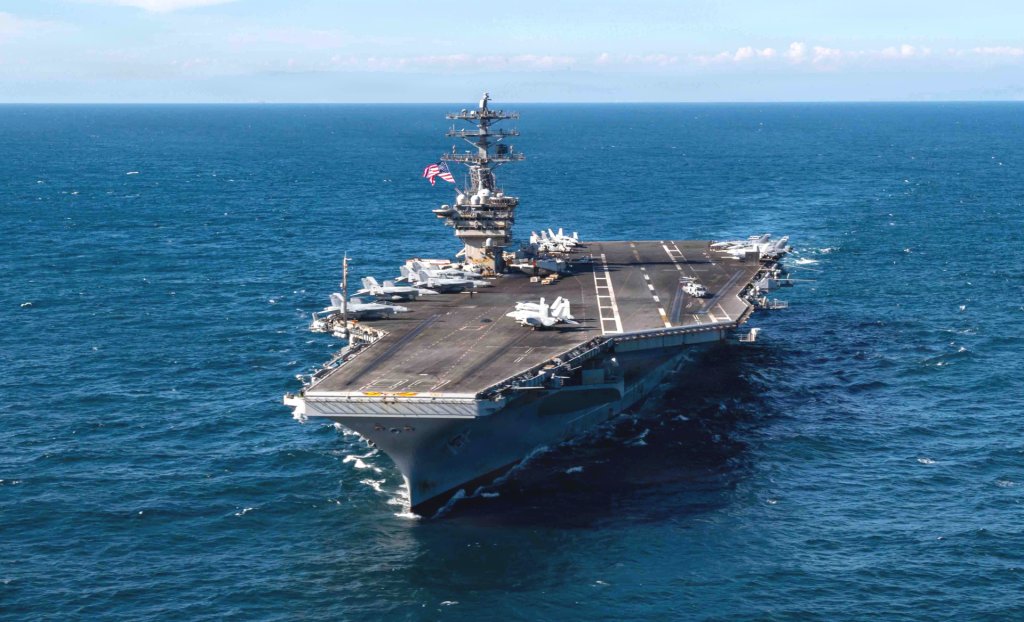
“So the President knows we’re reviewing it [the carrier plans], and want [sic] us to put in a review,” Phelan said. “And I think, like any businessman, he’s – okay, make sure you look at all these programs, understand the capabilities and what they’re doing.”
The Secretary of the Navy was asked what metrics the service might be looking at in order to assess the comparative capabilities of the Ford class and the preceding Nimitz class. Phelan was given, as an example, statements the Navy has made in the past about the new EMALS catapults offering improved sortie generation rates and reducing wear and tear on aircraft during launches.
“I think you’ll see the sortie rate come out and it will be eye-watering,” Navy Rear Adm. Ben Reynolds said just yesterday at the Pentagon during the rollout of the service’s proposed budget for the 2027 Fiscal Year, according to USNI News. “The capability is just absolutely incredible.”
Reynolds is currently serving as Deputy Assistant Secretary of the Navy for Budget and Director of the Fiscal Management Division within the Office of the Chief of Naval Operations.
“So these are all things you’ve heard. These are all the same things I’ve heard,” Phelan said at the roundtable at Sea Air Space. “I go to the Ronald Reagan School of trust, but verify. That’s what I’m doing.”
“Trust me, we measure and monitor a lot of things in the Navy, including that – the airframes and how that works. So I think it’s a function of just understanding it, for example, is the sortie rate generation that much greater? And then what are the cost implications of this electric catapult, and did it really generate the savings?” Phelan continued. “You know, the Navy would like to say we’ve saved $5 billion in terms of savings in number [sic] of men and maintenance. I just need to check that back up, and that’s what I mean by that.”
“I think, like anything, it’s both understanding the cost-benefit analysis of it, because we really want to make sure we’ve got a good handle on the costs,” the Navy Secretary added. “I think one of the things we have to do a better job of in the Navy is kind of what I call total cost of ownership. So what does it really cost to sustain and maintain these things? I think we do a reasonable job at that, to be honest. But the infrastructure needs on these are also costs you have to understand going in.”
As Phelan noted, the Navy has been conducting reviews of major programs across the service. The Navy Secretary has also shown a willingness to curtail high-profile, but seriously underperforming efforts despite high sunk costs. Last November, the service axed the Constellation class frigate program, long touted as a major priority, but which had become mired in delays and at risk of ballooning costs. Earlier this month, the Navy finally abandoned plans to return the Los Angeles class attack submarine USS Boise to active service, closing out a more than 10-year-long saga that had already cost it $800 million.
Yesterday, Phelan was also asked whether the Ford class could be curtailed as a result of the ongoing review. The possibility of truncating the program has been raised in the past.
“It’s too early to say, but we will have carriers. So, carriers are an important component to [sic] the force, and we will need that,” the Navy Secretary said. “I think it’s more, how do we figure out – like, again, this comes back to every program we’re looking at. What can we do to cut costs? What can we do to make this more efficient? What can we do to make the design more simple [sic]? What are the areas where we think we can save or not save?”
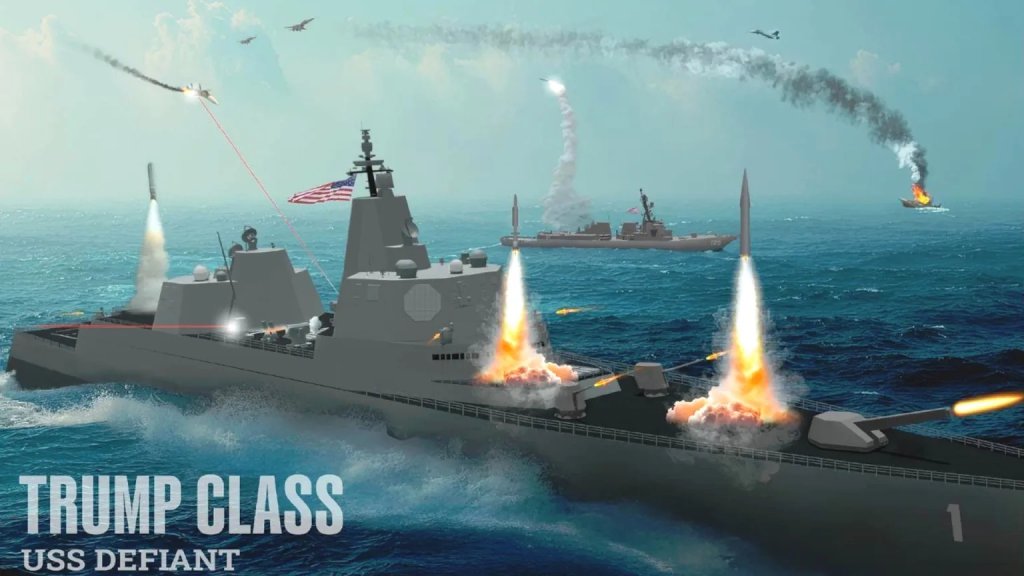
Even just cancelling future orders for Ford class ships would have major downstream impacts, including on the shipbuilding industrial base and its many suppliers. At the same time, the Navy’s shipbuilding priorities also now include the Trump class “battleships,” the first of which may cost $17 billion, according to the latest official estimates. If that price point holds, these large surface combatants will be more expensive than a Ford class aircraft carrier.
“These are very important decisions to be made, and you’re locking into very big contracts and very big platforms that are going to be around for a long time. And so I just think we’re trying to make prudent decisions across everything,” he added. “I think what I found a little bit is, I have a lot of people who know how to do finance. I don’t have a lot of people who necessarily understand finance, understand incentives and deal structures, and that’s something we just need to fix.”
How the Navy’s plans for the Ford class, and aircraft carriers in general, may evolve going forward will likely become clearer after the current review is completed.
Contact the author: joe@twz.com

Ukrainian President Volodymyr Zelensky has appointed the heads of the Security Service of Ukraine departments in Kyiv and the Kyiv region, as well as in the Kherson and Kharkiv regions.

Intercept released by Ukraine´s Intelligence suggests Russian commanders threaten and beat foreign recruits to force them into near-suicidal assaults.

A woman suspected of poisoning a soldier on behalf of Russian intelligence agencies has been detained in the Zakarpattia region.

Polish fintech company ZEN.com, which acquired 100% of the shares of insolvent JSC First Investment Bank (PINbank), does not plan to enter the Ukrainian banking market with lending services in the near future.