North Korea orders AI and new energy push, threatens managers who inflate results
North Korea has ordered industrial managers across the country to abandon inflated production statistics and pivot to quality-driven economic growth powered by new energy and artificial intelligence technologies — with dismissal threatened for those who fall short. A Daily NK source in South Pyongan
Daily NK
75
4 min read
0 views
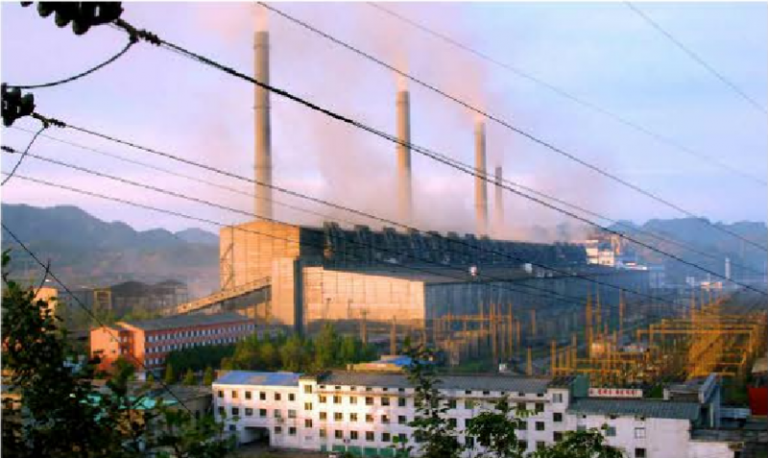
The Pukchang Thermoelectric Power Plant in South Pyongan Province. (Rodong Sinmun)
North Korea has ordered industrial managers across the country to abandon inflated production statistics and pivot to quality-driven economic growth powered by new energy and artificial intelligence technologies — with dismissal threatened for those who fall short.
A Daily NK source in South Pyongan province reported Thursday that a joint directive from the Central Committee’s economic department and the cabinet was issued to provincial people’s committees on March 13, laying out concrete implementation tasks tied to the economic strategy announced at the Ninth Congress of the Workers’ Party of Korea (WPK) last month.
The directive’s central thrust follows Kim Jong Un’s designation of the next five years as a period of “consolidating stability” and “gradual qualitative development.” It instructs officials to embed advanced technologies — including new energy systems and AI — across all sectors of industry, treating technological modernization as the primary benchmark of economic performance rather than raw output figures.
Significantly, the directive explicitly labels past practices of reckless quantitative expansion and statistical inflation as “empty boasting,” warning that “setting unachievable targets to deceive the party is no different from attempting to subvert the system.” The source described this language as direct pressure on field-level managers to produce results that ordinary North Korean people can actually feel, rather than figures that look good on paper.
Quality over quantity — and the limits of self-reliance
South Pyongan province’s people’s committee, responding to the directive, has identified the construction of a resilient, self-reliant economy using only internal resources and new technology as its top priority. Reflecting feedback from managers on the ground, the committee has formalized a pragmatic approach summarized as “start with what can actually be done” — requiring managers to demonstrate not just production volume but genuine process modernization and efficiency gains through technology.
One notable element of the central directive instructs officials to resolve technical obstacles in the adoption of advanced technology through exchanges with Russia, described as a “friendly country.” In response, South Pyongan province’s committee said it plans to accelerate cooperation with Russian technical advisers at major factories and enterprises within the province. The source interpreted this as a strategy of pursuing self-reliance in rhetoric while quietly sourcing necessary technology through external relationships.
The committee has also directed that AI technology be introduced first in light industry sectors directly tied to the daily lives of North Korean people. It identified the resolution of the country’s chronic electricity shortages through new energy technology development as the pivotal factor determining the success or failure of the five-year plan.
Reinforcing the shift in tone, the directive states that factory and enterprise managers who engage in “empty boasting” face immediate dismissal — a warning the source said has noticeably tightened the atmosphere on the ground.
“The managers say it’s a relief that the center is emphasizing quality improvement over filling quotas at any cost,” the source said, “but they’re losing sleep over how they’re supposed to achieve a self-reliant breakthrough when the funds and materials needed to actually introduce advanced technology are nowhere near sufficient.”
Daily NK operates networks of sources inside North Korea who document events in real-time and transmit information through secure channels. Unlike reporting based on state media, satellite imagery, or defector accounts from years past, our journalism comes directly from people currently living under the regime. We verify reports through multiple independent sources and cross-reference details before publication.
Our sources remain anonymous because contact with foreign media is treated as a capital offense in North Korea — discovery means imprisonment or execution. This network-based approach allows Daily NK to report on developments other outlets cannot access: market trends, policy implementation, public sentiment, and daily realities that never appear in official narratives.
Maintaining these secure communication channels and protecting source identities requires specialized protocols and constant vigilance. Daily NK serves as a bridge between North Koreans and the outside world, documenting what’s happening inside one of the world’s most closed societies.