Commander of the Lithuanian Border Guard: Lukashenko Dances Tango With Organized Crime Groups
In an exclusive interview, Kyiv Post speaks with Gen. Rustamas Liubajevas, head of Lithuania’s State Border Guard Service (VSAT), about hostile actions on the border with Belarus.
Kyiv Post
75
9 min read
0 views
Michał Kujawski: The Lithuanian-Belarusian border is being used as a tool for hybrid actions and provocations. What exactly do we understand by the word “hybrid”?
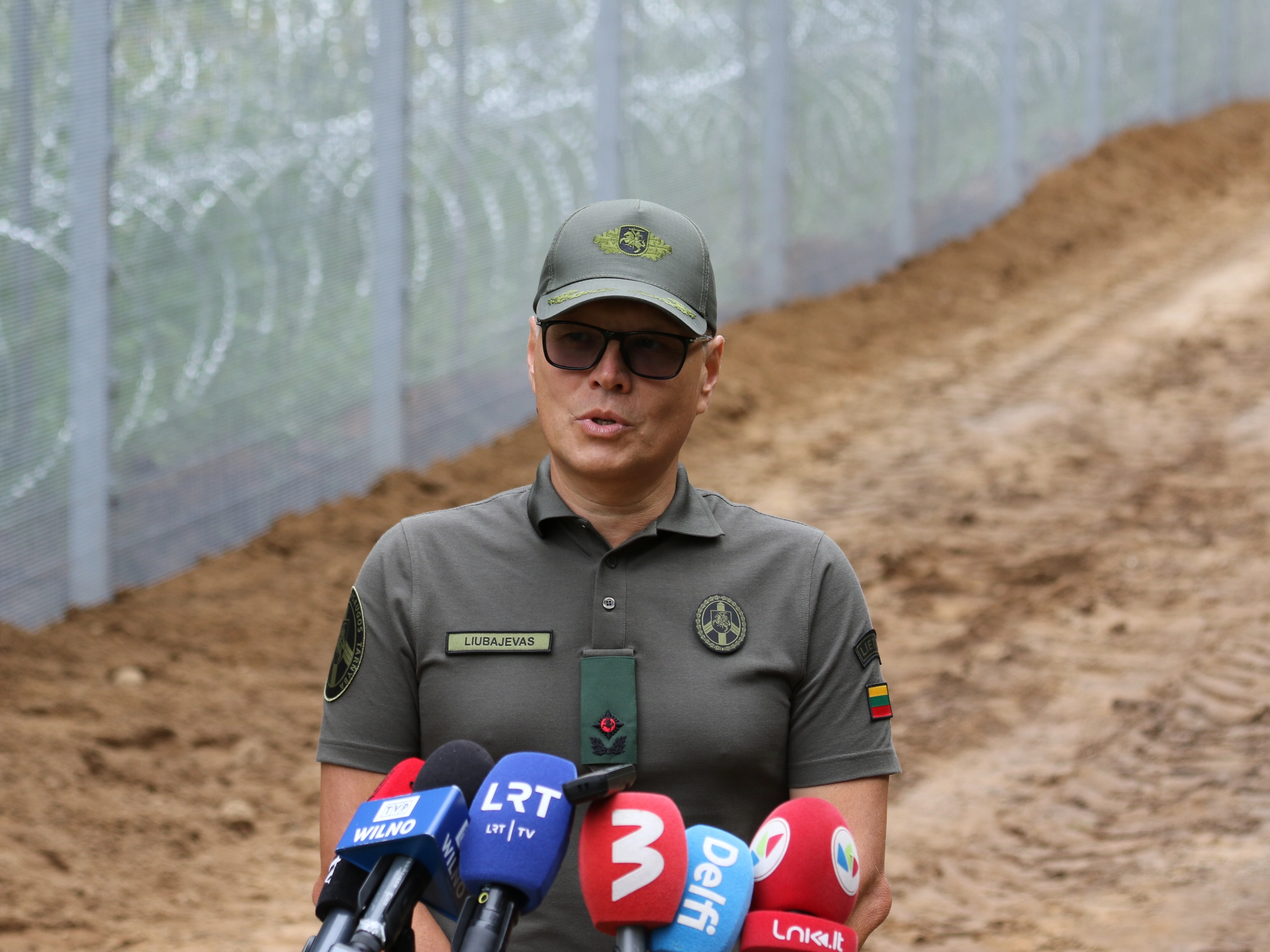
Photo by State Border Guard Service of the Republic of Lithuania
Rustamas Liubajevas: Hybrid actions, as a relatively new phenomenon, consist of many specific elements. One of the most important is the difficulty in clearly identifying them and determining their source – that is, answering the question of who is actually behind particular incidents at the border. The Belarusian authorities are often not formally or directly involved in such actions, or at least they try to conceal their involvement.
MK: So who is directly involved? Is this carried out under the cover of smugglers?
RL: Yes, although much depends on the specific situation. At the beginning of the migration crisis in 2021, we saw clear and direct involvement of the Lukashenko regime, which provided logistical support to groups of migrants. Over time, this support began to be taken over by organized criminal groups. [Alexander] Lukashenko simply “dances tango” with these groups.
Currently, we still observe the involvement of the Belarusian authorities, although not to the same extent as before. This means that Lukashenko tolerates and accepts criminal activity in border areas. The same applies to the smuggling of cigarettes by air using balloons. And again – it is not Lukashenko or his services or border guards who do it personally, but they create conditions favorable for the activities of criminal groups. Sending balloons with contraband has a huge impact on Lithuania’s air security. Unlike Poland or Latvia, whose airports are located far from the border, in Vilnius the airport is just 30 kilometers (19 miles) from the border with Belarus. The balloons pose a direct threat to air traffic, and the airport is temporarily closed because of this. This is how Belarus conducts its actions – it does not stand on the front line, but orchestrates the entire situation with the participation of criminal groups. The goal is destabilization and the achievement of specific political effects.
Russia’s foreign minister disputed US claims about Iran’s enriched uranium stockpiles amid escalating tensions following US and Israeli strikes.
MK: So one could say it is just a balloon with cigarettes, but in reality it is a serious challenge for civil aviation.
RL: Of course. The scale of the contraband itself is not huge – the number of smuggled cigarettes is limited. However, the impact of the balloons on safety is very serious. It is a real threat to passengers, airport infrastructure, and the aircraft themselves. It also causes social tensions – and that is exactly what Lukashenko wants.
MK: What do you do with these balloons? Do you wait until they fall? Do you shoot them down? What does the neutralization process look like?
RL: We apply an integrated approach. A special investigative task force established by the Ministry of the Interior, the police, the border guard, and the military cooperate. In this way, we respond to border violations by air.
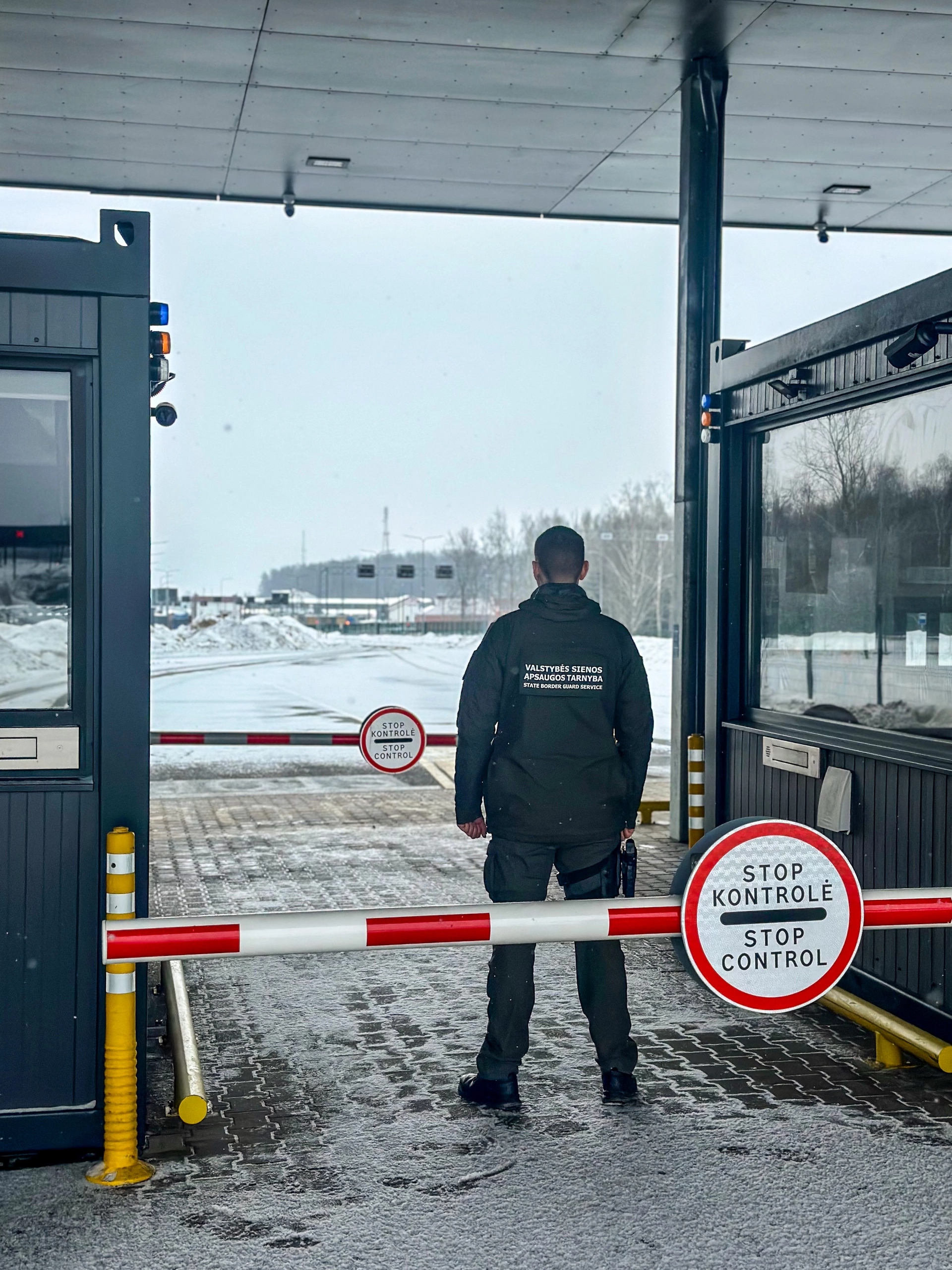
Photo by State Border Guard Service of the Republic of Lithuania
Theoretically, airspace may be used not only for smuggling, which is why so many state agencies cooperate with one another. We have various procedures. Unfortunately, we do not have direct cooperation with the Belarusian side, so we do not have access to information about the beginnings of these operations.
Intelligence plays a key role, as does dismantling criminal groups.
Kinetic actions have limitations – neutralizing balloons is not always possible due to people’s safety. A falling object may cause damage, and the region is densely populated. Therefore, we focus primarily on identifying persons involved on the Lithuanian side through comprehensive control measures, intelligence and investigative actions. It is also important to track down individuals receiving the smuggled goods. The police are responsible for actions within the country’s territory, the border guard operates within a 5-kilometer (3-mile) strip from the border, and the military controls the airspace. We exchange information about balloon movements and possible landing sites. This is a classic multiagency approach.
It is not Lukashenko or his services or border guards who do it personally, but they create conditions favorable for the activities of criminal groups.
MK: A similar migration crisis is observed in Poland and Latvia. What is the mechanism behind it?
RL: All EU countries in the region are facing the same problem. The crisis began in 2021 in Lithuania, then affected Poland and Latvia. From the beginning, we perceived it as a hybrid action by the Lukashenko regime, carried out in cooperation with the Kremlin. We had to strengthen border protection and adjust the law. Lithuania created a very effective protection system in a short time. Poland also made a great effort, using modern technologies and deploying additional personnel, including the military. Latvia is still facing challenges, as its protection system has not yet been fully completed.
Lukashenko and smugglers exploit this. Migrants cross through Latvia, but their destination is often neither Poland nor Lithuania – they continue to France, Germany, or other EU member states. They move within the Schengen area. What we face now is a challenge for the entire community. Germany has introduced temporary border control. We call this phenomenon secondary migration. It also occurs in the Western Balkans and in Austria. It is a problem for the whole EU and a huge challenge for the Schengen Area.
MK: It is a problem for the entire European Union.
RL: Yes, but there are differences between member states – for example in terms of social benefits for asylum seekers or infrastructure. From a legal point of view, permanent border control cannot be restored – only for a limited period of time and for specific reasons. Lithuania does not want to restore controls at internal EU borders. We focus on the border with Belarus and Russia.
MK: What does cooperation with Frontex, the European Border and Coast Guard Agency, look like?
RL: It is not as active as we would like. Frontex was criticized for decisions related to migration in southern Europe, particularly in the context of human rights. In our region, Lithuania, Poland, and Latvia introduced an emergency situation and limited the acceptance of asylum applications at the border. This is one of the reasons why Frontex tries to avoid stronger involvement. However, in 2021 we managed to reach an agreement with Frontex and launch a rapid operation in Lithuania, when we had already brought the situation under control. Currently, Frontex operates, but to a limited extent in border control.
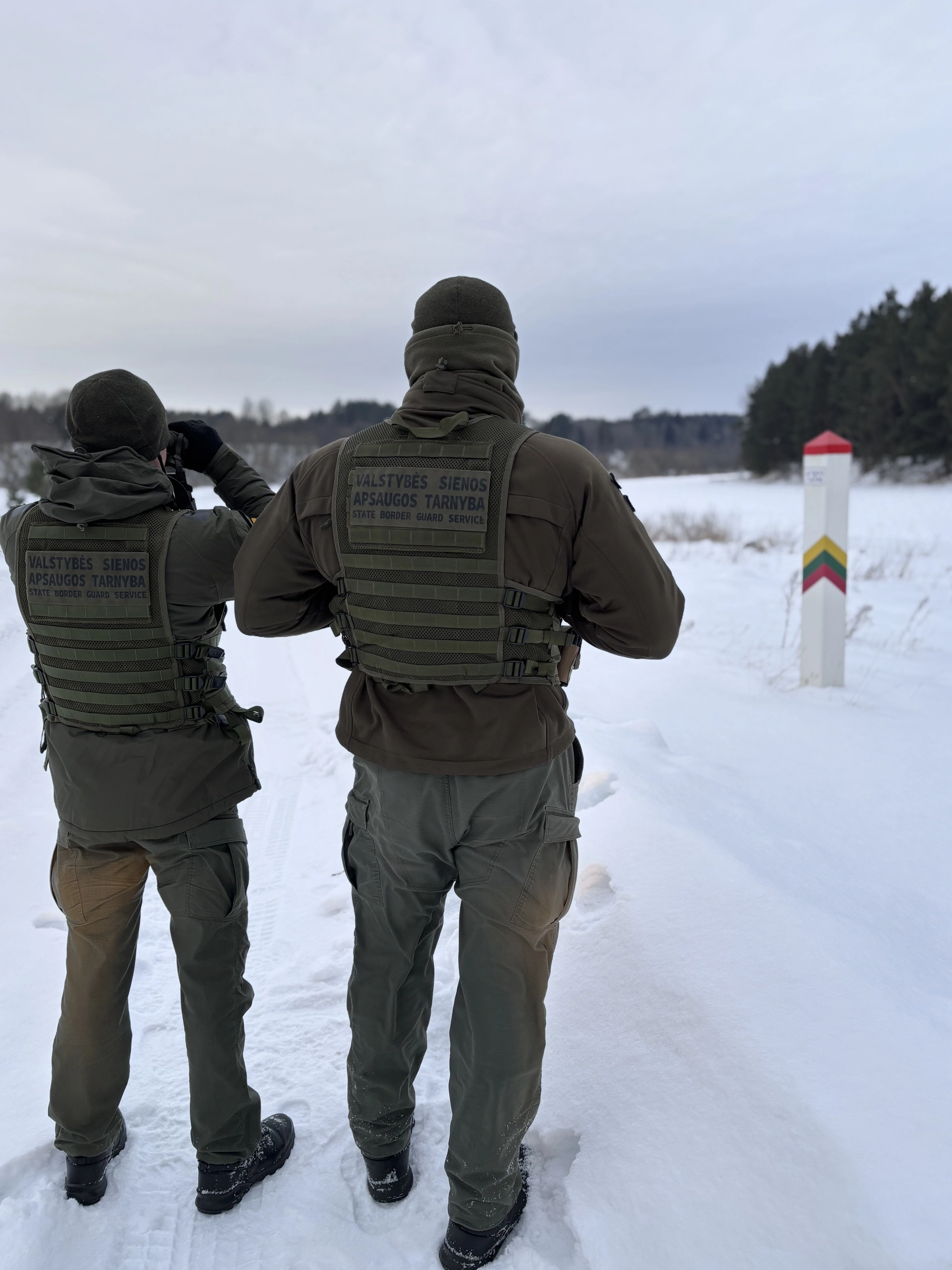
Photo by State Border Guard Service of the Republic of Lithuania
MK: It sounds as if Frontex does not perceive this situation as a hybrid threat, but as an ordinary refugee route.
RL: Yes. They agreed that this is not a regular migration route, but the weaponization of migration by the Lukashenko regime in order to destabilize the region. This is his clearly defined political goal.
MK: In Poland, it was difficult to convince part of society that this was a planned operation.
RL: In Lithuania, we also had a similar debate, especially in the context of balloons. This is the essence of hybrid actions – an unclear source and motivation. Some believe it, others do not. But we cannot ignore the evidence of Lukashenko’s involvement. Lithuanian society today largely recognizes the migration crisis as a planned operation. In the case of balloons, there are still doubts and some still do not recognize this as a hybrid operation.
MK: Last summer I was in Nida, right next to the border with the Russian Kaliningrad region. My GPS in my phone and in my car went crazy. What is happening there?
RL: This is the effect of GPS signal jamming, which affects EU and NATO countries in the region. The disruptions originate from the Kaliningrad region and from the area of Saint Petersburg. It affects shipping and aviation. This is another hybrid action – this time carried out by Kremlin structures. We also observe incidents in the Baltic Sea related to critical infrastructure, cutting of cables, and the activities of the so-called shadow fleet. The forecasts are not optimistic – Russia and Belarus may increase their activity, also in the kinetic dimension – we remember the events in Lithuania and Poland, where supermarkets and warehouses were set on fire, or drones entered the territory.
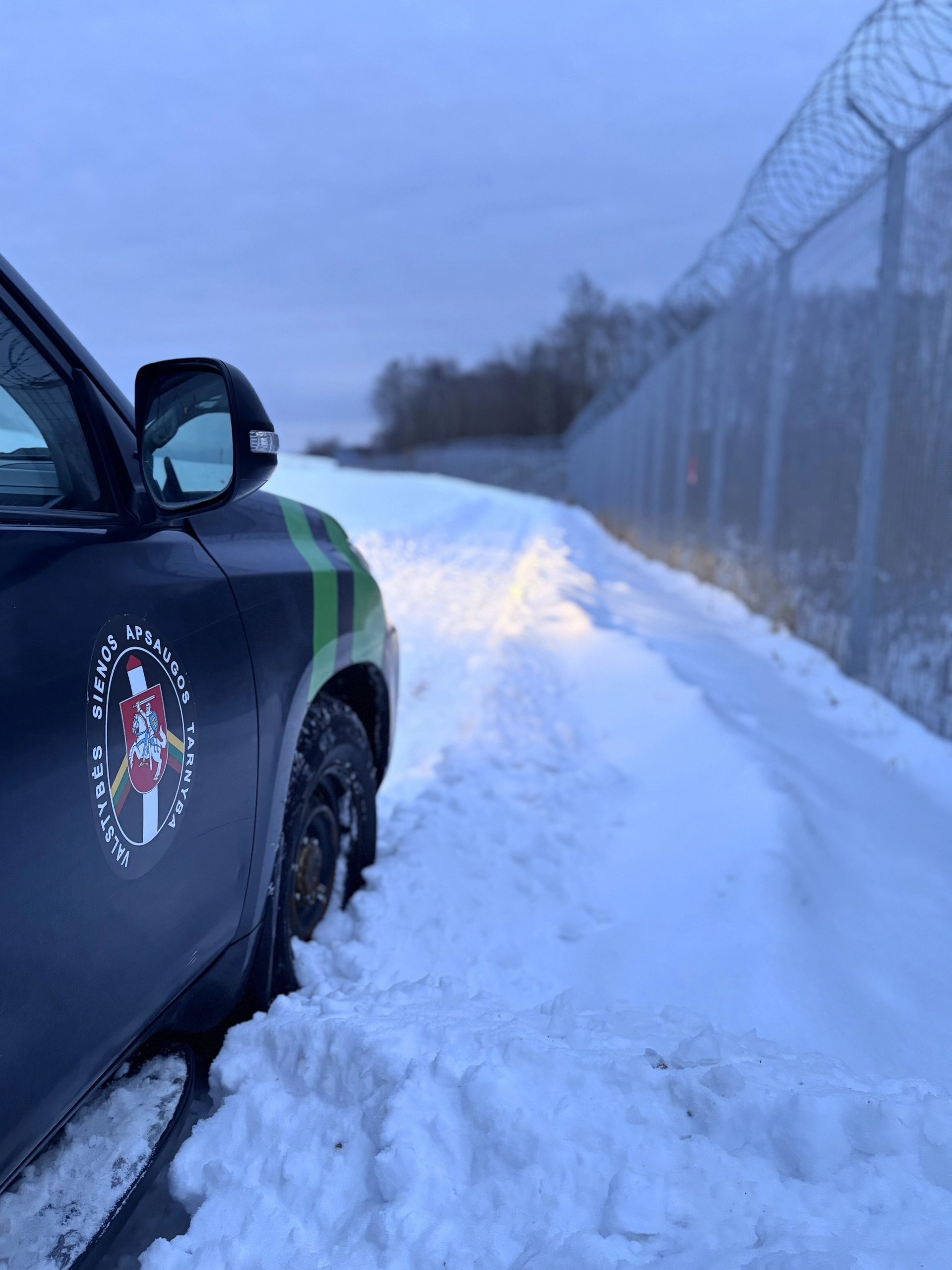
Photo by State Border Guard Service of the Republic of Lithuania
MK: We have mainly talked about the land border with Belarus and the sea. What is happening at the land border with Russia?
RL: It is well controlled. We do not observe significant criminal or military activity. Cooperation with Poland is very good – we have information exchange platforms and joint actions in many areas. We do not observe major criminal activity there. We also do not observe major military activity – it is not our main task, but being at the border we naturally observe the situation. There is a lot of military infrastructure there.
MK: How is it that the situation on the border with Russia is calmer than on the border with Belarus?
RL: The Kaliningrad region is an exclave dependent on transit. Russia does not want to provoke a situation that could lead to a revision of transit rules through Lithuania and the EU. Moreover, a significant part of the troops has been transferred to the Ukrainian front. The situation is relatively calm; however, securing it remains our priority. We have strengthened systems and additional personnel. Our response capabilities today are much greater than before.