
The role of modern submarines is changing. In a security environment shaped by geopolitical tensions, advanced anti-submarine warfare capabilities and increasingly networked military operations, stealth alone is no longer sufficient. Today’s platforms are expected to exchange information securely, cooperate with allied assets in real time and integrate seamlessly into multi-domain operations. Communication has therefore become a decisive factor for mission success and operational superiority.
At the same time, the conditions onboard a submarine remain exceptionally demanding. Limited space, restricted energy resources, reduced cooling capacities and stringent requirements for system availability and signature management place tight constraints on the integration of modern technologies. For submarine crews, this means one thing above all: communication systems must remain reliable at all times — intuitive to operate, resilient under pressure and fully mission-ready, even during submerged operations.
This is precisely where TKMS Hagenuk Marinekommunikation GmbH (TKMS HMK) focuses its expertise. As part of the TKMS Group, the company develops integrated communication and antenna solutions specifically designed for modern underwater platforms. With SEICAM® 7000 and TRITON® II, TKMS HMK follows a holistic approach that combines technological performance with operational usability.
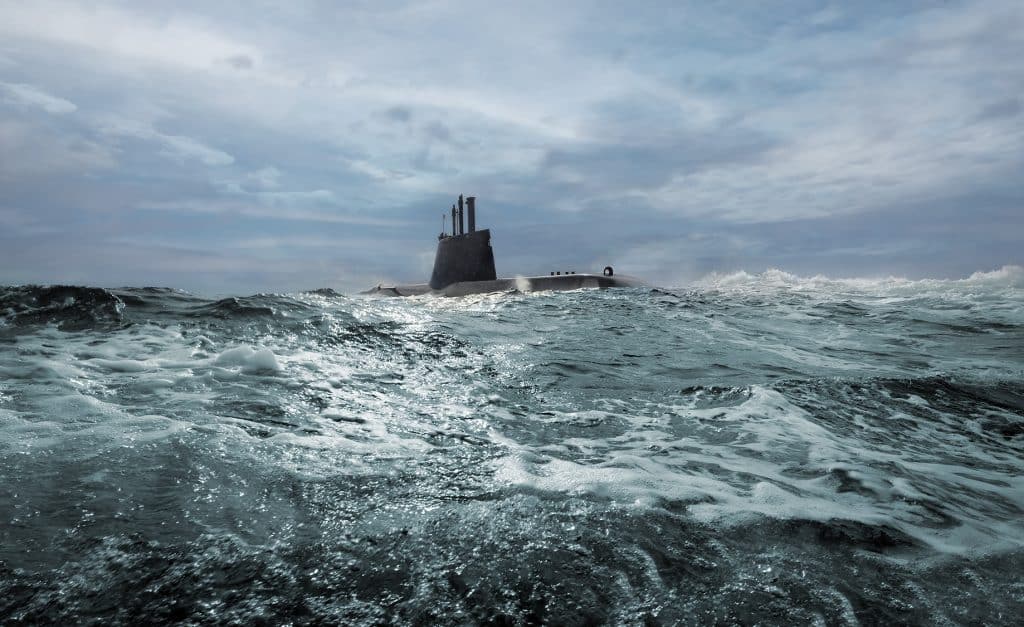
Communication Adapted to the Mission
At the core of this approach is SEICAM® 7000 (Sophisticated External and Internal Communication and Management System), the latest generation of integrated communication systems for submarines. Modern naval operations generate continuously increasing volumes of voice and data communication that must be processed simultaneously, transmitted securely and integrated flexibly into existing platform infrastructures. At the same time, integrating new technologies without adding operational complexity for the crew has become a growing challenge.
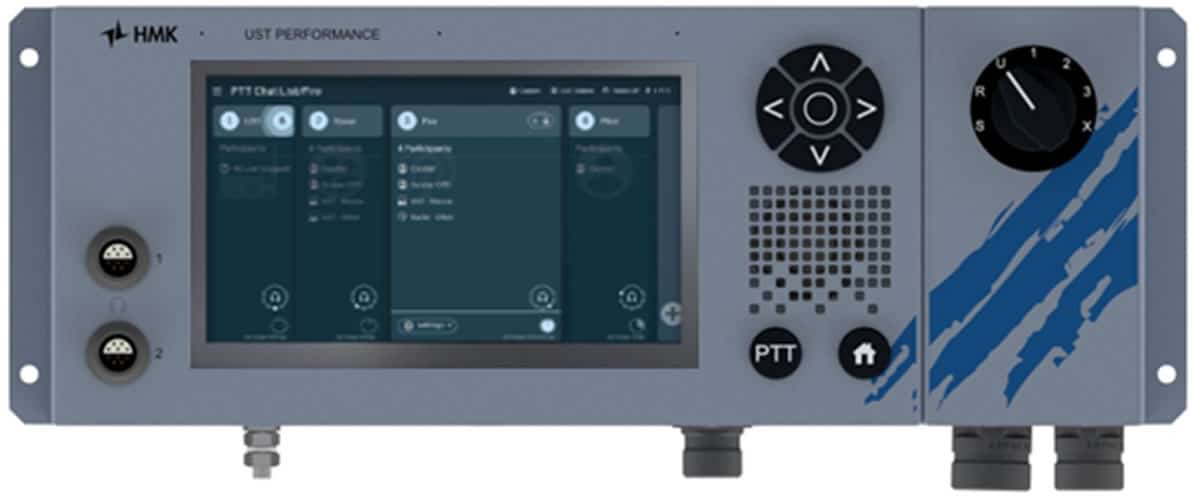
SEICAM® 7000 addresses these requirements with a fully IP-based architecture that combines voice communication and data communication within one integrated system. Through the central ICS Suite, all communication components — from individual radio units to complete subsystems — can be controlled and monitored centrally. Thanks to standardized IP technologies and MOTS hardware, the system can be flexibly integrated into platform and combat management systems while supporting both legacy and new third-party solutions.
However, technical performance alone does not determine mission success. Particularly under high operational pressure, information must be processed quickly and communication functions must remain intuitive to operate. Complex user interfaces increase cognitive workload and the risk of operator errors in critical situations.
For this reason, SEICAM® user interfaces were developed in close collaboration with submarine operators, UI specialists and psychologists. Standardized user interfaces across all operator roles ensure consistent workflows and reduce cognitive workload for the crew. Modern design principles — inspired by applications familiar from everyday life — further improve orientation and situational awareness. As a result SEICAM® 7000 is a system that can be operated quickly and reliably, especially under stress in operational conditions.
Communication systems must remain permanently available while avoiding unnecessary energy consumption and minimizing any impact on the submarine’s stealth characteristics.
SEICAM® addresses this challenge with intelligent energy and silent management. Automated power profiles dynamically adapt system behavior to different operational scenarios such as surfaced transit, submerged operations or tactical maneuvering. At the same time, a dedicated silent mode minimizes acoustic emissions without compromising essential communication functions. This ensures that communication capabilities remain fully operational even during sensitive missions, while significantly reducing overall energy consumption and acoustic signature.
Another increasingly important aspect is the secure handling of sensitive information. Modern naval operations require multiple security and classification levels to be processed simultaneously — quickly, reliably and without operational disruption.
To support this, SEICAM® integrates scalable multi-security-domain capabilities for voice communication. Operators can access relevant communication channels across different classification levels without switching between separate systems or devices. Particularly in time-critical situations, this significantly improves operational efficiency by accelerating decision-making processes while maintaining a high level of information security.
Integrated Communication Beyond the Platform
While SEICAM® integrates communication processes within the submarine, external communication presents its own challenges. Space on modern submarine masts is extremely limited, while the demand for communication, navigation and intelligence capabilities continues to grow. More and more systems must operate simultaneously — with maximum performance, high reliability and minimal onboard complexity.
With the TRITON® multifunction antenna, TKMS HMK therefore pursues a consistently integrated approach. The multifunctional antenna platform combines communication, navigation and intelligence capabilities within a single solution, creating additional operational flexibility for modern underwater platforms.
TRITON® II supports HF, VHF, UHF and SHF communications as well as satellite-based services and enables the simultaneous operation of adjacent frequency bands at high transmission power. Even under heavy network load, communication remains stable and reliable — a decisive factor in increasingly network-centric operational environments.
The platform’s integrated design is particularly evident in the pressure-resistant container located directly beneath the antenna body. This compartment allows additional COTS components such as LTE or WLAN modules as well as customer-specific systems to be integrated without requiring additional cabling into the submarine. This not only reduces installation and maintenance effort, but also minimizes signal losses and electromagnetic interference.
In addition, TRITON® II supports modern navigation and COMINT applications. Multiple global navigation satellite systems can be operated simultaneously, while broadband characteristics, high sensitivity and omni-directional performance enable passive signal intelligence collection without compromising the submarine’s low-signature profile.

The system is complemented by integrated sensors for continuous condition monitoring. Potential faults can therefore be detected at an early stage, maintenance activities can be planned more efficiently and unplanned downtime can be significantly reduced.
The result is an antenna solution that not only expands communication capabilities, but also improves availability, integration capability and operational efficiency throughout the entire mission lifecycle.
With SEICAM® and TRITON®, TKMS HMK demonstrates how modern communication technology is shaping the operational capability of future submarines. Both systems have been consistently developed from the operator’s perspective, combining technological performance with the real-world requirements of modern naval operations. Communication is thus becoming an integral part of underwater operations — reliable, secure and ready for the next generation of maritime missions.

