The TWZ Newsletter
Weekly insights and analysis on the latest developments in military technology, strategy, and foreign policy.
The XRQ-73 was designed with a focus on very quiet, high-efficiency flight, and it has evolved since it was last seen in 2024. The post DARPA’s XRQ-73 Hybrid-Electric Flying Wing Drone Has Flown appeared first on The War Zone.

The TWZ Newsletter
Weekly insights and analysis on the latest developments in military technology, strategy, and foreign policy.
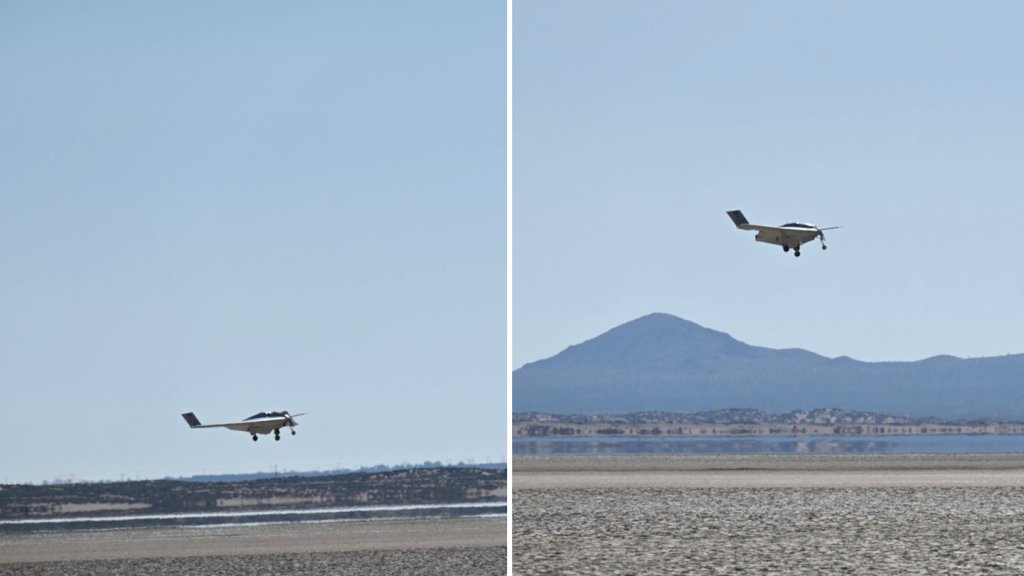
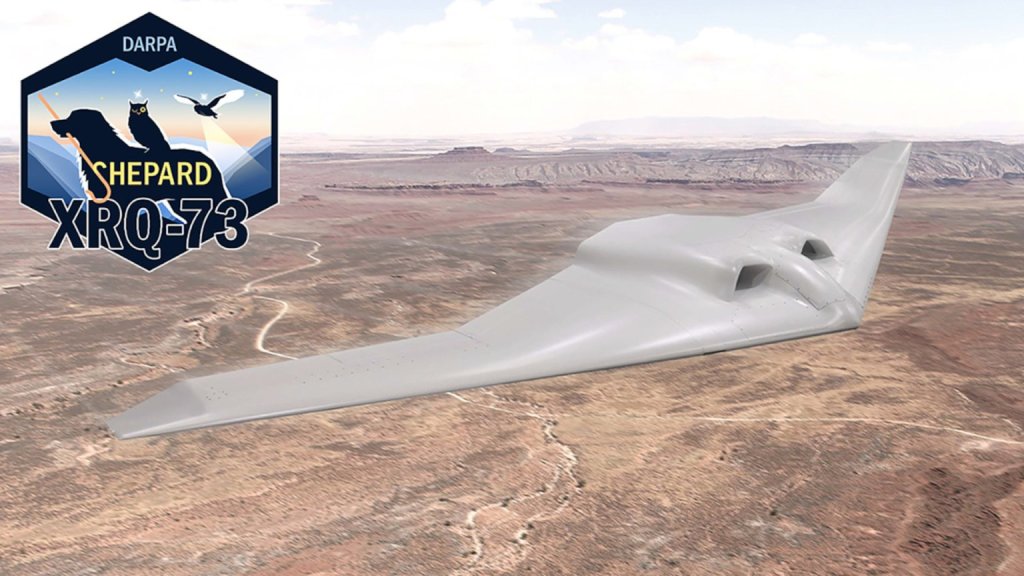
Northrop Grumman’s experimental XRQ-73 Series Hybrid Electric Propulsion AiRcraft Demonstration (SHEPARD) hybrid-electric drone has now taken to the skies. Newly released pictures show that the flying wing-type uncrewed aircraft’s design has also evolved since it first broke cover in 2024. A core goal of SHEPARD is to prove out high-efficiency and very quiet propulsion technology that could pave the way for new operational capabilities.
DARPA announced the XRQ-73 test flight, which was conducted in April from Edwards Air Force Base in California, in a press release today. The Air Force Research Laboratory (AFRL) was also involved in the milestone event.
Scaled Composites, a ‘bleeding edge’ boutique aircraft design house and wholly-owned subsidiary of Northrop Grumman, has been heavily involved in the development of the XRQ-73. The drone evolved directly from the XRQ-72A, another Scaled Composites design developed for the Intelligence Advanced Research Projects Activity (IARPA), which TWZ was first to report on in detail.
“This milestone is not just about a single flight,” Air Force Lt. Col. Clark McGehee, the SHEPARD program manager at DARPA, said in a statement. “The architecture proven by the XRQ-73 paves the way for new types of mission systems and delivered effects. We look forward to advancing this technology through the flight test program and delivering new capabilities for our warfighters.”
“This flight is a step forward in demonstrating the military utility of hybrid-electric propulsion,” DARPA’s press release adds. “Hybrid electric propulsion architectures will drive the development of revolutionary new aircraft designs by offering a combination of fuel efficiency, reduced emissions, and enhanced operational flexibility.”
“Developed to advance propulsion technologies for the Defense Advanced Research Projects Agency (DARPA) Series Hybrid Electric Propulsion AiRcraft Demonstration (SHEPARD) program, the XRQ-73 advances next-generation propulsion for lightweight autonomous aircraft,” Northrop Grumman said in its own brief press release. “The XRQ-73’s innovative hybrid-electric propulsion system combines fuel efficiency, reduced emissions and enhanced operational flexibility – enabling new mission possibilities and supporting the evolution of new aircraft designs.”
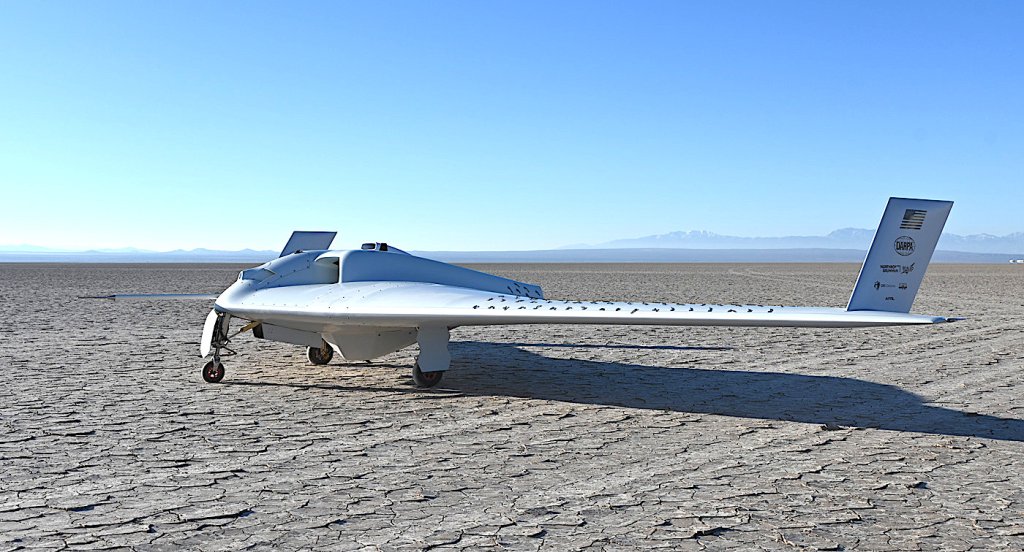
DARPA had originally hoped to see the XRQ-73 make its maiden flight before the end of 2024, and what caused the subsequent delay is unknown. TWZ has reached out to DARPA for more information. What is clear is that the XRQ-73’s design has changed in notable ways since 2024.
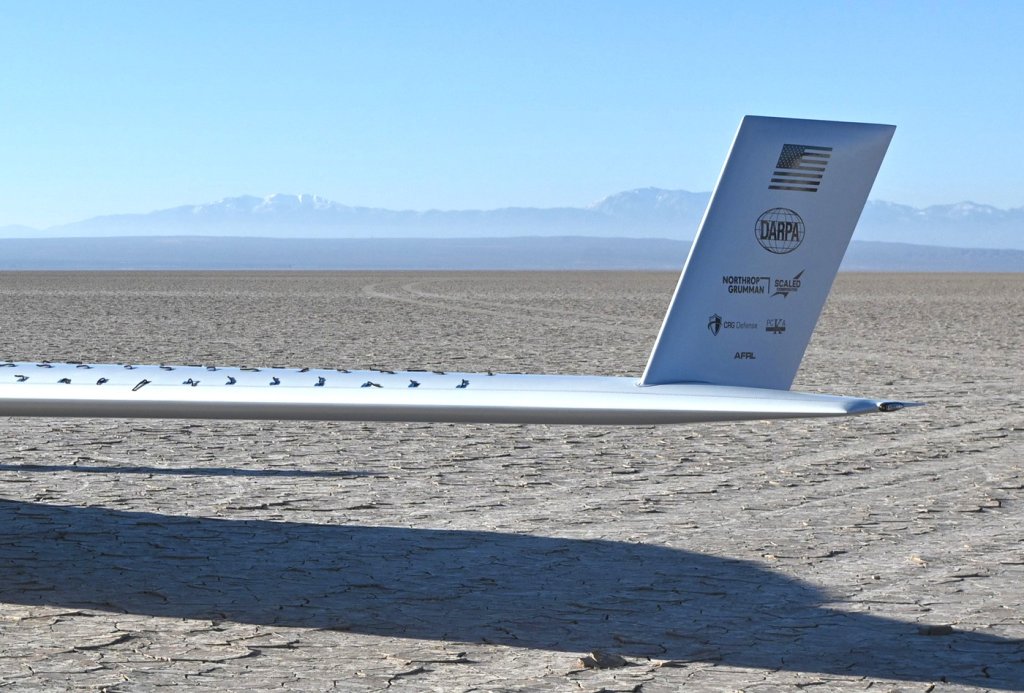
Most immediately eye-catching is the addition of two vertical stabilizers, one on top of each wing. They are positioned near, but not at the very tips of the wings. It is possible that these might be removed as flight testing expands. The preceding XRQ-72A design also had vertical wingtip stabilizers.
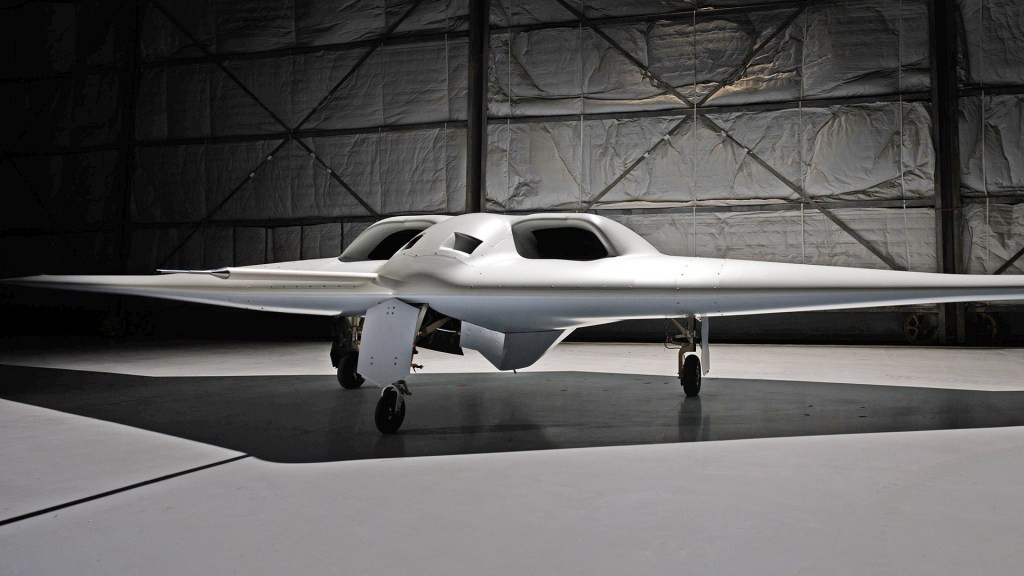
In addition to the two large air intakes on top of the central section of the fuselage, there is now another, much smaller auxiliary dorsal intake in between. Details about the exact configuration of the drone’s hybrid propulsion system remain limited. There are also at least two new black-colored blade antennas on top of the fuselage.
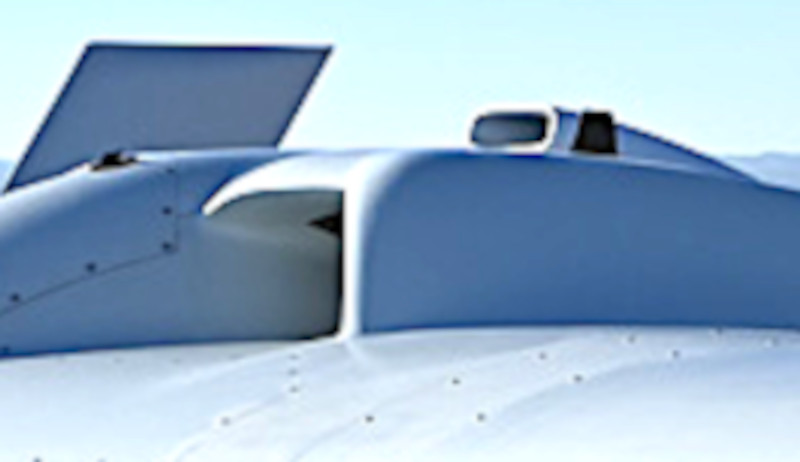
A fairing with what appears to be a forward-facing camera system is also now present at the front of the center of the fuselage. This is likely intended to at least provide visual inputs for control and additional situational awareness during flight testing. The fairing also sits in between two additional rectangular ‘nostril’ intakes. We have noted in the past that they could help cool the hybrid powerplant and the aircraft’s electronics, or help provide additional clean airflow to the powerplant during takeoff and landing.
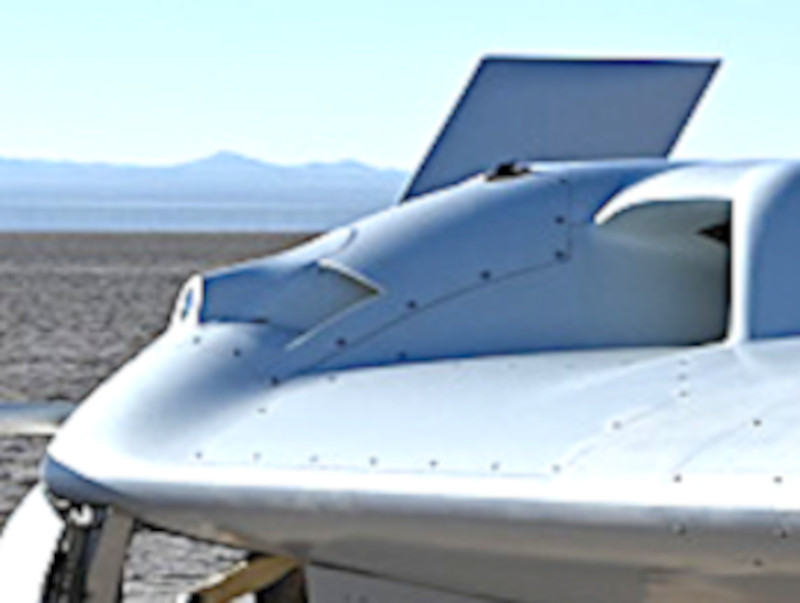
The XRQ-73’s design looks to be otherwise unchanged. A large, faceted fairing, very likely intended as a sensor enclosure, is notably still present below the central section of the fuselage. Test instrumentation and other systems could also be installed in that space to support the drone’s ongoing development.
DARPA has shared some other information about the design in the past, as TWZ has previously reported:
“No details about the XRQ-73’s expected performance appear to have been released so far, but DARPA says it is a Group 3 uncrewed aerial system (UAS) weighing approximately 1,250 pounds, which will include “operationally representative … mission systems.” By the U.S. military’s definitions, a Group 3 UAS weighs between 55 and 1,320, can fly at altitudes between 3,500 and 18,000 feet, and has a top speed of between 100 and 250 knots.
At 1,250 pounds, the XRQ-73 is set to be substantially larger than the XRQ-72A, the requirements for which called for a drone weighing between 300 and 400 pounds. The XRQ-72A also had a 30-foot wingspan, a length of 11.2 feet measured from the nose to the ends of the wingtips, and a height of four feet when including the vertical wingtip stabilizers, according to schematics The War Zone previously obtained via the Freedom of Information Act.“
What the future might now hold for the XRQ-73 is unclear. DARPA has previously talked about wanting to demonstrate a capability that could be operationalized relatively quickly with SHEPARD. The “RQ” intelligence, surveillance, and reconnaissance (ISR) designation is a clear reflection of that, although the drone could be configured to perform other missions. Hybrid-electric propulsion offers inherent advantages when it comes to reducing infrared and acoustic signatures, and the XRQ-73’s overall design has low-observable characteristics that could help it evade detection by radar.
However, a cursory review of DARPA’s proposed Fiscal Year 2027 budget does not appear to show a request for new funding for this effort. It is possible that it has been reorganized and/or rebranded, or has otherwise evolved in scale and/or scope, which is not uncommon for DARPA projects.
Last May, AFRL also awarded General Atomics a contract for a very similar-sounding “hybrid-electric propulsion ducted fan next-generation intelligence, surveillance, reconnaissance/strike unmanned aerial system,” or GHOST. That deal was valued at just over $99 million.
“We’ve been promising something impressive related to hybrid-electric propulsion, and now I can’t talk about it anymore,” C. Mark Brinkley, a spokesperson for General Atomics, told TWZ at that time when asked for more information. “That’s how it goes with these things. Contrary to what you see on the news, the revolution won’t be televised.”
Other relevant hybrid-electric development efforts could be ongoing in the classified realm.
If nothing else, DARPA’s announcement today does show that work has continued on the XRQ-73 since 2024, and that the evolved design has now reached flight test.
Update: 4:46 PM EST –
DARPA has confirmed to TWZ that XRQ-73 flight testing began in April.
“X-plane programs are designed to push the extreme limits of aerospace engineering, integrating entirely unproven concepts and revolutionary designs,” Air Force Lt. Col. Clark McGehee, the SHEPARD program manager, also told TWZ in response to a question about why the first flight timeline was delayed. “As with the XRQ-73, this effort involved resolving complex, unforeseen technical challenges during ground testing and integration.”
“DARPA will continue maturing the hybrid electric propulsion system through a short flight test campaign currently underway,” Lt. Col. McGehee added.
Contact the author: joe@twz.com

The Russian troops launched a drone strike on the Novobavarskyi district of Kharkiv, causing a fire to break out.

Russian Gerbera UAVs are dropping FPV drones carrying warheads deep inside Ukrainian territory – more than 30 km from the border.

Explosions and a fire have been reported at the Perm linear production and dispatch station in the Russian city of Perm, located more than 1,500 km from the border with Ukraine.

The death toll from the May 4 strike on Merefa in the Kharkiv region has increased to eight after a seriously wounded man died in the hospital.