
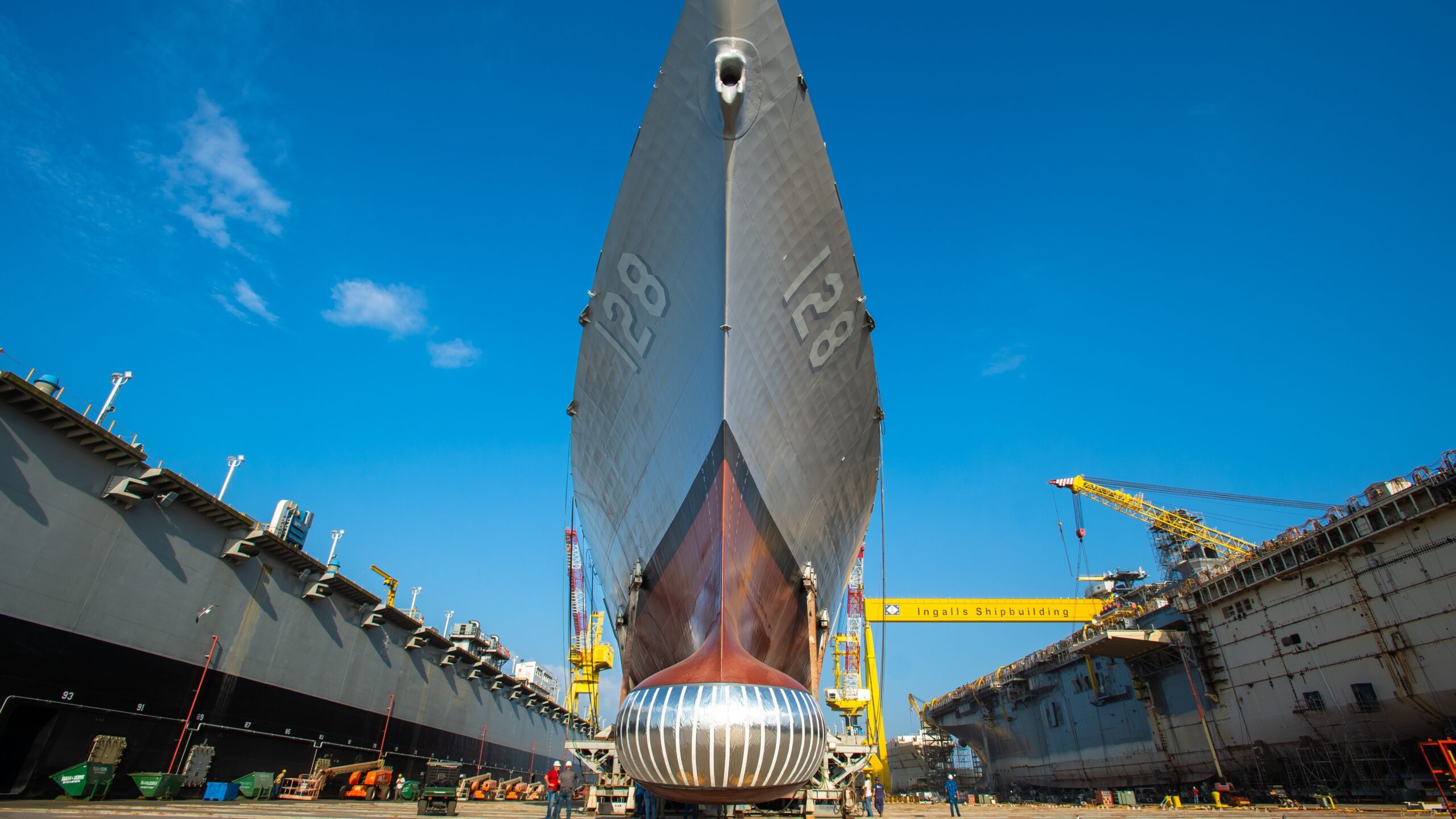
House authorizers want additional funding for the Navy to buy a second guided-missile destroyer in the next fiscal year, according to new legislation.
The bill, released Tuesday, authorizes $500 million in incremental funding for the Navy to buy another Flight III Arleigh Burke-class destroyer, according to the House Armed Services Committee’s chairman’s mark of the Fiscal Year 2027 legislation.
Incremental funding authorization for a second destroyer would address worries from Maine lawmakers, who during recent hearings voiced concern over the Navy’s decision to request one destroyer in the budget submission.
That destroyer, DDG-150, is expected to go to HII’s Ingalls Shipbuilding in Pascagoula, Miss., meaning the Maine-based General Dynamics Bath Iron Works would not get a ship on contract in Fiscal Year 2027 under the Navy’s current plans, according to the shipbuilding justification books. For the last few years, the Navy has purchased two to three destroyers per year.
“I heard just yesterday from General Dynamics … that this weak demand signal – if approved by Congress – would trigger layoffs at Bath Iron Works as soon as next year,” Rep. Jared Golden (D-Maine) said May 14 during a HASC hearing on the Navy budget.
Golden’s district does not include Bath, Maine, but is nearby. Sen. Susan Collins (R-Maine), who chairs the Senate Appropriations Committee and sits on the panel’s defense subcommittee, also expressed concerns last week about the Navy’s request.
“Such a reduction would send a troubling signal to the industrial base at a time when the Navy continues to emphasize the need for greater fleet capability and resiliency,” Collins said during the service’s budget hearing. “Bath Iron Works in Maine – which is only one of surface combatant shipyards in the country – has made real progress in workforce retention and accelerating production stability due to the steady demand signal.”
Collins pressed Acting Navy Secretary Hung Cao on how the service would support the industrial base and suppliers without buying two destroyers per year. Cao cited the backlog at Bath as the reason for why the Navy sought one destroyer in the budget submission. There are currently 11 destroyers on contract for Bath Iron Works, with seven under construction and four that have yet to begin construction, Cao said.
“We will add the ships in in future years. It’s just right now, I’m trying to give them the ability to catch up to the work, as of right now,” Cao told Collins.
Collins said BIW is nearing a rate of building 1.5 destroyers per year. The Navy’s budget books show that it’s taking the shipyard about 7.5 years from the start of construction to delivery to build each destroyer.
Collins said the lack of a consistent demand for the destroyers would cause a gap at the steel cutting stage in the yard.
Meanwhile, the chairman’s mark approved $1 billion in advance procurement funding that the Navy sought for the new BBG(X) battleship program, but with limitations.
“The Secretary of the Navy may not enter into a contract or other agreement that includes a scope of work for the construction of the lead ship of the Battleship program until the date on which the Secretary certifies to the congressional defense committees that the weapon systems planned for inclusion in such lead ship are at a sufficiently mature technology readiness level,” reads the mark.
The panel will mark up the bill on June 4.
