
Iranian-backed militias have continued to carry out dozens of attacks in Iraq over the past week, including targeting the US Embassy in Baghdad and the United Arab Emirates consulate in Erbil with drones. “Several explosions were heard across Erbil on Wednesday morning as air defense systems intercepted and destroyed multiple drones over the city,” Rudaw Media Network reported on March 18. The same day, Kataib Hezbollah, one of the Iranian-backed militias, said that it would pause its attacks in Iraq for five days, subject to certain conditions. However, other groups, including Kataib Sayyid al Shuhada, vowed to continue.
On March 18, the Kurdistan Regional Government’s Peshmerga Ministry announced that several of its soldiers were wounded in a drone attack. “Two headquarters of units affiliated with the Peshmerga ministry in both Erbil and Sulaimani provinces were targeted by drone attacks,” the ministry said. “Unfortunately, as a result of these attacks, three heroic Peshmerga were wounded.” The Peshmerga are the armed forces of the Kurdistan Region of northern Iraq, and Erbil is the region’s capital.
Both Erbil and Sulaimani have been attacked frequently since the conflict with Iran began on February 28. By March 13, Rudaw estimated that the region had been hit by almost 300 drone and missile attacks conducted by Iran and Iranian-backed groups in Iraq. Many of the attacks have targeted Kurdish opposition groups, while others have aimed at US facilities and diplomatic sites, as well as foreign forces in Iraq. For instance, a French soldier was killed in an attack on a facility in Iraqi Kurdistan on March 12.
On March 18, the Iranian-backed militia Kataib Hezbollah (KH) said it might halt its attacks for five days, as long as certain conditions were met. Its statement, which circulated on X and Telegram, links a halt in attacks to demands that Israel stop airstrikes on Beirut and that bombing also stop in Baghdad. The request regarding Baghdad came in the wake of the bombing of a house in the Jadriyah area on March 17, an attack that may have targeted Iranian advisors working with the militias and came after a drone attack on the Al Rasheed Hotel in Baghdad’s Green Zone on March 16. In addition, on March 17, there were more attacks in Baghdad, targeting the US Embassy and the US Diplomatic Support Center at Baghdad International Airport.
Even as Kataib Hezbollah claimed it might halt its attacks, other Iranian-backed militias said they would continue. Kazim al Fartousi, a spokesperson for Kataib Sayyid al Shuhada (KSS), told Rudaw that his group still considers US forces in Iraq as targets. “We are fighting an enemy that has established itself in Kurdistan with the consent of our brothers in the local regional government,” the spokesperson said. Fartousi also claimed that his group had been targeted by US aircraft in Iraq. KSS and KH are both US-sanctioned terrorist groups.
There is growing pressure on the Iraqi government to prevent more attacks. On March 19, French President Emmanuel Macron called for a stop to the attacks. “Informed Iraqi sources revealed on Thursday that the decision by armed factions to stop targeting the US embassy in Baghdad came as a result of intense political, governmental and judicial pressure, as well as strongly worded warning messages from Washington, coinciding with escalating security tensions in the region,” the Iraq-based Shafaq News reported. On March 16, Iraqi Prime Minister Mohammed Shia al Sudani and UAE President Mohamed bin Zayed both condemned the attack on the UAE’s consulate.
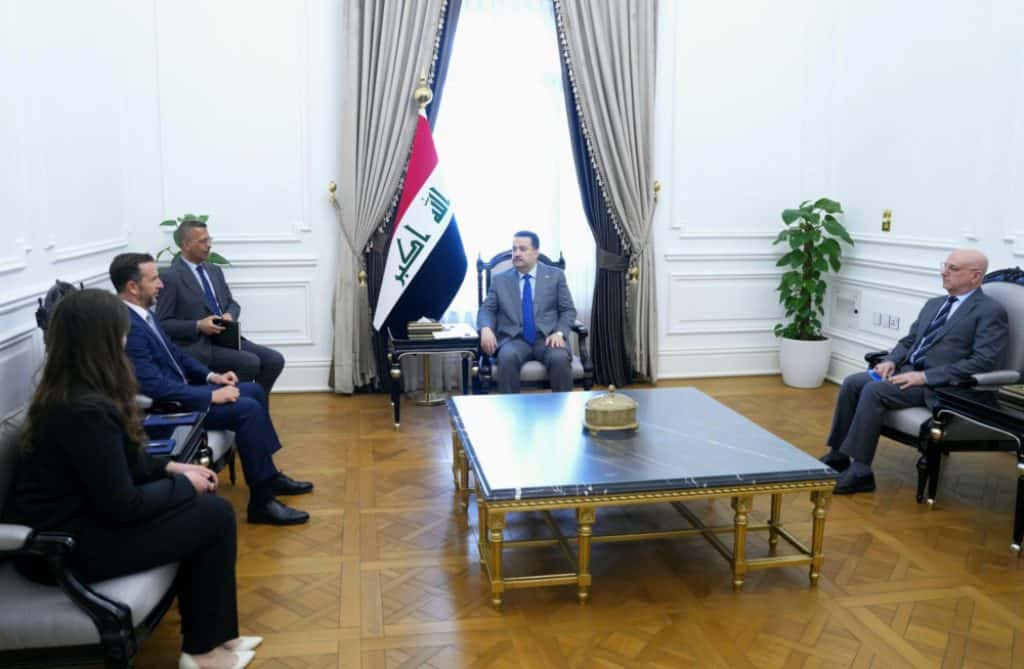
In a discussion with Secretary General of NATO Mark Rutte on March 19, Sudani reiterated his claims that he would confront attacks on diplomatic sites in Iraq. “The Prime Minister also affirmed Iraq’s full commitment and the readiness of its military and security forces, across all branches, to protect embassies and diplomatic missions operating in Iraq as part of their constitutional duties and responsibilities,” his office said. Sudani made a similar statement in a meeting with the Italian ambassador to Iraq on March 18.
Reporting from Israel, Seth J. Frantzman is an adjunct fellow at FDD and a contributor to FDD’s Long War Journal. He is the senior Middle East correspondent and analyst at The Jerusalem Post, and author of The October 7 War: Israel's Battle for Security in Gaza (2024).


