Japan’s US-2 joins Balikatan exercises in South China Sea

Japan’s US-2 advanced amphibious aircraft made its debut during Balikatan, the largest joint military exercises between the Philippines and the United States. A ShinMaywa US-2 aircraft of the Japan Maritime Self-Defense Force (JMSDF) splashed down in South China Sea as part of a joint casualty evacu

Naval News
75
3 min read
0 views
Japan’s US-2 joins Balikatan exercises in South China Sea

Japan’s US-2 advanced amphibious aircraft made its debut during Balikatan, the largest joint military exercises between the Philippines and the United States.

A ShinMaywa US-2 aircraft of the Japan Maritime Self-Defense Force (JMSDF) splashed down in South China Sea as part of a joint casualty evacuation drill for the Balikatan exercises last April 27, according to photos released by the US Indo-Pacific Command on May 2.

The drill, which took place near Oyster Bay in Palawan—a staging point for Philippine military resupply missions to the Spratly Islands that is being developed with US assistance into a maintenance hub for patrol boats— was just one of several events taking place across the Philippines for this year’s Balikatan.
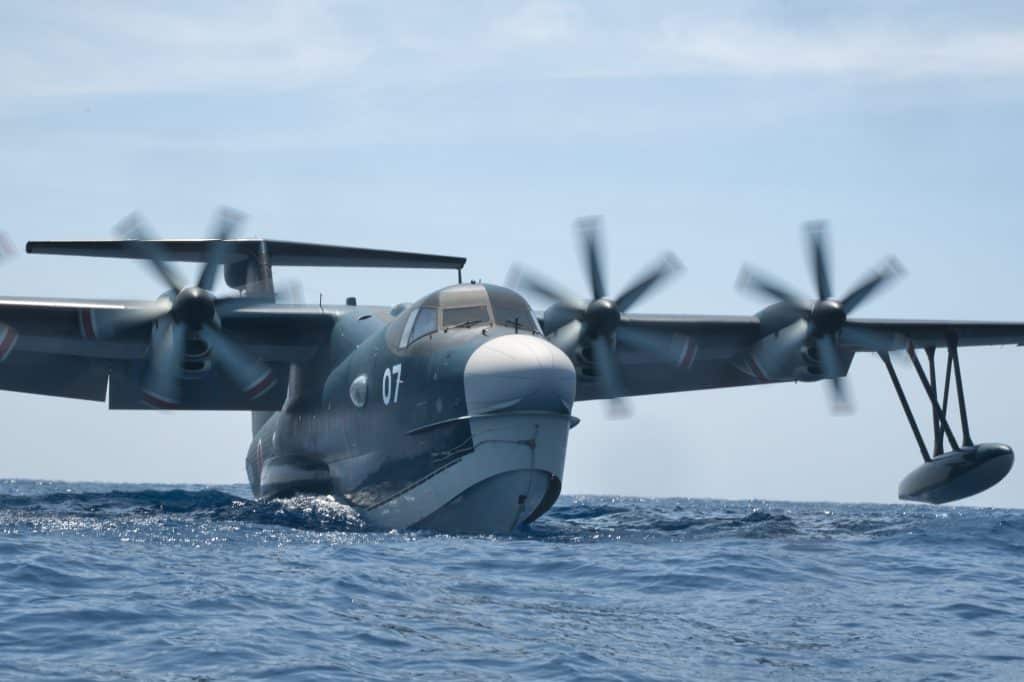
Japan’s US-2 joins Balikatan
JSDF’s US-2 amphibious aircraft splashes down near the South China Sea as part of a joint medical evacuation exercise for the 2026 Balikatan exercises. Japan Joint Staff picture.

The US Navy’s landing dock ship USS Ashland (LSD-48) worked alongside the JMSDF’s ShinMaywa US-2 for the exercises. Some crew members of the US-2 aircraft were transferred by lifeboat to the USS Ashland to rehearse critical patient movement and medical response procedures in realistic maritime conditions.

The US-2 is designed for search-and-rescue missions and can take off and land on both water and runways, including in rough sea conditions. Aside from the aircraft, Japan deployed one of its largest warships, the helicopter destroyer JS Ise, along with the landing ship JS Shimokita, the destroyer JS Ikazuchi,  C-130H transport aircraft and Type 88 missiles.

This year’s Balikatan is the largest and most expansive to date, with about 17,000 troops taking part. Japan deployed around 1,400 personnel, the first time it sent combat troops to Philippine soil since World War II, and the first deployment under the reciprocal access agreement with Manila that took effect last year. Australia, New Zealand, Canada, France and United Kingdom are also key participants in the exercises.
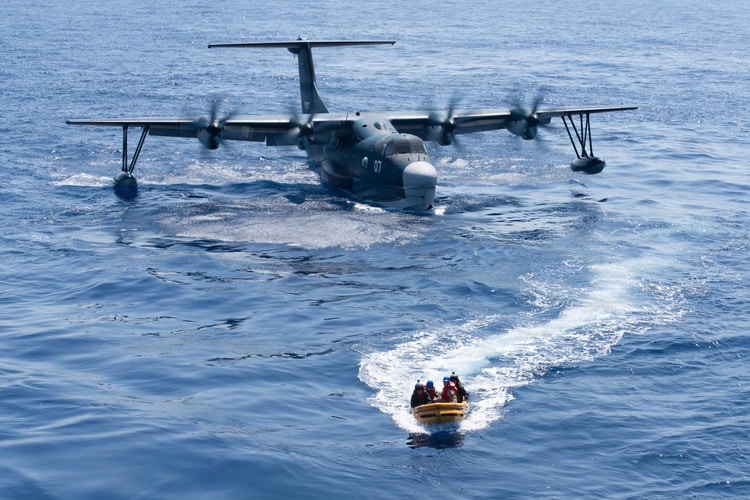
Japan’s US-2 joins Balikatan
Sailors with USS Ashland and Japan Maritime Self-Defense Force participate in a casualty evacuation exercise as part of Exercise Balikatan 2026, April 27. INDOPACOM picture

Japan Defense Minister Shinjiro Koizumi, who is scheduled to visit the Philippines, is expected to observe on May 6 the sinking of a decommissioned vessel off Laoag City in Ilocos Norte, near the South China Sea and Taiwan.

The exercises come amid heightened regional tensions over China’s activities in the East China Sea, around Taiwan and in the South China Sea. Both the Philippines and Japan are US allies and form part of the First Island Chain, considered a vital line of defense for containing Chinese maritime expansion.

Separately, the Philippine Marine Corps and Japan Ground Self-Defense Force’s Amphibious Rapid Deployment Brigade conducted an amphibious operation along coastal areas in Abulug, Cagayan in the northern Philippines last April 28.

“The exercise demonstrated seamless integration of air, land, and sea capabilities, highlighting the discipline, readiness, and interoperability of participating forces in executing complex amphibious operations,” the Philippine Marine Corps said.

Balikatan, which runs from April 20 to May 8, has also featured advanced US systems focused on maritime security, integrated air defense and drone warfare, including the NMESIS (Navy Marine Expeditionary Ship Interdiction System), MADIS (Marine Air Defense Integrated System), and HIMARS.

Original Source

Naval News

Share this article

Related Articles

🔬
🔬Weapons & Technology
Defence Blog

Trump praised AI drone killer at the White House

U.S. President Donald Trump just gave Allen Control Systems the most public endorsement a defense startup could ask for. Speaking at the White House, Trump praised the Austin-based company’s Bullfrog autonomous weapon station, calling it “that new very special machine gun that knocks the

circa 2 ore fa1 min
🔬
🔬Weapons & Technology
Defence Blog

Britain tests new drone-killing missile in Jordan

Britain’s newest drone-killing missile just proved itself in the desert, according to the latest UK government report. Cambridge Aerospace’s Skyhammer interceptor missiles and launchers successfully completed trials in Jordan less than two weeks after the UK Ministry of Defence signed a

circa 3 ore fa1 min
🔬
🔬Weapons & Technology
Defence Blog

U.S. Army tests Askari’s hand-launched drone interceptor

Askari Defense has been selected as a semifinalist in the U.S. Army’s xTech|Adaptive Strike competition, and the Atlanta-based company is heading to the National Training Center to put its Rift Alpha interceptor drone through its paces alongside the soldiers it was designed to protect. Th

circa 3 ore fa1 min
🔬
🔬Weapons & Technology
Defence Blog

U.S. military showed its top commanders ship-based drone defense system

Sierra Nevada Company’s BRAWLR air defense system made a notable public appearance at Exercise FLEX 2026, when senior U.S. military commanders, including the four-star head of U.S. Southern Command, got a close look at the weapon system integrated aboard a Textron Systems’ multi-mission

circa 3 ore fa1 min