The TWZ Newsletter
Weekly insights and analysis on the latest developments in military technology, strategy, and foreign policy.
A video showing a Pantsir-SMD-E being airlifted onto a skyscraper underscores Russian attempts to shield Moscow from increasing Ukrainian drone attacks. The post New Counter-Drone Optimized Pantsir Air Defense System Being Deployed Atop Skyscrapers In Moscow appeared first on The War Zone.

The TWZ Newsletter
Weekly insights and analysis on the latest developments in military technology, strategy, and foreign policy.
A recent video out of Russia once again highlights the drastic efforts being taken to provide Moscow with additional air defense coverage against the threat of long-range Ukrainian drones. While we have seen examples of the Pantsir short-range air defense system installed on buildings in Moscow before, the footage shows the counter-drone-optimized SMD-E variant being lifted onto the top of a skyscraper by helicopter.
The ruSSians are using a Mi-26 heavy-lift helicopter to deliver a Pantsir-SMD-E air defense system onto the roof of the Nordstar Tower business center in downtown Moscow.
Well thanks, now everyone knows where the next Ukrainian drone is going to hit 🎯 👍 pic.twitter.com/hgeIPJUwSq
The viral video appeared on social media this week and shows a Russian Aerospace Forces Mi-26 Halo heavy transport helicopter lowering a Pantsir-SMD-E system onto the top of a building in Moscow. The tower has been identified as the 42-story Nordstar Tower, an office building completed in 2009, with a roof height of 563 feet. The building is located in central Moscow, not far from the Kremlin.
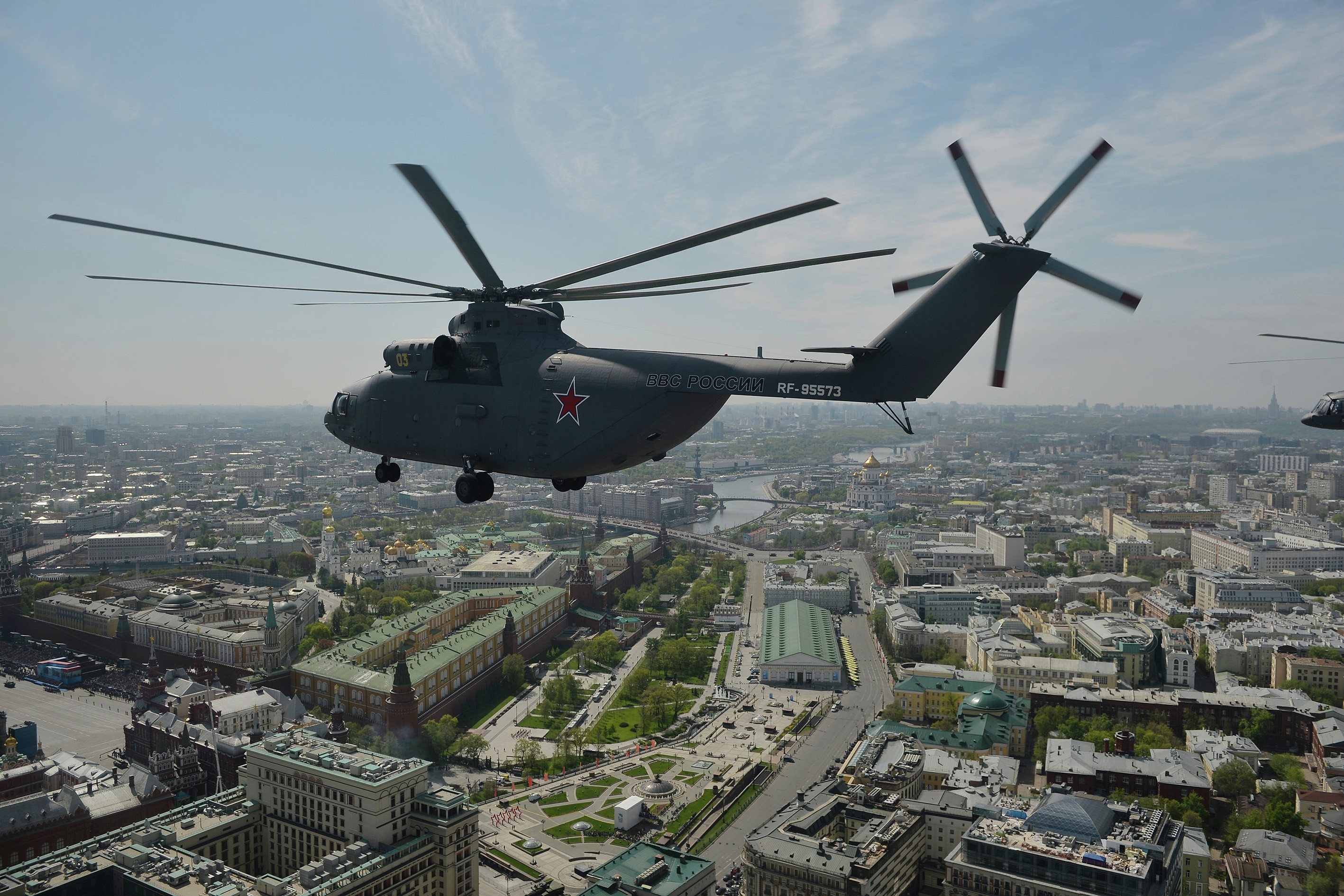
For the Mi-26, which can lift a load of more than 44,000 pounds, internally or as a slung load, moving the Pantsir-SMD-E is no problem at all.
As we have explained in the past, the Pantsir-SMD-E, with its self-contained static configuration, is designed to help protect critical static infrastructure from uncrewed aerial threats. For this, it can be loaded with as many as 48 small TKB-1055 anti-drone interceptors.
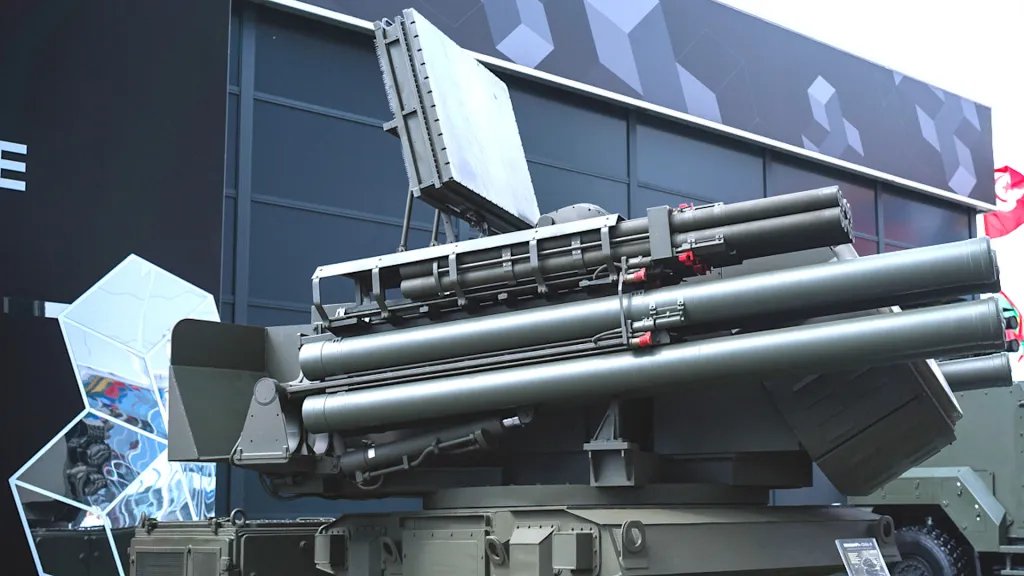
Alternatively, the SMD-E variant can fire up to 12 of the larger 57E6 short-range command-guided surface-to-air missiles, suitable for more traditional threats. A mix of effectors can also be used.
While the TKB-1055 has a stated maximum range of just over four miles, the 57E6 is claimed to be able to hit targets at nearly 12.5 miles.
The SMD-E’s turret also features two integrated radars, one for detecting and tracking targets and another fire-control type for directing the command-guided missiles.
Unlike earlier Pantsir systems, no cannons are included.
A video showing the previous Pantsir-S1 with combined gun/missile armament:
The development of the SMD-E version is hardly surprising given the fact that, for some time now, Ukrainian forces have been launching increasingly longer-range drone attacks on military bases and industrial facilities inside Russia.
On the other hand, it’s worth noting that previous members of the Pantsir family have earned a very mixed reputation since their introduction in the early 2010s. This has been underscored by reportedly poor performance in Syria and Libya, although the Pantsir is still widely fielded by Russia, and has even been adapted as a ‘quick-fix’ maritime air defense system. It has also been widely exported.
The previous versions of the Pantsir have also become popular choices for the counter-drone mission, especially in terms of defending Russia’s critical military, government, and industrial facilities.
In early 2023, Pantsirs began to appear on rooftops in Moscow, and another was deployed close to one of President Vladimir Putin’s official residences just outside the capital. Earlier this month, German media reported that Russia had significantly expanded its air defense network around the capital, deploying more than 40 additional Pantsir systems in 2025 alone.
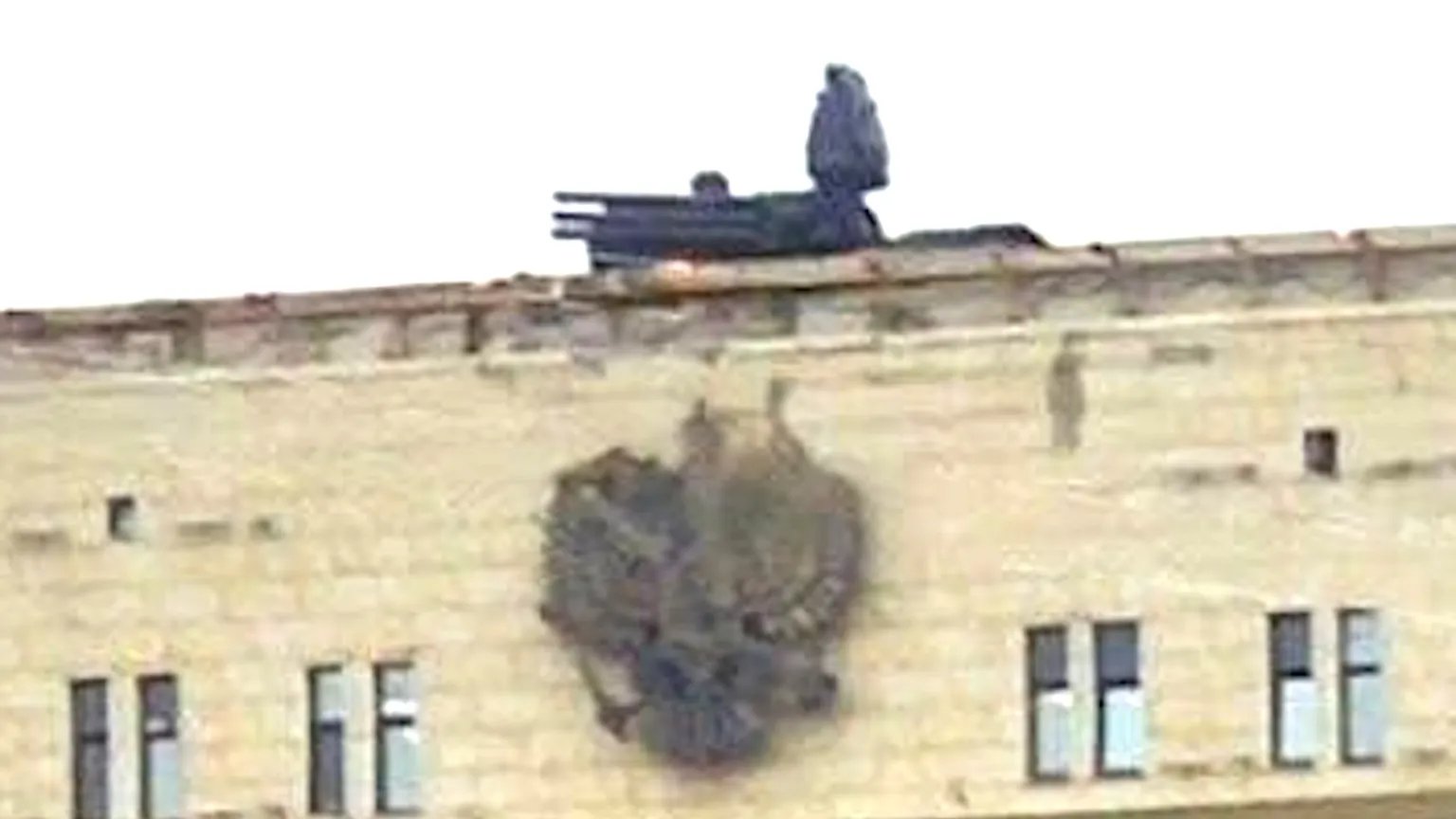
In Moscow, a Russian Pantsir-S1 anti-aircraft missile system has been placed on the roof of a building of the Central District Department of Education on Teterinsky Lane, for the reasons so far unknown.
55.745352, 37.651179 pic.twitter.com/qMd1NVDYhW
Of course, these are just elements of a much larger array of additional layered air defenses deployed in and around the Russian capital. This extends from S-400 long-range surface-to-air missile batteries to attack helicopters tasked with gunning down drones in midair.
The recent development of the Pantsir-SMD-E means that it very likely incorporates lessons from experience using the earlier versions in the counter-drone role.
Putting the system on a skyscraper provides a safer firing location, although it doesn’t remove the risk of interceptors going astray, or debris from destroyed drones causing damage or injury.
At the same time, this rooftop perch does ensure a clear line of sight for the radar, extended reaction time, and offers a much wider range of firing angles. For this reason, Russia has previously also built elevated towers for Pantsir batteries around the Moscow region.
The emergence of the system underscores just what level of danger Ukraine’s drone attacks have come to pose to Russia. Since Ukraine first began to employ long-range one-way attack drones, their designs have been optimized and their ranges extended, putting highly prized facilities deeper and deeper inside Russia within their crosshairs. The threat to Russia is only set to grow, as Ukraine expands production and capabilities, including adding long-range cruise missiles to its inventory.
A video showing the homegrown Ukrainian FP-5 Flamingo cruise missile in action:
It is also worth noting that Russia, while at war, is not alone in these concerns. In the United States, since 9/11, Washington, DC, has quietly evolved into one of the most heavily defended urban airspaces in the world. This includes systems like Stinger missile turrets positioned atop key government buildings. The planned air defense capacity for the new White House Ballroom is a glaring example of this same trend. This is being spurred primarily by major concerns about the growing drone threat.
Speaking earlier in the Oval Office, President Trump called the ballroom being constructed to replace the White House East Wing a “gift,” while adding that it will have bulletproof glass and walls, along with a “drone port” which Trump says was supposed to be Top Secret. pic.twitter.com/1zP9KaFxFc
— OSINTdefender (@sentdefender) May 21, 2026Depending on the success of the Pantsir-SMD-E in protecting the Russian capital, we may well see more of these systems deployed both in Moscow and elsewhere. As we have discussed before, the system apparently offers the potential to be fitted on vehicles and vessels, as well.
The appearance of the Pantsir-SMD-E on a Moscow skyscraper hammers home the reality of the drone threat, not just in Russia, but also more generally, on the battlefield, as well as against critical infrastructure, military and civilian.
Contact the author: thomas@thewarzone.com
Japan has made its first contribution to NATO’s PURL mechanism for supporting Ukraine, allocating nearly $14.7 million for the purchase of nonlethal equipment, Japan’s Foreign Ministry reported.

Ukrainian missile forensics experts have debunked key Kremlin claims regarding the “Oreshnik” intermediate-range ballistic missile, revealing that the weapon is nearly a decade old and contains exclusively Russian and Belarusian components. Presenting recovered electronic circuitry from a January 20

Ukraine's Unmanned Systems Forces have established fire control over key access routes to the Russian-occupied city of Debaltseve in the Donetsk region and severed a major transport link connecting Debaltseve and Alchevsk.