Teledyne secures new Royal Navy contract for ocean data technology

The UK has signed a contract with Teledyne Marine to improve the Royal Navy’s collection of oceanographic data using uncrewed technologies. The post Teledyne secures new Royal Navy contract for ocean data technology  appeared first on Naval Technology.

Naval Technology
75
2 min read
0 views
Teledyne secures new Royal Navy contract for ocean data technology

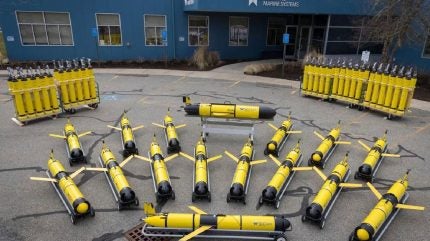
Teledyne will deliver autonomous ocean systems like Sentinel and Slocum gliders, APEX floats, and related services to the Royal Navy.

Array of data gathering systems. Credit: © Crown.

The UK Ministry of Defence (MoD) has signed a contract with Teledyne Marine to improve the Royal Navy’s collection of oceanographic and environmental data using uncrewed technologies.

The agreement forms part of the Royal Navy’s Future Maritime Data Gathering (FMDG) programme and will provide additional equipment directly to Information Warfare meteorological and oceanographic (IW METOC) operators.

Discover B2B Marketing That Performs

Combine business intelligence and editorial excellence to reach engaged professionals across 36 leading media platforms.

Find out more

Under the contract, Teledyne Marine will deliver a range of autonomous ocean observing systems, including Sentinel and Slocum gliders, APEX floats, and supporting services.

This will allow the Royal Navy to increase its use of uncrewed technologies for oceanographic data collection to support operational planning, maritime safety, and defence activities, in alignment with Atlantic Bastion.

Navy Develop hydrographic and IW METOC capability sponsor commander Mark Butcher said: “This investment in autonomous ocean sensing strengthens the Royal Navy’s ability to understand and operate in an increasingly contested North Atlantic, supporting Atlantic Bastion.

“Persistent data from systems such as these enhances our understanding of the underwater battlespace, enabling tactical exploitation of the environment and delivering the operational and information advantage commanders need.” 

Teledyne Marine’s systems are set to provide long-term data collection from complex and remote locations at sea, furthering the Royal Navy’s access to environmental intelligence.

This contract continues the service’s existing use of Teledyne’s autonomous platforms and highlights an expanded role for uncrewed systems within both Royal Navy and Nato operations.

Teledyne Marine has supplied unmanned systems such as Slocum gliders, APEX floats, and Gavia autonomous platforms for the Royal Navy since 2015.

Its uncrewed technologies are also deployed by commercial and scientific groups globally for ocean observation and environmental monitoring.

Teledyne President and CEO George Bobb said: “We are proud to support the Royal Navy’s Future Maritime Data Gathering program and to contribute capabilities that deliver high-quality ocean data to enable critical defence and maritime missions.”    

Original Source

Naval Technology

Share this article

Related Articles

HII Launches Flight III Destroyer George M. Neal (DDG 131)
🔬Weapons & Technology
Naval News

HII Launches Flight III Destroyer George M. Neal (DDG 131)

HII’s Ingalls Shipbuilding division successfully launched future USS George M. Neal (DDG 131) on April 1st, 2026, marking a major construction milestone for the fourth Flight III Arleigh Burke-class destroyer to be built at the shipyard. HII press release In the weeks leading up to launch, shipbuild

circa 5 ore fa2 min
🔬
🔬Weapons & Technology
USNI News

Two Former Navy Fighter Pilots Lead NASA’s Artemis II Mission

Two former U.S. Navy fighter pilots are aboard the first crewed orbit around the moon in more than 50 years after launching on Wednesday from NASA’s Kennedy Space Center on the Artemis II mission. Retired Capt. Reid Wiseman is the commander of the Artemis II mission, while Capt. Victor Glover Jr. is

circa 13 ore fa1 min
AV to Deliver ISR Services to U.S. Navy with JUMP 20-X
🔬Weapons & Technology
Naval News

AV to Deliver ISR Services to U.S. Navy with JUMP 20-X

AV has been selected to deliver JUMP 20-X to the U.S. Navy in support of its initiative to modernize and expand ISR operations. The JUMP 20-X enables multi-domain missions with fully autonomous, hands-free operation and more than 13 hours of flight time, a 115-mile

circa 15 ore fa2 min
🔬
🔬Weapons & Technology
USNI News

Japan Deploys New Hypersonic, Anti-ship Missiles

Tokyo’s first batch of long-range strike missiles capable of reaching ground and maritime targets at extended ranges have been operationally fielded, according to Japan’s defense ministry. The Japan Ground Self-Defense Force (JGSDF) announced Monday the deployment of the Type 25 series of missiles.

circa 16 ore fa1 min