Figures in the latest US Navy Shipbuilding Plan suggest the service will double its Medium Uncrewed Surface Vessels between 2027 and 2031.
The post US to double down on MUSV production appeared first on Naval Technology.
Naval Technology
75
4 min read
0 views
The Navy Shipbuilding Plan suggests more autonomous vessels will help to unburden higher-value assets.
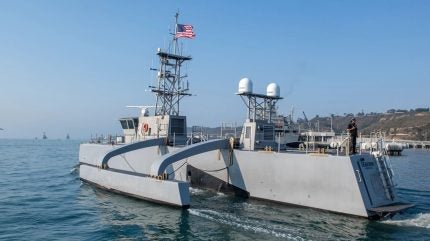
Seahawk Medium Uncrewed Surface Vessel (MUSV) protoype departs Naval Base Point Loma, California, 6 August 2025. Credit: DVIDS.
Figures in the US Navy Shipbuilding Plan suggest the service will double its MUSVs
These vessels constitue the multi-purpose laydown trucks of the sea, allowing for distributed operations
The MUSV segment is anticipated to make up more than 18% of the combined fleet in 2031
Published earlier this week, the US Navy Shipbuilding Plan revealed that the service will double the production of Medium Uncrewed Surface Vessels (MUSVs) between 2027 and 2031.
The US Navy will deploy these autonomous vessels in a number of roles, from anti-submarine warfare to convoy escort. The sheer range of responsibilities will see the ships serve as “the strategic laydown trucks of the fleet,” suggested John C. Phelan, the Navy Secretary.
Discover B2B Marketing That Performs
Combine business intelligence and editorial excellence to reach engaged professionals across 36 leading media platforms.
Find out more
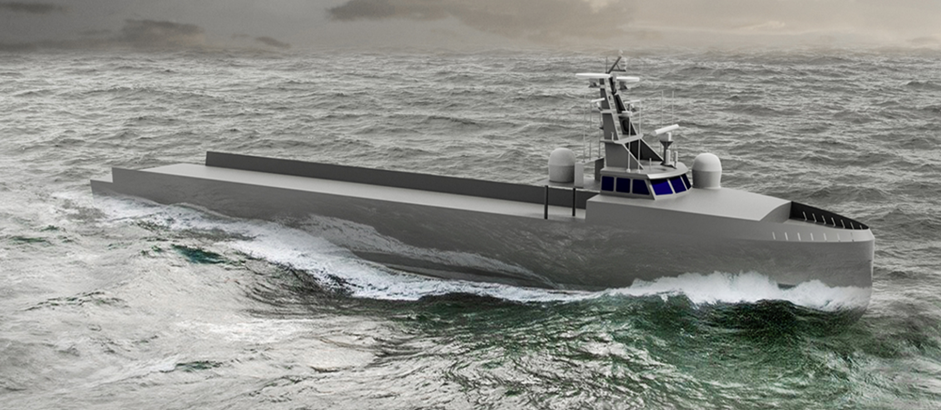
An MUSV will have a length of 195 feet (~59 metres) and a displacement of ~500 tonnes. The vessels will operate in formation with crewed command vessels.
In data: MUSV proliferation
The figures reveal that MUSVs will grow from 39 units in 2027 to 83 ships in 2031.
It appears the Navy intend to front-load construction in 2026 and 2027 with industry being tasked to build 36 units this year and three more next year.
So in 2027, the MUSV segment will make up 10% of the combined total naval vessel force and reach more than 18% by the end of the forecast period.
The FY27 budget will allocate $171m to procure three vessels and invest $3.1bn across the next five years to procure 47 MUSVs in all, thus cultivating a new culture of distributed capabilities.
Curiously, this uncrewed proliferation is out of step with the small share of the North American segment in the uncrewed maritime vehicles (UMV) market, led by uncrewed surface vessels like these new ships. More bizarrely, leading market intelligence indicates that Europe is the market frontrunner.
But upon closer inspection this makes sense. UMVs are a cost-effective alternative to strengthen a nation’s seapower. Cash-strapped countries like the UK are embracing the hybrid concept with relish, unwilling to pay for larger costly platforms.
On the other hand, the US can afford to build what it calls a “high-low mix,” which means the US Navy will implement a balance of advanced, high-cost capability with affordable, high-volume capacity.
What does this mean for the Navy?
MUSV integration essentialy frees up the US Navy by unburdening higher-value assets, such as Arleigh Burke-class destroyers, as the autonomous fleet can take up long endurance maritime domain awareness missions.
But the role of MUSVs may go further than this.
MUSVs are modular, meaning personnel can swap out containerised payloads according to a specific misison set.
While its development had largely been geared toward ISR and electronic warfare, the Shipbuilding Plan has since alluded to preparing MUSVs for more active strike missions. The document specifies the integration of missile systems, a flight deck and hangar capable of accomodating the MH-60R Seahawk helicopter.
Decision-makers may have considered the recent crisis in the Gulf, which demonstrates the extensive and combined missile strikes required to overwhelm even an adversary with second-rate air defences.
Early impression of the MUSV at sea. Credit: Swiftships.
Breakdown: MUSV development
The US Navy first contracted L3Harris in July 2020 to develop a prototype using its ASView autonomy and perception technology and to serve as the systems integrator.
In 2021, the subcontractor Swiftships was tasked with the construction of nine hulls in Morgan City, Louisiana.
Now, the Plan refers to using an Other Transaction Authority which will provide opportunities for new shipbuilding entrants.
The US Navy hopes MUSV will create opportunities for new shipyards to come online; for existing smaller shipyards to expand their workforce; and add capacity in parallel with combatant ships in production at established shipbuilders.
As MUSV capability approaches delivery, the Chief of Naval Operations will assess recommending the vessel’s inclusion in the battle force fleet.