12 hours ago
Tiffanie Turnbull
The melanoma doctor's brain cancer treatment experiment has sparked hope for a breakthrough.

12 hours ago
Tiffanie Turnbull

 Tim Bauer
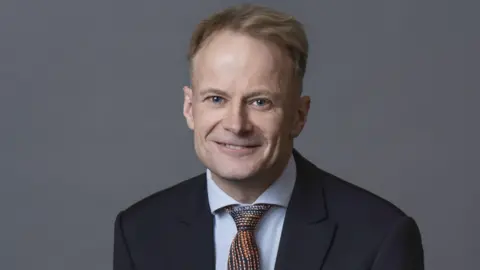
Pioneering Australian doctor Richard Scolyer has died, three years after being diagnosed with an aggressive brain tumour.
Scolyer, 59, made global headlines for his decision to undergo a risky world-first experimental treatment for his glioblastoma at the hands of his friend Professor Georgina Long - based on the pair's own scientific breakthroughs in skin cancer.
Their work on advanced melanoma - once a death sentence - has saved countless lives, and their encouraging findings in treating Scolyer's brain tumour have triggered an early stage clinical trial in the US.
"I wanted to keep contributing, even in my darkest hour," Scolyer said in an open letter announcing his death.
"I pen this letter as a final goodbye to all those I have had the immense privilege of loving, sharing life's adventures with, working alongside and meeting during what can only be described as a life filled with happiness, optimism, opportunity and passion."
Australia's Prime Minister Anthony Albanese called Prof Scolyer "one of our brightest lights and one of our biggest hearts".
"Every day, this remarkable man - the cancer specialist who became his own subject - took us into his confidence, and he lifted us all in the process."
One of the country's most respected medical minds, Prof Scolyer became a national treasure. In 2024, he was named Australian of the Year alongside Long.
As co-directors of the Melanoma Institute Australia, over the past decade the pair's research on immunotherapy, which uses the body's immune system to attack cancer cells, has dramatically improved outcomes for advanced melanoma patients globally. Half are now essentially cured, up from less than 10%.
Scolyer also pointed to the mentoring of up-and-coming pathologists as a source of pride in his career.
"I have always been driven by the belief that we all have a responsibility to try to change the future for others and leave the world a better place... I have lived that ethos to the fullest."
Glioblastomas, found in the brain's connective tissue, are notoriously aggressive and the general protocol for treating them - immediate excision then radiotherapy and chemotherapy - has changed little in two decades. Most patients with Scolyer's form of tumour survive less than a year.
"It didn't sit right with me… to just accept certain death without trying something," Prof Scolyer said.
"It's an incurable cancer? Well bugger that!"
Long was similarly determined. She spent the hours after she was told of her friend's diagnosis grieving, then plotting.
In melanoma, her team discovered that immunotherapy works better when a combination of drugs is used, and when they are administered before any surgery to remove a tumour. And so, Prof Scolyer in 2023 became the first brain cancer patient to ever have combination, pre-surgery immunotherapy.
He was also given a vaccine personalised to his tumour's characteristics, which boosts the cancer-detecting powers of the drugs.
Scolyer and Long knew the odds of a cure were "minuscule", but hoped the experimental treatment would prolong Prof Scolyer's life.
Subsequent scans appeared to show a positive immune response in the brain - and a small clinical trial is now trying to replicate those results.
"This was science in action!" esteemed melanoma surgeon John Thompson AO said in a statement paying tribute to his friend.
Describing Scolyer as a "cheery, down-to-earth, lad from Launceston" and a brilliant, internationally recognised scientist, he said: "He will be remembered as a truly great Australian."
Albanese said in a statement on Monday: "Richard's journey was difficult and confronting. 'My uncertain path', as he termed it with characteristic understatement. Yet it was one he travelled with courage, determination, and a grace that never ceased to be remarkable. The way he shared it with us was an act of profound generosity."
 Supplied
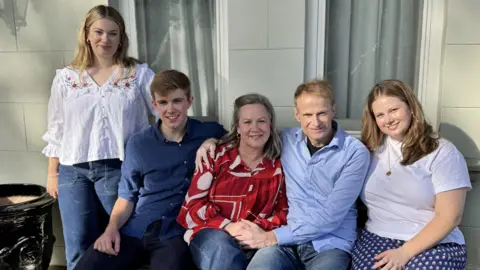
Scolyer is survived by his wife, fellow pathologist Katie Nicholl, and his three children.
In his letter, he said he was "perhaps lucky" that the physical and cognitive impacts of his brain cancer meant he was unlikely to have been fully aware of his own decline over these final weeks.
"I write this knowing that my wonderful family would have been by my side every minute, as they have been throughout my cancer journey… They are shining examples of the best of humanity and make me extremely proud."
Scolyer - who documented his treatment online - also thanked Australians for the outpouring of love.
"You've laughed with me, cried with me, and provided encouragement and support to keep going just when I needed it most. I haven't sugar coated my journey and I sincerely thank you for allowing me the space and opportunity to share it with you, warts and all."
He issued a call for scientists to keep being brave and inquisitive, and for governments to fund their innovations.
"We can and should continue to push boundaries to propel the cancer field forward."

“When we graduate, what can we do?” As a philosophy professor, questions like this – about employability – often crop up in my conversations with students. Indeed, with youth unemployment on the Chinese mainland standing at almost 17 per cent, and intense competition among those seeking employment,

The magnitude-7.8 quake triggered small tsunami waves in the Philippines, Indonesia and Japan.

Chinese scientists who inserted a gene from desert moss into cotton say their innovation can boost yields by nearly a quarter through protection against a pervasive fungal disease that threatens crops worldwide. The team, led by researchers from the Chinese Academy of Sciences’ Xinjiang Institute of

Beijing is trying to reassert influence over a strategically vital yet deeply unpredictable partner.