Book Arsenal 2026: Freedom, Responsibility and Culture in Wartime Ukraine
Kyiv’s Book Arsenal 2026 brought together leading Ukrainian and international writers, intellectuals, soldiers, and human rights advocates for four days of discussions on freedom, responsibility, memory, and culture during wartime. Speakers – including Maksym Butkevych, Oleksandra Matviichuk, Pavlo
Kyiv Post
75
5 min read
0 views
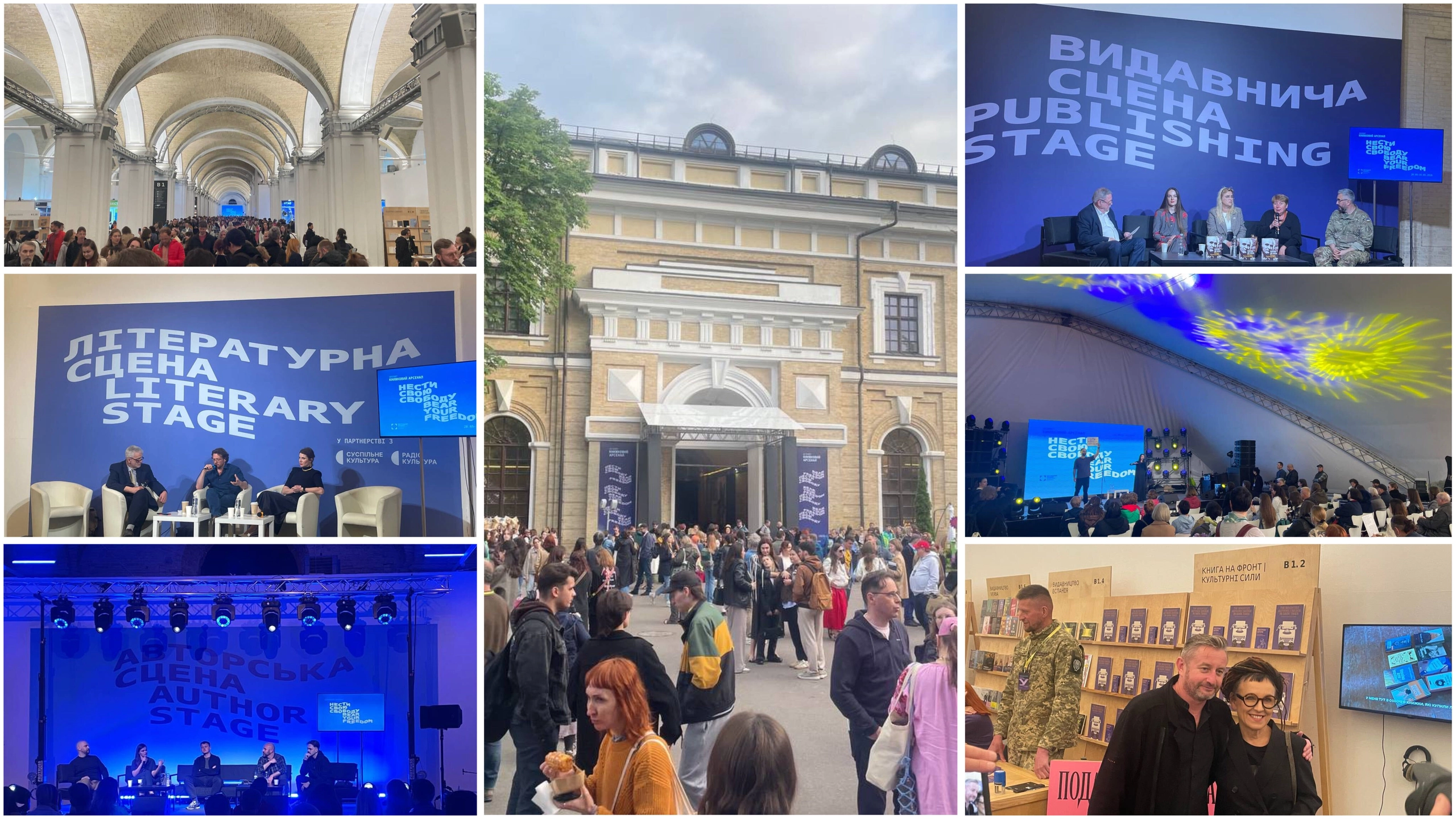
Kyiv’s XIV International Book Arsenal Festival, held from May 28 to 31, once again confirmed its status as one of Ukraine’s leading cultural and intellectual events. More than 150 publishers and booksellers, nearly 240 events, and hundreds of Ukrainian and international writers, human rights advocates, soldiers, scholars, and public intellectuals gathered for four days of discussions on freedom, responsibility, war, memory, and the future.
This year’s focus theme, “Carrying Freedom,” was curated by human rights defender, serviceman, and former Russian prisoner of war Maksym Butkevych.
“The Ukrainian experience matters today because we are learning to understand freedom not as something individual, but as something collective,” Butkevych said. “We have survived and continue to endure thanks to solidarity.”
The idea that freedom requires responsibility became one of the festival’s central themes.
Among the most prominent speakers was Nobel Peace Prize laureate and head of the Center for Civil Liberties Oleksandra Matviichuk.
Collage by Kyiv Post
“There is a difference between a population and citizens,” she said. “A citizen is not merely someone who holds a passport, but someone who accepts responsibility.”
Ukraine’s war has pushed many artists to abandon conventional careers and turn to art as a way to process trauma, loss, and displacement. Featured at Kyiv Art Fair, artists including Olena Kharakhulakh and Irina Cheremisina say creativity became essential for survival, healing, and preserving their connection to Ukraine amid Russia’s invasion.
“For me, responsibility is the other side of freedom. Freedom is never given – it is won.”
Discussions on information warfare and the ethics of public speech also drew considerable attention. Ukrainian serviceman and columnist Pavlo Kazarin described Russia’s war against Ukraine as “the first major war fought under existential threat, where defeat could mean disappearing from the political map of the world.”
According to Kazarin, the absence of formal military censorship places greater responsibility on individuals.
“I constantly ask myself whether a text can do harm. The absence of state censorship is something I compensate for with self-censorship,” he said.
Memory remained another defining theme of the festival. One of its most emotional events was the memorial performance “Echoes,” dedicated to Ukrainian writers, poets, and journalists killed or disappeared during Russia’s war against Ukraine.
The performance featured the words and recorded voices of writer and soldier Maksym Kryvtsov, novelist Victoria Amelina, children’s author Volodymyr Vakulenko, poet Hlib Babich, and others whose voices continue to resonate through Ukrainian culture despite their deaths.
Speaking on behalf of Ukrainian publishers, Svitlana Stretovych, founder and editor-in-chief of Stretovych Publishing House, reflected on the role of books during wartime.
“When there is so much pain and darkness around us, it is important to remember that there is still light worth working for. For us, books are always about light,” she said.
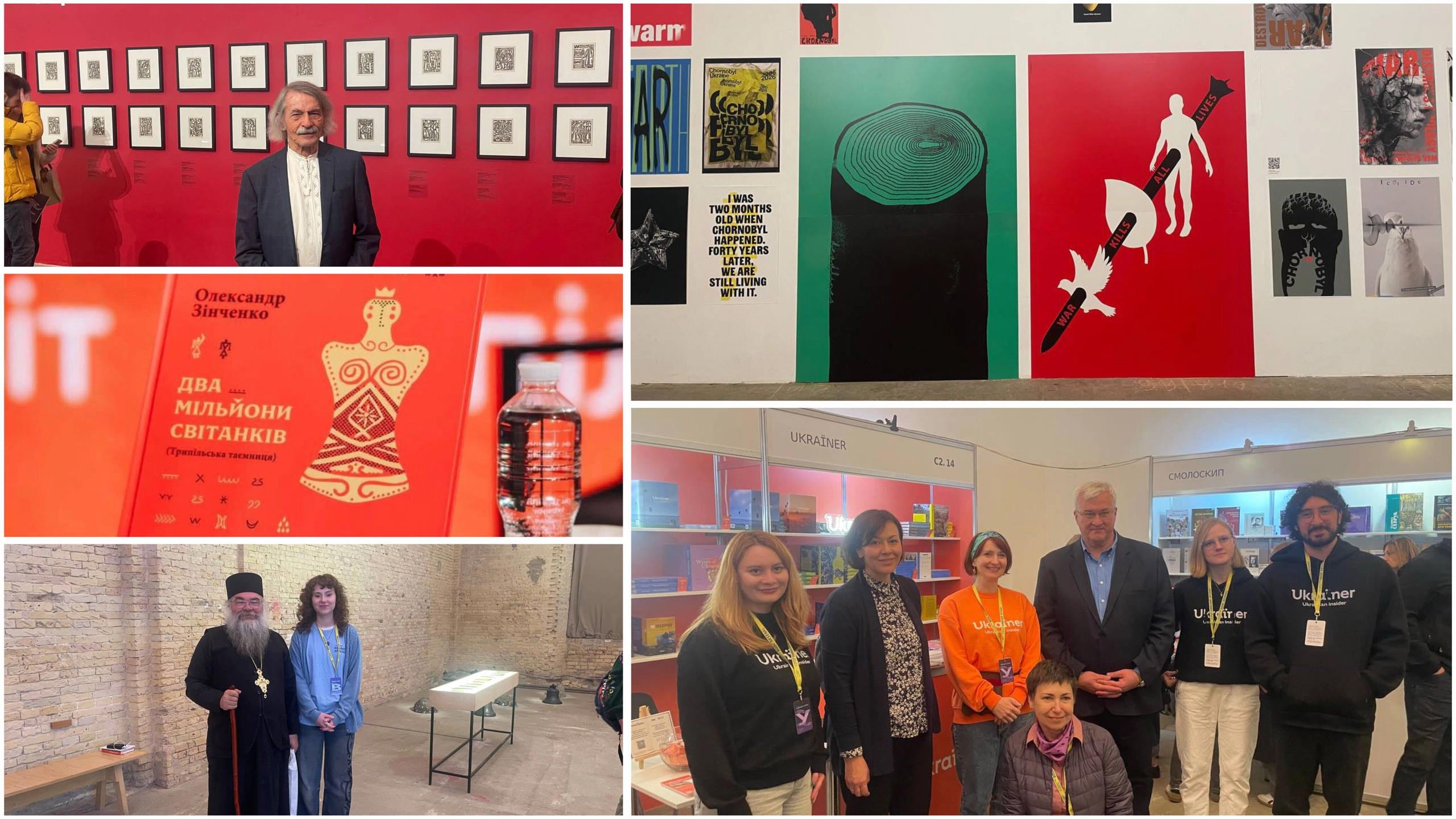
Among the festival’s most anticipated guests were Nobel Prize-winning Polish author Olga Tokarczuk, American historian Marci Shore, British-Ukrainian journalist and author Peter Pomerantsev, writers Serhiy Zhadan and Oksana Zabuzhko, political commentator Vitalii Portnikov, military medic Yuliia Paievska (“Taira”), and military analyst Taras Chmut.
Collage by Kyiv Post
One of the most anticipated events of the festival’s final day was a public conversation with Oksana Zabuzhko — one of Ukraine’s most influential writers and public intellectuals, whose works have been translated into more than 20 languages and have played a major role in introducing Ukrainian culture and history to international audiences.
Reflecting on war, history, and the individual’s place within it, Zabuzhko urged Ukrainians to adopt a longer historical perspective.
“When my mother turned 70, she would say: ‘My dear, life is so short. Just when you begin to make sense of it, you’re already being called to the exit.’”
We live for only a few decades, while history unfolds over centuries. That is why it is so important to place ourselves within a longer historical perspective.” she said.
Zabuzhko also argued that Russia’s full-scale invasion has fundamentally changed how the world views Ukraine.
“Over these years, Ukraine has proven not only its right to exist but also its ability to defend itself. That has forced the world to look differently at both our state and our culture.”
At the same time, she warned that contemporary societies are facing what she called “a crisis of the Enlightenment project.”
“It turned out that books, arguments, and rational explanations alone are not enough to stop evil,” Zabuzhko said.
Book Arsenal 2026 may have come to an end, but the conversations it sparked are unlikely to end with the festival itself.
For festival director Yuliia Kozlovets, this year’s gathering demonstrated once again that Ukrainian culture continues to thrive despite the war.
“Everything exists here simultaneously: war and peace, books and the front line, culture and national defense,” Kozlovets told Kyiv Post. “It is important that the festival remains one of the country’s key cultural events and gives people strength to keep going.”
In a country fighting daily for its survival, culture is increasingly becoming not an escape from reality but a way of understanding it. That is why Book Arsenal remains far more than a literary festival: it is a space where Ukraine continues to define the meaning of freedom – and the responsibility that comes with it.