Does it make sense for the UK to sell its Batch 1 OPVs?
The Royal Navy's Batch 1 OPVs have been in service since 2003 and mainly tasked with patrolling UK waters.
The post Does it make sense for the UK to sell its Batch 1 OPVs? appeared first on Naval Technology.
Naval Technology
75
3 min read
0 views
Reports suggest the UK is considering selling its OPVs used to patrol UK waters, further reducing Royal Navy presence at sea.
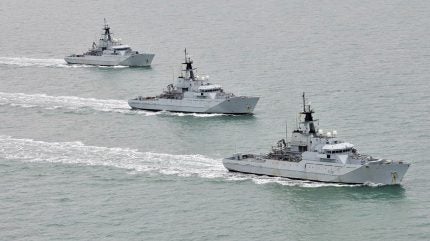
HMS Tyne, HMS Severn and HMS Mersey, pictured in 2012, could be on the chopping block. Credit: UK MoD/Crown copyright
UK reportedly considering selling HMS Tyne, Mersey and Severn to Uruguay for about $20m each
Sale could cut OPV running/support costs and fund other defence needs
Risk: fewer ships at sea, reducing escort/monitoring capacity as frigate numbers fall
Most recently seen ‘intercepting’ Russian warships transiting through the English Channel, the Royal Navy’s Batch 1 River-class OPVs could be on the verge of being sold to Uruguay, if reports are accurate.
Information published by Merco Press, citing the El Observador news outlet, revealed that the Uruguay Government is giving consideration to a UK proposal to sell three Batch 1 River-class patrol vessels for around $20m per vessel.
Discover B2B Marketing That Performs
Combine business intelligence and editorial excellence to reach engaged professionals across 36 leading media platforms.
Find out more
The Batch 1 River OPVs in question are HMS Tyne, HMS Mersey, and HMS Severn, which have been in service since 2003 and coming towards the end of their expected service life.
Another Batch 1 OPV, HMS Clyde, was transferred to the Royal Bahrain Naval Force in 2019.
However, in 2021, the UK Ministry of Defence (MoD) revealed that the intended out-of-service date of the three remaining Batch 1 vessels had pushed back to 2028. This would see the trio complete 25 years of operational service mainly around UK waters.
A single Batch 1 River-class OPV costs in the region of £3-4m ($4-5.3m) per year to run, with a 2023 contract confirming a £68.7m, five-year support deal for HMS Tyne, HMS Mersey, and HMS Severn.
A guideline cost to keep the three vessels operational for the next two years is around £26m, offering savings and even potential profit, if the 2023 deal is able to be exited.
In purely financial terms, depending on the MoD’s priorities, it could make fiscal sense to sell the Batch 1 OPVs and reinvest into wider defence capabilities. For example, ordering Batch 3 OPVs in a like-for-like replacement.
Does it make operational sense?
This is where the problems would begin, should the UK opt to sell the Batch 1 OPVs, as the River class maintain high operational availability. The type have in recent months been used as a de-facto Fleet Ready Escort to monitor Russian vessels transiting the English Channel, in absence of a Royal Navy frigate.
A reduction in OPV numbers would have a significant impact on the physical presence of Royal Navy ships at sea. This in turn could see the return of some or all of the more modern Batch 2 OPVs, which are forward deployed into regions of UK interest, such as the Mediterranean, South Atlantic, and Asia-Pacific.
The need to maintain presence in UK waters remains critical, as Russia’s shadow fleet operate with near impunity in proximity to the UK’s subsurface critical national infrastructure, such as communications and power links on the seabed.
Should financial arguments trump operational requirements, the loss of the Batch 1 Rivers would deepen a trough that the Royal Navy is sliding into, where ship losses (Type 23 frigates and OPVs) are not immediately replaced.
The next 12-18 months will see the Royal Navy’s frigate force reduce to that of a second-rank European power, potentially as low as five hulls, before gradually rebuilding with the incoming Type 26 and Type 31 vessels.